Ayu Aulia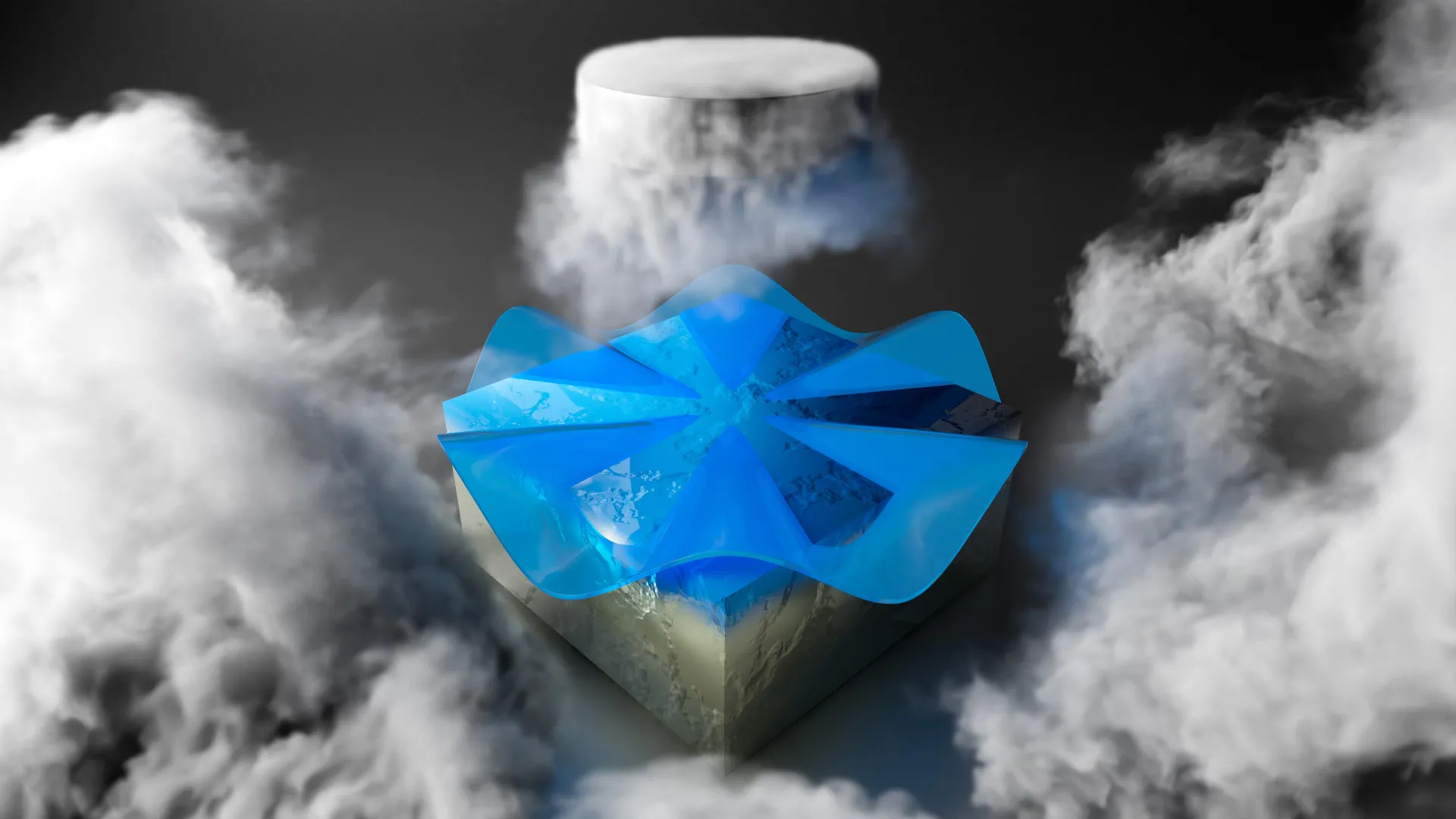
A groundbreaking discovery has emerged from the intricate world of quantum materials, revealing an unprecedented form of superconductivity within a compound of platinum and bismuth, specifically PtBi₂. This seemingly unremarkable gray crystal, studied by a collaborative research effort, hosts electrons that defy established paradigms, exhibiting a unique pairing mechanism and spontaneously generating particles crucial for future quantum computing.
The phenomenon of superconductivity, where electrical resistance vanishes below a critical temperature, has captivated scientists for over a century. Since its initial observation in 1911, the field has branched into conventional superconductors, largely explained by the Bardeen-Cooper-Schrieffer (BCS) theory involving electron pairing mediated by lattice vibrations, and unconventional superconductors, which exhibit more complex and often higher-temperature behaviors. The pursuit of room-temperature superconductivity remains one of condensed matter physics’ most ambitious goals, promising transformative impacts on energy transmission, medical imaging, and high-speed electronics. This latest finding, however, introduces a fundamentally new category, pushing the boundaries of what was previously understood about electron interaction and quantum states in solids.
The Topological Foundation of a Novel Superconductor
The extraordinary properties of PtBi₂ are deeply rooted in its topological characteristics. In condensed matter physics, topology refers to properties of a material’s electronic structure that remain robust against continuous deformations, much like how a donut can be stretched and twisted into a coffee cup without changing its fundamental topological characteristic (one hole). These topological invariants dictate how electrons behave, often leading to protected surface or edge states that exhibit unique electronic transport properties.
In PtBi₂, these topological attributes compel certain electrons to remain strictly confined to the material’s outermost atomic layers – specifically, its top and bottom surfaces. This confinement is a direct consequence of the intricate interplay between the electrons and the precise, orderly arrangement of atoms within the crystal lattice. What makes this particularly compelling is the inherent stability of these topological states; they persist unless the fundamental symmetry of the entire crystal is drastically altered, for instance, by severe structural modification or the application of powerful electromagnetic fields. Furthermore, this surface confinement is remarkably robust to the material’s dimensions. Even if a PtBi₂ crystal were cleaved, new surface-bound electronic states would immediately manifest on the freshly exposed planes, underscoring the intrinsic nature of this topological protection.
An Unprecedented "Superconductor Sandwich" Architecture
Building upon the topological confinement, the second critical step in PtBi₂’s exotic behavior manifests at cryogenic temperatures. As the material is cooled, the electrons constrained to its surfaces begin to form Cooper pairs, enabling them to flow without any resistance – the hallmark of superconductivity. Intriguingly, the vast majority of electrons residing within the bulk interior of the crystal do not participate in this pairing process. Instead, they continue to behave as ordinary electrons in a conventional metal, experiencing electrical resistance.
This creates a remarkable and unprecedented "superconductor sandwich" structure. The material’s external surfaces become perfectly conductive highways for electrons, while its interior maintains the properties of a normal metal. This distinct spatial separation of superconducting and normal states, driven by topologically protected surface electrons, firmly establishes PtBi₂ as an intrinsic topological superconductor.
The concept of topological superconductivity is one of the most vigorously pursued frontiers in contemporary physics. Such materials are theorized to host exotic quasiparticles known as Majorana fermions, which are critical for fault-tolerant quantum computing. While theoretical predictions have pointed to a handful of candidate materials capable of intrinsic topological superconductivity, definitive experimental evidence has often been elusive or inconsistent. The robustness of the observations in PtBi₂ now positions it as one of the most compelling and unambiguous examples of an intrinsic topological superconductor identified to date, offering a powerful new platform for fundamental research and technological development.
A Six-Fold Anomaly in Electron Pairing
The most startling revelation from the comprehensive study lies in the specific mechanism of electron pairing on PtBi₂’s superconducting surfaces. Utilizing exceptionally high-resolution experimental techniques, researchers at the Leibniz Institute for Solid State and Materials Research (IFW Dresden) meticulously probed the electronic structure. These measurements uncovered a pattern of electron pairing unlike any previously observed in any superconductor.
In conventional superconductors, electrons pair up in a way that is largely isotropic, meaning their pairing behavior is independent of the direction in which they travel across the material. In contrast, some unconventional superconductors, such as the high-temperature cuprates, exhibit anisotropic pairing, often with a four-fold rotational symmetry reflecting the crystal structure. However, PtBi₂ presents an entirely new paradigm: electrons moving in six specific, evenly distributed directions across the surface fundamentally refuse to participate in the superconducting pairing. This remarkable six-fold symmetric pattern is a direct reflection of the underlying atomic arrangement on the PtBi₂ crystal surface, which itself possesses a three-fold rotational symmetry.
This anisotropic pairing, with its unique six-fold nodal structure, challenges existing theoretical frameworks of superconductivity. It suggests the involvement of complex electron-electron interactions, potentially mediated by strong spin-orbit coupling or unconventional phonon modes that are intricately tied to the material’s specific band structure and surface topology. The current understanding of this pairing mechanism is still nascent, opening up a rich avenue for theoretical physicists to develop new models that can account for this unprecedented behavior. The implications extend beyond just PtBi₂; this discovery necessitates a re-evaluation of the parameters and symmetries that can govern electron pairing in quantum materials, potentially leading to the discovery of even more exotic superconducting states.
The Emergence of Majorana Fermions at Crystal Edges
Beyond its unique superconducting properties, PtBi₂ has been definitively shown to be a potent source of Majorana fermions, one of the most sought-after entities in condensed matter physics. Majorana fermions are elusive quasiparticles that are their own antiparticles, a concept first proposed by Ettore Majorana in 1937. In condensed matter systems, they manifest as collective excitations of electrons and holes, rather than fundamental particles.
Their significance lies primarily in their potential as the building blocks for fault-tolerant quantum computers. Unlike conventional qubits, which store information in the fragile quantum states of individual particles (like electrons or photons), topological qubits encode information in the non-local properties of Majorana fermions. Specifically, these Majoranas are expected to obey non-abelian statistics, meaning that physically braiding them around one another can change the overall quantum state of the system in a way that is intrinsically protected from local environmental noise and decoherence – the primary nemesis of current quantum computing efforts.
The computations performed in conjunction with the experimental work confirm that the topological superconductivity inherent to PtBi₂ automatically gives rise to Majorana particles that become localized along the edges of the material. This natural emergence is a critical advantage. Many previous approaches to generating Majorana fermions have relied on complex hybrid structures, such as semiconductor nanowires proximitized with conventional superconductors, which often face challenges in reproducibility and stability. PtBi₂ offers a remarkably simpler and more scalable pathway. As researchers noted, by deliberately creating step edges or other controlled boundaries within the crystal, it would theoretically be possible to engineer and precisely position a desired number of these exotic Majoranas, paving the way for their controlled manipulation.
Controlling Quantum States for Future Technologies
The identification of PtBi₂’s unusual superconductivity and its intrinsic capacity to host edge-bound Majorana particles marks a pivotal moment. The immediate focus for researchers now shifts to gaining precise control over these phenomena, a prerequisite for their eventual application in quantum technologies.
One promising strategy involves carefully reducing the thickness of the PtBi₂ material. By thinning the crystal, it is hypothesized that the non-superconducting interior could undergo a phase transition, transforming from a conducting metal into an electrical insulator. This modification would be crucial for isolating the Majoranas. If the bulk of the material is insulating, it would prevent ordinary, "noisy" electrons from interfering with the delicate quantum states of the Majoranas, thereby enhancing their coherence and making them more viable as qubits.
Another sophisticated control mechanism involves the application of external magnetic fields. Theoretical models suggest that by carefully tuning the strength and orientation of a magnetic field, it might be possible to manipulate the energy landscape of the electrons in PtBi₂. This could potentially induce a migration of the Majorana particles, moving them from their naturally occurring positions along the edges of the crystal to its corners. Such precise spatial control over Majoranas is fundamental for performing the braiding operations necessary for topological quantum computation. The ability to move, position, and ultimately braid these quasiparticles represents a significant leap towards realizing robust, fault-tolerant qubits.
The implications of this discovery are profound, extending beyond the immediate prospect of topological quantum computing. PtBi₂ presents a unique platform for exploring fundamental questions in condensed matter physics, particularly regarding the interplay between topology, superconductivity, and exotic quasiparticles. Its unusual pairing mechanism could inspire new theoretical models and guide the search for other novel superconducting materials. The ease with which it generates Majoranas intrinsically offers a practical route to experimental verification and manipulation of these elusive particles, accelerating progress in a field that has long grappled with the challenges of their realization. As researchers continue to unravel the mysteries of PtBi₂, its role in shaping the future of quantum science and technology appears increasingly significant.




 Lisa Mariana
 Aura Kasih
 Safa Marwah