
 Aura Kasih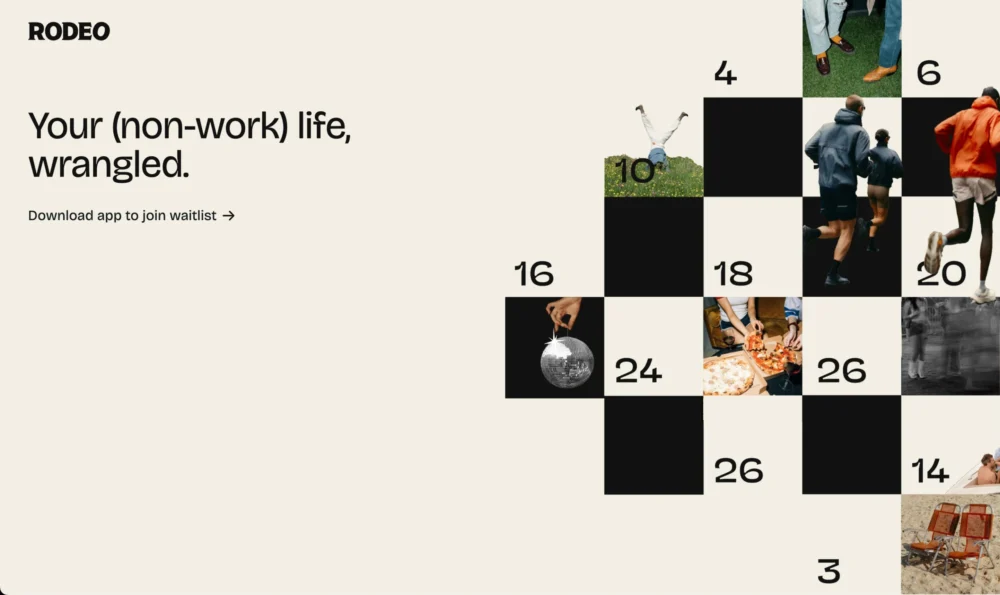
In an era saturated with applications designed to facilitate romantic encounters, streamline professional workflows, and forge new friendships, a novel platform emerges with a distinct focus: reinforcing the bonds of existing social circles. Rodeo, a new mobile application, leverages artificial intelligence to simplify the often-cumbersome process of organizing activities and making plans with the friends and family one already knows.
The genesis of Rodeo can be traced to the insights of its founders, Sam Levy and Tim MacGougan, former executives at Hinge. Their personal experiences, and likely those of many others, highlighted a significant friction point in modern life: the difficulty of translating nascent social desires into concrete, shared experiences. The relentless demands of careers, the intricacies of parenting, and the cacophony of numerous digital communication channels, particularly group chats, often conspire to relegate the cultivation of existing relationships to a secondary concern. Rodeo aims to reverse this trend by acting as a digital catalyst for social engagement.
At its core, Rodeo’s innovative approach lies in its ability to intelligently parse and process unstructured social information. The application can ingest data from various sources, including social media posts announcing events or recommending restaurants, and even screenshots of casual conversations within group chats. Through sophisticated AI algorithms, Rodeo can then distill this information into actionable plans. For instance, a user might upload an image of an Instagram advertisement for a newly released film. Rodeo’s AI would then autonomously identify the movie’s theatrical run, pinpointing local cinemas and available showtimes, and potentially even facilitating direct ticket purchases within the app. A streamlined feature allows users to effortlessly "wrangle" friends into these burgeoning plans, transforming spontaneous ideas into confirmed outings.
Beyond immediate event planning, Rodeo provides a robust framework for long-term social organization. Users can curate thematic lists, categorizing potential activities for future reference. These could range from meticulously researched "date night" restaurant recommendations to nostalgic "college buddies" excursions, such as booking a session at a local paintball arena. The collaborative nature of these lists is a key differentiator. Users can invite their entire network, such as former fraternity brothers, to contribute suggestions, fostering a collective brainstorming environment for future gatherings. This feature transforms fragmented ideas into a shared repository of social possibilities, easily accessible and expandable by all involved.
While the founders are notably discreet about overtly marketing the AI capabilities of Rodeo, this underlying technology is precisely what distinguishes it. In a landscape where artificial intelligence is frequently discussed, often with a degree of public apprehension regarding its intrusion into personal lives, Levy and MacGougan appear to have astutely recognized the desire for AI to operate as an invisible, supportive force. The practical functionalities of Rodeo—collaborative list-making, saving venue suggestions, and coordinating event invitations—are achievable through conventional digital tools. However, Rodeo’s value proposition lies in its AI-driven automation, which eliminates the time-consuming manual effort of extracting details from disparate sources and synthesizing them into organized invitations and concrete plans. This intelligent backend is what truly streamlines the social planning process.

The company, however, is not entirely shying away from contemporary organizational paradigms. In recent industry commentary, Levy has described Rodeo as a "second brain" for managing social and familial activities. This framing suggests an aspiration to tap into the growing trend of individuals seeking digital tools that augment their organizational capacity. The success of productivity and personal knowledge management applications like Notion, Obsidian, and MyMind points to a significant market appetite for systems that help users capture, organize, and retrieve information effectively. Rodeo appears to be strategically positioning itself to capture this organizational obsession within the social realm, aiming to translate the principles of efficient personal organization into the dynamic context of interpersonal relationships.
Currently, Rodeo is operating in a closed beta phase, accessible only by invitation. Prospective users can, however, download the iOS application to join a waiting list, signaling a phased rollout strategy designed to refine the user experience and gather valuable feedback before a broader public release. This approach is typical for ambitious technology startups, allowing for iterative development and a controlled scaling of infrastructure and user support.
The implications of Rodeo’s approach are multifaceted. By simplifying the logistics of social planning, the app has the potential to significantly reduce the mental load associated with maintaining friendships in busy adult lives. This could lead to more frequent and spontaneous interactions, fostering deeper connections and combating the social isolation that can arise from the complexities of modern living. Furthermore, the collaborative list feature could democratize the planning process, empowering multiple individuals within a group to contribute ideas and take ownership of organizing events, rather than placing the burden solely on one or two individuals.
From an analytical perspective, Rodeo’s success will hinge on its ability to deliver on its promise of seamless integration and intuitive usability. The AI must be robust enough to accurately interpret diverse inputs without requiring excessive user correction. The user interface must be clean, engaging, and conducive to quick decision-making. The "wrangle" feature, in particular, needs to strike a delicate balance between encouraging participation and avoiding any perception of coercion or annoyance.
Looking ahead, the potential for Rodeo to evolve is considerable. Future iterations could incorporate more advanced AI functionalities, such as predictive suggestions for activities based on user preferences and historical data, or even AI-powered conversational agents that can facilitate group decision-making. Integration with other calendar and communication platforms could further enhance its utility. The app could also explore partnerships with event organizers and venues, creating a more integrated ecosystem for social experiences.
The challenge for Rodeo will be to navigate the competitive landscape of social and productivity applications while maintaining its unique focus on existing relationships. As more individuals seek to reclaim their social lives from the overwhelming demands of digital communication and daily obligations, tools that offer genuine, practical solutions will find a receptive audience. Rodeo, with its AI-driven approach to simplifying social planning, appears poised to address this critical need, potentially redefining how we connect and engage with the people who matter most. The "second brain" metaphor, if effectively realized, could indeed become a cornerstone of modern social engagement, helping individuals to not only remember but also to actively participate in and enrich their most valued relationships. The quiet efficacy of its AI, working behind the scenes to orchestrate real-world connections, may prove to be its most powerful marketing asset, fostering a sense of effortless social flow that resonates deeply with users weary of digital friction.




 Safa Marwah
 Ayu Aulia

