Ridwan Kamil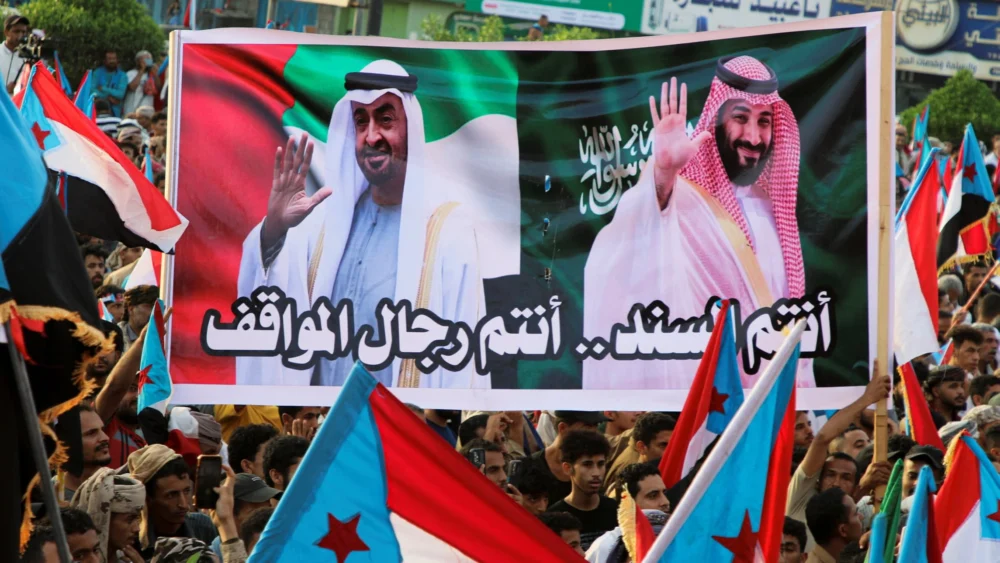
In a significant escalation of its involvement in the Yemeni conflict, Saudi Arabia has conducted targeted strikes against a faction reportedly backed by the United Arab Emirates, a development that underscores and exacerbates existing fissures within the Gulf Cooperation Council (GCC). This military action, occurring in the strategic southern Yemeni province of Shabwah, signals a complex and evolving regional dynamic, moving beyond the initial stated objectives of the Saudi-led coalition and highlighting diverging interests and geopolitical calculations among its key members. The strikes not only underscore the deeply entrenched nature of the Yemeni crisis but also illuminate the growing strategic divergence between Riyadh and Abu Dhabi, with potentially far-reaching implications for regional stability and the future of Yemen itself.
The incident, which reportedly involved Saudi airstrikes on positions controlled by the Giants Brigades, a militia force that has been a key component of the anti-Houthi coalition and has received significant support from the UAE, marks a notable departure from the established operational parameters of the intervention. While the exact justifications and immediate triggers for these strikes remain subject to varying interpretations and official pronouncements, their occurrence in Shabwah, a province with considerable economic and strategic importance due to its oil and gas reserves and its coastline, amplifies their significance. The Giants Brigades have been instrumental in pushing back Houthi forces in southern Yemen, a campaign that has largely aligned with the UAE’s strategic priorities in the region. This direct military engagement by Saudi Arabia against a UAE-supported entity thus represents a profound shift in the internal coalition dynamics.
The broader context for this development is the protracted and devastating civil war in Yemen, which began in late 2014 when the Houthi movement seized control of the capital, Sanaa. A Saudi-led coalition intervened in March 2015, aiming to restore the internationally recognized government of President Abd Rabbuh al-Mansur Hadi. However, the conflict has since devolved into a complex proxy war, with numerous factions, both internal and external, vying for influence and control. The humanitarian toll has been catastrophic, with Yemen facing one of the world’s worst humanitarian crises, characterized by widespread famine, disease, and displacement. Despite years of intervention and immense expenditure, a decisive military victory for the coalition has remained elusive, leading to a prolonged stalemate and increasing international pressure for a political resolution.
The growing divergence between Saudi Arabia and the UAE on Yemen policy has been a discernible trend for some time. While both nations initially shared a common objective of countering Iranian influence and supporting the Hadi government, their strategic visions and operational approaches have increasingly diverged. The UAE, which had historically played a more direct and robust role in the southern theater of the conflict, including extensive ground operations and support for various southern secessionist movements, began to recalibrate its strategy in 2019, withdrawing a significant portion of its troops. This shift was attributed to a combination of factors, including a desire to focus on other regional priorities, such as counter-terrorism efforts and the Horn of Africa, as well as a growing disillusionment with the military quagmire and a preference for a more diplomatic or localized approach.
Saudi Arabia, on the other hand, has maintained a more direct leadership role within the coalition, primarily focusing on aerial bombardment and supporting allied Yemeni ground forces. However, the persistent Houthi threat, particularly from cross-border missile and drone attacks on Saudi territory, has compelled Riyadh to sustain its military engagement. The underlying strategic differences between the two Gulf powers have manifested in their preferred partners within Yemen, their long-term objectives for the country’s political future, and their tolerance for the ongoing conflict’s protracted nature. The UAE’s increasing emphasis on regional de-escalation and its more pragmatic approach to engaging with various Yemeni actors, including some who are not directly aligned with Riyadh’s stated goals, has created friction.
The recent Saudi strikes can be interpreted as a response to perceived strategic challenges or a reassertion of Saudi influence in a critical region. One possible explanation is that Saudi Arabia views the growing autonomy and influence of UAE-backed factions, particularly in resource-rich areas like Shabwah, as potentially undermining its own long-term interests or its ability to dictate the terms of any future settlement in Yemen. The province’s strategic location, connecting the Marib gas fields to export terminals and its proximity to key southern ports, makes it a vital asset in any post-conflict reconstruction or regional power balance. By striking the Giants Brigades, Riyadh may be signaling its intent to maintain direct control over critical territories and to ensure that the future of southern Yemen aligns with its own strategic calculus, rather than solely with Abu Dhabi’s.
Another perspective suggests that these strikes could be a reaction to evolving battlefield dynamics or intelligence assessments regarding the shifting allegiances and operational capabilities of various Yemeni factions. The complex web of alliances and rivalries within Yemen means that any military action can have cascading effects, and Saudi Arabia may be acting to preemptively counter perceived threats or to consolidate its position vis-à-vis other influential actors. The Houthi movement, while the primary adversary, has also demonstrated a remarkable capacity for adaptation and resilience, and any shifts in the coalition’s internal dynamics could inadvertently create opportunities for the rebels.
The implications of this Saudi action extend beyond the immediate military context. It signals a deepening of the rift within the GCC, an organization that has historically prided itself on a degree of strategic cohesion. While the GCC has faced internal challenges before, the direct military action by one member against forces supported by another represents a significant breach of trust and cooperation. This could weaken the collective security architecture of the Gulf, making individual member states more vulnerable to external pressures and internal instabilities. It also complicates any unified GCC approach to regional security challenges, including the ongoing efforts to achieve a lasting peace in Yemen.
Furthermore, the strikes could have a tangible impact on the ground in Yemen. The Giants Brigades have been a crucial element in the fight against the Houthis in the south. Any disruption to their operational capacity or a fracturing of their alliance with Saudi Arabia could empower the Houthi movement and further prolong the conflict. This would undoubtedly exacerbate the already dire humanitarian situation and make any diplomatic resolution even more challenging. The international community, which has been urging for de-escalation and a political settlement, will likely view these developments with concern, as they introduce further uncertainty and complexity into an already intractable conflict.
The future outlook for Yemen and the broader region remains precarious. The Saudi strikes highlight the intricate and often contradictory nature of regional power plays, where alliances can be fluid and national interests can diverge sharply. For Saudi Arabia, the intervention in Yemen has been a costly and politically sensitive undertaking. The recent action suggests a renewed determination to shape the outcome, even at the risk of alienating key regional partners. For the UAE, this development may prompt a reassessment of its role and influence in Yemen, potentially leading to a further disengagement or a more assertive stance to protect its interests.
The ongoing conflict in Yemen has served as a crucible for regional rivalries, and the latest Saudi action is a stark reminder that the internal dynamics of the intervention are as critical as the external pressures. As the international community continues to advocate for a cessation of hostilities and a comprehensive peace process, the growing strategic divergence between Saudi Arabia and the UAE presents a significant obstacle. The ability of these two key players in the GCC to bridge their differences and present a united front will be crucial in determining the trajectory of the Yemeni conflict and the broader stability of the Arabian Peninsula. Without a renewed commitment to cooperation and a shared vision for Yemen’s future, the prospect of lasting peace will remain distant, and the humanitarian crisis will continue to deepen. The geopolitical implications of this intra-GCC friction are substantial, potentially emboldening adversaries and undermining regional security efforts, further complicating the already arduous path toward a stable and prosperous Yemen.


 Aura Kasih
 Safa Marwah
 Ayu Aulia