Lisa Mariana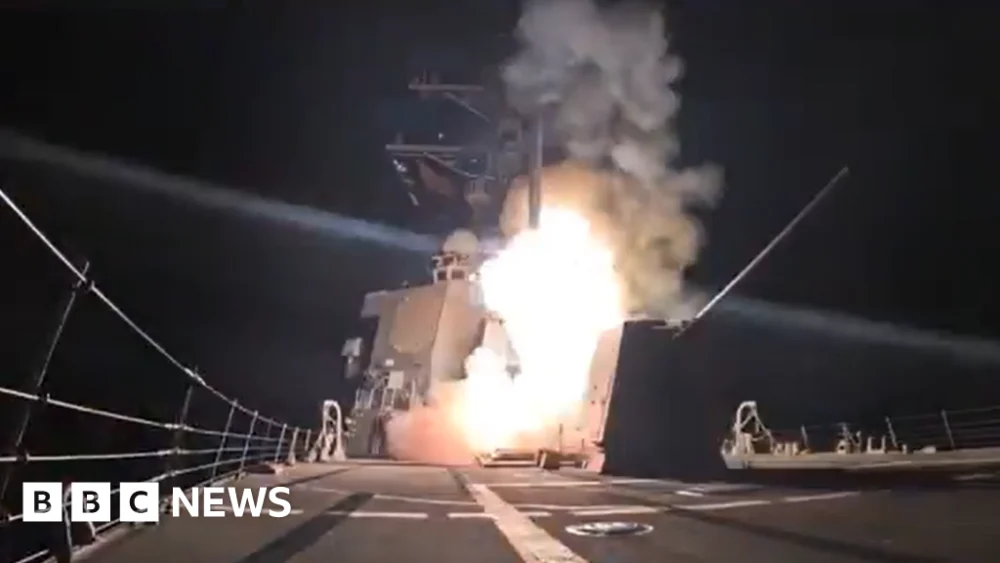
The United States has confirmed the execution of targeted airstrikes against elements of the Islamic State (IS) in Nigeria’s northwestern Sokoto State, marking a significant escalation in American military engagement within the West African nation. This operation, announced by former President Donald Trump, underscores a pronounced shift in US counter-terrorism focus and highlights the intricate dynamics of international cooperation in combating extremist ideologies in a volatile region.
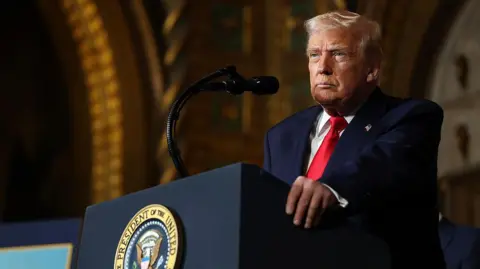
The precise military action, which occurred on Thursday, involved what President Trump characterized as "powerful and deadly strikes" against what he termed "terrorist scum" affiliated with the Islamic State. In a statement disseminated via Truth Social, the former US leader specifically accused the targeted group of "viciously killing, primarily, innocent Christians," framing the intervention as a protective measure against religiously motivated violence. The US Africa Command (AFRICOM) subsequently corroborated the operation, clarifying that the offensive was conducted in close coordination with Nigerian security forces, a detail later affirmed by the Nigerian government.
Nigerian Foreign Minister Yusuf Maitama Tuggar provided essential context to the joint operation, emphasizing its collaborative nature. He stated that the strikes were a result of a meticulously planned "joint operation" aimed at "terrorists," unequivocally asserting that the action "has nothing to do with a particular religion." Tuggar further disclosed that the operation had been under development "for quite some time," relying on crucial intelligence data furnished by the Nigerian side. The minister did not preclude the possibility of future joint military actions, indicating that such decisions would be contingent upon ongoing deliberations between the leaderships of both countries.
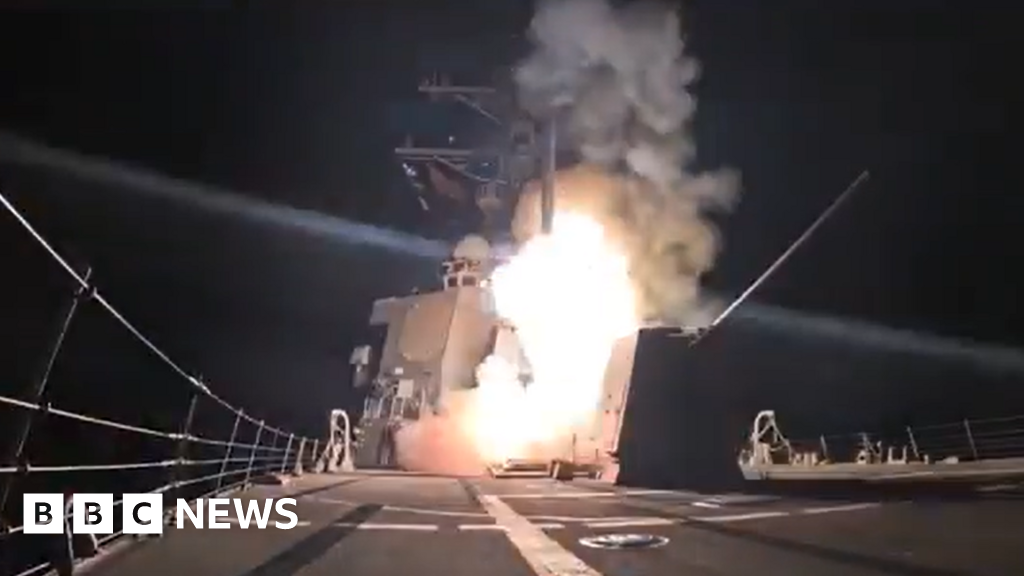
This recent military intervention follows an earlier directive issued by President Trump in November, which mandated the US military to prepare for potential actions in Nigeria to confront Islamist militant organizations. The underlying rationale for this directive, particularly the claims of a systematic genocide against Nigeria’s Christian population, has been a recurring theme in certain conservative US political circles. However, independent monitoring organizations and Nigerian government officials have consistently challenged the veracity of these claims, asserting that violence in Nigeria affects individuals across all religious and ethnic spectrums. US Defence Secretary Pete Hegseth, in a social media post, conveyed gratitude for the Nigerian government’s "support & cooperation," adding a seasonal greeting. The US Department of Defense further released a video segment purportedly depicting a missile launch from a naval vessel, visually reinforcing the nature of the engagement.
The Nigerian foreign ministry reiterated its commitment to international security partnerships, stating on Friday that the nation’s authorities "remain engaged in structured security co-operation with international partners, including the United States of America, in addressing the persistent threat of terrorist and violent extremism." The statement affirmed that this cooperation has facilitated "precision hits on terrorist targets in Nigeria by air strikes in the North West." This official stance contrasts with the more religiously inflected rhetoric emanating from Washington, underscoring a nuanced diplomatic landscape where shared security objectives coexist with differing interpretations of the conflict’s root causes.
Independent analyses from organizations such as the Armed Conflict Location & Event Data Project (ACLED) consistently indicate that violence perpetrated by jihadist groups in Nigeria, including Boko Haram and the Islamic State West Africa Province (ISWAP), has predominantly affected Muslim populations. While sectarian violence, particularly clashes between mostly Muslim herders and predominantly Christian farming communities in Nigeria’s central belt, contributes to significant casualties, these conflicts are primarily driven by disputes over land and resources rather than a targeted religious extermination campaign. Human rights groups concur that there is no substantive evidence to suggest that Christians are disproportionately targeted or constitute the primary victims of widespread violence across the nation.
An adviser to Nigerian President Bola Tinubu, Daniel Bwala, previously articulated Nigeria’s willingness to accept US assistance in combating Islamist insurgents while simultaneously asserting the nation’s "sovereign" status. Bwala emphasized that the jihadist groups do not discriminate based on religion, having claimed victims from diverse faith backgrounds. President Tinubu himself has repeatedly affirmed the existence of religious tolerance within Nigeria, noting that the nation’s security challenges impact citizens "across faiths and regions." The US, under Trump’s previous administration, had designated Nigeria as a "country of particular concern" due to purported "severe violations of religious freedom," a classification that carries the potential for sanctions. This designation, based on unverified claims of "thousands" of Christian killings, was met with a pledge from the Tinubu administration to collaborate with the US and the international community to safeguard all religious communities.
The strategic deployment of US military assets in northwestern Nigeria signifies an evolving dimension of counter-terrorism efforts in the Sahel region, a vast and increasingly unstable expanse of Africa. For over a decade, groups like Boko Haram and its more potent offshoot, ISWAP, have wreaked havoc primarily in northeastern Nigeria, destabilizing communities, displacing millions, and causing a profound humanitarian crisis. While these groups historically concentrated their activities in the Lake Chad Basin, their operational reach has demonstrably expanded, with recent intelligence indicating a westward creep into states like Sokoto, bordering Niger Republic. This geographical expansion necessitates a re-evaluation of counter-terrorism strategies, moving beyond localized containment to a more expansive, regional approach.
AFRICOM’s mandate in Africa is primarily to deter and defeat transnational threats, protect US interests, and promote regional stability through security cooperation. The precision airstrikes in Sokoto align with this mandate, reflecting a tactical response to an identified threat. Such operations leverage advanced intelligence, surveillance, and reconnaissance (ISR) capabilities, often utilizing drone technology and aerial platforms to identify and neutralize high-value targets or concentrations of militant forces. The emphasis on "precision hits" aims to minimize collateral damage, though the inherent complexities of aerial warfare in civilian-dense areas always carry inherent risks.
The US-Nigeria security partnership is a critical component of broader efforts to stabilize West Africa. Nigeria, as Africa’s most populous nation and largest economy, represents a vital strategic partner. However, the nature of this partnership is often subject to diplomatic sensitivities. While Nigeria welcomes assistance in confronting formidable security threats that have overstretched its domestic capacities, it remains acutely conscious of its national sovereignty. The differing narratives surrounding the religious dimension of the conflict underscore the need for careful diplomatic navigation to ensure that external interventions are perceived as supportive rather than intrusive, and that they align with Nigeria’s strategic priorities.
From an analytical perspective, the efficacy of aerial strikes alone in dismantling entrenched extremist groups remains a subject of considerable debate among security experts. While such operations can degrade immediate capabilities, eliminate key figures, and disrupt logistical networks, they rarely address the underlying socio-economic and governance deficits that often fuel radicalization. A sustainable counter-terrorism strategy typically involves a multi-pronged approach encompassing military pressure, robust intelligence sharing, economic development, good governance, and community engagement to counter extremist ideologies. The recent US "massive strike" against IS in Syria, involving over 70 targets and international partners like Jordan, offers a comparative example of large-scale, coordinated aerial campaigns against a well-established insurgent presence, yet even in Syria, the complete eradication of IS remains an elusive goal.
Looking ahead, the continuation of US military involvement in Nigeria will likely depend on several factors: the evolving threat landscape posed by IS affiliates, the willingness and capacity of the Nigerian government to sustain joint operations, and the geopolitical calculus of the incoming US administration. While precision strikes can offer immediate tactical advantages, the long-term stabilization of northwestern Nigeria and the broader Sahel will require sustained, comprehensive efforts that integrate security measures with development initiatives and robust governance reforms. The challenge for both the United States and Nigeria will be to forge a partnership that is strategically effective, diplomatically sensitive, and ultimately capable of addressing the multifaceted roots of insecurity and extremism in the region.

 Aura Kasih
 Safa Marwah
 Ayu Aulia