Aura Kasih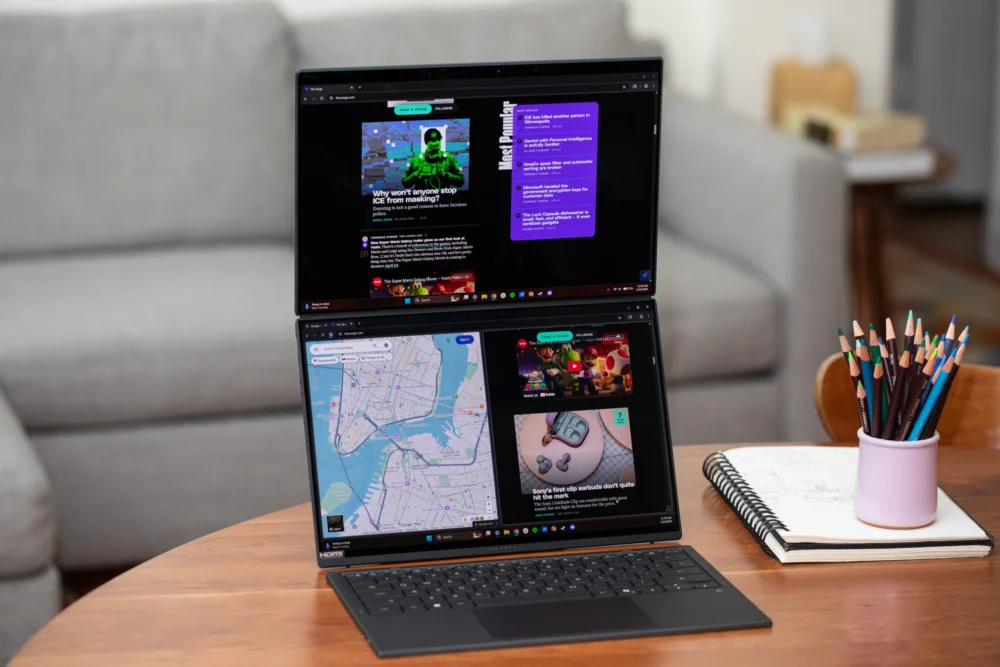
The landscape of personal computing is undergoing a seismic shift, with the Asus Zenbook Duo (2026) emerging as a vanguard of this evolution, offering a radical redefinition of portable workstation capabilities. This latest iteration of Asus’s innovative dual-screen laptop platform introduces a refined hinge mechanism, enhanced material aesthetics, and a formidable processing core, all coalescing to create a device that not only captivates with its futuristic design but also delivers tangible, substantial gains in user productivity and creative potential. While the allure of its twin OLED displays is undeniable, the Zenbook Duo (2026) also presents a compelling case for its premium price point, positioning itself as a specialized tool for professionals and power users who demand the absolute pinnacle of on-the-go computing power and flexibility.

At the heart of the Zenbook Duo’s transformative user experience lies its ingenious dual-display architecture. The previous iterations of this groundbreaking technology, while conceptually brilliant, sometimes felt like two separate screens awkwardly tethered together. The 2026 model, however, boasts a meticulously re-engineered ErgoLift hinge. This sophisticated mechanism now seamlessly integrates the two 14-inch 3K OLED panels, bringing them into closer proximity and creating a virtually unbroken, single-plane visual canvas. This design not only enhances the aesthetic appeal, presenting a more cohesive and less fragmented interface, but also fundamentally improves the usability of the dual-screen setup. The once-distinct separation between the primary display and the ScreenPad Plus has been minimized, allowing for more fluid interaction and a more immersive digital workspace. This advancement addresses a key challenge in multi-display laptop design: the creation of a genuinely unified and intuitive user environment.
Beyond the structural enhancements, the exterior of the 2026 Zenbook Duo has also received a significant upgrade. Asus has incorporated a new, lightly textured Ceraluminum coating. This material choice, while perhaps sounding unassuming, lends the device a premium feel and a sophisticated visual presence that belies its complex internal architecture. The subtle texture not only improves grip but also adds a touch of understated elegance, differentiating it from the typical glossy or matte finishes found on many contemporary laptops. This attention to tactile and visual detail underscores Asus’s commitment to crafting not just functional, but also desirable, pieces of technology.

The performance leap delivered by the integration of Intel’s new Panther Lake CPU is arguably the most significant upgrade. This cutting-edge processor represents a new benchmark in mobile processing power and efficiency. Its inclusion ensures that the Zenbook Duo (2026) is not merely a novelty device, but a true workhorse capable of handling the most demanding professional workflows. The architecture of the Panther Lake chip is engineered to excel at parallel processing, making it ideally suited for the multitasking demands inherent in a dual-screen environment. Whether engaging in intensive content creation, complex data analysis, or even high-fidelity gaming, this processor provides the necessary horsepower to execute tasks with remarkable speed and fluidity, even when unplugged. This sustained performance, independent of a power outlet, is a critical factor for mobile professionals who cannot afford to be tethered to a wall socket.
Complementing the powerful new CPU is a substantially enlarged battery. The inclusion of a massive 99Wh power cell is a testament to Asus’s understanding of the practical needs of its target audience. In an era where productivity is paramount and constant connectivity is expected, the ability to operate for extended periods without requiring a recharge is no longer a luxury but a necessity. The reviewer’s experience of achieving over 14 hours in standardized rundown tests, and easily navigating a full workday with both displays active at high brightness, highlights the remarkable endurance of this device. This extended battery life, combined with the processing prowess of the Panther Lake chip, transforms the Zenbook Duo into a genuinely all-day mobile workstation, capable of supporting intensive use without compromise. The ability to maintain near-full performance levels even when disconnected from AC power further solidifies its position as a top-tier mobile computing solution.

The design of the Zenbook Duo is inherently modular and adaptable, allowing users to seamlessly transition between different working modes. The keyboard and mechanical trackpad, detachably connected via magnetic pogo pins, can be positioned directly above the lower screen for a traditional laptop configuration or removed entirely to optimize the dual-screen experience. This flexibility is a core tenet of the Duo’s appeal, catering to a wide range of user preferences and task requirements. The tactile feedback of the keyboard, characterized by a deep 1.7mm key travel, offers a satisfying typing experience, while the trackpad provides precise control. Even when detached and operating wirelessly via Bluetooth, the keyboard maintains respectable battery life, further enhancing its utility. The option to charge the keyboard independently via USB-C adds another layer of convenience, ensuring that this essential input device is always ready for action.
In comparison to its closest competitors, such as the Lenovo Yoga Book 9i, the Zenbook Duo (2026) presents a more refined and integrated approach to dual-screen functionality. The Yoga Book 9i, while offering its own unique set of features, relies on a more cumbersome folio-based stand and lacks a built-in trackpad on its detachable keyboard, necessitating additional peripherals and increasing its overall footprint for transport. The Zenbook Duo’s integrated kickstand and on-device trackpad offer a more streamlined and efficient user experience, particularly when on the move. While the Duo cannot fold backward into a tablet mode, its inherent design prioritizes a more practical and versatile dual-monitor workflow. The minor compromise in thickness and weight is a justifiable trade-off for the superior integration and user-centric design elements it offers.

The integration of two high-resolution, color-accurate OLED displays fundamentally alters the way users can interact with their digital content. The expanded screen real estate allows for more efficient window management, enabling users to tile applications side-by-side, reference documents concurrently, or dedicate one screen to creative tools while the other displays project materials. This capability is particularly beneficial for content creators, programmers, and anyone who engages in complex multitasking. The ability to orient the screens in an extra-tall configuration also offers an improved webcam experience, positioning the camera at a more natural eye level, which leads to more engaging and professional video calls. This ergonomic benefit, often overlooked, contributes significantly to the overall usability and comfort of the device during extended work sessions.
However, the pioneering nature of the Zenbook Duo’s dual-screen configuration is not without its minor complexities. The very flexibility that makes it so powerful can also introduce some user-interface quirks. For instance, when orienting the laptop onto its side to utilize the screens in a vertical configuration, certain ports can become obstructed. This necessitates careful consideration of peripheral connections to avoid compromising functionality. Furthermore, Windows’ display management can occasionally require manual adjustments to ensure that system elements, such as the taskbar and system tray, remain in their expected positions across different screen orientations. While these are not deal-breakers, they represent areas where software and hardware integration could be further optimized to achieve a truly seamless experience. Asus’s proprietary ScreenXpert software aims to mitigate some of these challenges by providing enhanced tools for managing dual-screen applications and gestures. While functional, these software overlays can sometimes feel less intuitive than native operating system controls, and the learning curve for mastering the multi-touch gestures can be steep for some users.

Despite these minor challenges, the overwhelming impression of the Zenbook Duo (2026) is one of exceptional capability and forward-thinking design. The dual-screen paradigm, once a niche concept, is demonstrably proving its worth as a powerful tool for enhancing productivity and creativity. The ability to access expanded digital real estate anywhere, anytime, is a compelling proposition for professionals who are constantly on the move. While the current iteration comes with a significant price tag, the advancements in performance, battery life, and user experience justify the investment for those who can leverage its unique capabilities. Asus’s commitment to this dual-screen platform is further evidenced by the upcoming launch of models featuring previous-generation Intel chips, potentially offering a more accessible entry point, as well as a dedicated dual-screen gaming laptop, the ROG Zephyrus Duo. These developments signal a clear trajectory for Asus, solidifying their position as a leader in the burgeoning dual-screen laptop market.
The Zenbook Duo (2026) is more than just a laptop; it’s a statement about the future of personal computing. It represents a significant step forward in integrating powerful hardware with intuitive, adaptable interfaces, empowering users to work smarter, create more fluidly, and engage with their digital world in entirely new ways. While the dual-screen segment remains a specialized niche, devices like the Zenbook Duo are instrumental in demonstrating its potential and paving the way for broader adoption. The "twice as nice" moniker in its title is not mere hyperbole; it accurately reflects the substantial increase in functional capacity and creative freedom that this innovative machine offers, albeit with a price that reflects its cutting-edge technology and premium build quality. For professionals and enthusiasts who prioritize productivity, versatility, and a glimpse into the future of computing, the Asus Zenbook Duo (2026) stands as a compelling, albeit premium, proposition.



 Lisa Mariana
 Safa Marwah
 Ayu Aulia