Lisa Mariana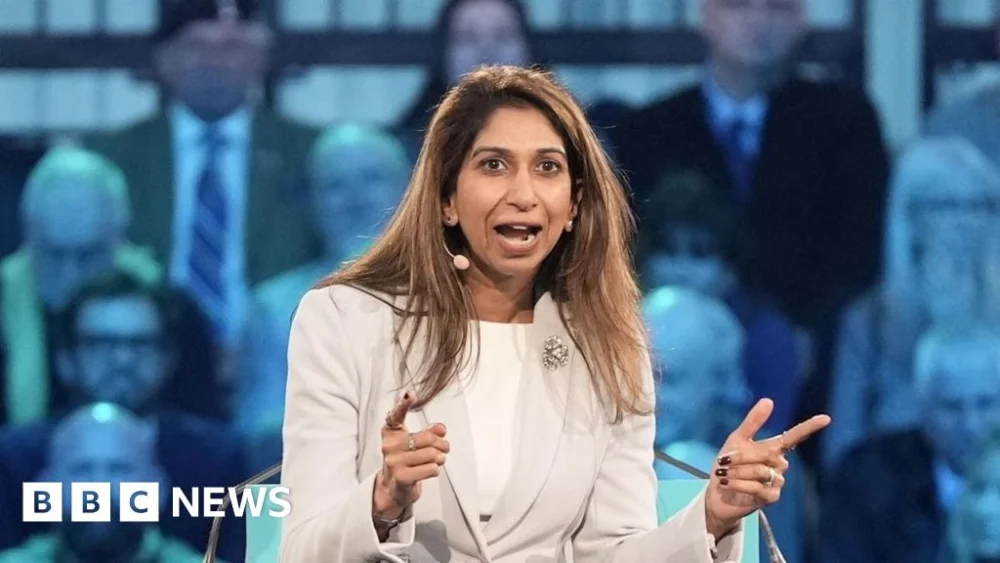
In a seismic development poised to significantly reconfigure the landscape of British right-wing politics, former Conservative Home Secretary Suella Braverman has formally announced her departure from the governing party and her immediate allegiance to Reform UK, a move that introduces a new dynamic into an already volatile electoral environment. This high-profile defection, revealed by Reform UK leader Nigel Farage during a party gathering in the heart of London, represents not merely a personal political transition but a potent symbol of the deep ideological fractures currently rending the Conservative Party and the accelerating momentum of its challenger on the populist right.
Braverman, a prominent figure known for her staunchly conservative views and vocal advocacy on issues such as immigration and national sovereignty, articulated her decision with conviction, conveying to Reform adherents a profound sense of ideological congruence, stating, "I feel like I’ve come home," after severing a three-decade affiliation with the Conservative Party. Her switch marks the third such departure from the Conservative parliamentary ranks within the current month, following Robert Jenrick and Andrew Rosindell, and the fourth since the 2024 general election, underscoring a growing trend of disaffection among Tory parliamentarians and a strategic realignment towards Reform UK. This latest acquisition elevates Reform UK’s representation in the House of Commons to eight sitting members, a critical mass that further solidifies its claim as a legitimate parliamentary force.
Braverman’s Political Genesis and Ideological Stance
Suella Braverman’s political journey has been characterised by a rapid ascent and an unyielding commitment to a particular brand of conservatism. Elected as a Member of Parliament in 2015, she quickly distinguished herself as a vocal advocate for Brexit and a proponent of a more robust, less interventionist state. Her career trajectory saw her serve as Attorney General under Boris Johnson, a position that solidified her reputation as a legal purist with a strong constitutional bent. Her subsequent elevation to Home Secretary under Liz Truss in September 2022 placed her at the forefront of the government’s efforts to tackle complex issues such as illegal immigration and public safety.
However, her tenure in this high-profile ministerial role was marked by controversy and brief interruptions. She was compelled to resign after just a month, following an incident where an official document was transmitted via her personal email, raising questions about protocol and security. Despite this setback, her ideological alignment with the party’s right-wing faction remained undiminished, leading to her swift reappointment to the Home Office by Rishi Sunak merely six days later upon his assumption of the premiership. Braverman subsequently emerged as a standard-bearer for the right of the Conservative Party, articulating often provocative stances on immigration policy, particularly the government’s controversial Rwanda plan, and engaging robustly in what have been termed "culture wars." Her second term as Home Secretary concluded abruptly the following year when she was dismissed after penning an article that accused the Metropolitan Police of exhibiting bias in their handling of pro-Palestinian demonstrations in London, a move that was widely interpreted as a direct challenge to the operational independence of the police force and a significant breach of collective responsibility. These episodes, rather than diminishing her profile, cemented her image as an uncompromising figure, willing to challenge establishment norms and articulate the concerns of a segment of the electorate that felt increasingly disenfranchised by mainstream political discourse.
The Unravelling of the Conservative Hegemony
The defection of a figure of Braverman’s stature is not an isolated incident but rather a symptom of the broader malaise afflicting the Conservative Party. For over a decade, the Tories enjoyed a period of relative dominance, navigating the complexities of Brexit and securing a landslide victory in 2019. However, recent years have witnessed a precipitous decline in public confidence, marked by internal strife, a succession of leadership changes, and a series of economic and social challenges that have tested the party’s unity and credibility.
The Conservative Party, historically a broad church encompassing various ideological currents, has seen its traditional electoral coalition fragment. The Brexit referendum, while delivering a decisive outcome, also sowed the seeds of division, creating a deep ideological chasm between those advocating for a complete break from European institutions and those favouring a softer approach. Successive governments have struggled to reconcile these factions, leading to policy paralysis and a perception of drift. Economically, the country has grappled with high inflation, sluggish growth, and a cost-of-living crisis, further eroding public trust in the government’s ability to deliver prosperity. Socially, issues such as immigration and national identity have become increasingly polarising, with the Conservative Party often struggling to articulate a coherent and unifying vision. The party’s recent electoral misfortunes, including significant losses in local elections and a persistent deficit in national opinion polls, underscore the depth of its predicament. Against this backdrop, the departure of prominent figures like Braverman signals a deepening crisis of identity and purpose within the party, further destabilising its electoral prospects and challenging its claim to represent the mainstream right.
Reform UK’s Ascendancy and Strategic Imperatives
Reform UK, initially formed from the remnants of the Brexit Party, has strategically positioned itself as the authentic voice of the anti-establishment, anti-immigration, and staunchly Eurosceptic wing of British politics. Under the charismatic leadership of Nigel Farage, the party has consistently tapped into a vein of public dissatisfaction with traditional political parties, particularly among working-class voters and those who feel overlooked by the political elite. Its platform is characterised by a strong emphasis on national sovereignty, drastic cuts to immigration, reform of public services, and a more robust defence posture.
The party’s growth, though gradual, has been consistent, capitalising on public fatigue with the established order and a perceived failure of the Conservative government to deliver on key promises, particularly those related to controlling borders and reducing state expenditure. Braverman’s defection represents a significant strategic coup for Reform UK. Her ministerial experience, public profile, and articulate advocacy for specific policy positions provide the party with an immediate credibility boost and a potent figurehead capable of drawing media attention and attracting disaffected Conservative voters. This move is indicative of Farage’s broader strategy to position Reform UK not merely as a protest movement but as a viable alternative for those on the right who feel the Conservative Party has abandoned its core principles. The increasing number of sitting MPs joining its ranks lends further weight to its ambition to fundamentally reshape the British political landscape, moving beyond a single-issue focus to a comprehensive programme for national reform.
The Calculus of Defection: Motivations and Alignments
Braverman’s decision to cross the floor is likely the culmination of multiple intertwined motivations, encompassing personal ambition, ideological purity, and a calculated assessment of the prevailing political winds. From an ideological perspective, Braverman’s public statements following her defection resonate deeply with Reform UK’s core tenets. She articulated a bleak vision of contemporary Britain, asserting that the nation is "indeed broken" and "suffering," citing issues such as "out of control" immigration, public services "on their knees," a lack of public safety, and a nation that stands "weak and humiliated on the world stage." This rhetoric, a stark indictment of the current trajectory, aligns seamlessly with Reform UK’s narrative of national decline and the urgent need for radical change. Her belief that "a better Britain is possible" through reclaiming national power and strength positions her as a natural fit within Reform’s framework.
Beyond ideological alignment, the defection also suggests a strategic calculation regarding electoral viability and influence. Within the increasingly fractured Conservative Party, Braverman, despite her popularity among a segment of the membership, found herself increasingly marginalised following her dismissal from the Home Office. Her ability to significantly influence government policy or ascend to higher office within the current Conservative leadership appeared constrained. By joining Reform UK, she immediately assumes a prominent role, gaining a platform to articulate her vision unfettered by the constraints of collective responsibility or party discipline. This move could be interpreted as a strategic gamble, positioning her at the forefront of a burgeoning political movement that, while currently smaller, appears to be gaining traction and offering a more receptive environment for her particular brand of politics. For Braverman, the shift represents an opportunity to be a leading voice in a party that shares her fundamental convictions, rather than a dissenting voice within a party she perceives as having lost its way.
Immediate Repercussions for the Conservative Party
The departure of a figure as prominent and ideologically significant as Suella Braverman presents a profound challenge to the Conservative Party. The immediate repercussion is a further exacerbation of internal divisions, particularly between the more centrist factions and the increasingly vocal right-wing. Braverman’s defection validates the grievances of those within the party who believe the leadership has strayed too far from core conservative principles, particularly on issues like immigration and national sovereignty. This could inspire further defections or deepen the internal rifts, making it even more challenging for the party to present a united front to the electorate.
Furthermore, the move delivers a significant blow to the Conservative Party’s electoral prospects. Braverman’s appeal to a segment of the right-wing electorate, particularly those who voted for Brexit and are concerned about immigration, means her defection risks directly siphoning votes away from the Conservatives. This ‘splitting of the right-wing vote’ could prove decisive in numerous constituencies, particularly in marginal seats where the Conservatives are already facing an uphill battle against the Labour Party. The perception that the Conservative Party is unable to retain its own senior figures, especially those who represent a significant ideological bloc, further undermines its credibility and projects an image of disarray, potentially alienating both traditional supporters and undecided voters. The party will now face intense pressure to recalibrate its message and strategy to mitigate the damage and prevent further haemorrhaging of support to Reform UK.
Strategic Gains and Challenges for Reform UK
For Reform UK, Braverman’s accession represents a substantial strategic victory. It provides the party with a high-profile figure who possesses significant ministerial experience, a recognised national profile, and a demonstrated ability to articulate policy positions forcefully. This immediately enhances Reform UK’s legitimacy and media visibility, transforming it from a niche protest vehicle into a more serious contender for the right-wing vote. Her presence adds intellectual weight and governmental experience to Reform’s front bench, allowing the party to present a more credible alternative to the established parties.
Moreover, Braverman’s defection is likely to attract a wave of disaffected Conservative voters and members who share her ideological convictions. Her "I’ve come home" sentiment will resonate with those who feel similarly alienated from the current Conservative leadership. This influx of support could bolster Reform UK’s membership base, increase its fundraising capacity, and provide crucial ground-level campaigning resources ahead of the next general election. However, challenges remain. Integrating a figure of Braverman’s stature into the existing party structure, and ensuring a coherent message across a growing and diverse parliamentary group, will require careful management. The party will also need to demonstrate that it can translate this heightened profile into tangible electoral success, moving beyond simply attracting disaffected voters to actually winning seats.
Broader Electoral Dynamics and Policy Drift
The implications of Braverman’s defection extend beyond the immediate fortunes of the Conservative Party and Reform UK, potentially reshaping the broader electoral dynamics of British politics. The splitting of the right-wing vote between the Conservatives and Reform UK significantly increases the likelihood of a Labour government, as the progressive vote is largely consolidated behind one major party. This dynamic could force the Conservative Party to make difficult choices: either move further to the right to try and win back Reform voters, risking alienating more moderate segments of the electorate, or attempt to hold the centre ground, potentially losing more ground to Reform.
In terms of policy, Braverman’s move could exert a gravitational pull on the political discourse, particularly on issues like immigration, national security, and state reform. Reform UK, now with a more prominent voice, will likely push these issues higher up the agenda, potentially forcing the Conservative Party to adopt even tougher stances to counter the threat from its right flank. This could lead to a more hardline approach across government policy, even if it is not directly enacted by Reform UK. Conversely, it could also create a clearer ideological distinction between the two parties, offering voters a more defined choice between a traditional conservative platform and a more radical, populist alternative.
The Future Trajectory of the British Right
The defection of Suella Braverman is not merely a political event but potentially a harbinger of a more fundamental realignment of the British right. Historically, the Conservative Party has been adept at accommodating various ideological factions, allowing it to maintain a broad electoral appeal. However, the post-Brexit landscape, coupled with years of perceived governmental underperformance and cultural shifts, has created fertile ground for a more ideologically pure, populist alternative.
The question now is whether this marks the beginning of a sustained trend that could see Reform UK displace the Conservatives as the dominant force on the right, or if it represents a temporary protest vote that will ultimately dissipate. The upcoming general election will be a critical test. Should Reform UK manage to secure a significant number of votes, even if not many seats, it could fundamentally alter the calculations for future elections, potentially leading to a more fragmented multi-party system or forcing the Conservative Party into an existential crisis that necessitates a radical transformation. Braverman’s role within Reform UK will also be closely scrutinised; her ability to effectively campaign, articulate policy, and attract further support will be crucial to the party’s long-term trajectory. This move, therefore, transcends a simple change of allegiance; it signifies a pivotal moment in the ongoing evolution of Britain’s conservative movement, with ramifications that could resonate for decades to come.




 Aura Kasih
 Safa Marwah
 Ayu Aulia