
 Ridwan Kamil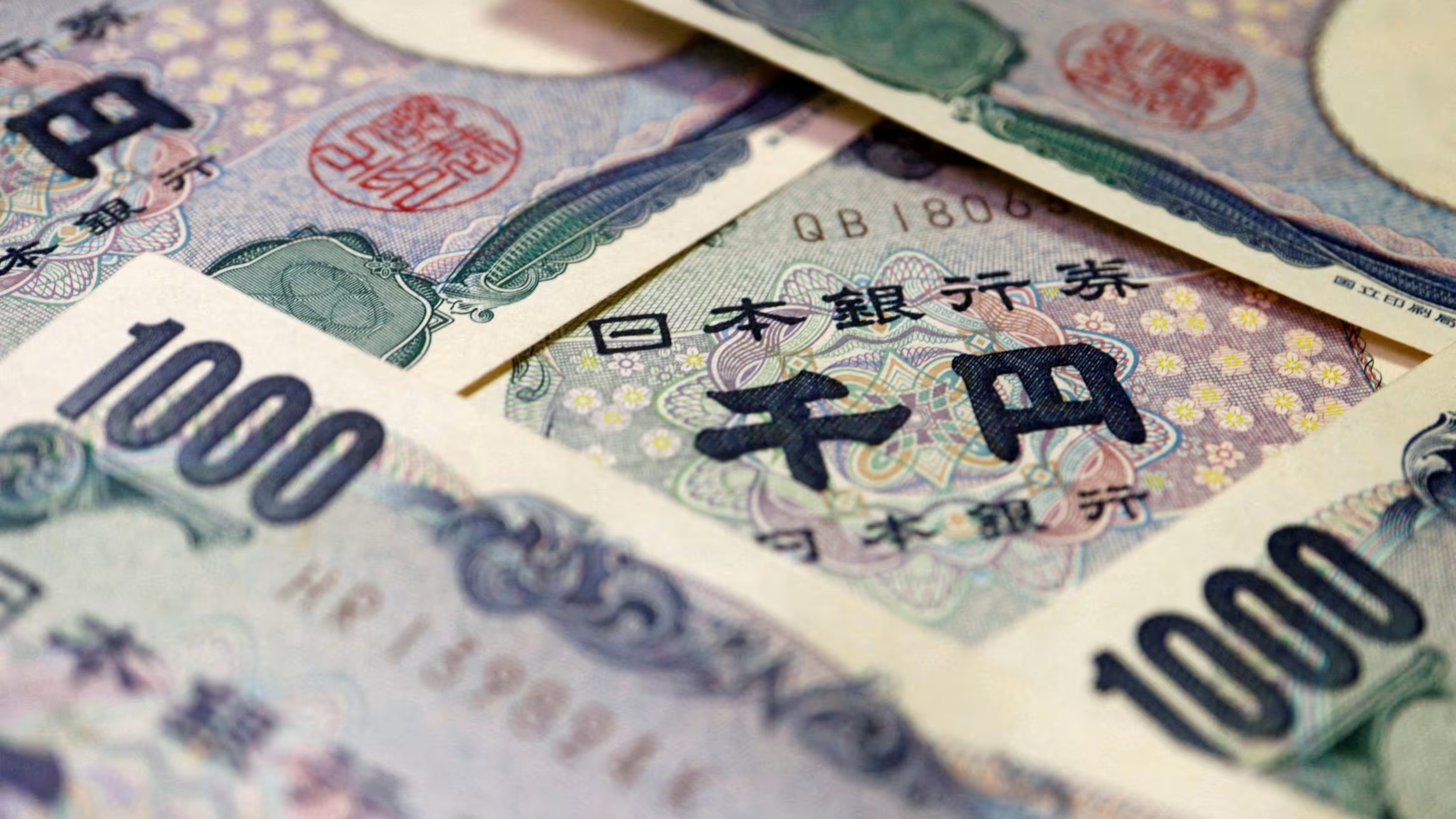
The Japanese Yen experienced a significant and rapid surge in value against major global currencies on Tuesday, a dramatic shift attributed to a palpable increase in market sentiment surrounding potential intervention by the Bank of Japan. This sudden upward momentum for the Yen, which had been languishing at multi-decade lows, suggests a growing conviction among traders that Japanese authorities are poised to take decisive action to arrest the currency’s steep depreciation.
A Turning Tide for the Yen: Intervention Whispers Echo Through Markets
The Japanese Yen, long a subject of intense scrutiny due to its sustained weakness, found itself at the center of global financial attention as it staged a remarkable rally. This pronounced upward movement, which saw the Yen strengthen considerably against the US Dollar, Euro, and other key currencies, was not driven by a sudden improvement in Japan’s economic fundamentals or a shift in global risk sentiment. Instead, the catalyst appears to be a widespread belief that the nation’s monetary authorities are nearing a point where they will actively intervene in currency markets to support their embattled currency.
For months, the Yen has been on a downward trajectory, reaching historic lows against the US Dollar and other major currencies. This prolonged slide has been fueled by a widening interest rate differential between Japan and other advanced economies, particularly the United States, where central banks have been aggressively raising rates to combat inflation. The Bank of Japan, conversely, has maintained its ultra-loose monetary policy, including negative interest rates, in an effort to stimulate domestic demand and achieve its long-term inflation target. This divergence in monetary policy has created a powerful incentive for investors to sell Yen and buy higher-yielding currencies, putting relentless downward pressure on the Japanese unit.
However, the recent sharp appreciation suggests that the pain points associated with a weaker Yen – such as rising import costs for energy, food, and raw materials, and potential inflationary pressures – are becoming increasingly acute for the Japanese economy and its policymakers. The weakening Yen exacerbates inflation by making imports more expensive, eroding the purchasing power of households and businesses. While a weaker Yen can benefit exporters by making their goods cheaper abroad, the current levels have raised concerns about the broader economic stability and the potential for imported inflation to become entrenched.
The market’s anticipation of intervention has been building for some time, fueled by increasingly vocal comments from Japanese officials expressing concern over the Yen’s rapid decline. While these statements have historically been interpreted as verbal intervention, aimed at influencing market sentiment without direct action, the magnitude and speed of the recent Yen rally indicate that traders are now pricing in the possibility of actual market operations. Such operations could involve the Bank of Japan directly selling foreign currency reserves (typically US Dollars) and buying Yen in the open market, thereby increasing demand for the Japanese currency and pushing its value higher.
The economic implications of such an intervention, should it materialize, are multifaceted. For Japanese consumers and businesses, a stronger Yen would translate into cheaper imports, potentially easing inflationary pressures and providing some relief from the rising cost of living. This could bolster domestic demand and improve corporate profit margins for companies heavily reliant on imported goods. However, for Japan’s export-oriented industries, a stronger Yen would make their products more expensive for foreign buyers, potentially dampening export volumes and impacting their competitiveness on the global stage. This delicate balancing act underscores the complexities faced by policymakers in managing currency fluctuations.
The Underpinnings of Yen Weakness: A Widening Interest Rate Chasm
To fully comprehend the current situation, it is crucial to examine the fundamental drivers that have propelled the Yen to its recent lows. The primary culprit has been the stark divergence in monetary policy stances between the Bank of Japan (BoJ) and other major central banks, most notably the US Federal Reserve. While the Fed, the European Central Bank (ECB), and the Bank of England have all embarked on aggressive interest rate hiking cycles to combat persistent inflation, the BoJ has remained steadfast in its commitment to its ultra-accommodative monetary policy.
For years, Japan has struggled with deflationary pressures and sluggish economic growth, leading the BoJ to adopt a policy of negative interest rates and yield curve control (YCC). YCC aims to cap long-term borrowing costs by setting a target for the yield on 10-year Japanese government bonds. This policy, combined with continued quantitative easing, has kept Japanese interest rates exceptionally low compared to the rest of the developed world.
The consequence of this policy divergence is a significant interest rate differential. Investors seeking higher returns have been incentivized to borrow in Yen (where interest rates are near zero or negative) and invest in assets denominated in currencies with higher yields, such as US Dollar-denominated bonds or equities. This "carry trade" strategy, where investors profit from the difference in interest rates, has exerted continuous selling pressure on the Yen.
Furthermore, global economic uncertainty and a general preference for safe-haven assets during times of stress have also played a role. While the Yen has historically been considered a safe haven, its appeal has diminished as the interest rate differential widened. Investors seeking refuge from market volatility might now opt for currencies of countries with higher yields and stronger economic prospects, further undermining the Yen’s safe-haven status.
The impact of a depreciating Yen on Japan’s economy is a double-edged sword. On one hand, it makes Japanese exports more competitive internationally, potentially boosting sales for manufacturers like Toyota, Sony, and other major exporters. This can translate into higher corporate profits and contribute to economic growth. However, Japan is a net importer of essential commodities, including oil, natural gas, and food. A weaker Yen significantly increases the cost of these imports, leading to higher inflation for consumers and businesses. This "imported inflation" can erode household purchasing power and squeeze corporate margins for companies that rely heavily on imported raw materials.
The recent surge in inflation in Japan, while still lower than in many Western economies, has been exacerbated by the weak Yen. This presents a policy dilemma for the BoJ. On one hand, maintaining accommodative policy is seen as crucial for achieving sustainable inflation and escaping the deflationary mindset that has plagued Japan for decades. On the other hand, a persistently weak Yen is contributing to inflationary pressures that could ultimately harm consumers and businesses.
Signs and Signals: The Language of Intervention Speculation
The market’s heightened sensitivity to intervention talk stems from a history of Japanese authorities attempting to manage currency fluctuations. In the past, Japan has engaged in direct market intervention, selling foreign currency reserves to buy Yen. These actions are typically undertaken when the Yen’s depreciation is deemed to be excessive and potentially destabilizing to the economy.
However, direct intervention is not the only tool available to policymakers. "Verbal intervention" – statements from government officials or central bank representatives expressing concern about the currency’s movements – can also influence market sentiment. These pronouncements are designed to signal the authorities’ discomfort with the current exchange rate and to encourage traders to reconsider their positions. The recent increase in such verbal pronouncements from Japanese Finance Minister Shunichi Suzuki and other high-ranking officials has been a key factor in fueling intervention speculation.
The market’s interpretation of these signals is crucial. Traders closely monitor the language used, the timing of the statements, and the seniority of the officials making them. A perceived shift from expressing concern to hinting at readiness to act often triggers a reassessment of market positioning. The recent rally in the Yen suggests that the market has interpreted these signals as a strong indication that direct intervention is becoming increasingly probable.
Several factors likely contribute to the urgency felt by Japanese policymakers. Firstly, the pace of Yen depreciation has been rapid, leaving little time for gradual adjustments. Secondly, the psychological impact of reaching new historic lows can create a sense of crisis. Thirdly, there is a concern that prolonged weakness could lead to a loss of confidence in the Yen as a stable currency, with broader implications for Japan’s financial system and its role in the global economy.
The scale of potential intervention is also a consideration. Japan holds substantial foreign currency reserves, providing it with the capacity to conduct significant market operations. However, the effectiveness of intervention is not guaranteed. If the underlying fundamental forces driving the currency’s movement (such as interest rate differentials) remain unchanged, intervention might only provide a temporary respite before the trend reasserts itself. Therefore, any intervention is likely to be part of a broader strategy that may eventually involve adjustments to monetary policy or other economic measures.
The Broader Economic Landscape: Implications for Global Markets
The Yen’s movements have ripple effects far beyond Japan’s borders. As the world’s third-largest economy and a major player in global trade, Japan’s currency fluctuations can influence international markets in several ways.
A stronger Yen can lead to a recalibration of global commodity prices. As Japanese demand for imports becomes cheaper, this can potentially temper demand for certain commodities, although the overall impact depends on the magnitude of the Yen’s appreciation and the broader global economic environment.
For multinational corporations with significant operations in Japan or those that export to Japan, a stronger Yen can impact their earnings. Companies that import goods from Japan will find them more expensive, while those that export to Japan will find their products more competitive.
Furthermore, the Yen’s role as a funding currency in global financial markets is also noteworthy. The carry trade, which has contributed to Yen weakness, involves borrowing in Yen. A strengthening Yen can unwind these trades, potentially leading to a sudden outflow of capital from riskier assets and increased volatility in global markets. This could create a "risk-off" sentiment, where investors move away from equities and other riskier investments towards safer assets.
The Bank of Japan’s actions, or anticipated actions, also have implications for the global monetary policy landscape. While the BoJ has been an outlier in maintaining ultra-loose policy, any shift towards tighter policy, even through intervention, could signal a broader trend towards normalization of monetary policy in an increasingly inflationary world. This would be closely watched by other central banks and market participants.
The Path Forward: Navigating Uncertainty and Policy Choices
The recent surge in the Yen marks a critical juncture. Whether this appreciation is a temporary correction or the beginning of a sustained reversal in trend will depend on a multitude of factors.
For the Bank of Japan, the challenge lies in balancing the need to support the Yen with its broader mandate of achieving sustainable inflation and economic growth. Direct intervention, while potentially effective in the short term, does not address the underlying interest rate differential that has been driving Yen weakness. Therefore, any intervention is likely to be viewed as a precursor to, or complement of, more fundamental policy adjustments.
The market will be closely scrutinizing future communications from the BoJ and the Japanese Ministry of Finance for any hints of a shift in monetary policy. The timing and magnitude of any potential interest rate adjustments, or changes to its YCC policy, will be of paramount importance.
Conversely, if the global inflation outlook moderates and major central banks begin to signal a pause or reversal in their rate hiking cycles, the pressure on the Yen from interest rate differentials could ease, even without direct intervention.
The current situation underscores the delicate balance of forces that shape currency markets. While fundamental economic factors remain paramount, policy decisions, market sentiment, and speculative flows can all play a significant role in driving currency movements. The Yen’s recent rally serves as a potent reminder of the impact that anticipated policy actions can have on global financial markets, and the complex interplay between economic realities and market psychology. The coming weeks and months will be crucial in determining the sustained trajectory of the Yen and its broader implications for the global economic landscape.




 Aura Kasih
 Safa Marwah
 Lisa Mariana


 Ayu Aulia