
 Ridwan Kamil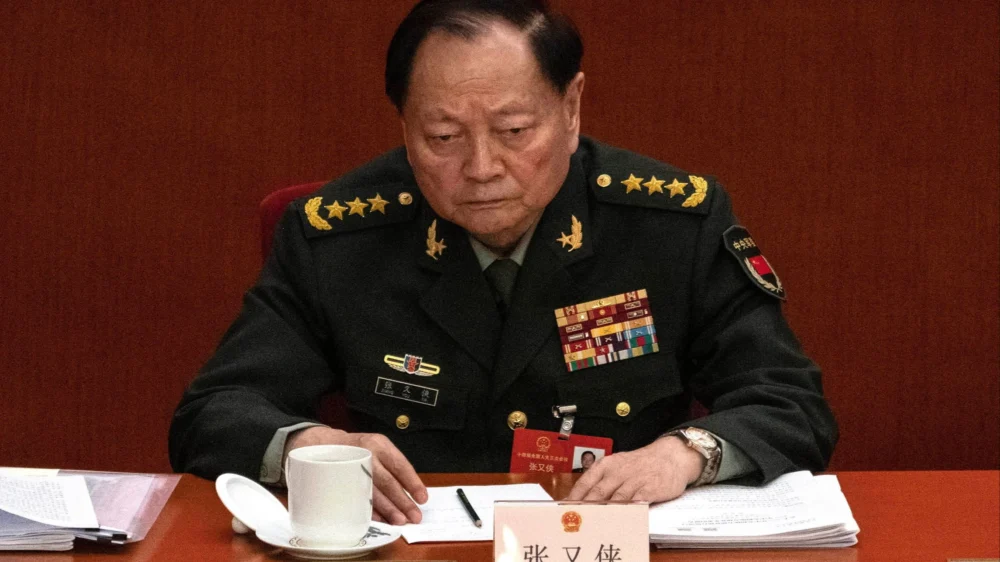
An unprecedented accusation has emerged from the highest echelons of China’s military, alleging that a prominent four-star general actively worked to erode President Xi Jinping’s authority. This serious charge, if proven, signals a significant internal power struggle within the People’s Liberation Army (PLA), an institution considered the bedrock of the Communist Party’s rule and President Xi’s personal power base. The implications of such internal dissent within the military are profound, potentially impacting national security, regional stability, and the broader political landscape of China.
The allegations, reportedly emanating from within the Central Military Commission (CMC), the supreme military decision-making body chaired by Xi Jinping himself, center on General Li Shangfu. While specific details of Li’s alleged actions remain undisclosed, the very fact that such accusations are being publicly, albeit implicitly, aired suggests a deliberate move to discredit and potentially sideline a high-ranking officer. This is a stark departure from the typically tightly controlled narrative surrounding military leadership in China, where loyalty to the party and its paramount leader is paramount and unquestioned.
General Li Shangfu, who held the critical position of Minister of National Defense and was also a member of the CMC, has been conspicuously absent from public view for several months. This prolonged disappearance, coupled with the emergent accusations, has fueled widespread speculation about his fate and the nature of the internal disciplinary actions being taken. His removal from public duties and the subsequent allegations point towards a severe breach of protocol or loyalty, viewed through the lens of Xi Jinping’s unwavering emphasis on absolute political control over the armed forces.
The timing of these allegations is particularly noteworthy. Under Xi Jinping’s tenure, the PLA has undergone extensive reforms aimed at professionalizing its ranks, enhancing combat readiness, and, crucially, ensuring unwavering political loyalty. These reforms have often involved purges and investigations into corruption, but accusations of directly undermining the paramount leader’s authority are a rarer and more serious development. It suggests that the anti-corruption campaigns, which have been a hallmark of Xi’s leadership, may be extending to encompass perceived challenges to his personal and political standing.
The Central Military Commission, established in 1954, holds immense power, overseeing all aspects of the PLA, from strategic planning and personnel appointments to operational command and equipment procurement. As the primary organ for military governance, any discord or internal conflict within its ranks, especially involving accusations against a top general, carries significant weight. The commission’s dual role as the ultimate authority for military matters and as a key platform for Xi Jinping to exert his influence makes these accusations all the more sensitive.
General Li Shangfu’s career trajectory provides some context for his current predicament. He ascended through the ranks, notably serving as the commander of the PLA’s Strategic Support Force, a relatively new and technologically advanced branch focused on space, cyber, and electronic warfare capabilities. His appointment as Minister of National Defense in March 2023 placed him at the forefront of China’s military diplomacy and defense policy, a role that demands not only military acumen but also unassailable political fidelity. His previous involvement in arms procurement, specifically concerning Russian military hardware, has also drawn attention and could potentially be a contributing factor to any scrutiny he faces.
The concept of "undermining Xi Jinping’s authority" in the Chinese political context is multifaceted. It can encompass a range of behaviors, from overt dissent and criticism to perceived insubordination, policy disagreements, or even actions that are interpreted as challenging Xi’s personal leadership style and his signature initiatives, such as the Belt and Road Initiative or the "China Dream" national rejuvenation agenda. In the military, such actions might also involve deviating from directives, fostering factionalism, or expressing views that are not aligned with the party’s dominant ideological discourse.
The Chinese Communist Party (CCP) operates on the principle of "the party commands the gun," a doctrine that has been consistently reinforced by Xi Jinping. This principle dictates that the military is an instrument of the party, and by extension, of its leader, and must be subordinate to political authority. Any perceived challenge to this fundamental tenet is treated with extreme seriousness. The emphasis on loyalty is not merely a matter of rhetoric; it is woven into the fabric of the CCP’s governance, especially within its most critical institutions like the PLA.
The implications of these allegations extend beyond the immediate fate of General Li Shangfu. If internal dissent within the PLA is indeed a growing concern, it could signal underlying tensions or dissatisfaction among some military leaders regarding the pace or direction of reforms, the increasing politicization of the armed forces, or even broader policy decisions made by the central leadership. Such internal friction could potentially weaken the PLA’s operational effectiveness and its ability to respond to external challenges.
Furthermore, these accusations, even if implicitly communicated, serve as a powerful warning to other high-ranking officials, both military and civilian, about the unforgiving nature of Xi Jinping’s anti-corruption and loyalty enforcement campaigns. The message is clear: absolute adherence to the party line and unwavering personal loyalty to the leader are non-negotiable. This could lead to an even more cautious and risk-averse environment within the upper echelons of power, potentially stifling initiative and open discussion.
The international community will be closely watching these developments. China’s military modernization and its assertive foreign policy have already raised concerns in various regions, particularly in the Indo-Pacific. Any perceived instability or internal power struggles within the PLA could have ripple effects on regional security dynamics. For instance, uncertainties about military leadership or decision-making processes could influence the strategic calculations of neighboring countries and global powers.
The narrative surrounding the purge of high-ranking officials in China, particularly those with military ties, has often been framed within the context of anti-corruption drives. While corruption undoubtedly exists and needs to be addressed, the broader objective has been to consolidate Xi Jinping’s power and ensure absolute loyalty. The current situation with General Li Shangfu appears to be an extension of this strategy, with the added gravity of accusations touching upon the very core of political authority.
The Chinese legal system, and particularly the internal disciplinary mechanisms of the CCP and the PLA, are not transparent by international standards. Investigations and disciplinary actions are often conducted behind closed doors, with outcomes announced selectively. This lack of transparency makes it difficult to ascertain the full truth of the allegations or the exact process being followed. However, the silence from General Li’s side, combined with the implicit official accusations, strongly suggests his removal from power and potential severe repercussions.
The future outlook for General Li Shangfu is likely bleak. Given the gravity of the alleged offense – undermining the paramount leader – he could face severe penalties, including expulsion from the party, military rank, and potentially imprisonment. His career, which was once at its zenith, appears to have come to an abrupt and ignominious end.
More broadly, this episode underscores the ongoing consolidation of Xi Jinping’s authority and his meticulous efforts to ensure that the PLA remains a loyal instrument of his rule. It highlights the intricate and often opaque nature of power dynamics within the Chinese political system, where loyalty, political ideology, and personal allegiance are paramount. As China continues to assert its influence on the global stage, the internal stability and leadership of its military will remain a critical factor to observe, and the recent accusations against General Li Shangfu offer a stark reminder of the high stakes involved. The long-term consequences of such internal purges, particularly when they touch upon the fundamental principles of military loyalty, will undoubtedly shape the future trajectory of China’s military and its role in global affairs. The carefully curated image of a unified and disciplined PLA, ever loyal to its leader, has been momentarily, albeit implicitly, fractured, raising questions about the depth of potential internal challenges that the current leadership may face.


 Aura Kasih
 Safa Marwah
 Lisa Mariana

 Ayu Aulia