Lisa Mariana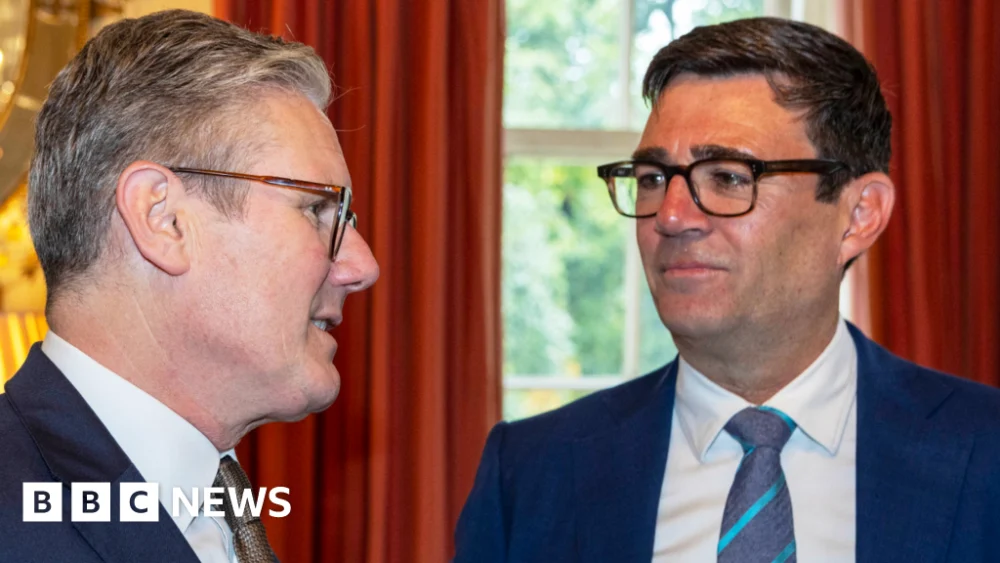
The National Executive Committee (NEC) of the Labour Party has definitively rebuffed Greater Manchester Mayor Andy Burnham’s application to contest the upcoming parliamentary by-election for the Gorton and Denton constituency, a decision that has sent ripples of dissent through the party’s ranks and underscored the profound strategic and leadership anxieties within its hierarchy. This highly contentious ruling, made by Labour’s paramount governing body, explicitly prohibits the popular regional mayor from seeking a return to the House of Commons, citing concerns over public expenditure and the allocation of party resources, but is widely interpreted as a pre-emptive manoeuvre to neutralise a perceived future leadership challenge to Prime Minister Sir Keir Starmer.
The vacancy in the Gorton and Denton seat arose following the resignation of long-serving Labour MP Andrew Gwynne, who stepped down on Friday citing health reasons. Burnham, a former cabinet minister and two-time contender for the Labour leadership, swiftly submitted his application on Saturday, seeking the NEC’s requisite endorsement to stand as a candidate. As a directly elected mayor, his candidacy required special dispensation from the national committee, a procedural hurdle that ultimately proved insurmountable. The party’s official statement attributed the denial of permission to a desire to "avoid an unnecessary mayoral election, which would use substantial amounts of taxpayers’ money and resources that are better spent tackling the cost-of-living crisis." This justification, however, has been met with considerable skepticism by numerous party observers and internal figures, who point instead to the deep-seated political rivalries at play.
The Undercurrent of Leadership Ambition
Andy Burnham has cultivated a significant political profile since assuming the Greater Manchester mayoralty in 2017, earning the moniker "King of the North" for his assertive advocacy on behalf of the region and his often-distinctive policy stances, particularly during the COVID-19 pandemic. His popularity, frequently surpassing that of national Labour leaders in public opinion polls, has consistently positioned him as a potential alternative leader should a vacancy arise. His prior attempts to lead the Labour Party in 2010 and 2015, though unsuccessful, cemented his reputation as an individual with national ambitions. A return to Westminster is widely considered an indispensable prerequisite for any credible bid for the party leadership, making the Gorton and Denton by-election a critical juncture in his political trajectory. The NEC’s decision effectively closes off this immediate avenue, at least for the duration of the current parliamentary term.
This strategic block is viewed by many as a calculated move by allies of Sir Keir Starmer to consolidate his authority and mitigate the risk posed by potential internal rivals. Starmer’s leadership has faced its own set of challenges, including fluctuating approval ratings, persistent criticism from segments of the party’s left wing, and the unexpected resurgence of Reform UK in national polling, which has begun to erode Labour’s lead over the Conservatives. In such a volatile political climate, the prospect of a high-profile figure like Burnham returning to the parliamentary fold, potentially galvanising internal opposition or simply serving as a visible alternative, appears to have been deemed an unacceptable risk by the current leadership.
The NEC’s Deliberations and the Vote
The decision to block Burnham’s candidacy was finalised during a Sunday morning meeting of ten key members of the NEC. This influential group included prominent figures such as Home Secretary Shabana Mahmood, party chair Ellie Reeves, and Prime Minister Sir Keir Starmer himself. Sources within the NEC indicated that the vote was decisively 8-1 against Burnham’s application, with Sir Keir casting his vote in favour of the block. Notably, Home Secretary Mahmood abstained from the vote in her capacity as chair, while Labour’s Deputy Leader, Lucy Powell, reportedly voted to permit Burnham to stand, highlighting a degree of internal disagreement at the very top of the party.
During the meeting, significant concerns were articulated regarding the financial and political ramifications of allowing Burnham to contest the by-election. Labour sources conveyed that the principal arguments revolved around the substantial cost of triggering a new mayoral election for Greater Manchester and the potential for a "divisive campaign" that could detract from the party’s broader electoral efforts. Sir Keir’s supporters within the NEC emphasised Burnham’s perceived effectiveness as mayor, arguing that an election to replace him would impose a financial burden of "hundreds of thousands of pounds" on the party and "millions of pounds" on the public purse during an acute cost-of-living crisis. Furthermore, apprehensions were voiced that Reform UK, a growing electoral force, could "outspend us ten to one" in a fiercely contested by-election, further complicating Labour’s strategic outlook. The public justification for the decision also aimed to frame it as a commitment to avoiding the "political psychodramas of the Tory years" during a period dominated by pressing geopolitical concerns and domestic economic hardship. NEC sources reported "overwhelming support" for upholding "clear Labour Party rules preventing mayors and PCCs standing in by-elections," suggesting a desire to present the decision as a principled enforcement of established party regulations.
Costs, Resources, and Strategic Imperatives
The Labour Party’s official statement underscored the argument that an "unnecessary election for the position of Greater Manchester mayor would have a substantial and disproportionate impact on party campaign resources ahead of the local elections and elections to the Scottish Parliament and Welsh Senedd in May." While asserting confidence in retaining the mayoralty, the NEC concluded it "could not put Labour’s control of Greater Manchester at any risk." The financial implications of a mayoral by-election are indeed significant; the last Greater Manchester mayoral election incurred an estimated cost of approximately £4.7 million for taxpayers.
However, critics of the decision argue that these financial and resource arguments, while valid in isolation, serve as a convenient smokescreen for deeper political motivations. The cost of by-elections, both local and national, is an inherent feature of democratic processes. The perception that the party is prioritising central control over local choice, or sacrificing a potentially strong candidate for internal political reasons, risks alienating grassroots members and voters. The emphasis on resource allocation also highlights the Labour Party’s strategic anxieties concerning its upcoming electoral challenges, suggesting a cautious approach to conserve its campaigning capacity for broader, multi-territory contests rather than diverting it to an internal leadership proxy battle.
Internal Dissent and Party Unity
The NEC’s decision has predictably provoked strong reactions within the Labour Party, exposing existing fault lines and ideological tensions. John McDonnell, the veteran Labour MP and former shadow chancellor, expressed his "absolute fury" at the ruling, characterising it as an act of "weakness and cowardice" and "factionalism gone wild." McDonnell, a prominent voice on the party’s left, openly suggested that Sir Keir Starmer had underestimated the depth of anger this decision would generate among party members and warned that it could "hasten his demise if he’s not careful." He dismissed the official rationale regarding the cost of a mayoral election as an "insult to people’s intelligence," directly challenging the leadership’s stated motives. Such a forceful condemnation from a respected figure like McDonnell signals the potential for sustained internal resistance and highlights the risks associated with perceived authoritarian tendencies within the party leadership.
Conversely, other Labour MPs, such as John Slinger, representing the Rugby constituency, welcomed the "quick and clear decision," asserting that it would allow the party to "move on from the damaging, introspection and psychodrama of the last week." This dichotomy of reaction underscores the ongoing struggle within Labour to forge a unified identity and purpose, particularly after a period of significant internal upheaval under previous leaderships. The leadership’s move, while intended to project strength and control, simultaneously risks exacerbating internal divisions at a crucial pre-election period.
The Gorton and Denton By-election: A Test Case
The Gorton and Denton constituency, situated in Greater Manchester, has historically been a Labour stronghold, with the party securing a substantial majority of 13,000 in the 2024 general election. However, the national political landscape has shifted considerably since then. Labour’s overall popularity has seen some decline, and the emergence of Reform UK as a significant challenger, alongside the Green Party’s growing electoral presence (which secured second and third place respectively in the last general election in this seat), indicates that even traditionally safe Labour seats can no longer be taken for granted.
The by-election will now serve as an early barometer of Labour’s strength in a post-general election environment, particularly in a northern urban area where the party has historically drawn strong support. The decision to exclude a popular local figure like Burnham, who undoubtedly possesses significant campaigning prowess and name recognition, represents a substantial political gamble. If Labour’s majority is significantly reduced, or if the party faces an unexpectedly strong challenge, the leadership’s decision to block Burnham will inevitably come under intense scrutiny, potentially reigniting the very "psychodrama" it sought to avoid. The outcome will be closely watched for what it reveals about the effectiveness of Starmer’s leadership strategy and the true extent of Labour’s electoral vulnerability.
Future Implications and Outlook
The rejection of Andy Burnham’s bid for a return to Westminster carries significant implications for both his personal political future and the broader trajectory of the Labour Party. For Burnham, this setback necessitates a re-evaluation of his path to national influence. While he remains a highly visible and popular figure as Greater Manchester Mayor, his immediate route to the parliamentary stage, and thus a direct challenge for the party leadership, has been obstructed. This could either compel him to redouble his efforts in his mayoral role, further solidifying his "King of the North" persona and potentially building a platform for a future national comeback outside conventional Westminster routes, or he could seek an alternative parliamentary constituency at a later date, assuming the political climate shifts.
For Sir Keir Starmer and the Labour leadership, the decision reflects a clear assertion of central authority and a determination to control the party’s narrative and strategic direction. While some within the party may view this as a necessary act of discipline to maintain unity and focus ahead of a general election, others will perceive it as an autocratic move that stifles internal democracy and alienates popular figures. The long-term success of this strategy hinges on Labour’s performance in the upcoming by-election and, more critically, in the next general election. Should the party falter, the decision to block Burnham will undoubtedly be revisited as a critical error, potentially weakening Starmer’s position and emboldening his detractors. Conversely, a strong electoral showing could validate the leadership’s uncompromising approach. This episode underscores the inherent tensions between central party control and regional autonomy, and between the exigencies of electoral strategy and the aspirations of individual political figures, painting a complex picture of the Labour Party’s internal dynamics as it navigates a pivotal period in British politics.


 Aura Kasih
 Safa Marwah
 Ayu Aulia