Ridwan Kamil
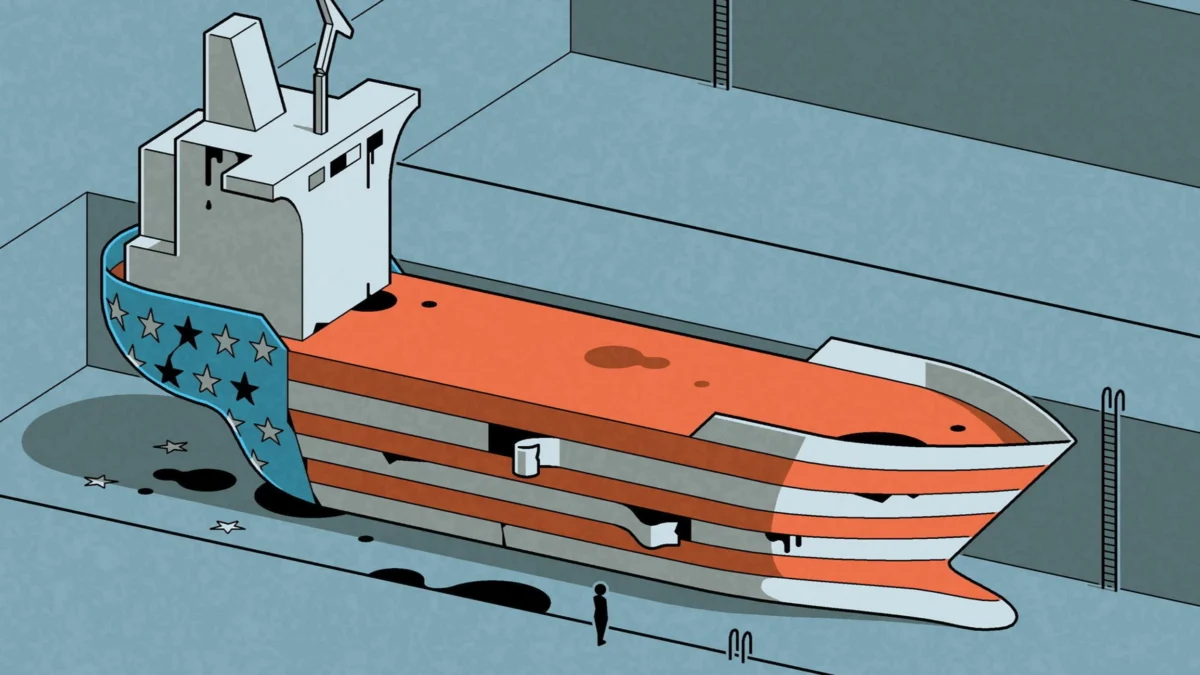
As the geopolitical landscape undergoes a seismic transformation, nations occupying the middle ground in global power dynamics may find themselves more profoundly impacted by the erosion of established international norms and institutions than they initially perceive. The current era of flux, marked by rising great power competition and a questioning of multilateral frameworks, presents a complex challenge to the stability and predictability that has largely defined the post-World War II international order. For these middle powers, often acting as crucial balancing forces and facilitators of global cooperation, the potential unravelling of this order carries significant implications for their economic prosperity, strategic autonomy, and ability to navigate an increasingly fragmented world.
The post-World War II era was characterized by the development of a robust system of international institutions, led by the United Nations, the Bretton Woods institutions (the International Monetary Fund and the World Bank), and various regional security and economic alliances. This architecture, while imperfect, fostered a degree of stability, predictability, and multilateral problem-solving that facilitated unprecedented global economic growth and interconnectedness. Middle powers, such as Canada, Australia, South Korea, the Netherlands, and many others, played a vital role within this system. They were not the primary architects of the grand designs, nor were they the dominant hegemons, but they were instrumental in its operationalization, providing crucial diplomatic, financial, and military contributions. Their engagement lent legitimacy to international bodies, facilitated consensus-building among larger powers, and often served as the bridge builders in complex negotiations.
The current disruption to this established order stems from a confluence of factors. The ascendance of new economic and military powers, particularly China, has challenged the unipolar or bipolar dynamics that previously shaped international relations. Simultaneously, a rise in nationalist sentiment and a questioning of the efficacy and fairness of existing global governance structures in several major powers, including the United States, have led to a retreat from multilateral commitments and a preference for transactional, bilateral dealings. This shift has manifested in trade disputes, weakened international agreements, and a diminished capacity of multilateral institutions to address pressing global challenges such as climate change, pandemics, and economic instability.
For middle powers, this erosion of the established order presents a multifaceted threat. Economically, many of these nations are deeply integrated into the global trading system, relying on open markets, stable supply chains, and predictable regulatory environments. A fragmentation of global trade, the imposition of tariffs, and the politicization of economic relationships can significantly disrupt their export-oriented economies and hinder foreign investment. Furthermore, their ability to access international capital markets and secure favourable trade agreements may be compromised if global economic governance weakens. The rules-based international economic order, while sometimes criticized, provided a degree of certainty that allowed these nations to plan and invest for the long term. Its weakening introduces an element of profound uncertainty.
Strategically, middle powers often derive their influence and security from their participation in alliances and their ability to act as neutral arbiters or conveners. As great power competition intensifies, they may find themselves increasingly pressured to choose sides, potentially compromising their strategic autonomy and forcing them to divert resources towards military build-ups rather than development or social programs. The existing security architecture, built on collective defence pacts and norms of non-aggression, provided a framework for managing rivalries. When these norms weaken, the risk of regional conflicts and broader geopolitical instability increases, directly impacting the security environment of middle powers, even if they are not direct participants in the primary rivalries.
Moreover, the weakening of multilateral institutions undermines the very platforms through which middle powers have historically exerted influence and advanced their interests. These institutions provided forums for collective action on issues that transcend national borders, such as public health, environmental protection, and the promotion of human rights. When these forums falter, the capacity for coordinated global responses diminishes, leaving middle powers with fewer effective tools to address shared challenges. Their ability to shape global norms and standards, a key aspect of their diplomatic leverage, is also diminished when international dialogue and consensus-building mechanisms are sidelined.
The concept of "middle power" itself is fluid and context-dependent, but it generally refers to states that possess significant economic and diplomatic capabilities but lack the military might or global reach of great powers. These nations often excel in specific areas of expertise, such as development assistance, mediation, or technological innovation, and have historically leveraged multilateralism to amplify their impact. They have often been champions of international law, human rights, and sustainable development, using their positions to advocate for a more equitable and just global order.
The current geopolitical climate, however, demands a re-evaluation of how middle powers can best adapt and thrive. One immediate consequence of the weakening global order is the increased imperative for self-reliance and strategic hedging. Middle powers may need to diversify their economic partnerships, build greater domestic resilience, and enhance their defence capabilities to deter potential aggressors or protect their interests in a more volatile world. This could involve a recalibrating of foreign policy priorities, with a greater emphasis on pragmatic national interests and a more cautious approach to international commitments.
Furthermore, the nature of diplomacy itself may need to evolve. While great power rivalries often dominate headlines, the ongoing challenges facing the international community require sustained cooperation on a range of issues. Middle powers could play a crucial role in revitalizing multilateralism by advocating for reforms that make international institutions more representative, effective, and responsive to contemporary challenges. This might involve forging new coalitions of like-minded states, focusing on specific areas where multilateral action remains essential, and developing innovative approaches to diplomacy that can navigate the complexities of great power competition.
The economic implications of this geopolitical shift are also significant. Middle powers might need to explore new models of economic development that are less reliant on specific global supply chains or markets. This could involve promoting domestic innovation, investing in green technologies, and fostering regional economic integration to create alternative avenues for trade and investment. The principle of "friend-shoring" or "ally-shoring," where critical supply chains are concentrated within allied nations, could offer both opportunities and challenges for middle powers, depending on their existing economic relationships and industrial capabilities.
The potential for a more fragmented and multipolar world also necessitates a reassessment of security doctrines. While direct military confrontation between great powers might remain a low probability event, the risk of proxy conflicts, cyber warfare, and hybrid threats is likely to increase. Middle powers will need to develop robust strategies to counter these emerging threats, which may involve strengthening their cyber defences, investing in intelligence capabilities, and engaging in strategic communication to counter disinformation campaigns.
The impact on international law and norms is another critical area. As great powers increasingly prioritize their national interests over established legal frameworks, the very foundations of international cooperation could be undermined. Middle powers, often the custodians of these norms, will face the challenge of upholding international law and advocating for its continued relevance in a world where might increasingly appears to make right. This could involve strengthening international legal institutions, supporting accountability mechanisms, and promoting adherence to treaties and conventions.
Looking ahead, the trajectory of the global order remains uncertain. The current period of flux may eventually give way to a new equilibrium, or it could lead to a prolonged era of instability and competition. For middle powers, the key to navigating this transition will lie in their ability to adapt, innovate, and strategically engage with the evolving geopolitical landscape. Their historical role as facilitators of cooperation and advocates for a rules-based order remains relevant, but the methods and platforms for achieving these goals will likely need to change.
The underestimation of their stake in the global order by middle powers stems from a historical perspective that often views international relations through the lens of great power dominance. However, the interconnectedness of the modern world means that the stability and prosperity of all nations are intrinsically linked. The weakening of the global order is not merely a concern for the major players; it is a fundamental challenge that affects the economic, social, and security well-being of every nation, particularly those that have benefited immensely from the predictable and cooperative environment that the existing, albeit fraying, order has provided. Their active and strategic engagement is therefore not just beneficial, but essential for shaping a more stable and prosperous future for all. The current juncture demands a proactive and sophisticated approach from these nations, one that acknowledges the profound implications of the shifting global order and leverages their unique capabilities to forge a path forward.


 Lisa Mariana
 Aura Kasih
 Safa Marwah
 Ayu Aulia