Ridwan Kamil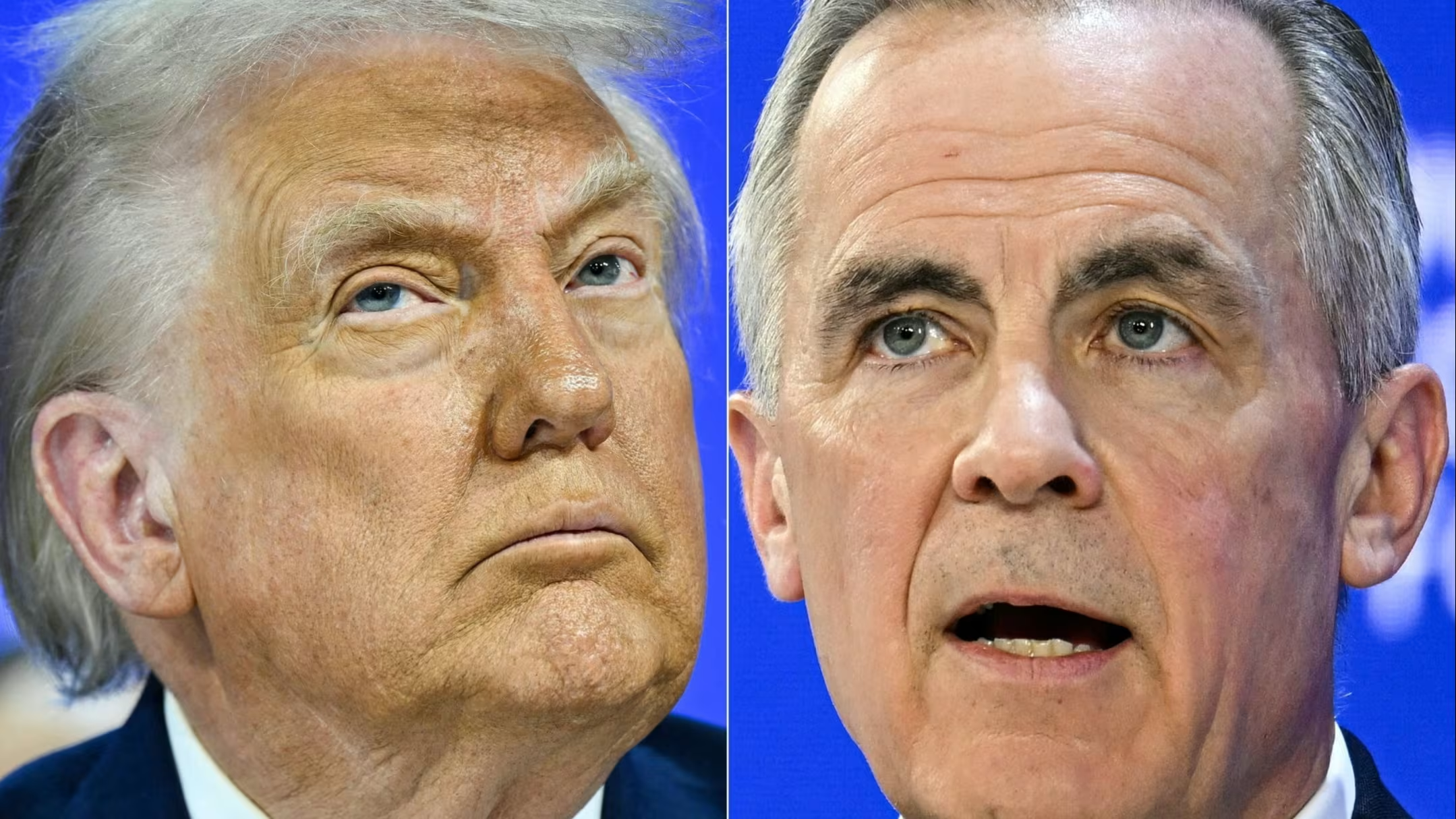
Former President Donald Trump has issued a stark warning, threatening to impose a crippling 100% tariff on all Canadian imports should Ottawa proceed with a significant trade agreement with Beijing, a move that could dramatically reshape North American economic relations and introduce unprecedented volatility into global commerce.
The assertion, delivered through public statements and amplified by his political allies, signals a potential return to the protectionist trade policies that characterized Trump’s previous term in office, raising immediate concerns for Canadian businesses and the broader geopolitical landscape. This dramatic pronouncement underscores a fundamental tension: the desire of nations to forge independent economic partnerships versus the assertion of unilateral economic leverage by a powerful trading partner. The implications of such a tariff imposition extend far beyond bilateral trade, potentially triggering retaliatory measures and disrupting established supply chains across multiple sectors.
The core of Trump’s threat revolves around the perceived strategic and economic threat posed by China’s growing global influence. His argument, as articulated by his campaign and supporters, posits that any substantial trade pact between Canada and China would undermine American economic interests and national security. The proposed 100% tariff represents an extreme form of economic coercion, designed to compel Canada to align its trade policies with those favored by the United States, or face severe economic repercussions. This approach is consistent with Trump’s "America First" philosophy, which prioritizes perceived national advantage, often through aggressive trade negotiations and the imposition of tariffs as a primary tool.
For Canada, a nation deeply integrated into the North American economy, particularly with the United States, such a tariff would be catastrophic. The Canadian economy is heavily reliant on exports to its southern neighbor, with goods and services flowing across the border in vast quantities daily. A 100% tariff would effectively render most Canadian exports prohibitively expensive for American consumers and businesses, leading to a sharp decline in trade, significant job losses, and a profound economic recession. The Canadian government, under Prime Minister Justin Trudeau, has historically pursued a diversified foreign policy, seeking to strengthen ties with a variety of global partners, including China, which represents a significant market for Canadian goods and a source of investment. However, the specter of Trump’s tariff threat introduces an unquantifiable level of risk to this strategy.
The potential imposition of such sweeping tariffs by the United States on a close ally like Canada would represent a significant departure from established international trade norms and the principles of alliances. While trade disputes and the use of tariffs are not new in international relations, the scale and potential severity of Trump’s threat, aimed at a nation with which the U.S. shares the longest undefended border and a deeply intertwined economic relationship, are unprecedented. This action would likely be viewed by many as an attempt to weaponize economic interdependence for political gain, potentially eroding trust and cooperation between the two North American powers.
Analyzing the strategic underpinnings of Trump’s stance reveals a broader concern about China’s economic ascent and its implications for American global leadership. The former President has consistently voiced skepticism about multilateral trade agreements and has favored bilateral deals where he believes the U.S. can exert maximum leverage. In his view, a robust trade relationship between Canada and China could diminish Canada’s economic reliance on the U.S., thereby reducing American influence and potentially opening avenues for China to expand its economic and geopolitical footprint within North America. The threat of tariffs, in this context, serves as a powerful deterrent, signaling that the U.S. is prepared to take drastic measures to prevent such an outcome.
The Canadian response to such a threat would be multifaceted and extremely challenging. Ottawa would face immense pressure to balance its sovereign right to conduct independent foreign policy and pursue economic opportunities with the imperative of maintaining stable relations with its largest trading partner. Diplomatic channels would be heavily engaged, with intense negotiations and consultations likely to occur. However, the effectiveness of these diplomatic efforts would depend on the political will and strategic calculations of both the U.S. administration and the Canadian government.
From an economic perspective, the ripple effects of a 100% tariff would be profound. Industries heavily reliant on cross-border trade, such as automotive manufacturing, agriculture, and natural resources, would be particularly vulnerable. Canadian businesses would be forced to seek alternative markets, a process that is often time-consuming, costly, and not always successful. This could lead to significant restructuring of Canadian industries, with potential long-term consequences for economic growth and employment. Furthermore, American consumers and businesses would also face higher costs for Canadian goods, potentially leading to inflation and reduced competitiveness.
The international implications of such a trade war would also be significant. A unilateral imposition of such severe tariffs by the U.S. on Canada could be viewed as a violation of World Trade Organization (WTO) principles and could invite challenges within the international trading system. It could also embolden other nations to adopt similar protectionist measures, leading to a fragmentation of global trade and a slowdown in economic globalization. The existing international order, built on decades of multilateral cooperation and trade liberalization, could be significantly destabilized.
Moreover, the threat itself serves as a potent reminder of the power dynamics inherent in international trade. The U.S., as a vast market and a major economic power, possesses considerable leverage over smaller economies that are heavily dependent on it. Trump’s willingness to wield this leverage aggressively highlights a strategic approach that prioritizes perceived national interests above traditional diplomatic considerations and alliance commitments. This approach can create uncertainty and instability, making it difficult for businesses to plan and invest for the future.
The prospect of a Canada-China trade deal, even without Trump’s intervention, is a complex issue for Canada. China’s economic practices, including issues related to intellectual property rights, market access, and state subsidies, have been a source of concern for many Western nations. Canada, like other countries, has sought to navigate these complexities, aiming to secure favorable trade terms while mitigating potential risks. The Trump threat, however, dramatically escalates the stakes, forcing Canada into a position where its economic future could be significantly jeopardized by its foreign policy choices.
Experts in international trade and economics have expressed considerable concern over the potential ramifications of such a tariff. They emphasize that while countries have the right to protect their national interests, the use of such extreme measures against close allies can have unintended and damaging consequences. The interconnectedness of modern economies means that protectionist policies often lead to retaliatory actions, creating a cycle of escalating trade barriers that ultimately harms all parties involved. The complexity of global supply chains further exacerbates this issue, as disruptions in one area can have cascading effects across multiple sectors and countries.
The political dimension of Trump’s threat cannot be overstated. His pronouncements often serve as a signal to his base, reinforcing his image as a strong leader willing to challenge established norms and confront perceived adversaries. The targeting of Canada, a nation with whom the U.S. shares a generally positive and cooperative relationship, underscores the transactional nature of his foreign policy approach. It suggests that even long-standing alliances are subject to renegotiation based on his perceived economic and political advantage.
Looking ahead, the situation presents a critical juncture for North American economic relations. Should Trump’s threat materialize, the economic fallout for Canada would be severe, necessitating a significant recalibration of its trade strategy. The United States itself would likely face repercussions, including higher consumer prices and potential retaliatory measures from Canada or other affected nations. The broader international implications would involve a further erosion of the rules-based trading system and an increase in global economic uncertainty.
The underlying tension between national sovereignty, economic opportunity, and geopolitical alignment is at the heart of this dispute. Canada’s ability to navigate this complex landscape will be a testament to its diplomatic skill and economic resilience. The ultimate outcome will depend on a confluence of factors, including the political trajectory of the United States, the strategic decisions made by the Canadian government, and the evolving dynamics of global trade and international relations. The threat of 100% tariffs on Canada by the United States, in the context of a potential trade deal with China, represents a significant challenge to the established order of North American economic interdependence and a stark illustration of the potential for economic leverage to be employed as a geopolitical tool.


 Lisa Mariana
 Aura Kasih
 Safa Marwah
 Ayu Aulia