
 Ridwan Kamil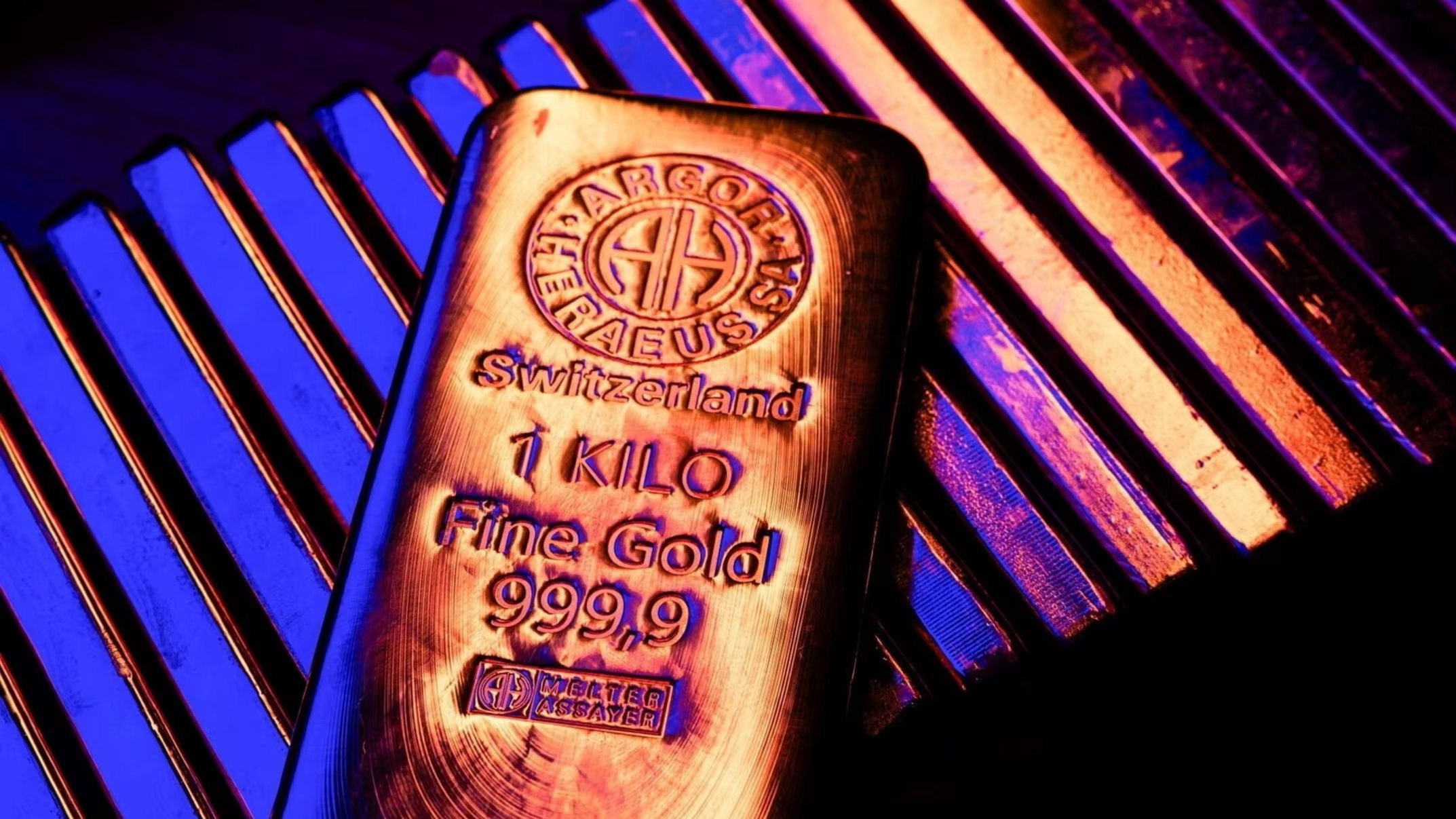
As the global economic landscape shifts under the weight of emerging geopolitical tensions, the price of gold has surged, charting its most significant weekly gain since 2020. This remarkable ascent is being fueled by a confluence of factors, most notably a palpable unease surrounding the dollar’s stability, underscored by developments in Greenland and broader concerns about international relations. Investors, seeking refuge from uncertainty, are once again turning to the time-honored safe-haven asset, pushing gold prices to new heights and challenging the dominance of the world’s reserve currency.
The recent upward trajectory of gold prices is not an isolated event but rather a symptom of a more profound recalibration in global financial markets. For weeks, a growing sense of apprehension has been building, driven by a complex interplay of economic headwinds and escalating geopolitical friction. The precious metal, often seen as a barometer of global stability, has responded with a robust rally, signaling a significant shift in investor sentiment. This surge in demand for gold is particularly noteworthy given its historical role as a hedge against inflation and currency devaluation.
The narrative unfolding in Greenland has become a focal point, amplifying concerns about the dollar’s standing. While the specifics of the situation in Greenland are still developing, the mere suggestion of geopolitical instability in a region with strategic importance has sent ripples through financial markets. This unease is translating into a tangible weakening of the US dollar, as investors begin to question the currency’s traditional role as a bedrock of global commerce and finance. The dollar’s vulnerability, in turn, creates a more attractive environment for gold, which is priced in dollars. As the dollar weakens, it takes more dollars to purchase an ounce of gold, thereby driving up its price.
Beyond the immediate catalyst of events in Greenland, a broader constellation of geopolitical risks is contributing to gold’s ascent. Tensions between major global powers, regional conflicts, and the specter of trade disputes are all contributing to an environment of heightened uncertainty. In such a climate, investors naturally gravitate towards assets perceived as less susceptible to the vagaries of political upheaval. Gold, with its tangible value and historical precedent as a store of wealth, fits this description perfectly.
The current market dynamics suggest a potential paradigm shift in how investors perceive risk and allocate capital. For years, the US dollar has enjoyed a privileged position, bolstered by its status as the world’s primary reserve currency and the perceived stability of the American economy. However, a growing chorus of analysts and market participants are voicing concerns about the long-term sustainability of this dominance. Factors such as mounting US national debt, persistent inflation, and a more fragmented global political order are contributing to this reassessment.
The weakening dollar is not merely a short-term fluctuation; it could represent a more sustained trend. If global confidence in the dollar erodes further, it could lead to a significant reallocation of international reserves away from dollar-denominated assets. This would, in turn, create a powerful tailwind for alternative stores of value, with gold being a prime beneficiary. The implications of such a shift are far-reaching, potentially altering the global financial architecture and impacting trade, investment, and sovereign debt dynamics.
The role of central banks in this unfolding scenario also warrants attention. While many central banks have historically held significant dollar reserves, there is increasing evidence of diversification strategies being employed. Nations are actively seeking to reduce their reliance on any single currency, a move that would naturally increase demand for gold and other alternative assets. This diversification trend, if it gains momentum, could accelerate the weakening of the dollar and further bolster gold prices.
Furthermore, the persistent inflationary pressures that have characterized the global economy in recent times continue to underpin the appeal of gold. While inflation may moderate in some regions, the underlying drivers, such as supply chain disruptions and an accommodative monetary policy in some jurisdictions, remain in place. Gold has historically proven to be a reliable hedge against inflation, as its value tends to hold or increase when the purchasing power of fiat currencies diminishes.
The current surge in gold prices can be dissected into several key components. Firstly, the safe-haven demand is undeniable. Geopolitical instability, whether in Greenland or elsewhere, creates a palpable sense of risk, prompting investors to seek the perceived security of gold. Secondly, the weakening dollar acts as a direct price driver. As the dollar depreciates, gold becomes cheaper for holders of other currencies, increasing demand and thus its price in dollar terms. Thirdly, the ongoing inflationary environment provides a structural support for gold prices, acting as a long-term store of value.
The technical indicators for gold also suggest a bullish outlook. The recent breakout above key resistance levels indicates strong buying momentum. Analysts are closely watching for sustained upward movement, which could signal the beginning of a more significant bull market for the precious metal. The volume of trading in gold futures and options also points to increased investor interest and conviction.
The implications of a sustained rise in gold prices extend beyond the investment community. For countries with significant gold reserves, a rising gold price translates into increased wealth and economic stability. It can also provide a buffer against currency fluctuations and economic downturns. For individuals, gold remains a tangible asset that can offer a sense of security in uncertain times, a hedge against inflation, and a potential store of value for future generations.
The narrative surrounding gold is thus multifaceted, encompassing geopolitical risks, currency dynamics, inflation, and investor sentiment. The events in Greenland, while a specific trigger, are part of a larger tapestry of global uncertainties that are collectively pushing investors towards the yellow metal. The dollar’s position as the world’s preeminent reserve currency is facing its most significant challenge in recent memory, and gold stands to be a primary beneficiary of this tectonic shift.
Looking ahead, several factors will continue to influence the trajectory of gold prices. The evolution of the situation in Greenland and any broader geopolitical developments will be closely monitored. The economic policies of major central banks, particularly regarding interest rates and quantitative easing, will play a crucial role in shaping inflation expectations and currency valuations. The pace of global economic recovery and the extent to which supply chain issues are resolved will also contribute to the overall economic sentiment.
However, the current momentum suggests that gold is likely to remain a favored asset for the foreseeable future. The combination of geopolitical unease, a potentially weakening dollar, and persistent inflation creates a fertile ground for further price appreciation. Investors who have historically relied on gold as a safe haven are likely to continue their allocation, while new investors may be drawn to its appeal as a hedge against an increasingly uncertain global economic and political environment.
The current market environment is characterized by a departure from the predictable patterns of the past. The traditional correlations between asset classes are being tested, and new drivers of market movements are emerging. In this context, gold’s resurgence is not just a trading opportunity but a reflection of a deeper reassessment of risk and value in the global financial system. The yellow metal, with its enduring appeal, is once again proving its worth as a sanctuary in a turbulent world, and its strong performance this week is a clear indication that this trend is far from over. The coming months will be critical in determining whether this surge represents a temporary correction or the beginning of a sustained new era for gold.


 Aura Kasih
 Safa Marwah
 Lisa Mariana


 Ayu Aulia