
 Ridwan Kamil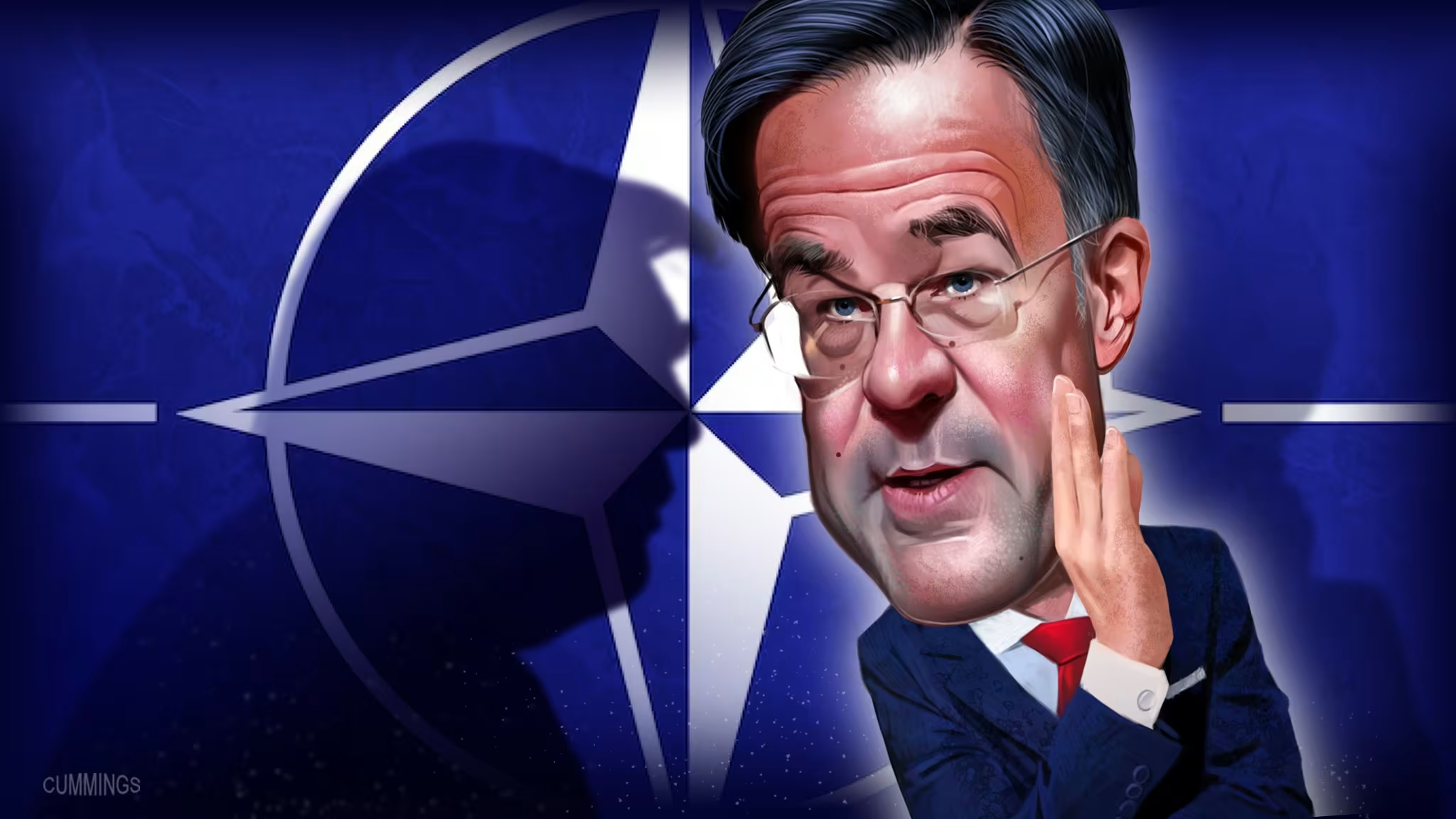
In the intricate theatre of international diplomacy, Mark Rutte, the outgoing Dutch Prime Minister, has carved a distinctive niche as a skilled navigator of complex relationships, particularly with the United States under Donald Trump’s presidency. His tenure has been marked by a pragmatic approach, characterized by a willingness to engage directly and candidly with figures often seen as disruptive forces on the global stage, earning him a reputation as an unlikely, yet effective, interlocutor. This analysis delves into the strategies, implications, and broader significance of Rutte’s diplomatic style, examining how his approach has shaped perceptions and outcomes in the often-turbulent waters of transatlantic politics.
The political landscape of the early 21st century has been profoundly reshaped by the rise of populist movements and leaders who challenge established international norms and institutions. Within this evolving context, Mark Rutte’s consistent engagement with Donald Trump, a figure who personified this populist wave, stands out. While many European leaders adopted a stance of cautious distance or outright opposition, Rutte pursued a more direct, albeit at times challenging, dialogue. This strategy was not born of ideological alignment but rather a deeply ingrained belief in the necessity of communication, even with those holding divergent views. His approach can be understood as a sophisticated exercise in realpolitik, prioritizing the preservation of vital alliances and national interests through direct engagement rather than ideological confrontation.
Rutte’s diplomatic methodology is rooted in a profound understanding of Dutch history and its geopolitical positioning. As a small, trading nation with a long tradition of international engagement, the Netherlands has historically relied on strong alliances and a stable international order to prosper. This historical imperative informs Rutte’s pragmatic outlook. He views international relations not as an abstract ideological battleground but as a complex web of interconnected interests where compromise and understanding are paramount. When faced with a figure like Trump, whose rhetoric and policy pronouncements often seemed to defy traditional diplomatic protocols, Rutte did not retreat. Instead, he leaned in, seeking to understand the underlying drivers of Trump’s positions and to identify areas of potential common ground, however narrow.
The "Trump whisperer" moniker, while perhaps informal, captures an essential aspect of Rutte’s approach: his ability to engage with Trump on a level that seemed to resonate, or at least to prevent outright rupture. This was achieved through a combination of directness, a lack of overt ideological posturing, and a focus on practical outcomes. Rutte was not afraid to express disagreement, but he did so in a manner that often emphasized shared objectives or the potential negative consequences of certain actions, rather than resorting to moralistic pronouncements. For instance, during Trump’s presidency, when the US administration questioned the value of NATO and multilateral institutions, Rutte was a vocal proponent of their continued relevance, not by denouncing Trump, but by articulating the tangible benefits of these structures for all member states, including the US.
This strategy had several key components. Firstly, Rutte consistently emphasized the economic and security benefits that flowed from strong transatlantic ties. He understood that Trump, despite his protectionist rhetoric, was also a businessman who understood transactional relationships. By framing cooperation in terms of mutual benefit and tangible gains, Rutte aimed to appeal to this aspect of Trump’s decision-making. Secondly, he maintained a consistent, if sometimes critical, presence on the international stage, ensuring that Dutch interests were represented and that dialogue channels remained open. This provided a crucial counterpoint to more confrontational approaches that might have alienated the US administration further. Thirdly, Rutte’s approach was characterized by a certain resilience. He was willing to absorb criticism and setbacks, understanding that the long-term preservation of alliances often requires patience and persistence.
The implications of Rutte’s diplomatic style extend beyond his direct interactions with Trump. His approach has offered a template for how European leaders might engage with populist movements and leaders who challenge the established international order. It suggests that direct, pragmatic engagement, focused on shared interests and practical outcomes, can be more effective than outright condemnation or disengagement. This does not imply endorsement of the policies or rhetoric of such leaders, but rather a strategic recognition that maintaining dialogue is crucial for safeguarding national interests and for influencing outcomes.
Furthermore, Rutte’s success in this arena highlights the enduring importance of personal relationships and direct communication in international diplomacy. While institutions and formal agreements are vital, the ability of leaders to connect on a human level, to understand each other’s perspectives, and to build a degree of trust can be instrumental in navigating difficult situations. Rutte’s willingness to engage directly, to listen, and to articulate his positions clearly and without excessive preamble, likely contributed to his ability to build a rapport, however tentative, with Trump.
The future outlook for transatlantic relations remains a subject of considerable debate. With the potential for shifts in US leadership and the ongoing evolution of the global geopolitical landscape, the need for skilled diplomacy and a clear understanding of national interests will only intensify. Rutte’s pragmatic and engaged approach provides valuable lessons for his successors and for European leaders navigating a world that is increasingly complex and unpredictable. His legacy in this regard is not one of ideological victory, but of a demonstrable capacity to maintain dialogue and to safeguard national interests through astute and direct engagement, even in the face of significant challenges.
The Dutch Prime Minister’s ability to navigate the turbulent waters of transatlantic diplomacy, particularly during the Trump administration, offers a compelling case study in pragmatic statecraft. His consistent engagement with a leader often perceived as an outlier, rather than retreating into isolation, underscored a deep-seated belief in the efficacy of direct dialogue. This approach, characterized by a focus on mutual benefit and tangible outcomes, allowed the Netherlands to maintain its influence and secure its interests within a rapidly shifting global order.
Rutte’s strategy was not predicated on ideological affinity but on a shrewd understanding of international power dynamics and the enduring importance of alliances. As a representative of a nation with a long history of global trade and engagement, he recognized that isolation was not a viable option. Instead, he opted for a more active, if at times challenging, form of diplomacy, one that prioritized understanding and communication over confrontation. This involved articulating Dutch interests clearly, identifying areas of potential cooperation, and maintaining a consistent presence on the international stage, even when faced with rhetoric that challenged established norms.
The "Trump whisperer" epithet, while informal, speaks to Rutte’s perceived ability to connect with a leader who often eschewed traditional diplomatic protocols. This was achieved through a combination of directness, a disinclination towards ideological posturing, and a consistent focus on practical, transactional outcomes. Rutte demonstrated a capacity to engage with Trump on his own terms, to understand his motivations, and to articulate the benefits of cooperation in a language that resonated. This approach, while not always yielding immediate concessions, served to maintain open channels of communication and to prevent outright ruptures in critical alliances.
The implications of Rutte’s diplomatic style are far-reaching. It suggests that in an era of rising populism and challenges to the international order, pragmatic engagement can be a more effective strategy than ideological opposition. By prioritizing dialogue and focusing on shared interests, European leaders can potentially mitigate the negative impacts of disruptive political forces and safeguard their own national objectives. This approach underscores the enduring importance of personal relationships and direct communication in international diplomacy, highlighting how skilled interlocutors can build rapport and navigate complex situations even amidst significant disagreements.
Looking ahead, the global geopolitical landscape continues to evolve, with potential shifts in leadership and the emergence of new challenges. In this context, Rutte’s pragmatic and engaged approach offers valuable lessons for his successors and for European leaders grappling with an increasingly complex and unpredictable world. His legacy in this arena is not one of ideological triumph, but of a demonstrated capacity to maintain dialogue and to advance national interests through astute and direct engagement, even in the face of formidable obstacles. The Dutch Prime Minister’s tenure serves as a testament to the power of pragmatic diplomacy in navigating the complexities of the 21st-century international order.
The carefully calibrated approach of Mark Rutte to the intricacies of international relations, particularly his engagement with figures such as Donald Trump, offers a compelling lens through which to examine contemporary diplomatic strategies. His tenure as Dutch Prime Minister has been characterized by a distinctive pragmatism, a willingness to engage directly and candidly with leaders who often operate outside traditional diplomatic norms. This approach has not only shaped perceptions of the Netherlands on the global stage but has also provided a practical model for navigating the often-turbulent waters of transatlantic politics.
Rutte’s diplomatic methodology is deeply rooted in the historical and geopolitical realities of the Netherlands. As a nation with a long-standing tradition of international trade and a strategic location, the Netherlands has consistently relied on strong alliances and a stable international order to ensure its prosperity and security. This historical imperative has fostered a pragmatic outlook, one that prioritizes tangible outcomes and mutual benefit over ideological posturing. When confronted with leaders whose rhetoric and policies challenged established international norms, Rutte did not opt for isolation or outright condemnation. Instead, he pursued a strategy of direct engagement, seeking to understand the underlying motivations and to identify avenues for cooperation, however narrow.
The informal moniker of "Trump whisperer" encapsulates a crucial aspect of Rutte’s effectiveness: his perceived ability to engage with Donald Trump in a manner that fostered communication and mitigated potential ruptures. This was not achieved through subservience or ideological capitulation, but through a combination of directness, a disinclination towards overt ideological pronouncements, and a relentless focus on practical results. Rutte understood that in engaging with Trump, a transactional approach, emphasizing mutual benefit and shared interests, was likely to be more productive than abstract appeals to multilateralism or shared values. He was adept at articulating the tangible advantages of cooperation, framing alliances not as abstract ideals but as practical instruments for achieving desired outcomes.
This strategic engagement had several key implications. Firstly, it ensured that Dutch interests were consistently represented and advocated for within the complex dynamics of the US administration. By maintaining open channels of communication, Rutte was able to exert influence, however incremental, on policy decisions that affected the Netherlands and its European partners. Secondly, his approach offered a counter-narrative to the growing trend of disengagement and isolationism that characterized certain political movements. By demonstrating the efficacy of direct dialogue, Rutte provided a model for other European leaders seeking to navigate similar challenges.
Furthermore, Rutte’s diplomatic style highlights the enduring significance of personal relationships and direct communication in international affairs. While formal agreements and institutional frameworks are essential, the ability of leaders to connect on a human level, to understand each other’s perspectives, and to build a degree of trust can be instrumental in navigating difficult situations. Rutte’s willingness to engage directly, to listen attentively, and to articulate his positions clearly and concisely, likely contributed to his ability to establish a working relationship, however tentative, with Trump.
The broader implications of Rutte’s pragmatic diplomacy extend beyond his direct interactions with any single leader. His approach suggests that in an era of evolving geopolitical landscapes and the rise of populist movements, a strategy of engaged pragmatism can be a potent tool for safeguarding national interests and preserving alliances. This does not imply an endorsement of disruptive rhetoric or policies, but rather a strategic recognition that maintaining dialogue and seeking common ground are essential for navigating complex global challenges.
As the international order continues to shift, and as new political dynamics emerge, the lessons from Rutte’s diplomatic tenure remain highly relevant. His ability to combine a clear articulation of national interests with a pragmatic approach to engagement offers a valuable framework for future diplomatic efforts. The Dutch Prime Minister’s legacy in this regard is one of effective statecraft, characterized by a commitment to dialogue and a keen understanding of the practical realities of international relations, even in the face of unprecedented challenges. His approach underscores the enduring power of diplomacy to shape outcomes and to navigate the complexities of the 21st-century global arena.

 Aura Kasih
 Safa Marwah
 Lisa Mariana


 Ayu Aulia