Aura Kasih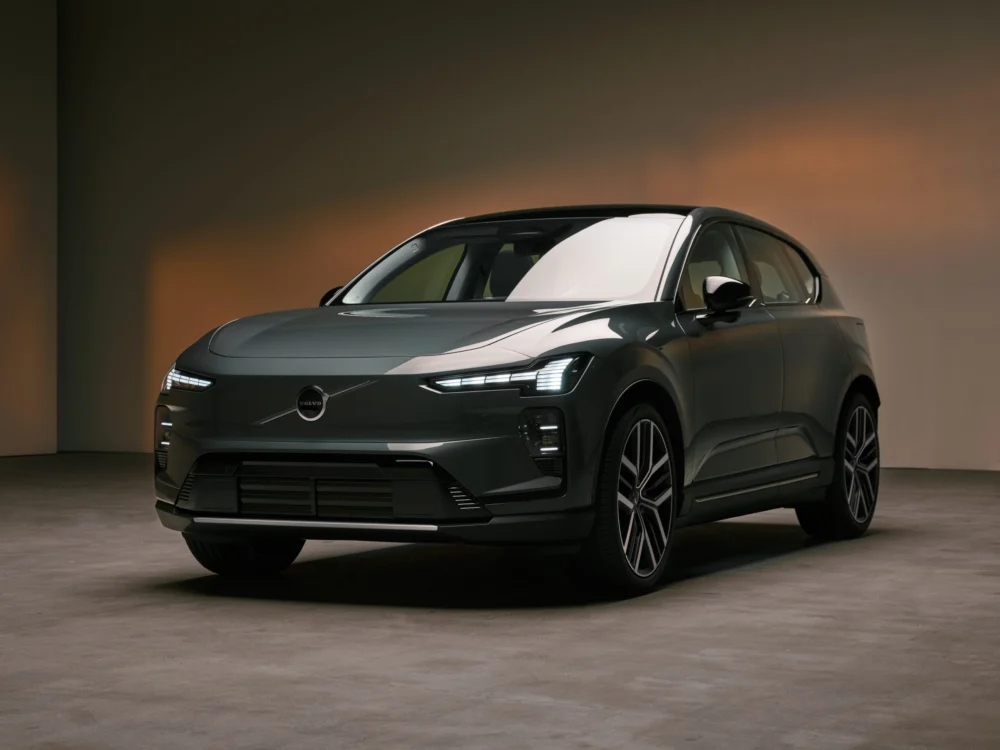
Volvo Cars has officially unveiled its highly anticipated EX60, a meticulously engineered electric crossover poised to redefine the brand’s trajectory in the burgeoning EV market. Featuring cutting-edge fast-charging capabilities, a revolutionary electric architecture, and an ambitious vision for profitability, the EX60 represents a significant pivot for Volvo’s battery-electric strategy, aiming to decisively address consumer concerns and bolster its financial performance in this rapidly evolving sector.
The arrival of the EX60 marks a pivotal moment for Volvo Cars, signaling a strategic "reset" for its electric vehicle (EV) lineup. The Swedish automaker is positioning this new crossover as the vanguard of its next generation of electrified offerings, directly confronting historical hurdles in EV adoption such as range anxiety and protracted charging times. With an estimated driving range of up to 400 miles and the integration of an advanced 800-volt electrical architecture facilitating ultra-rapid charging, the EX60 is engineered to resonate with discerning consumers seeking practicality and performance in their electric vehicles. Beyond its technical prowess, the EX60 embodies a broader corporate imperative for Volvo: optimizing its supply chain and production methodologies to ensure the long-term profitability of its EV division, a critical objective in the competitive global automotive landscape.
Visually, the EX60 presents a design language familiar to followers of Volvo’s electrified portfolio, drawing aesthetic cues from its larger sibling, the EX90, and its hybrid counterparts. However, beneath its recognizable exterior lies a completely reimagined foundation. The crossover is built upon Volvo’s proprietary SPA3 (Scalable Product Architecture 3) platform, a sophisticated and versatile architecture designed to support a new era of automotive innovation. This platform is not merely an incremental upgrade; it represents a fundamental shift in how Volvo develops and manufactures its vehicles, incorporating modularity for continuous hardware and software enhancement and pioneering new manufacturing techniques.
The SPA3 platform is conceived with inherent modularity at its core, enabling a seamless lifecycle of upgrades and improvements through over-the-air software updates. This adaptability ensures that the EX60 can evolve alongside technological advancements, maintaining its relevance and competitive edge. A significant manufacturing innovation debuting with the EX60 is Volvo’s new megacasting production process. This technique, which involves casting large, single pieces of aluminum, drastically reduces the number of components required for the vehicle’s structure, leading to substantial weight savings and enhanced manufacturing efficiency. Furthermore, the EX60 will incorporate a structural battery pack, wherein the high-voltage battery cells are integrated directly into the vehicle’s chassis, contributing to both structural rigidity and optimized weight distribution.
Arguably the most transformative aspect of the EX60 is its advanced processing power, which Volvo touts as making it the "most intelligent" car in its history. The vehicle’s operational heart is HuginCore, Volvo’s proprietary state-of-the-art hardware and software system. This integrated ecosystem harmonizes Volvo’s in-house technological expertise with contributions from industry leaders such as Google, Nvidia, and Qualcomm. The synergy achieved through this collaborative development promises a vehicle that is not only faster and more intuitive but also capable of continuous improvement and adaptation through its sophisticated over-the-air update capabilities.
Central to the EX60’s intelligent capabilities is its integration of Google’s Gemini AI assistant. This advanced AI is deeply embedded within the vehicle’s operating system, facilitating natural language interactions and personalized user experiences. Drivers can engage in fluid, conversational exchanges with the AI, accessing vehicle functions, information, and entertainment seamlessly. The infotainment system itself is engineered for exceptional responsiveness, aiming to eliminate lag and provide an immediate, intuitive interface, although real-world testing will be crucial to validate these claims.
The introduction of an 800-volt electrical architecture, a first for Volvo, directly addresses another critical aspect of EV ownership: charging speed. This advanced architecture places the EX60 in league with other manufacturers, such as Hyundai and Kia, whose 800-volt vehicles have demonstrated resilience in a cooling EV market due to their rapid charging capabilities. The EX60 is engineered to replenish its battery from 10% to 80% in a mere 19 minutes when connected to a 400kW fast charger. This translates to an impressive addition of approximately 168 miles of range in just 10 minutes, significantly mitigating charging downtime. Furthermore, the inclusion of a native NACS (North American Charging Standard) charge port ensures seamless compatibility with Tesla’s extensive Supercharger network, providing EX60 owners with unparalleled charging flexibility.
Reinforcing its commitment to long-term ownership and technological reliability, Volvo is extending its battery warranty to a global 10-year coverage, encompassing up to 240,000 kilometers (approximately 150,000 miles). This significant enhancement from its previous eight-year warranty underscores Volvo’s confidence in its in-house battery development and manufacturing expertise, offering consumers enhanced peace of mind.
The EX60 is also equipped with advanced energy management features, including standard vehicle-to-home (V2H) and vehicle-to-grid (V2G) functionality across all markets and trim levels. These capabilities position the EX60 as more than just a mode of transportation; it becomes an active participant in the energy ecosystem. Volvo has already established a partnership with Swedish energy provider Vattenfall to explore how the EX60 and its future EV models can contribute to grid stabilization and load balancing, demonstrating a forward-thinking approach to sustainable energy integration.
The EX60 will be offered in three distinct powertrain configurations, each tailored to different driving preferences and range requirements. The P6 variant delivers an estimated range of 310 miles, powered by a single rear-wheel-drive motor designed for a lighter, more agile driving dynamic. The P10 and P12 models will feature dual-motor all-wheel-drive systems, providing enhanced torque and superior traction. The P10 is projected to offer 320 miles of range, while the flagship P12 variant aims for an impressive 400 miles of estimated range. These powertrain options will be available in either Plus or Ultra trim levels, each offering enhanced comfort and convenience features. Production of the P6 and P10 variants is slated to commence in April 2026, with the P12 following later in the year.
The P10 trim, with an anticipated starting price around $60,000, comes comprehensively equipped with a suite of premium standard features. These include a sophisticated 21-speaker Bose sound system, a large 15-inch curved OLED central display powered by Google’s integrated software, a panoramic glass roof, a 360-degree camera system for enhanced situational awareness, and stylish 20-inch diamond-cut alloy wheels. The vehicle also boasts Volvo’s advanced Pilot Assist driver-assistance system, a three-zone climate control system, premium metallic paint finishes, adaptive suspension for a refined ride, and a robust 19.2kW onboard charger.
The EX60 enters a significantly altered market landscape compared to Volvo’s previous EV endeavors. Following the challenges encountered during the launch of the larger, three-row EX90, the company is keenly focused on recapturing consumer enthusiasm and establishing a strong market presence. By introducing the EX60 in the highly sought-after two-row, five-passenger crossover SUV segment—a category that consistently dominates automotive sales regardless of powertrain type—Volvo aims to leverage its design and engineering strengths to appeal to a broad customer base.
The strategic implementation of an upgraded manufacturing process at Volvo’s historic Torslanda plant in Sweden, coupled with the adoption of megacasting technology, underscores Volvo’s dual commitment to both product excellence and profitability. The EX60’s rear underbody, for instance, will be precision-cast as a single piece of aluminum by an immense 8,400-ton casting machine, effectively consolidating approximately 100 individual parts into one integrated component. This streamlining of production not only enhances structural integrity and reduces weight but also contributes to significant cost efficiencies.
Volvo’s assertion that the EX60 is its "smartest, longest-range, and fastest-charging EV to date" carries considerable weight, particularly given that similar superlatives were previously applied to the China-produced ES90 sedan. The ES90’s production has faced delays attributed to prevailing tariff concerns and broader profitability considerations, positioning the EX60 as Volvo’s primary strategic initiative to rectify its course in the competitive electric vehicle arena and secure its future in sustainable mobility.



 Lisa Mariana
 Safa Marwah
 Ayu Aulia