
 Ridwan Kamil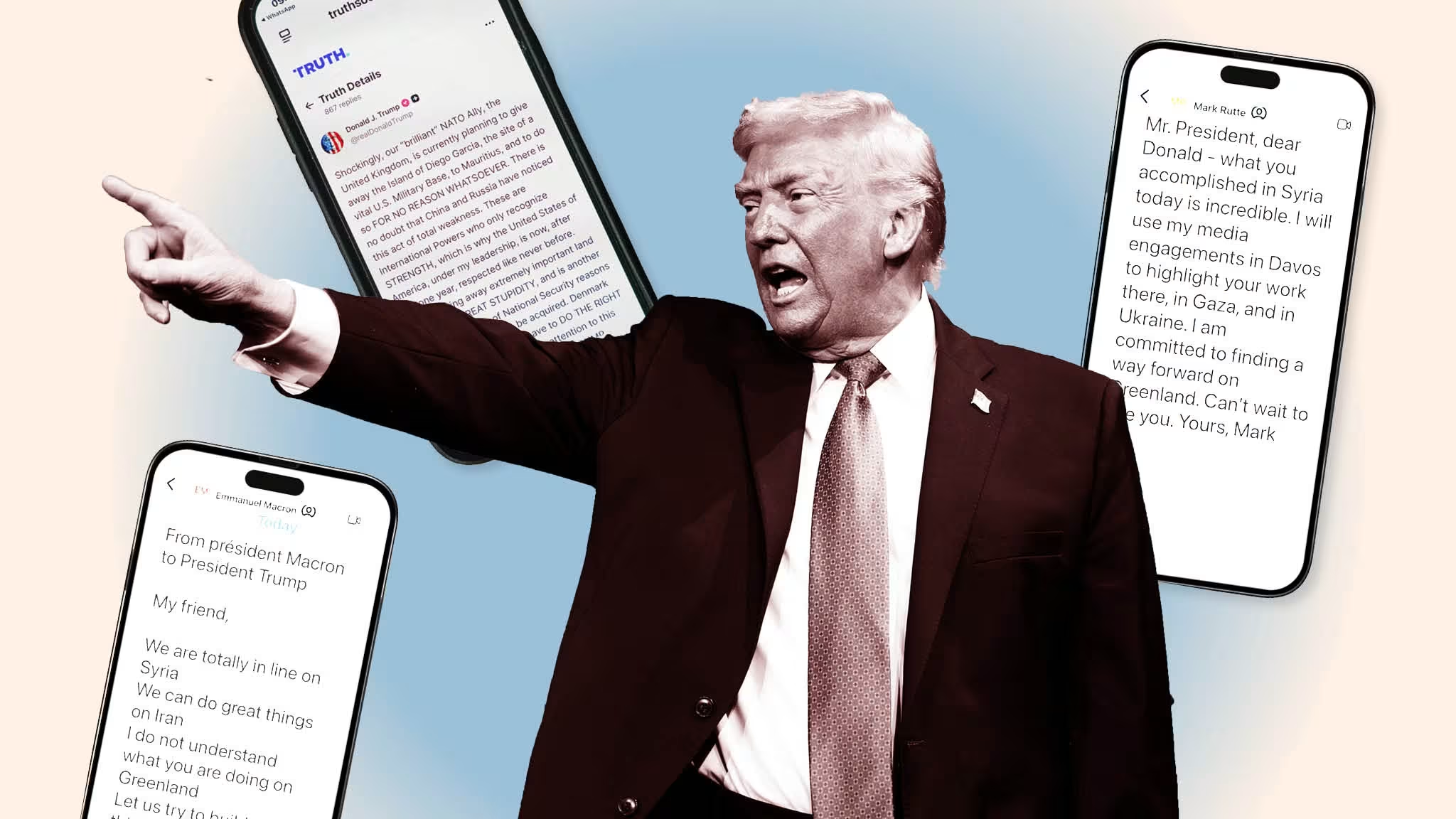
Donald Trump’s presidency was characterized by an unprecedented and often bewildering approach to communication, a strategy that transformed casual mockery and personal insults into potent tools of both domestic political messaging and international diplomacy.
Donald Trump’s presidency marked a significant departure from traditional diplomatic and political engagement, as he ingeniously transformed personal insults and derisive commentary into a formidable instrument for shaping both domestic discourse and international relations. This essay will delve into the multifaceted ways in which Trump leveraged mockery, dissecting its strategic utility, its impact on established norms, and its enduring legacy.
The Genesis of the Mockery Machine
From his earliest forays into public life, Donald Trump displayed an affinity for aggressive and often colorful language. This predilection, initially perceived by many as mere boorishness or a symptom of his celebrity persona, gradually evolved into a finely tuned instrument of political communication. His rallies, his social media pronouncements, and his impromptu press conferences became stages for a performance art of verbal assault. Nicknames were coined with remarkable speed and stickiness – "Crooked Hillary," "Sleepy Joe," "Little Marco," "Lyin’ Ted" – each designed to encapsulate a perceived weakness or flaw and lodge it in the public consciousness.
This strategy was not born out of a vacuum. It tapped into a deep well of public cynicism and disillusionment with conventional politics. For many voters, Trump’s unfiltered, often coarse, language represented an authentic rejection of the perceived insincerity and obfuscation of the political establishment. His insults were not just attacks; they were signals of rebellion, delivered with a theatrical flair that captivated his base and often left his opponents scrambling to respond.
Mockery as a Domestic Political Tactic
Domestically, Trump’s use of mockery served several critical functions. Firstly, it was a powerful tool for consolidating his base. By targeting perceived enemies – the media, political opponents, "establishment" figures – he reinforced a sense of "us versus them," galvanizing his supporters and creating an echo chamber where dissenting voices were often derided into silence. The shared experience of witnessing these verbal skirmishes fostered a sense of camaraderie and belonging among his followers.
Secondly, mockery served to dominate the news cycle. Trump’s often outrageous statements, frequently delivered via Twitter, were designed to elicit strong reactions, ensuring constant media attention. This attention, regardless of its tone, kept him at the forefront of public discourse, overshadowing the policy initiatives or criticisms of his rivals. The sheer volume and shock value of his pronouncements made it difficult for traditional media outlets to ignore him, effectively granting him a level of earned media that few politicians could ever achieve.
Thirdly, this linguistic aggression was a means of de-legitimizing opponents. By labeling individuals or institutions as "fake," "dishonest," or "corrupt," Trump sought to erode their credibility in the eyes of his supporters. This tactic proved particularly effective against the press, which he repeatedly characterized as "the enemy of the people." This sustained assault on the credibility of news organizations created an environment where factual reporting was often dismissed as biased propaganda by a significant portion of the electorate.
Mockery as a Diplomatic Weapon
The application of Trump’s distinctive communication style extended beyond domestic politics into the complex arena of international relations, with often unpredictable results. His approach to diplomacy was characterized by a willingness to disregard established protocols and engage in personal invective, even when addressing heads of state.
One of the most prominent examples of this was his relationship with North Korean leader Kim Jong Un. Initially, Trump engaged in a dangerous war of words, referring to Kim as "Little Rocket Man" and threatening to unleash "fire and fury" upon North Korea. This heightened rhetoric, while alarming to many, ultimately paved the way for a series of unprecedented summits between the two leaders. The question remains whether this was a strategic diplomatic gambit or a fortunate, if risky, byproduct of his unconventional style.
His interactions with allies also saw a departure from traditional diplomatic niceties. He frequently questioned the value of long-standing alliances, such as NATO, and engaged in public spats with leaders of allied nations, often through Twitter. He labeled the European Union a "trading disgrace" and publicly criticized the leaders of Canada and Germany. This approach, while alienating some traditional partners, was perceived by others as a sign of strength and a willingness to challenge the status quo.
The rationale behind this diplomatic approach, from Trump’s perspective, appeared to be a belief that by being provocative and unpredictable, he could disrupt established power dynamics and extract concessions. He seemed to operate under the assumption that perceived weakness or politeness in international negotiations was a disadvantage. By adopting an aggressive and often insulting posture, he aimed to project an image of strength and unpredictability, forcing other nations to engage on his terms. This "America First" doctrine, as articulated through his blunt and often abrasive language, signaled a willingness to break from multilateralism and prioritize bilateral deals, even if it meant alienating traditional allies.
The Psychological Impact and Underlying Strategy
The effectiveness of Trump’s mockery can be attributed to several psychological factors. Firstly, it tapped into a primal human tendency to respond to direct confrontation. His insults were often simple, visceral, and easy to understand, bypassing nuanced policy debates and appealing directly to emotions. Secondly, his consistent application of these tactics created a sense of predictability within his own strategy, even as his pronouncements themselves were unpredictable. His supporters learned to anticipate his attacks, and his opponents often struggled to find an effective counter-strategy that wouldn’t fall into his trap.
Beneath the surface of what appeared to be impulsive outbursts, there was often a discernible strategic intent. The mocking nicknames, for instance, were not random. They were carefully chosen to highlight perceived vulnerabilities or character flaws, aiming to diminish the target’s authority and make them appear less credible. This was a form of psychological warfare, designed to destabilize opponents and control the narrative.
Furthermore, Trump’s embrace of what many considered to be uncivil discourse allowed him to reframe the rules of engagement. By lowering the bar for acceptable political rhetoric, he made it more difficult for opponents to criticize him on grounds of impropriety without appearing to be overly sensitive or out of touch with the public mood. This created a dynamic where his opponents were often forced to engage on his terms, responding to his provocations rather than setting their own agenda.
The Enduring Legacy and Future Implications
The long-term consequences of Donald Trump’s weaponization of mockery are still unfolding. Domestically, it has contributed to a further polarization of the political landscape, where respectful dialogue has become increasingly rare. The normalization of insults and personal attacks in public discourse has arguably eroded civic norms and made constructive political engagement more challenging.
Internationally, his approach has left a mixed legacy. While some argue that his unconventional diplomacy opened new avenues for dialogue with adversaries, others contend that it damaged relationships with key allies and undermined the stability of the international order. The precedent set by his administration suggests that future leaders may feel emboldened to adopt similar communication strategies, potentially leading to a more volatile and unpredictable global political environment.
The rise of Donald Trump and his distinctive brand of communication offers a compelling case study in the evolving nature of political and diplomatic engagement. His ability to transform personal derision into a potent political weapon highlights the significant impact that communication style can have on public perception, domestic politics, and international relations. While the long-term effects of this approach remain to be fully assessed, it is undeniable that Donald Trump irrevocably altered the landscape of political discourse, demonstrating that in the modern era, the art of the insult can indeed be a formidable instrument of power. The challenge for future leaders and societies will be to navigate this new terrain, finding ways to engage effectively without succumbing to the corrosive effects of unchecked personal attack.

 Aura Kasih
 Safa Marwah
 Lisa Mariana


 Ayu Aulia