
 Safa Marwah
In a profound strategic maneuver, cybersecurity researchers have successfully leveraged a critical cross-site scripting (XSS) vulnerability embedded within the web-based administrative panels employed by operators of the pervasive StealC information-stealing malware. This exploitation granted the research team unprecedented visibility into the illicit operations, allowing for the direct observation of active threat actor sessions, the collection of detailed hardware fingerprints, and the extraction of valuable intelligence pertaining to the adversaries’ methods and identities. This incident represents a significant disruption to the established cybercrime ecosystem, effectively turning the tables on a prominent malware-as-a-service (MaaS) platform.
The StealC malware first surfaced in early 2023, quickly establishing itself as a formidable presence within the dark web’s illicit markets. Its rapid ascent to prominence was largely attributable to aggressive promotional campaigns across various cybercrime forums and its robust capabilities for data exfiltration and evasion. The malware was designed to aggressively target sensitive information, including credentials, financial data, and personal identifiable information (PII), from compromised systems. Its initial release showcased a sophisticated toolkit, but subsequent iterations further solidified its position as a top-tier info-stealer.
Over the ensuing years, the developers behind StealC consistently introduced substantial enhancements, reflecting a continuous effort to maintain its competitive edge and address evolving defensive measures. A notable milestone was the release of version 2.0 in April of the subsequent year. This update brought a suite of advanced features, including integrated Telegram bot support for real-time compromise alerts, enabling operators to receive instant notifications of successful infections and data exfiltrations. Furthermore, a new, highly customizable builder was introduced, empowering threat actors to generate bespoke StealC builds tailored to specific campaign objectives, incorporating unique templates and custom rules for data theft. These continuous improvements underscored the malware’s adaptability and the developers’ commitment to enhancing its utility for their clientele.

The pivotal opportunity for researchers arose concurrently with the release of StealC v2.0, when the source code for the malware’s backend administration panel was inadvertently leaked. This critical disclosure provided security researchers with an invaluable window into the internal workings of the StealC infrastructure. It allowed for meticulous analysis of the panel’s architecture, functionalities, and, crucially, its inherent vulnerabilities. This leak proved to be a strategic misstep for the StealC operators, unknowingly exposing their operational command center to the scrutiny of legitimate cybersecurity experts.
Leveraging this leaked source code, researchers at CyberArk identified a critical cross-site scripting (XSS) vulnerability within the administrative panel. XSS flaws typically allow attackers to inject malicious client-side scripts into web pages viewed by other users. In this context, the researchers successfully injected code that enabled them to perform a variety of intrusive actions against the StealC operators themselves. These actions included the comprehensive collection of browser and hardware fingerprints, offering insights into the operators’ computing environments. More critically, the vulnerability allowed researchers to observe active sessions of StealC operators in real-time, providing a unique vantage point into their daily activities and campaign management. Furthermore, the XSS flaw facilitated the theft of session cookies from the panel, which subsequently enabled the researchers to remotely hijack and control operator sessions, effectively taking over their administrative interfaces.
The implications of this successful exploitation were profound. As detailed by the research team, "By leveraging the vulnerability, we were able to ascertain distinct characteristics of the threat actors’ computing environments, including general geographical indicators and granular details about their hardware configurations." This direct access allowed for an unprecedented level of intelligence gathering on individuals who, until then, operated largely with impunity. The ability to retrieve active session cookies proved particularly potent, granting the researchers full control over the compromised sessions from their own secure machines, thereby neutralizing the operators’ control over their own illicit infrastructure.

CyberArk, in a deliberate strategic decision, chose not to disclose the specific technical details of the XSS vulnerability. This measured approach was taken to prevent StealC operators from quickly identifying, patching, and subsequently fortifying the flaw. Such a pre-emptive disclosure would have negated the disruptive potential of the discovery. Instead, the focus was placed on the strategic implications and the intelligence gained, ensuring maximum impact on the cybercriminal operations without providing an immediate remediation roadmap for the adversaries.
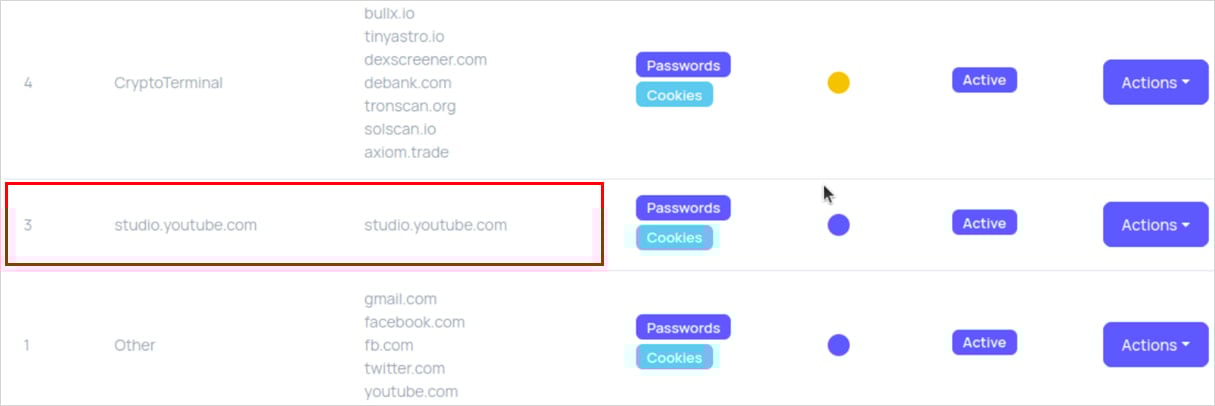
The intelligence harvested from this operation provided concrete examples of StealC’s utilization. One particular case highlighted a customer, internally designated as ‘YouTubeTA,’ who engaged in extensive malicious campaigns throughout the year 2025. This operator specialized in hijacking antiquated, legitimate YouTube channels, likely through the use of previously compromised credentials. These compromised channels were then weaponized to disseminate infecting links, serving as vectors for the StealC malware. Over the course of their operations, YouTubeTA amassed a significant collection of illicit data, totaling over 5,000 victim logs, approximately 390,000 stolen passwords, and an astonishing 30 million cookies, although the majority of these cookies were deemed non-sensitive.
Further analysis of screenshots captured from YouTubeTA’s compromised panel revealed the primary infection vectors employed by this particular threat actor. A significant proportion of infections occurred when unsuspecting victims searched for pirated versions of popular software, specifically Adobe Photoshop and Adobe After Effects. This indicates a targeted approach leveraging common user behaviors associated with illicit software acquisition, a well-known tactic within the cybercrime community.
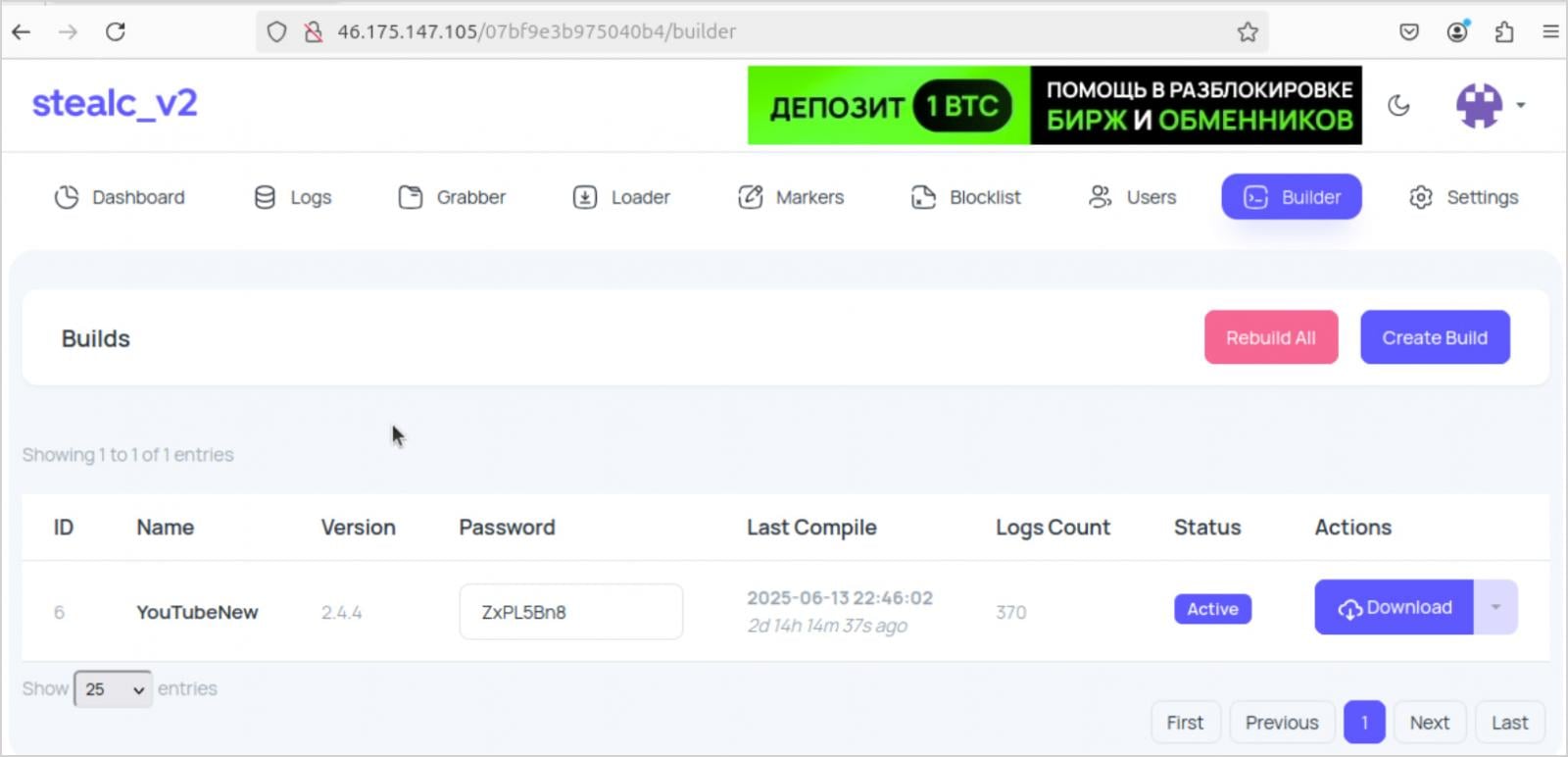
Beyond operational insights, the XSS flaw provided critical attribution data. By exploiting the vulnerability, researchers were able to precisely determine the technical profile of the YouTubeTA operator. The attacker utilized an Apple M3-based system, configured with both English and Russian language settings, and operated within an Eastern European time zone. Crucially, the attacker’s location was definitively exposed when they neglected to route their connection to the StealC panel through a VPN. This operational security lapse revealed their true IP address, which was subsequently traced to TRK Cable TV, an internet service provider based in Ukraine. This oversight underscores the inherent risks faced by cybercriminals who rely on shared infrastructure and may, at times, fail to maintain rigorous operational security protocols.
This incident serves as a stark illustration of the inherent vulnerabilities within the Malware-as-a-Service (MaaS) paradigm. While MaaS platforms offer rapid scalability and ease of deployment for threat actors, they simultaneously introduce significant exposure risks. The reliance on centralized infrastructure, often developed with less rigorous security standards than legitimate applications, creates single points of failure that can be exploited by skilled defenders. This "hack-back" scenario demonstrates that the very tools and platforms designed to facilitate cybercrime can become conduits for intelligence gathering and disruption when vulnerabilities are identified and exploited.
BleepingComputer engaged with CyberArk regarding the timing of this disclosure. Ari Novick, a researcher involved in the operation, explained the strategic rationale: "We observed a notable surge in the number of StealC operators in recent months, possibly in response to the operational turmoil surrounding Lumma, a competing info-stealer, a couple of months ago." This increase presented a unique opportunity. "By publicly disclosing the existence of this XSS vulnerability, we aim to instigate significant disruption in the utilization of the StealC malware, prompting operators to reassess its viability," Novick elaborated. Given the current proliferation of StealC operators, this disclosure is poised to cause a substantial ripple effect across the MaaS market, compelling threat actors to reconsider their choice of tools and potentially shifting market dynamics within the illicit economy.
The ramifications of such disclosures extend beyond immediate operational disruption. They provide invaluable intelligence for the broader cybersecurity community, shedding light on the evolving tactics, techniques, and procedures (TTPs) of sophisticated info-stealers and their operators. For defenders, understanding these vulnerabilities within cybercriminal infrastructure offers new avenues for proactive defense and intelligence-driven threat hunting. It underscores the importance of continuous vigilance, even against the tools used by adversaries, and highlights the potential for innovative counter-offensives in the perpetual cat-and-mouse game of cybersecurity. This incident reinforces the notion that no system, legitimate or illicit, is entirely immune to determined and skilled exploitation, and that the weaknesses of adversaries can be leveraged to their own detriment.



 Lisa Mariana
 Aura Kasih


 Ayu Aulia