Aura Kasih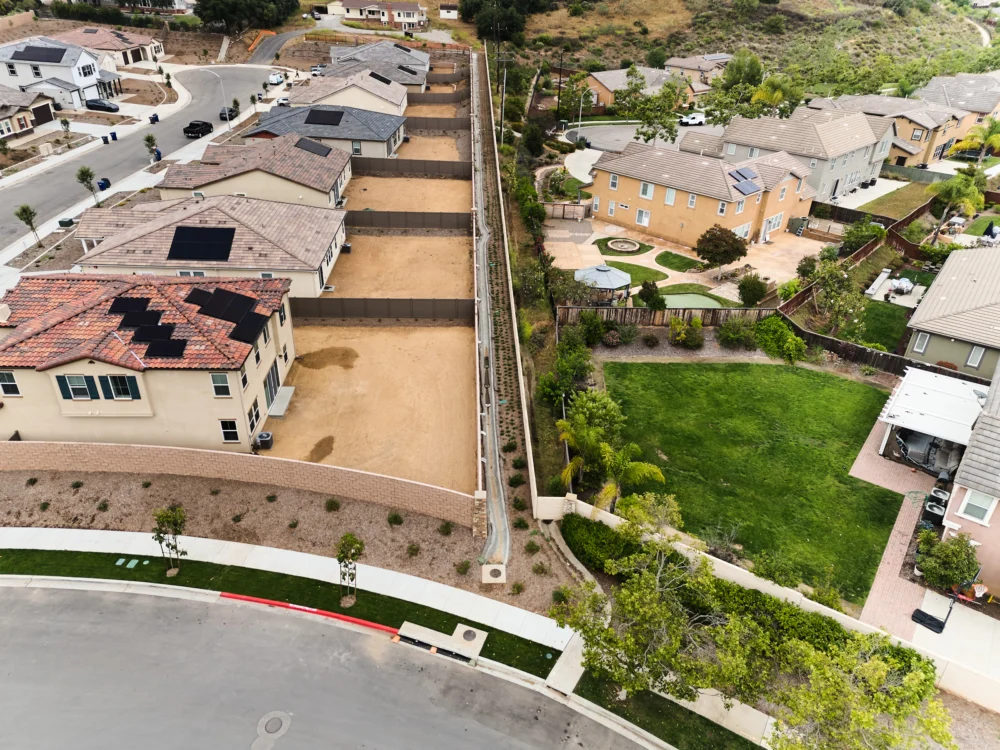
As climate change intensifies wildfire seasons, cities and communities across fire-prone regions are shifting from reactive defense to proactive resilience, fundamentally altering how urban development and homeownership intersect with environmental risk. This paradigm shift, exemplified by innovative strategies in California, underscores the critical need for integrated approaches that safeguard communities from the ground up.

The burgeoning threat of increasingly destructive wildfires necessitates a departure from traditional firefighting methods. While emergency responders remain vital, the sheer scale and ferocity of modern conflagrations demand a multi-faceted strategy that begins long before the first ember ignites. This involves a concerted effort by developers, homeowners, policymakers, and researchers to create environments inherently more resistant to ignition and the rapid spread of flames. The lessons learned from devastating fire seasons, such as the widespread destruction witnessed in Southern California in early 2025, are driving a more urgent and comprehensive approach to urban planning and construction in areas historically considered at risk.

The phenomenon of the wildland-urban interface (WUI), where human settlements abut undeveloped natural landscapes, has become a focal point for these resilience efforts. As populations grow and housing markets strain, more people are compelled to build and reside in these high-risk zones. This proximity amplifies the danger, as wind-driven embers can easily travel from wildlands into neighborhoods, initiating a chain reaction of structural ignitions. Understanding the three primary mechanisms of structural ignition – ember intrusion, direct flame impingement, and radiant heat transfer – is fundamental to developing effective mitigation strategies.

Deconstructing Wildfire Dynamics: From Ignition to Inferno

The critical analysis of wildfire behavior reveals that megafires often originate from seemingly minor ignitions, such as a single ember finding purchase on flammable material. The wildland-urban interface, a zone characterized by the juxtaposition of natural vegetation and human habitation, is particularly vulnerable. In these areas, prevailing winds can act as powerful conduits, propelling embers from forest or brush fires directly into residential areas. These errant sparks can find entry through minute openings in structures, such as vents, or ignite nearby vegetation, creating a cascading effect that rapidly escalates a localized fire into a community-wide inferno.

The destructive potential of a wildfire is magnified when multiple structures ignite in close proximity. The resulting increase in ember production and direct flame contact creates an environment of intense radiant heat, capable of igniting even fire-resistant materials. This interconnectedness of ignition points highlights a crucial aspect of wildfire science: the most effective defense is not solely individual homeowner action, but a collective, community-wide hardening against these threats. This principle is increasingly being integrated into building codes and development practices.

The historical context of fire management in regions like California is also essential to understanding current challenges. Centuries of fire suppression policies, while intended to protect communities, have inadvertently led to an accumulation of dead vegetation. This increased fuel load, combined with the exacerbating effects of climate change – characterized by longer, hotter, and drier fire seasons – creates conditions ripe for exceptionally large and intense wildfires. Human-induced climate change has demonstrably lengthened fire seasons and increased the acreage burned annually across California, necessitating adaptation strategies that go beyond historical norms.

Furthermore, the economic and social pressures driving population growth in WUI areas cannot be ignored. The scarcity and escalating cost of housing in urban centers often push residents towards more affordable, yet higher-risk, outlying areas. This trend, documented by federal data indicating a significant increase in WUI housing stock since the 1990s, means that a substantial portion of the population is now more exposed to wildfire threats. While concepts like "managed retreat" are discussed as potential adaptations, their feasibility and fairness are often questioned, especially for populations with limited resources and fewer safe alternatives.

The Science of Resilience: Building and Community-Level Defense

The successful resistance of communities like Cielo in Rancho Santa Fe to the Witch Creek Fire of 2007 serves as a critical case study in proactive wildfire mitigation. This neighborhood, along with other developments constructed after the implementation of stricter building codes, emerged unscathed from an inferno that destroyed numerous older structures. The key differentiator was the adoption of enhanced building standards, including mandatory residential fire sprinklers and the establishment of robust defensible space around homes. These measures, later adopted into statewide building codes, demonstrated the tangible impact of fire-resistant construction.

The concept of "hardening" a home refers to the process of making it more resistant to embers, direct flames, and radiant heat. This involves a range of construction and landscaping techniques. For example, California building codes now mandate features such as ember-resistant vents, double-pane windows with tempered glass, and non-combustible roofing materials. The community of Dixon Trail in Escondido, California, represents a further advancement in this field, built to meet the rigorous home and neighborhood-level wildfire resilience standards developed by the Insurance Institute for Business & Home Safety (IBHS).

At Dixon Trail, homeowners encounter a deliberate design philosophy aimed at minimizing ignition risks. This includes a mandatory five-foot perimeter of gravel and concrete around each home, known as "defensible space," which effectively removes flammable vegetation close to the structure. Beyond this critical buffer, the homes themselves incorporate advanced features. Garage doors are constructed from non-combustible materials, eliminating plastic windows that could melt and allow embers to enter. Eaves are designed with non-combustible stucco soffits to block ember intrusion, and retaining walls are made of steel, a material offering superior fire resistance compared to wood. These features, while enhancing safety, are increasingly being integrated into new developments without significantly increasing construction costs, particularly when compared to the escalating costs of insurance and potential rebuilding.

The economic implications of wildfire resilience are profound. Homeowners in high-risk areas face soaring insurance premiums, with some experiencing dramatic annual increases. The move to a fire-resilient community like Dixon Trail has shown a marked reduction in these costs for residents, providing a tangible financial incentive for adopting these advanced building standards. This economic benefit, coupled with the enhanced safety, underscores the value proposition of fire-resilient development.

Community-Wide Strategies: From Individual Properties to Landscape Management

Beyond individual home hardening, community-level initiatives are paramount for comprehensive wildfire preparedness. This includes the management of shared natural spaces, which can act as either fire accelerators or buffers. In communities like Rancho Santa Fe, homeowner associations are actively engaged in ecological management to reduce wildfire risk. This involves the removal of dead or dying trees, thinning of undergrowth to prevent the formation of "ladder fuels" that allow fires to climb into canopies, and the strategic replacement of highly flammable, non-native species like eucalyptus with more fire-resistant native vegetation.

The implementation of these landscape management strategies requires a delicate balance, particularly when dealing with beloved natural features. However, the stark reality of wildfire devastation often necessitates difficult decisions. The Arroyo project, a significant undertaking by the San Dieguito River Valley Conservancy, exemplifies a large-scale effort to transform a river corridor into a natural firebreak. By removing invasive, water-intensive trees and restoring native riparian species, the project aims to create a more resilient landscape that can slow or halt the progression of wildfires. This initiative highlights the critical role of ecological restoration in bolstering community safety.

Technological advancements are also playing an increasingly important role in wildfire preparedness. Aerial imagery, utilizing multispectral cameras, can provide homeowners and community managers with detailed insights into the health of vegetation. This technology can identify stressed or dying plants that may be more susceptible to ignition, allowing for targeted intervention before they become a significant fire hazard. By providing a unique perspective, these tools empower property owners to take more informed and effective actions to maintain defensible space.

Furthermore, community designations such as "Firewise" recognize neighborhoods that have implemented comprehensive wildfire risk reduction programs. These programs, often involving collaboration between residents, local authorities, and insurance providers, can lead to reduced insurance premiums and provide a framework for ongoing community engagement in fire safety. Such designations foster a sense of shared responsibility and collective action, reinforcing the understanding that community resilience is a shared endeavor.

The ongoing efforts in California and beyond reflect a critical evolution in our approach to living in fire-prone landscapes. The devastating fires of recent years have served as a stark reminder that proactive, science-based strategies are not merely optional but essential for the long-term survival and prosperity of our communities. As climate change continues to reshape our environment, the integration of resilient building practices, intelligent landscape management, and robust community-wide preparedness initiatives will be paramount in fortifying our cities against the escalating threat of wildfires. The future of urban development in these regions hinges on a commitment to building not just homes, but entire fire-resistant ecosystems.




 Lisa Mariana
 Safa Marwah
 Ayu Aulia