
 Lisa Mariana
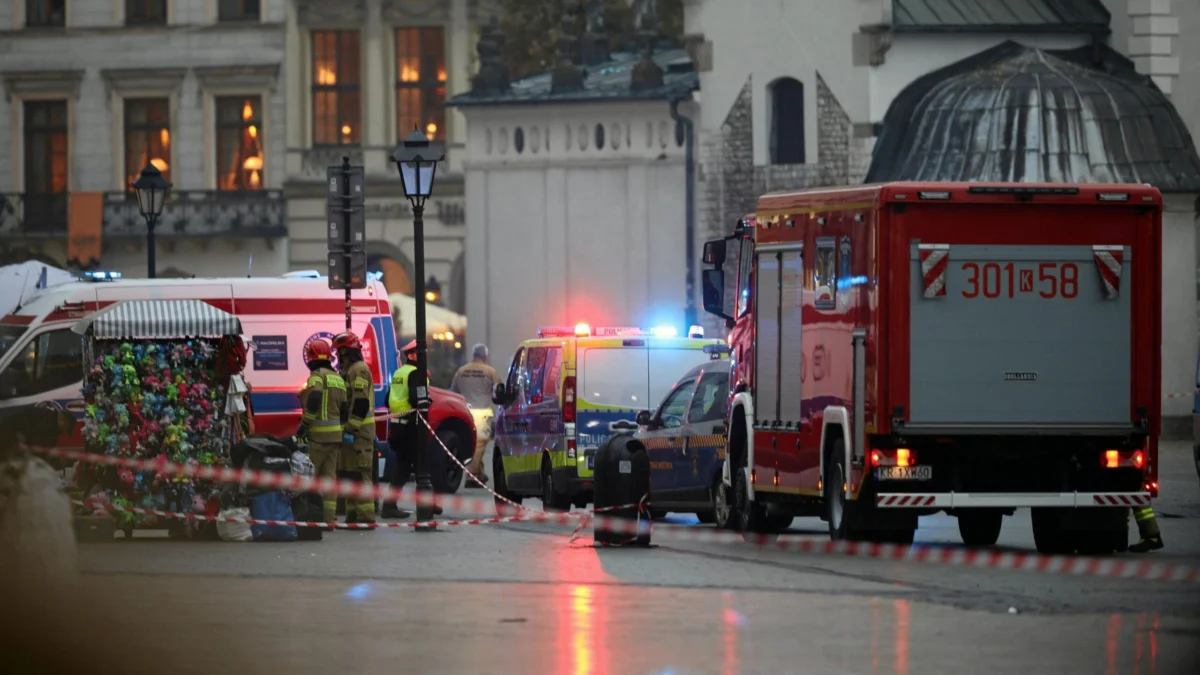
A devastating act of violence unfolded in the historic heart of Krakow, Poland, claiming multiple lives and leaving a vibrant community grappling with shock. The assault, which saw a lone gunman open fire indiscriminately in the city’s iconic Main Market Square before additional victims were discovered at his residence, has prompted a swift and multifaceted investigation into the motives and circumstances behind this unprecedented tragedy in a nation known for its strict gun control.
The Unfolding Catastrophe in Krakow’s Heart
The tranquility of Krakow’s Main Market Square, a UNESCO World Heritage site and a bustling hub for both locals and international visitors, was shattered shortly before 15:00 local time (14:00 GMT). Eyewitness accounts and verified footage depict a harrowing scene as a man, driving into the square, began to discharge a firearm at random individuals from within his vehicle. The sudden burst of gunfire plunged the usually serene square into chaos, with crowds scattering in a desperate search for cover.
The perpetrator’s rampage extended beyond the immediate vicinity of his car. A passing tram, a common mode of transport in the city, bore the brunt of the assault, its windows shattering under a hail of bullets. Miraculously, despite the extensive damage, no passengers on board were reported to have sustained injuries. The rapid escalation of the event underscored the immediate and grave danger posed to the public.
Within minutes of the initial reports, armed police units converged on the scene, demonstrating a remarkably swift response. Officers engaged the assailant in a direct confrontation, culminating in the suspect being shot and apprehended within approximately three minutes of the attack commencing. This decisive action is widely credited with preventing a potentially far greater loss of life. Distressing video evidence, authenticated by independent verification services, captured the intense moments of the police encounter, showing an officer confronting the suspect on the ground and firing, before himself appearing to be injured.
The aftermath revealed a scene of profound disruption. Bullet impacts scarred shop windows around the square, with shattered glass littering the pavements. City authorities immediately issued urgent advisories, urging both residents and tourists to avoid the affected area as a comprehensive investigation and security sweep commenced. The suspect’s vehicle, located at the intersection of Dietla and Stradomska streets, was meticulously examined for any potential explosive devices, necessitating the temporary evacuation of nearby buildings as a precautionary measure, though no explosives were ultimately discovered.
A Tragic Toll: Casualties and Injuries
The scale of the human cost from this horrific event became increasingly clear as authorities pieced together the details. Six individuals – four women and two men – have been confirmed deceased. Among the fatalities is a British national, alongside three Polish citizens, while the identities of two other victims remain unconfirmed pending further investigation.
Beyond the immediate fatalities in the square, the tragedy deepened with the discovery of three additional bodies – two women and one man – during a police search of the gunman’s residence following his apprehension. This finding significantly broadens the scope of the incident, suggesting a more complex and premeditated sequence of events.
In total, sixteen people, including five foreign nationals and the attacker himself, received medical treatment in various hospitals. The injured include two police officers, Senior Constable Jakub Kulik and Senior Constable Artur Morański, who sustained gunshot wounds during their courageous efforts to detain the assailant. One of these officers was described by a Polish government minister as being in a "very critical condition" after suffering three gunshot wounds and undergoing extensive surgery, highlighting the extreme peril faced by first responders. The injured foreigners were identified as citizens from Britain, Austria, Russia, Germany, and Portugal, underscoring the international impact of the attack in a major European tourist destination. Authorities have refrained from releasing the names and ages of other victims, respecting the privacy of those affected and their families.

Profiling the Suspect and Unraveling the Motive
The individual responsible for the attack has been identified by police as a 25-year-old Polish man, though his name has not been officially released. Initial reports described him as wearing "military-style attire" and wielding a "military-grade weapon," prompting immediate speculation. However, authorities swiftly clarified that the suspect was not a serving member of the armed forces. A substantial cache of weapons and ammunition was reportedly discovered in his vehicle, indicating a degree of preparedness.
Polish media sources have suggested that the suspect possessed a valid firearms permit and may have acquired his weapons from his family home, raising questions about the circumstances of legal gun ownership in Poland, despite its strict regulations.
A significant and deeply concerning development in the investigation is the preliminary indication that the assailant was inspired by "far-right ideologies." A government minister further elaborated, describing the suspect as an "ultra-nationalist," without providing specific details regarding the nature of these beliefs or any potential affiliations. This ideological dimension has led to the involvement of counter-terrorism police in the search of his home, signifying the gravity with which authorities are treating the potential extremist motivations behind the assault. The investigation will undoubtedly focus on uncovering the extent of his radicalization, his potential connections to extremist groups, and the specific triggers that led to this violent act.
Witness Perspectives from a Scene of Panic
The Main Market Square, one of Europe’s largest medieval plazas, is typically a place of vibrant activity and historical charm. The sudden eruption of gunfire transformed this familiar landscape into a zone of terror, as recounted by those who witnessed the unfolding events.
Jonathan Balshaw, an Ipswich resident visiting with his Polish girlfriend Dominika, described being near St Mary’s Basilica when the shooting commenced. "We ran down the side of the church and through the side door and hid with several other people until the gunfire died down," he recounted, emphasizing the sheer volume of shots fired: "A lot of shots were fired, more than 20 with it sounding like multiple different firearms – there were two distinctly different noises." This detail suggests either the rapid cycling of a single weapon or the use of multiple firearms, adding to the intensity of the experience.
Caitlin Shasby from Newcastle, who had arrived in Krakow for a weekend getaway, heard the shots from her hotel room. Initially unsure of the commotion, she and her friend Jon were soon informed by their hotel to "stay in our rooms until further notice," a testament to the swift communication and precautionary measures implemented across the city. Such accounts highlight the abrupt shift from routine tourism to a state of heightened alert, encapsulating the pervasive fear that gripped the city.
National Mourning and International Condemnation
The shooting has elicited a profound reaction both within Poland and across the international community, marking a rare instance of such public violence in the country. Prime Minister Donald Tusk, traveling to Krakow in the immediate aftermath, articulated the collective shock: "Until now in Poland we haven’t had such drastic cases of terrorism…that’s what we have to call this cruel attack on people’s lives here in Krakow." His statement underscores the unprecedented nature of the incident and its classification as a potential act of terrorism, given the apparent indiscriminate targeting and ideological leanings.
In a gesture of communal grief and solidarity, Krakow Mayor Łukasz Gibała promptly declared a period of official mourning for the city, lasting until Wednesday, 11 November. This civic response provides a framework for remembrance and healing within the affected community.

Internationally, the condemnation was swift and strong. Tom Rose, the US ambassador to Poland, characterized the event as a "savage and murderous attack," reflecting the severity of the violence. Kaja Kallas, the EU’s top diplomat, echoed these sentiments, stating that the shooting was "a tragedy that will be felt far beyond Poland," acknowledging the broader European impact of such an attack in a major member state.
Background and Context: Poland’s Exceptional Safety Record
This tragic event stands in stark contrast to Poland’s generally low rates of violent crime and its stringent firearms regulations. Poland maintains some of Europe’s most rigorous gun control laws, with firearms ownership primarily restricted to licensed hunters, sport shooters, and security personnel, requiring extensive background checks, psychological evaluations, and demonstrable need. Public mass shootings are exceedingly rare, making this incident a profound anomaly that challenges the nation’s perception of safety.
Krakow itself, a city steeped in history and culture, is a premier tourist destination, drawing millions annually to its medieval architecture, vibrant cultural scene, and historical significance. The choice of such a prominent public space for an act of violence sends a chilling message, disrupting the sense of security associated with one of Europe’s most cherished urban centers.
The preliminary indications of the suspect’s affiliation with "far-right ideologies" introduce a concerning dimension to the investigation. While Poland has seen sporadic activity from ultra-nationalist groups, large-scale, indiscriminate violence explicitly linked to such extremism has historically been uncommon. The incident prompts a deeper examination into the potential radicalization pathways within Polish society, including the influence of online extremist narratives and any domestic or international networks that might foster such dangerous ideologies. This context will be crucial for understanding not only the individual motive but also any broader societal undercurrents that might have contributed to the tragedy.
Implications and Future Outlook
The Krakow shooting will undoubtedly have significant implications for public safety protocols and national discourse in Poland. The immediate and effective police response, which neutralized the threat within minutes, will likely be analyzed as a case study in rapid intervention. However, the nature of the attack – a lone actor with ideological motivations – presents a complex challenge for preventative security measures. Authorities will face pressure to review and potentially enhance security in crowded public spaces, particularly in tourist-heavy areas, without impinging excessively on public freedoms.
Politically, the incident is expected to fuel discussions regarding the monitoring and combating of extremist ideologies within Poland. While existing counter-terrorism frameworks are robust, the focus may shift towards identifying and disrupting lone-wolf actors or small, radicalized cells more effectively. Despite Poland’s strict gun laws, questions may arise about the efficacy of licensing processes, particularly concerning individuals who may harbor extremist views, even if they meet initial legal criteria for firearm ownership.
The psychological impact on the residents of Krakow and the wider Polish society cannot be understated. Such an act of violence, in a country unaccustomed to it, shatters a collective sense of security and innocence. The period of mourning and community solidarity will be vital for healing.
Looking ahead, the investigation will delve deeply into the suspect’s background, mental state, and any potential connections to organized extremist groups. Forensic analysis of the crime scenes, digital forensics from the suspect’s devices, and extensive interviews will be critical in constructing a complete picture of the motive and modus operandi. The outcome of this investigation will inform future strategies for combating extremism and safeguarding public spaces in Poland, a nation now confronting a new and unsettling dimension of internal security challenges. The tragedy serves as a stark reminder that even in countries with robust safety records, vigilance against radicalization and violence remains a perpetual necessity.

 Aura Kasih

 Ayu Aulia