
 Aura Kasih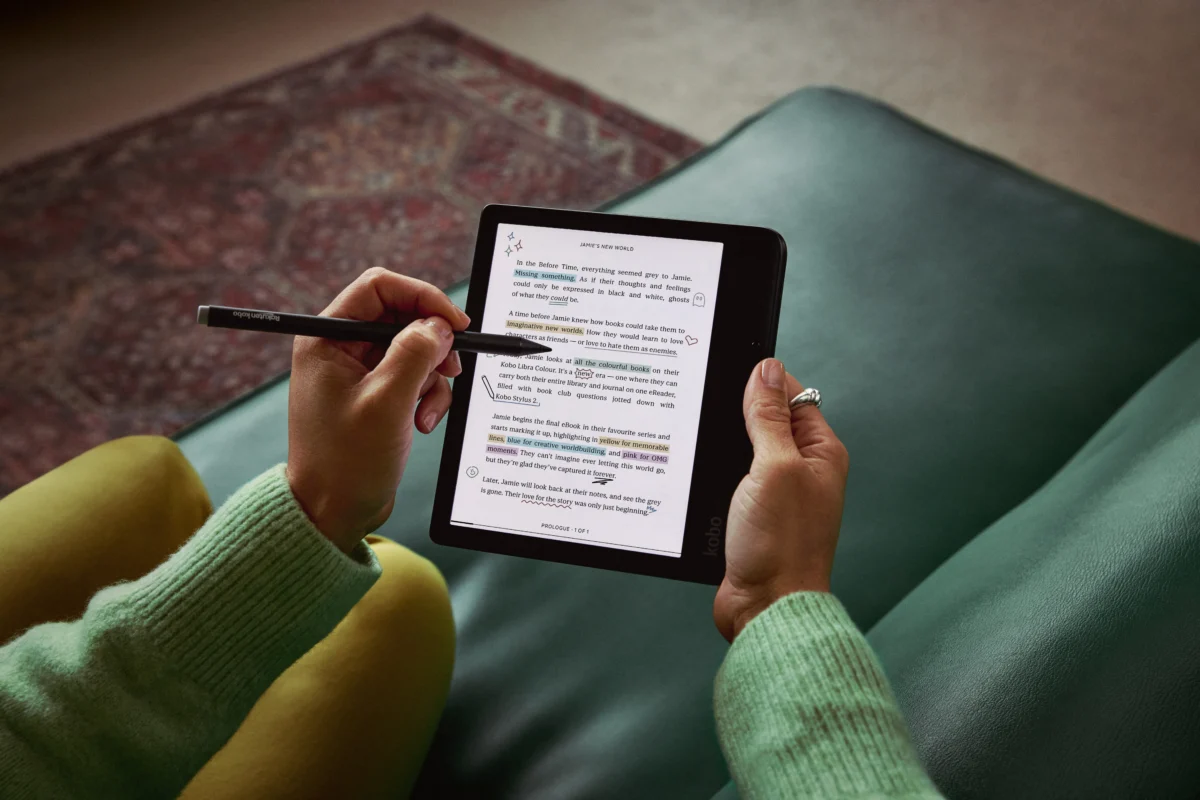
A significant shift in the digital reading landscape is underway as two prominent color e-readers, the Amazon Kindle Colorsoft (16GB) and the Kobo Libra Colour, have simultaneously reached their lowest prices in several months, marking a pivotal moment for consumers seeking enhanced visual experiences without the premium cost. While monochromatic displays have long been the standard for e-readers, offering a paper-like reading experience optimized for text, the inclusion of color opens up a new dimension for consuming a wider array of digital content. This development, driven by substantial discounts, makes the allure of color e-reading more accessible than ever, potentially reshaping user expectations and device adoption.
The advent of color displays on e-readers, primarily utilizing E Ink’s Kaleido technology, has been a gradual but impactful evolution. Initially, color e-readers were a niche product, often carrying a hefty price premium that relegated them to early adopters and enthusiasts. The primary advantage of color lies in its ability to revitalize content that traditionally suffers in grayscale. Digital books with intricate illustrations, vibrant comic panels, visually rich magazines, detailed cookbooks, and even academic texts with color-coded diagrams can now be appreciated with a fidelity previously unattainable on dedicated e-reading devices. This has been a long-standing aspiration for many readers who found the limitations of black and white inadequate for certain genres and content types.
The current price reductions are particularly noteworthy. The Amazon Kindle Colorsoft, equipped with 16GB of internal storage, is now available for $169.99, representing an impressive $80 discount from its typical retail price. This significant markdown positions it as a highly competitive option within the color e-reader market. Similarly, the Kobo Libra Colour, a device lauded for its versatility and robust feature set, has seen its price drop to $199.99, a reduction of $30. While the Kobo’s discount might appear less dramatic in absolute terms, it still represents a substantial incentive for prospective buyers, bringing it closer to the price point of premium monochrome devices. These price adjustments are not merely seasonal promotions; they signal a strategic move by manufacturers to broaden the market appeal of color e-readers and capture a larger segment of consumer interest.
Delving deeper into the technical specifications, both devices feature 7-inch E Ink displays with a sharp 300 pixels per inch (ppi) resolution for monochrome content. When displaying color, this resolution is halved to 150 ppi, a common characteristic of current color E Ink technology. While the Kindle Colorsoft’s display is often cited as being marginally more vibrant, the difference is generally subtle and unlikely to be a decisive factor for most users. Both devices also boast IPX8 water resistance, a crucial feature for many e-reader users, offering peace of mind against accidental spills and enabling worry-free reading sessions in environments such as bathtubs or by the poolside. This shared feature underscores their design intent as durable, portable companions for diverse reading habits.

The choice between the Kindle Colorsoft and the Kobo Libra Colour largely hinges on individual user preferences regarding content acquisition, storage needs, and specific functionalities like note-taking. For individuals deeply integrated into Amazon’s digital ecosystem, the Kindle Colorsoft presents a seamless experience. The purchasing and access of Kindle books are inherently intuitive, eliminating the need for manual file transfers or sideloading. As a more budget-friendly entry into Amazon’s color lineup, the standard Colorsoft offers a reading experience that closely mirrors its more premium counterpart, the Signature Edition. A particularly innovative feature it supports is Amazon’s "Send to Alexa Plus" functionality. This integration allows users to send documents or notes to Amazon’s AI assistant for tasks such as generating summaries, creating to-do lists, or setting reminders, thereby bridging the gap between reading and personal productivity. However, the standard Colorsoft omits certain conveniences found in higher-tier models, such as wireless charging and an auto-adjusting front light, and is equipped with 16GB of storage, half that of the Signature Edition.
Conversely, the Kobo Libra Colour emerges as a compelling alternative, particularly for users who prioritize greater storage capacity and advanced annotation features. With a generous 32GB of internal storage, it accommodates a significantly larger library of books, magazines, and comics. The inclusion of physical page-turn buttons is a significant ergonomic advantage for many readers who prefer tactile feedback over touchscreen navigation. Furthermore, the Libra Colour distinguishes itself with robust stylus support, enabling users to directly annotate documents and books. It also provides built-in notebook templates and the sophisticated capability to convert handwritten notes into typed text, a feature that enhances its utility for students, researchers, and professionals. The device’s compatibility with a broader range of file formats, including the widely adopted EPUB standard, and its integration with services like Instapaper for offline article saving, further bolster its versatility. Coupled with an adjustable warm lighting feature, which is beneficial for reducing eye strain during extended reading sessions, the Kobo Libra Colour presents a well-rounded package for the discerning digital reader.
The strategic pricing of these color e-readers suggests a broader industry trend toward making advanced features more accessible. For years, the e-reader market has been dominated by monochrome devices, which excel at replicating the experience of reading printed text. However, the digital content landscape is diversifying, with a growing demand for visually rich materials. Comic books, graphic novels, illustrated children’s books, and full-color magazines are increasingly popular in digital formats. By lowering the price barrier for color e-readers, manufacturers are not only catering to existing demand but also actively cultivating new market segments. This move could potentially democratize the consumption of visual digital content, making it as convenient and enjoyable as reading plain text.
The technological underpinnings of these devices are crucial to understanding their current appeal. E Ink’s color display technology, while advancing rapidly, still presents certain trade-offs compared to traditional LCD or OLED screens. The primary benefit remains the paper-like quality and exceptional readability in direct sunlight, which are hallmarks of E Ink. However, color saturation and refresh rates have historically been areas where color E Ink lags behind its monochrome counterparts and, of course, conventional displays. The fact that both the Kindle Colorsoft and Kobo Libra Colour offer 150 ppi for color content indicates that while colors are present, the sharpness and detail may not match that of high-resolution color screens on tablets or smartphones. Nevertheless, for the intended use cases – reading comics, magazines, or books with illustrations – the current iteration of color E Ink technology provides a significant improvement over grayscale.
The long-term implications of this pricing strategy are manifold. Firstly, it could accelerate the adoption of color e-readers, leading to increased sales volumes and, consequently, further investment in E Ink’s color display research and development. As manufacturing scales up and technology matures, we can anticipate even more vibrant, faster-refreshing, and potentially higher-resolution color E Ink displays in the future. This could pave the way for more sophisticated applications, such as interactive educational materials or even basic color-based productivity tools.

Secondly, this development puts pressure on manufacturers of premium monochrome e-readers. As color devices become more affordable, the value proposition of a high-end black-and-white reader may need to be re-evaluated. This could lead to more aggressive pricing or feature innovation in the monochrome segment to maintain market share.
Thirdly, the expanded accessibility of color e-reading has significant implications for content creators and publishers. With a larger potential audience for visually rich digital content, publishers may be incentivized to invest more in high-quality color formatting for their e-books, magazines, and graphic novels. This could lead to a richer and more diverse digital content ecosystem.
Looking ahead, the trajectory of color e-readers appears promising. As the technology continues to evolve, we can expect improvements in color reproduction, faster page turns, and potentially even the integration of more advanced features. The current price drops are a strong indicator that manufacturers are committed to making color e-reading a mainstream option, moving beyond its status as a premium luxury. For consumers, this is an opportune moment to explore the enhanced visual capabilities of digital reading at a significantly reduced cost, potentially transforming how they engage with a wide spectrum of digital content. The convergence of advanced display technology and strategic pricing heralds a new era for e-reading, one where color is no longer a prohibitive luxury but an increasingly accessible and integral part of the digital library experience.



 Ayu Aulia
 Safa Marwah
 Lisa Mariana