Ridwan Kamil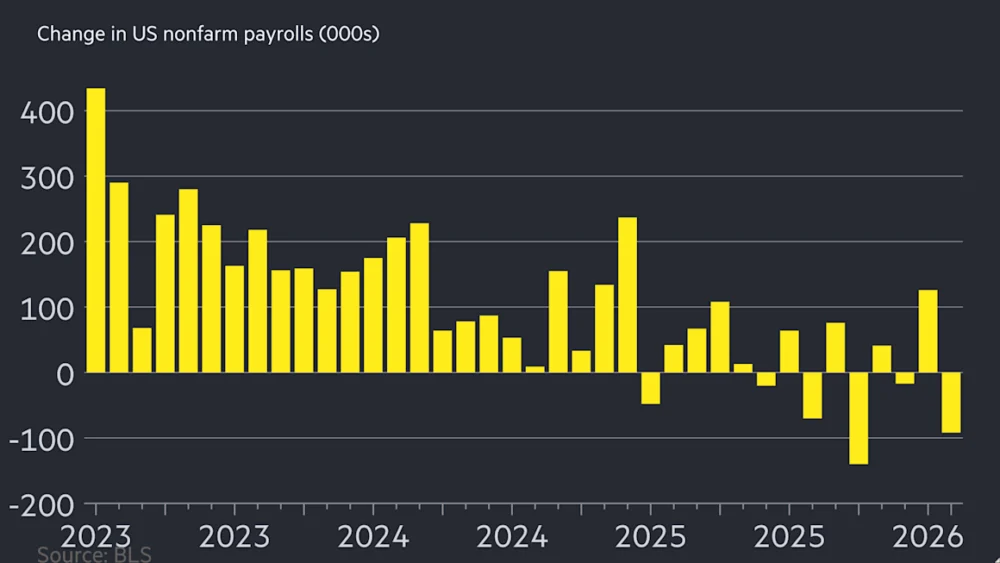
The United States experienced a significant downturn in its labor market during February, with an unexpected shedding of 92,000 jobs, indicating a potential deceleration in economic activity and raising concerns about the nation’s growth trajectory.
The February jobs report delivered a stark contrast to prior expectations, revealing a contraction in employment that deviates considerably from the more robust performance observed in preceding months. This unexpected decline, totaling 92,000 jobs lost, presents a critical juncture for economic policymakers and market participants, prompting a reassessment of the prevailing economic narrative. The figures, released by the Bureau of Labor Statistics, suggest that underlying pressures within the economy are more substantial than previously understood, potentially impacting consumer spending, business investment, and overall confidence. This development is particularly noteworthy given the Federal Reserve’s ongoing efforts to manage inflation without inducing a significant economic slowdown. The February data introduces a new layer of complexity to this balancing act, necessitating a closer examination of the sectors contributing to the job losses and the broader implications for the nation’s economic health.
Unpacking the February Employment Contraction
The headline figure of 92,000 jobs lost in February represents a significant reversal from the more positive employment trends seen in the latter half of 2023 and early 2024. This contraction suggests that the labor market, long considered a bastion of strength supporting the broader economy, may be beginning to falter under the weight of persistent inflation, elevated interest rates, and a general slowdown in global demand.
A detailed examination of the sector-specific data is crucial to understanding the drivers of this downturn. While specific breakdowns are not provided in the initial report, historical patterns suggest that sectors sensitive to interest rate hikes and consumer discretionary spending are often the first to exhibit weakness. Industries such as construction, manufacturing, and certain segments of the retail and hospitality sectors are typically more vulnerable during periods of economic recalibration. A substantial decline in any of these key areas could have ripple effects across the supply chain and consumer confidence.
The nature of the job losses is also a critical factor. Were these temporary layoffs, indicating a short-term adjustment by businesses, or were they permanent reductions in workforce, suggesting a more structural shift in demand or operational efficiency? The distinction is vital for forecasting future employment trends. If businesses are cutting back due to a perceived imminent recession, the pace of job losses could accelerate. Conversely, if the decline is a result of specific industry headwinds or seasonal adjustments that are less pervasive, the market might stabilize more quickly.
Broader Economic Context and Contributing Factors
This sharp decline in employment does not occur in a vacuum. It is crucial to contextualize these figures within the broader economic landscape. The Federal Reserve’s aggressive monetary policy tightening, aimed at curbing inflation, has undeniably increased the cost of borrowing for businesses and consumers. This has a dampening effect on investment, expansion plans, and large purchases, all of which are typically supported by robust job growth.
Inflation, while showing signs of moderation, has remained stubbornly above the Fed’s target for an extended period. This persistent price pressure erodes purchasing power, forcing consumers to prioritize essential goods and services, thereby reducing demand for non-essential items. Businesses, facing higher input costs and diminished consumer demand, may find themselves compelled to reduce their payrolls to maintain profitability.
Furthermore, global economic uncertainties, including geopolitical tensions and slower growth in major international markets, can also impact the U.S. economy. Reduced export demand and supply chain disruptions can create headwinds for domestic industries, leading to job cuts. The interplay of these domestic and international factors creates a complex environment where the resilience of the labor market is tested.
Implications for Policymakers and the Federal Reserve
The February jobs report presents a significant challenge for the Federal Reserve. For months, the central bank has been navigating a delicate path, aiming to bring inflation under control without triggering a severe recession. The shedding of 92,000 jobs suggests that the economy may be tipping towards a more pronounced slowdown than anticipated.
This data could influence the Fed’s future monetary policy decisions. If the trend of job losses continues and broadens across sectors, it may signal a need for the Fed to consider pausing or even reversing interest rate hikes sooner than previously expected. The risk of policy-induced recession becomes more palpable when employment data deteriorates so sharply. Conversely, if inflation remains a persistent concern, the Fed might be forced to maintain its restrictive stance, potentially exacerbating the economic slowdown.
Beyond monetary policy, this report also has implications for fiscal policy. Government spending on infrastructure, workforce development, and targeted support for struggling industries could become more critical in mitigating the impact of job losses and fostering a more sustainable recovery. Policymakers will need to carefully assess the duration and severity of the employment downturn to formulate an effective response.
Market Reactions and Investor Sentiment
Financial markets are inherently forward-looking, and the February jobs report is likely to elicit significant reactions. Investors will be scrutinizing the data for signs of a broader economic downturn. Stock markets could experience increased volatility as investors reassess corporate earnings prospects and the likelihood of a recession.
Bond markets might see shifts in yield expectations, with a potential for lower yields if the data suggests an imminent economic slowdown and a pivot in Fed policy. Currency markets could also react, with the U.S. dollar potentially weakening if investors anticipate a more dovish stance from the Federal Reserve.
The sentiment among businesses will also be a key indicator. A significant increase in unemployment claims, a decline in manufacturing orders, or a slowdown in retail sales could further confirm the negative trajectory indicated by the jobs report. This could lead to a contraction in business investment and hiring plans, creating a self-reinforcing cycle of economic deceleration.
Expert Analysis and Future Outlook
Economists will be closely analyzing the detailed components of the February jobs report to identify specific industries bearing the brunt of the losses. Understanding whether the decline is concentrated in a few sectors or represents a more widespread phenomenon is crucial for forecasting. For instance, a significant contraction in durable goods manufacturing might signal a pullback in business investment, while widespread losses in leisure and hospitality could indicate a weakening consumer.
The report also raises questions about labor force participation. If individuals are leaving the workforce due to discouragement or other factors, this could mask the true extent of labor market weakness. Conversely, if the decline in jobs is accompanied by an increase in the labor force, it could signal growing competition for fewer available positions.
Looking ahead, the economic outlook for the United States has become more uncertain. The February jobs report injects a dose of caution into forecasts that previously leaned towards a soft landing or continued, albeit slower, growth. Several key indicators will need to be monitored closely in the coming months:
- Inflation Trends: The trajectory of inflation will remain paramount. If inflation continues to decline, it could provide the Fed with room to ease policy. However, persistent inflation could force a more prolonged period of restrictive monetary conditions, increasing the risk of a deeper downturn.
- Consumer Spending: The resilience of consumer spending is vital. A sustained decline in consumer outlays would signal a significant contraction in aggregate demand, with cascading effects on businesses and employment.
- Business Investment: The willingness of businesses to invest in new equipment, technology, and expansion will be a key determinant of future growth. If investment falters, it could lead to reduced productivity gains and slower job creation.
- Housing Market: The health of the housing market, often a bellwether for the broader economy, will also be closely watched. Rising mortgage rates have already impacted housing affordability, and further weakness could spill over into other sectors.
The 92,000 job shedding in February is a significant data point that demands attention. It suggests that the economic headwinds facing the United States are intensifying, and the path ahead for policymakers and businesses is fraught with challenges. A period of careful monitoring, strategic recalibration, and potentially a reassessment of existing economic assumptions is now warranted. The coming months will be critical in determining whether this February downturn is a temporary blip or the harbinger of a more substantial economic correction.




 Aura Kasih
 Lisa Mariana
 Ayu Aulia
 Safa Marwah