
 Aura Kasih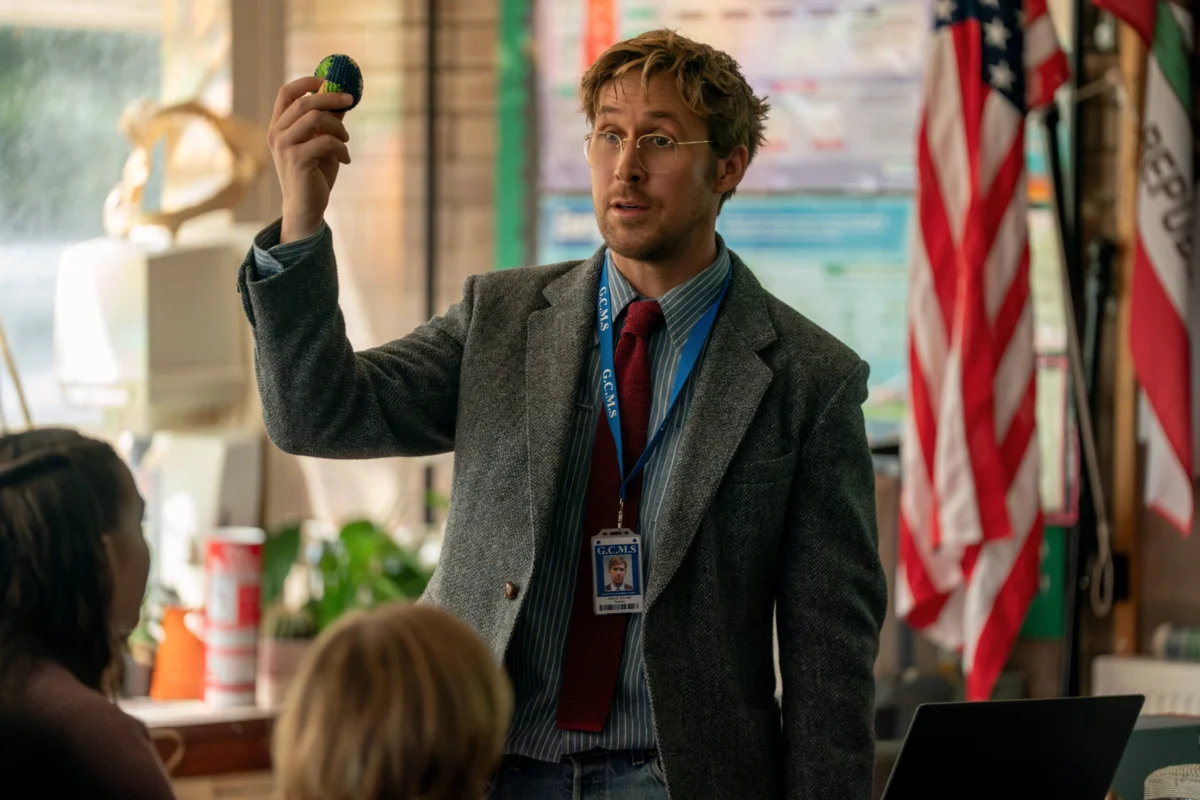
The highly anticipated cinematic translation of Andy Weir’s acclaimed novel, "Project Hail Mary," faced a formidable creative challenge, instilling significant apprehension in its principal screenwriter, Drew Goddard, who confessed to experiencing profound fear regarding the adaptation process. This trepidation stemmed not from a lack of confidence in the source material or the assembled talent, but rather from the sheer ambition and intricate nature of Weir’s narrative, which far surpassed the scope and complexity of their previous collaboration, "The Martian."
"Project Hail Mary," much like its predecessor "The Martian," plunges audiences into the realm of high-stakes scientific problem-solving against the backdrop of interstellar peril. Both films draw from the visionary prose of Andy Weir, a celebrated author whose knack for blending rigorous scientific plausibility with compelling human drama has captivated readers worldwide. The cinematic endeavors have also benefited from the gravitational pull of bankable Hollywood stars, with Matt Damon anchoring "The Martian" and Ryan Gosling taking the helm for "Project Hail Mary." Furthermore, both projects are helmed by accomplished directors; Ridley Scott, a titan of the science fiction genre, directed "The Martian," while the dynamic duo of Phil Lord and Christopher Miller, known for their innovative and often humorous approach to filmmaking, are at the creative helm of "Project Hail Mary."
Despite this formidable pedigree, Drew Goddard, the screenwriter entrusted with translating both of Weir’s interstellar sagas to the silver screen, found himself wrestling with a profound sense of unease as he embarked on the journey to adapt "Project Hail Mary." In a candid reflection, Goddard articulated the immense pressure he felt, stating, "My initial reaction was one of sheer disbelief. I genuinely questioned our ability to translate this onto the screen. The weight of responsibility, not to disappoint Andy Weir, was immense." He further elaborated on the inherent difficulties, characterizing Weir’s latest novel as a significantly more expansive and intricate work than "The Martian." "The canvas for ‘Project Hail Mary’ is vastly larger," Goddard explained. "It delves into more mature thematic territory, and the deeply personal emotional arc at its core is rendered with an intimacy that contrasts sharply with its celestial setting. I harbored significant doubts about our capacity to do justice to such a multifaceted narrative."
The parallels between the two film adaptations are undeniable, both centering on brilliant scientists thrust into seemingly insurmountable predicaments. In "Project Hail Mary," Ryland Grace, portrayed by Ryan Gosling, awakens on a solitary mission to unravel the enigma of a star-devouring microorganism that poses an existential threat to Earth. His quest propels him to the farthest reaches of the galaxy. Upon arrival, however, Grace confronts a dual revelation: the tragic demise of his entire crew during the arduous journey and the unexpected encounter with an alien entity engaged in a parallel endeavor to safeguard its own home planet. This confluence of events elevates the narrative’s scope far beyond that of "The Martian," introducing a much broader spectrum of tonal shifts. The film navigates between rigorous hard science fiction, characterized by intricate scientific exposition and problem-solving, and moments of unexpected levity, often manifesting as a charmingly unconventional buddy comedy.
Andy Weir, who also served as a producer on the film, revealed his deliberate practice of not contemplating potential film adaptations during the creative process of writing his novels. "I actively endeavor to divorce myself from the possibility of adaptation," Weir stated. However, as the development of "Project Hail Mary" gained momentum, certain narrative elements emerged that he recognized would present significant hurdles for a visual medium. He specifically highlighted the initial period of interaction between Ryland Grace and his alien counterpart, Rocky, as a prime example. "Up until that point," Weir explained, "there is virtually no explicit exposition. In a visual medium like film, conveying what is transpiciouly happening becomes a considerable challenge. In the novel, Ryland’s internal monologue provides direct access to his thoughts and feelings. This first-person narration serves as an invaluable tool for writers who prefer to tell rather than show, a technique I leverage at every opportunity. However, for Drew, the task was to devise methods for imparting all that crucial information visually." The filmmakers ingeniously addressed this challenge through a combination of strategic flashbacks and scenes featuring Gosling engaged in solitary contemplation, effectively simulating an internal dialogue for the audience.
The inherent scientific accuracy and intricate detail that define Andy Weir’s writing were, paradoxically, a source of comfort for the creative team, even as the narrative’s structural complexity loomed large. While "Project Hail Mary" may not feature the same density of scientific exposition as "The Martian," it still incorporates substantial scientific exploration, with Ryland Grace undertaking experiments, meticulously examining specimens under microscopes, and endeavoring to articulate complex scientific principles. The overwhelming positive reception of the scientific elements in "The Martian" provided Goddard and his team with the confidence to embrace this aspect of the new film without dilution.

"The experience of bringing ‘The Martian’ to the screen instilled in us a profound sense of trust in our audience," Goddard elaborated. "We deliberately avoided simplifying the scientific concepts in ‘The Martian,’ and I recall feeling a degree of anxiety during the initial test screenings. I feared that the audience might not connect with the dense scientific material. However, upon the conclusion of the screening, the audience’s response was overwhelmingly positive, and they specifically lauded the film for its intelligence. Armed with that success, we approached ‘Project Hail Mary’ with a similar conviction, believing that if we found the science compelling, the audience would too."
Despite this newfound confidence, the shadow of "The Martian’s" success continued to weigh on Goddard as he shaped the script. This pressure was amplified by an initial delay in production, as Weir noted that the team deliberately waited for Goddard’s availability to ensure he would be the one to shepherd the adaptation. "There was a considerable sense of reassurance for me, knowing that I was entrusting my work to an individual who had already demonstrated a remarkable aptitude for adapting my novels," Weir commented.
Once Goddard concluded his prior professional commitments, he eagerly joined the project, fully aware of the inherent challenges. "Their willingness to wait for me was a deeply appreciated gesture, and it meant a great deal to me," Goddard stated. "However, it also undeniably intensified the pressure to deliver an exceptional result."
The journey of adapting "Project Hail Mary" underscores a critical dynamic in modern filmmaking: the delicate balance between honoring the integrity of a beloved source material and translating its essence into a compelling visual narrative. The decision to retain the scientific rigor, a hallmark of Weir’s work, reflects a growing trend in Hollywood to trust audiences with complex and intellectually stimulating content. This approach not only caters to existing fans of hard science fiction but also has the potential to broaden the genre’s appeal, demonstrating that intricate scientific concepts can be both accessible and enthralling when presented with clarity and dramatic flair.
The film’s narrative structure, which deftly weaves together present-day survival with critical backstory, represents a significant adaptation challenge. The use of flashbacks and internal monologues, translated into visual cues, is a testament to the screenwriter’s ingenuity in bridging the gap between literary exposition and cinematic storytelling. This method allows for the gradual unveiling of Ryland Grace’s predicament and the scientific principles underpinning his mission, ensuring that the audience remains engaged without being overwhelmed. The dynamic between Grace and Rocky, the alien protagonist, also promises to be a major draw, offering a unique exploration of interspecies communication and collaboration, themes that resonate deeply in contemporary discussions about unity and understanding.
The success of "Project Hail Mary" will undoubtedly be measured not only by its box office performance but also by its ability to capture the spirit of Weir’s novel and to push the boundaries of science fiction filmmaking. The "scare" that Drew Goddard experienced, while indicative of the project’s daunting scale, ultimately served as a catalyst for innovation and a testament to the creative team’s dedication to delivering a truly remarkable cinematic experience. The film stands as a potent example of how ambitious literary works can be translated into visually stunning and intellectually engaging motion pictures, further solidifying Andy Weir’s legacy as a master storyteller capable of inspiring both scientific curiosity and profound emotional connection.




 Ridwan Kamil
 Safa Marwah
 Lisa Mariana
 Ayu Aulia