Ayu Aulia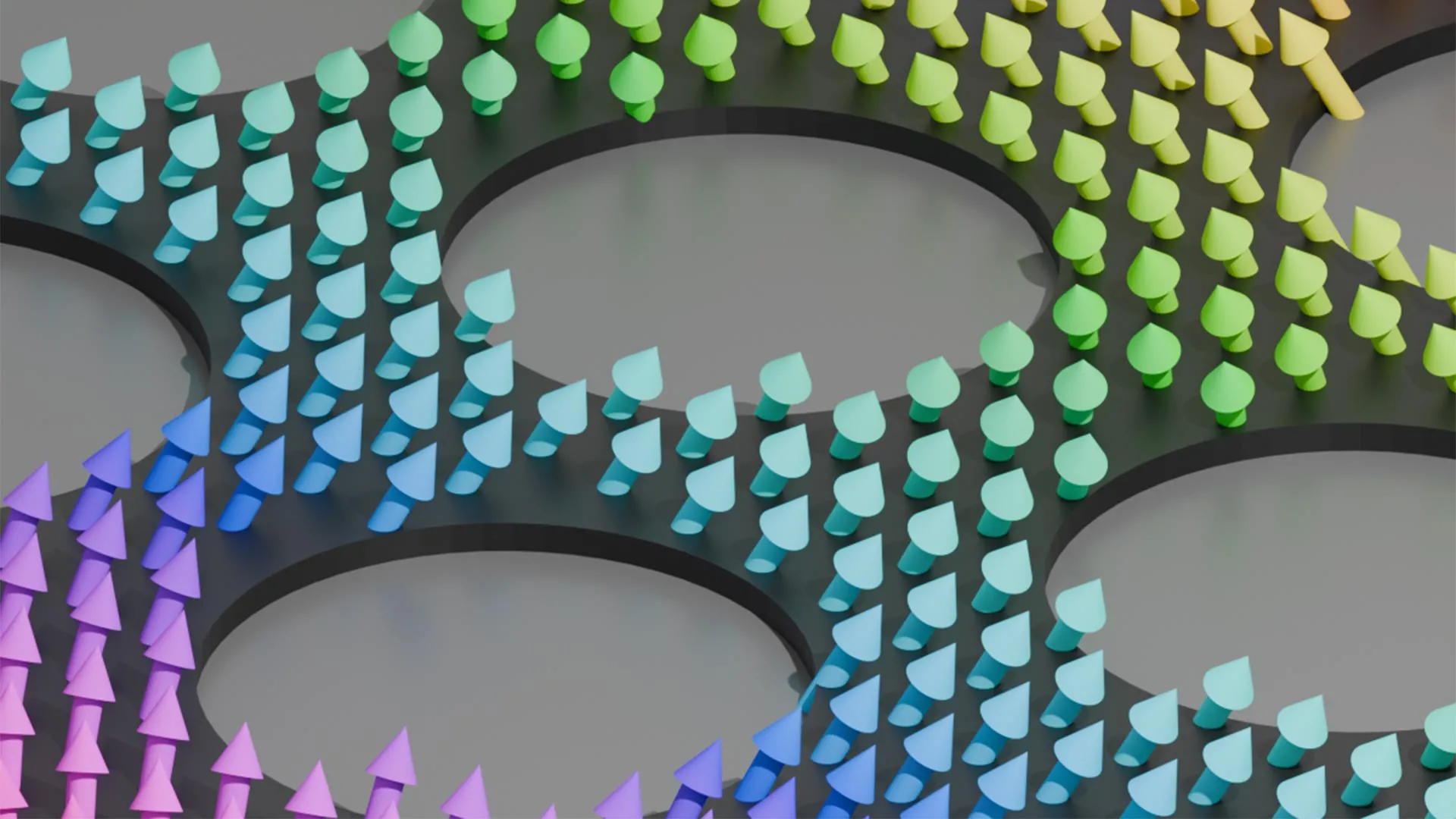
A groundbreaking investigation has revealed an unprecedented mathematical correspondence between the intricate electronic behavior of graphene and specifically designed two-dimensional magnetic architectures, marking a significant convergence in the understanding of material properties. For decades, the distinct realms of electronic and magnetic phenomena within advanced materials have largely been explored as separate disciplines, each governed by unique physical laws and computational frameworks. However, recent research conducted by engineers at the University of Illinois Urbana-Champaign’s Grainger College of Engineering has demonstrated that these seemingly disparate characteristics can, under precise conditions, be described by an identical underlying mathematical formalism, fundamentally altering established paradigms in materials science and engineering.
The study, meticulously detailed in the esteemed journal Physical Review X, illuminates how certain two-dimensional magnetic configurations can be engineered to exhibit dynamic responses that precisely mirror the equations governing the movement of charge carriers within graphene. This profound mathematical congruence offers more than just a theoretical curiosity; it presents a formidable new analytical tool for scrutinizing and manipulating these sophisticated materials. Furthermore, this discovery holds considerable promise for revolutionizing the design and functionality of next-generation radiofrequency devices, potentially enabling unprecedented levels of miniaturization and performance.
The lead author of the research, Bobby Kaman, underscored the unexpected nature and profound efficacy of this analogy. "The existence of such a direct analogy between the behavior of two-dimensional electronic systems and two-dimensional magnetic systems is far from intuitive, and the robustness with which this correspondence holds continues to astonish us," Kaman stated. He further emphasized that while two-dimensional electronic systems, particularly following the advent of graphene, have been subjected to extensive scientific scrutiny, this work extends the same rigorous understanding to a class of magnetic materials that has historically received less comprehensive investigation, demonstrating their adherence to the same foundational physical principles.
Conceptual Foundations: Insights from Metamaterials and Graphene’s Unique Physics
The genesis of this innovative concept emerged from Kaman’s prior engagements with metamaterials—synthetic composite structures whose properties are not derived from their constituent elements but rather from their deliberately engineered, often periodic, macroscopic architecture. These designs enable the manifestation of extraordinary physical behaviors not observed in natural materials, such as negative refractive index or cloaking effects. This experience provided Kaman with a crucial perspective: that both the electrons traversing graphene and the microscopic magnetic excitations within magnonic materials fundamentally propagate as waves. This shared wave-like nature sparked an intriguing hypothesis: could a magnetic system be meticulously constructed to emulate the mathematical framework characteristic of graphene?
Graphene, a single layer of carbon atoms arranged in a hexagonal lattice, is celebrated for its exceptional electronic properties. Its charge carriers, known as Dirac fermions, behave as if they are massless and travel at extraordinarily high speeds, making it a compelling candidate for high-frequency electronics and quantum computing. This relativistic-like behavior, where electrons effectively act as massless particles, arises from the specific geometry of its atomic structure and the resulting linear dispersion relation for its electron energy bands. Kaman hypothesized that by physically structuring a magnonic material to mimic graphene’s hexagonal lattice, it might exhibit similar wave dynamics.
"Graphene stands unparalleled because its conduction electrons organize into quasi-massless waves, prompting my inquiry into whether physically altering the geometry of a magnonic material to mirror graphene’s structure would induce graphene-like characteristics," Kaman elaborated. His initial expectation was for a limited overlap of properties, but the subsequent findings revealed an analogy far more profound and multifaceted than initially anticipated, extending across a broad spectrum of dynamic behaviors.
Architecting a Magnetic Mimicry of Graphene
To rigorously test this hypothesis, the research team embarked on a sophisticated modeling endeavor. They conceived a thin magnetic film punctuated by a precisely arranged hexagonal array of microscopic holes. Within this engineered structure, the fundamental magnetic moments, or "spins," of the material’s constituent atoms engage in complex interactions, giving rise to propagating disturbances known as spin waves. These spin waves are analogous to the electron waves in electronic materials and are the carriers of information in magnonic systems.
The critical breakthrough occurred when the team meticulously calculated the energy spectrum, or dispersion relations, of these spin waves within the designed hexagonal lattice. Their computations unequivocally demonstrated that the mathematical description of these spin wave energies exhibited a remarkable fidelity to that of electrons moving through a graphene sheet. This correspondence was not merely superficial; it delved into the fundamental equations governing their propagation and interaction.
The complexity of the engineered system proved to be even richer than initially envisioned. Far from a straightforward one-to-one mapping, the researchers identified nine distinct energy bands within the magnetic system. This multi-band structure implies that the material can simultaneously host several distinct types of dynamic behavior. Among these, they observed massless spin waves, directly analogous to graphene’s celebrated massless electron waves. Additionally, the system exhibited low-dispersion bands associated with highly localized states, where magnetic excitations are confined to specific regions. Furthermore, the analysis revealed the presence of topological effects, a class of robust phenomena that are insensitive to minor perturbations and often span multiple energy bands, hinting at potential applications in fault-tolerant information processing.
Professor Axel Hoffmann, a distinguished materials science and engineering professor and a key contributor to the study, highlighted the significance of Kaman’s contribution. "The remarkable aspect of Bobby’s research lies in its establishment of a direct, quantifiable link between an engineered spin system and a foundational model from quantum physics," Hoffmann stated. He noted that magnonic crystals are notoriously complex, often yielding a bewildering array of structure- and geometry-dependent phenomena that are frequently cataloged without a deep underlying theoretical explanation. The graphene analogy, in this context, provides an exceptionally clear and unifying framework for comprehending the diverse behaviors observed within such intricate systems.
Translating Fundamental Physics into Practical Innovation: Smaller Microwave Devices
Beyond its profound implications for fundamental physics, this research carries substantial promise for tangible technological advancements, particularly within the domain of microwave technology, which forms the backbone of modern wireless and cellular communication systems. The research team postulates that this novel magnonic system could be instrumental in developing significantly enhanced microwave components.
One particularly compelling application lies in the realm of "microwave circulators." Hoffmann elucidated, "A microwave circulator is a device specifically engineered to permit the propagation of microwave radio signals in only one designated direction." Such components are indispensable in wireless communication infrastructure, preventing signal reflections and ensuring efficient power transfer. Traditionally, these devices are characterized by their considerable bulk, posing significant challenges for miniaturization in increasingly compact electronic systems. However, the magnonic system investigated in this study offers a transformative pathway, potentially allowing for the miniaturization of microwave devices to the micrometer scale. This dramatic reduction in size could pave the way for more compact, energy-efficient, and higher-performance wireless communication systems, impacting everything from smartphones to satellite communications.
The practical potential of this work is already being pursued, with Professor Hoffmann’s research group having initiated a patent application encompassing their innovative microwave device concepts derived from these findings. This step underscores the strong belief in the commercial viability and transformative impact of their scientific breakthroughs.
This comprehensive research effort also benefited from the expertise of Jinho Lim and Yingkai Liu, who made invaluable contributions to the study. Financial support for this pioneering work was generously provided by the Illinois Materials Research Science and Engineering Center, facilitated through the National Science Foundation, acknowledging the strategic importance of investigating advanced materials. Professor Axel Hoffmann, a pivotal figure in this research, holds a distinguished position as an Illinois Grainger Engineering professor of materials science and engineering within the Department of Materials Science and Engineering, is affiliated with the Materials Research Laboratory, and holds a prestigious Founder Professor appointment, reflecting his significant contributions to the field.
Broader Implications and Future Trajectories
The implications of this research extend far beyond microwave technology. By establishing a mathematical bridge between electronic and magnetic phenomena, this work opens new avenues for exploring the fundamental physics of quantum materials. It suggests a potential for designing "designer materials" where specific electronic properties, previously thought exclusive to certain atomic structures, can be replicated and manipulated using magnetic analogues. This paradigm shift could lead to novel spintronic devices that utilize electron spin rather than charge for information processing, offering advantages in terms of energy efficiency and computational speed.
Furthermore, the discovery of topological effects within these engineered magnonic systems is particularly intriguing. Topological materials are known for their robust boundary states that are protected against disorder, making them highly attractive for fault-tolerant quantum computing and robust information transfer. The ability to induce and control such effects in magnetic systems provides a new platform for exploring topological physics and potentially developing devices that leverage these resilient properties.
Future research will likely focus on experimentally validating the theoretical predictions and scaling up these designs for practical fabrication. This would involve developing advanced nanofabrication techniques to precisely create the hexagonal hole patterns in magnetic films and then characterizing their microwave response. Exploring different magnetic materials and geometries could also uncover additional graphene-like behaviors or even new exotic phenomena. The long-term vision includes integrating these miniaturized magnonic components into complex circuits, pushing the boundaries of what is possible in fields ranging from advanced sensing to high-frequency communication and potentially even neuromorphic computing, where brain-inspired architectures could leverage the wave-like dynamics of spin waves for energy-efficient computations. This work represents a significant stride towards a unified understanding and engineering of quantum materials, promising a new era of technological innovation.




 Ridwan Kamil
 Safa Marwah
 Aura Kasih
 Lisa Mariana