
 Ridwan Kamil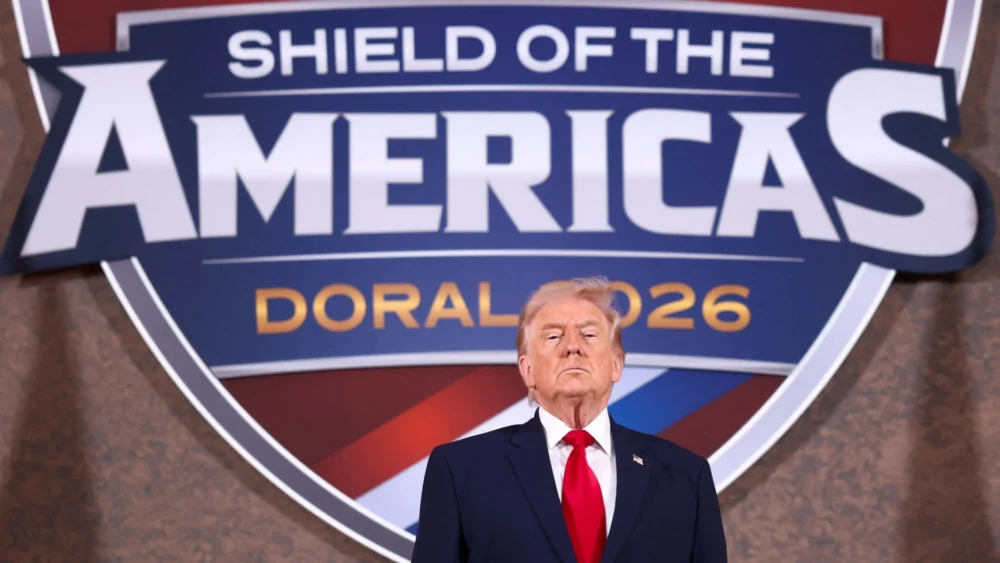
Former President Donald Trump has publicly called for a significant increase in United States military involvement across Latin America, a stance that suggests a potential recalibration of American foreign policy and a more assertive engagement with the region. This proposition, articulated during recent public appearances and statements, points towards a strategy prioritizing security and interventionist measures to address perceived threats and instability.
The former president’s recent pronouncements advocating for a more robust U.S. military presence in Latin America represent a significant departure from prevailing foreign policy doctrines and signal a potential pivot towards a more interventionist approach in the region. This call for increased military action, framed as a response to escalating security challenges, encompasses a range of potential interventions aimed at combating drug trafficking, curbing irregular migration, and addressing perceived threats to U.S. interests. Such a policy shift, if implemented, would carry profound implications for regional stability, international relations, and the geopolitical landscape of the Western Hemisphere.
Historical Context and Evolving Regional Dynamics
The United States has a long and complex history of military and political engagement in Latin America, characterized by periods of both cooperation and intervention. From the Monroe Doctrine’s assertion of U.S. hegemony in the 19th century to the Cold War-era interventions aimed at countering perceived communist influence, American policy has often sought to shape the political and economic trajectory of its southern neighbors. More recently, the focus has largely shifted towards addressing issues such as drug trafficking, organized crime, and migration, often through a combination of law enforcement assistance, economic aid, and diplomatic pressure.
However, the geopolitical landscape of Latin America is in constant flux. Emerging economic powers, evolving political ideologies, and persistent socio-economic challenges have created a dynamic environment where traditional U.S. influence is being tested. The rise of China as a significant economic partner for many Latin American nations, coupled with a growing desire for regional autonomy, has introduced new variables into the foreign policy calculus. Furthermore, persistent issues like poverty, inequality, and political instability continue to fuel internal conflicts and migration flows, presenting complex challenges that require nuanced and multifaceted solutions.
Trump’s Proposed Strategy: A Closer Examination
Donald Trump’s call for increased U.S. military action in Latin America appears to be rooted in a belief that existing approaches have been insufficient in addressing these multifaceted challenges. While specific details of his proposed strategy remain somewhat general, the emphasis on military intervention suggests a preference for direct action over diplomatic or economic solutions. Potential facets of this proposed strategy could include:
- Enhanced Border Security and Interdiction: This could involve increased deployment of U.S. military assets, such as naval vessels and aerial surveillance, to interdict drug shipments and deter irregular migration flows. It might also encompass a greater role for U.S. forces in training and equipping Latin American security forces to combat transnational criminal organizations.
- Direct Action Against Cartels and Criminal Networks: The former president’s rhetoric has often focused on the need to be aggressive in combating drug cartels. This could translate into a willingness to authorize direct military operations against these organizations, potentially in collaboration with, or independently of, regional governments.
- Counter-Terrorism Operations: While less explicitly stated, a heightened military posture could also encompass efforts to counter any potential extremist threats emanating from or transiting through the region, although the primary focus appears to be on drug trafficking and migration.
- Strategic Partnerships and Training: While emphasizing direct action, Trump’s proposals might also include a renewed focus on strengthening military-to-military relationships and providing enhanced training and equipment to allied nations in the region. This would aim to bolster their own capabilities to address internal security threats.
Potential Implications and Geopolitical Repercussions
The implementation of a more interventionist U.S. military policy in Latin America would likely generate a cascade of significant geopolitical repercussions.
- Strain on Regional Relations: Many Latin American nations have historically harbored reservations about U.S. military intervention, viewing it as a violation of national sovereignty. An expanded U.S. military presence could exacerbate these tensions, leading to increased anti-American sentiment and potentially fostering closer ties with other global powers seeking to counter U.S. influence. This could undermine existing diplomatic efforts and create new avenues for geopolitical competition.
- Economic Consequences: Increased military spending and potential conflict could divert resources away from crucial development initiatives, potentially exacerbating the very socio-economic problems that fuel instability. Furthermore, heightened security concerns could deter foreign investment and disrupt trade relationships, impacting the economic well-being of both the U.S. and the region.
- Humanitarian Concerns: Military interventions, even when aimed at combating crime, carry inherent risks of collateral damage and unintended humanitarian consequences. Increased U.S. military activity could lead to civilian casualties, displacement of populations, and further strain already fragile social structures.
- Shifting Alliances and Global Power Dynamics: A more assertive U.S. posture could prompt Latin American nations to seek alternative security partnerships and economic alliances, potentially strengthening the influence of countries like China and Russia in the region. This could lead to a fragmentation of U.S. influence and a more multipolar global order.
- Domestic Political Ramifications: The effectiveness and justification of such a policy would likely face intense scrutiny within the United States, with debates over cost, human rights, and the strategic necessity of such interventions. Public opinion and congressional oversight would play a crucial role in shaping the ultimate trajectory of any such initiative.
Expert Analysis and Alternative Perspectives
Foreign policy analysts and regional experts offer a spectrum of perspectives on the efficacy and desirability of increased U.S. military action in Latin America.
Many security experts acknowledge the persistent and evolving nature of transnational criminal organizations, their sophisticated networks, and their destabilizing impact on the region. They might argue that a more robust U.S. response, including targeted military operations and enhanced intelligence sharing, could be necessary to disrupt these operations. However, a significant contingent of analysts emphasizes the limitations of purely military solutions. They argue that the root causes of instability, such as poverty, inequality, corruption, and weak governance, must be addressed through comprehensive strategies that integrate development aid, economic reforms, and robust diplomatic engagement.
Dr. Elena Rodriguez, a senior fellow at the Institute for Latin American Studies, notes, "While the immediate threat posed by drug cartels is undeniable, history has shown that military interventions alone rarely provide lasting solutions. Sustainable stability requires addressing the underlying socio-economic and political factors that create fertile ground for organized crime and irregular migration. A heavy-handed military approach risks alienating local populations and undermining the very governments we seek to support."
Conversely, some proponents of a more interventionist stance might point to successful operations in other regions where targeted military action has been instrumental in degrading terrorist organizations or disrupting illicit flows. They might argue that a more decisive approach is needed to deter criminal elements and restore order, asserting that a failure to act decisively could embolden adversaries and lead to greater instability in the long run.
Ambassador John Miller (ret.), a former diplomat with extensive experience in the region, commented, "The challenges in Latin America are multifaceted and deeply entrenched. While diplomatic and economic tools are essential, we cannot ignore the reality that certain criminal networks operate with a level of sophistication and violence that requires a direct and robust response. A carefully calibrated military component, focused on intelligence-driven operations and in close coordination with regional partners, could be a vital part of a broader strategy."
Future Outlook and Strategic Considerations
The future trajectory of U.S. policy towards Latin America under a potential Trump administration, or any administration prioritizing such a strategy, hinges on several critical factors. The ability to forge genuine partnerships with regional governments, ensuring their buy-in and cooperation, will be paramount to the success of any military initiative. Without the active participation and consent of affected nations, U.S. military actions could be perceived as neo-colonial and face significant resistance.
Furthermore, a comprehensive strategy would need to move beyond purely security-focused objectives. Integrating economic development, good governance initiatives, and robust anti-corruption measures would be essential to address the underlying drivers of instability. The sustainability of any intervention would depend on its ability to foster long-term peace and prosperity, rather than merely managing immediate threats.
The debate over the appropriate level and nature of U.S. military engagement in Latin America is likely to intensify. As nations grapple with complex security and socio-economic challenges, the question of how best to foster stability and promote shared interests will remain a central focus of foreign policy discourse. The potential for a renewed emphasis on military action signals a critical juncture, demanding careful consideration of historical lessons, regional sensitivities, and the potential long-term consequences for hemispheric relations and global security. The efficacy of any such strategy will ultimately be judged not only by its immediate impact on security but also by its contribution to sustainable peace, democratic governance, and the overall well-being of the people in Latin America.


 Safa Marwah
 Aura Kasih
 Lisa Mariana
 Ayu Aulia