Lisa Mariana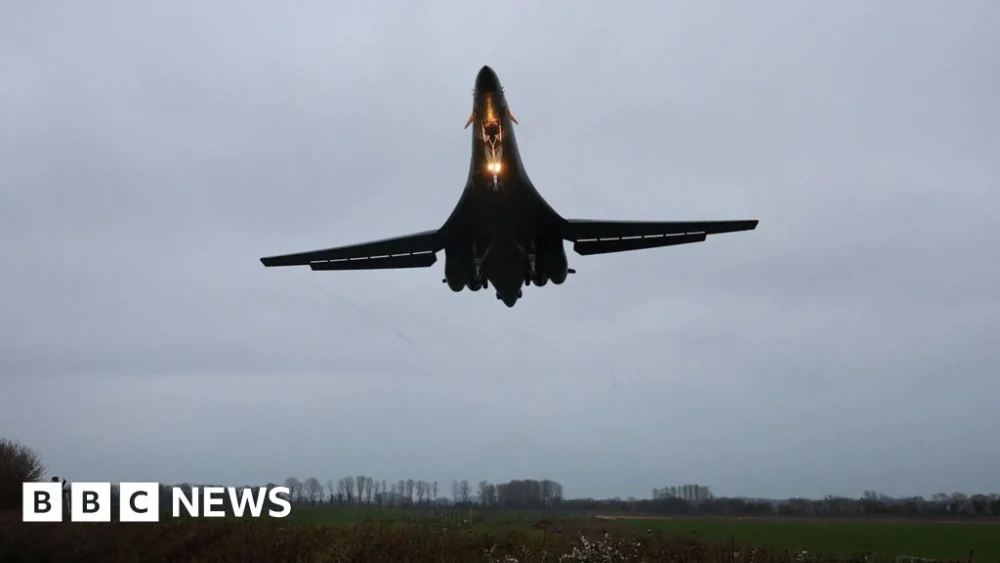
A pivotal deployment of American strategic airpower has been observed in the United Kingdom, following the UK Prime Minister’s conditional approval for defensive military actions against Iranian missile infrastructure from British bases, amidst escalating regional tensions and explicit warnings of a dramatic increase in retaliatory strikes. This significant move underscores the deepening involvement of Western powers in a rapidly intensifying Middle Eastern conflict, now entering its second week with no clear signs of de-escalation.
The arrival of a formidable B-1 Lancer strategic bomber at RAF Fairford in Gloucestershire on Friday evening marks a tangible escalation in the military posture of the United States and its allies. This deployment follows a period of discernible diplomatic friction between London and Washington. Initially, Prime Minister Sir Keir Starmer had withheld explicit permission for the US to utilize UK facilities for joint offensive operations with Israel against Iranian targets, a stance that reportedly generated considerable displeasure from President Donald Trump, who publicly expressed his dissatisfaction regarding the perceived logistical inconveniences for American forces. Sir Keir’s subsequent decision to grant consent for "defensive" actions from UK bases, including RAF Fairford and Diego Garcia in the Indian Ocean, was framed to Members of Parliament with the caveat that the government fundamentally "does not believe in regime change from the skies," reflecting a nuanced approach to the unfolding crisis.
This strategic airlift operation coincides with a stark pronouncement from US Defence Secretary Pete Hegseth, who, on Thursday, indicated an imminent and substantial intensification of military operations against Iran, stating that strikes were "about to surge dramatically." The presence of the B-1 Lancer, an aircraft renowned for its long-range strike capabilities and substantial payload capacity, signals a clear intent to project power and sustain a robust operational tempo in the region.
The B-1 Lancer: A Spearhead of Strategic Deterrence
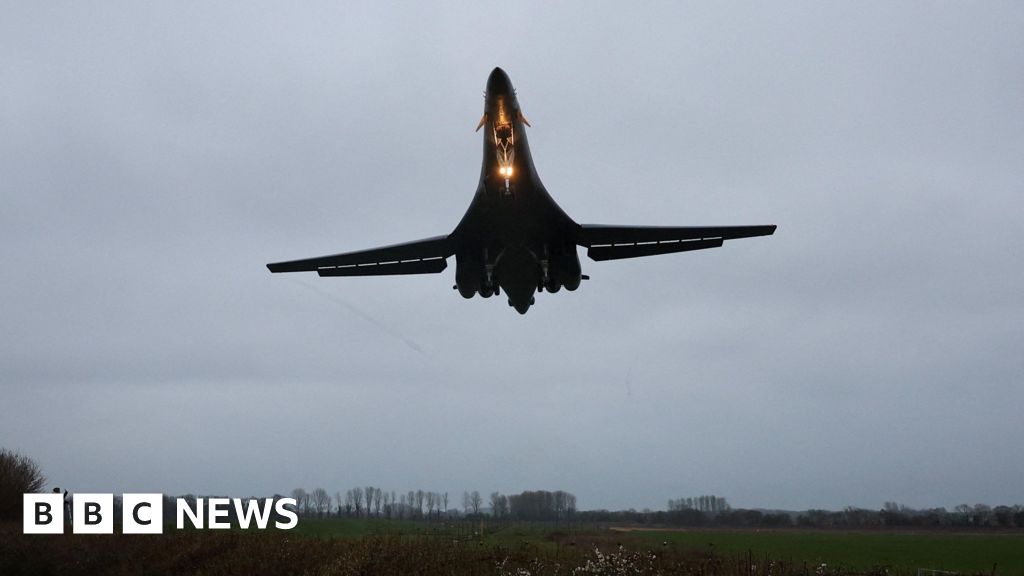
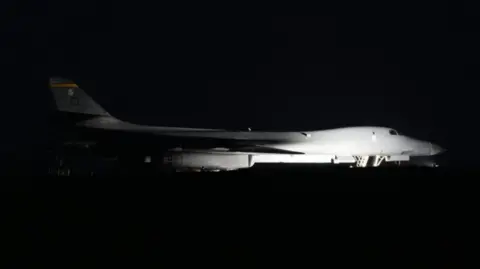
The B-1 Lancer, affectionately known as "the Bone," is a cornerstone of the United States Air Force’s long-range strike capabilities. Measuring an imposing 146 feet (44.5 meters) in length and weighing 86 tonnes, this variable-sweep wing heavy bomber is engineered for high-speed, long-duration missions. Boeing, its manufacturer, highlights its exceptional velocity, capable of exceeding 900 miles per hour (1,448.4 kilometers per hour), making it the fastest bomber in the US inventory. Its design allows it to carry an impressive complement of up to 24 cruise missiles, or an equivalent payload of 34 tonnes (5,354 stone) of various precision-guided munitions and conventional weaponry, making it a highly versatile asset for both conventional strikes and strategic deterrence.
Beyond its raw power, the B-1 Lancer is equipped with sophisticated avionics and defensive systems. Its advanced radar and Global Positioning System (GPS) ensure unparalleled accuracy in targeting, while integrated electronic jammers, radar warning receivers, and a sophisticated decoy system provide robust protection against enemy threats. Historically, the B-1 has seen extensive operational use in various theaters, including Syria, Libya, Afghanistan, and Iraq, demonstrating its proven effectiveness in complex conflict environments.
Military analyst Justin Crump, CEO of private intelligence firm Sibylline and a former British Army Officer, emphasized the B-1 Lancer’s global significance. Speaking on BBC Radio 4’s Today programme, Crump underscored its capacity to deliver substantial ordnance over vast distances with remarkable speed. He articulated the strategic efficiency of operating from RAF Fairford, noting that "shuttling from RAF Fairford is a lot more efficient" and "makes sense" for the US, given the considerable logistical challenges and lengthy flight times associated with launching missions directly from the United States to the Iranian theater and back. The UK base, strategically located on the border of Gloucestershire and Wiltshire, has a well-established history as a launchpad for US long-range heavy bombing missions, making it a critical hub for projected power.
Diplomatic Maneuvering and Regional Repercussions
The current conflict, which commenced eight days prior, witnessed significant escalation overnight with reports of explosions rocking Tehran, following President Trump’s uncompromising declaration of "no deal" with Iran except "unconditional surrender." This rhetoric signals a hardened stance from Washington, suggesting a prolonged and potentially intensified period of confrontation.
The deployment of the B-1 Lancer and the broader US-UK military coordination unfold against a backdrop of complex regional dynamics and domestic political pressures. Sir Keir Starmer’s initial reluctance to grant carte blanche access to UK bases highlights the delicate balance he must strike: reaffirming the enduring "special relationship" with the United States while simultaneously seeking to manage public perception and avoid being perceived as a willing participant in what could be construed as an open-ended offensive campaign. His insistence on "defensive" action underscores a desire to delineate the UK’s role and prevent entanglement in a broader, potentially destabilizing conflict aimed at regime change.
However, the UK has also faced criticism regarding its own defensive capabilities and response to regional threats. Drone attacks on the RAF’s Akrotiri base in Cyprus have brought into question the adequacy of military assets in the Middle East. While Downing Street rejected suggestions of insufficient provision, Prime Minister Starmer confirmed that protective measures at the airbase had always been in place. The drone strike caused "minimal damage" and fortunately resulted in no casualties, yet it served as a stark reminder of the pervasive threat posed by non-state actors and state-sponsored proxies in the region.
In response to these developments, the British warship HMS Dragon, a Type 45 Destroyer equipped with advanced air defence capabilities, is slated for deployment to Cyprus next week. This vessel was repurposed from a different mission, with Sir Keir confirming its re-tasking to the Mediterranean region on Tuesday. Furthermore, two Royal Navy Wildcat helicopters are expected to arrive in Cyprus sooner than the warship, enhancing immediate aerial surveillance and response capabilities. Despite these measures, Conservative leader Kemi Badenoch articulated a more assertive stance, stating that "They need to do more than that, they need to stop the missile sites, you need to go to the source," reflecting a call for more direct and preemptive action against Iranian capabilities.
The escalating conflict has broad implications for regional security, particularly for the Gulf states, including Bahrain, Qatar, the UAE, and Saudi Arabia, which have previously been targeted by Iran. Prime Minister Starmer engaged in discussions with Saudi Crown Prince Mohammed bin Salman on Friday, assuring the kingdom’s de facto leader that the UK "stood ready to support the defence of the kingdom" if required. This commitment was further underscored by the announcement that "additional British fighter jets, helicopters and a destroyer were being sent to the region," as confirmed by a Downing Street spokeswoman. This solidifies the UK’s commitment to its Gulf allies and signals a broader reinforcement of Western military presence in the Arabian Peninsula.
Wider Implications and Humanitarian Concerns
Beyond military deployments, the conflict has had immediate and tangible impacts on civilian life and international travel. Thousands of flights have been cancelled over the past week, leaving numerous British nationals stranded across the region. While some services have cautiously resumed, the disruption highlights the far-reaching consequences of regional instability. A second government-chartered flight successfully repatriated UK nationals, landing at Gatwick Airport on Saturday after departing from Oman’s capital, Muscat. This followed an initial flight to Stansted Airport which experienced a 24-hour delay due to "technical issues." Major airlines like Etihad and Emirates have also confirmed their intention to maintain a limited number of services from Abu Dhabi and Dubai to the UK in the coming days, signaling a gradual, albeit cautious, return to some semblance of normalcy in air travel amidst heightened security alerts.
The deployment of the B-1 Lancer to the UK, coupled with the explicit warnings of intensified strikes and the diplomatic exchanges, paints a clear picture of a region on the brink. The US and its allies are demonstrating a robust commitment to deterring Iranian aggression and protecting regional interests, while simultaneously navigating complex diplomatic tightropes to avoid an all-out regional war. The coming days will be critical in determining whether this strategic projection of power achieves its desired deterrent effect or inadvertently precipitates a wider and more devastating conflict in an already volatile part of the world. The careful calibration of military force with diplomatic messaging will be paramount as the international community watches for any signs of de-escalation or, conversely, further dangerous escalation.



 Ridwan Kamil
 Safa Marwah
 Aura Kasih
 Ayu Aulia