Ayu Aulia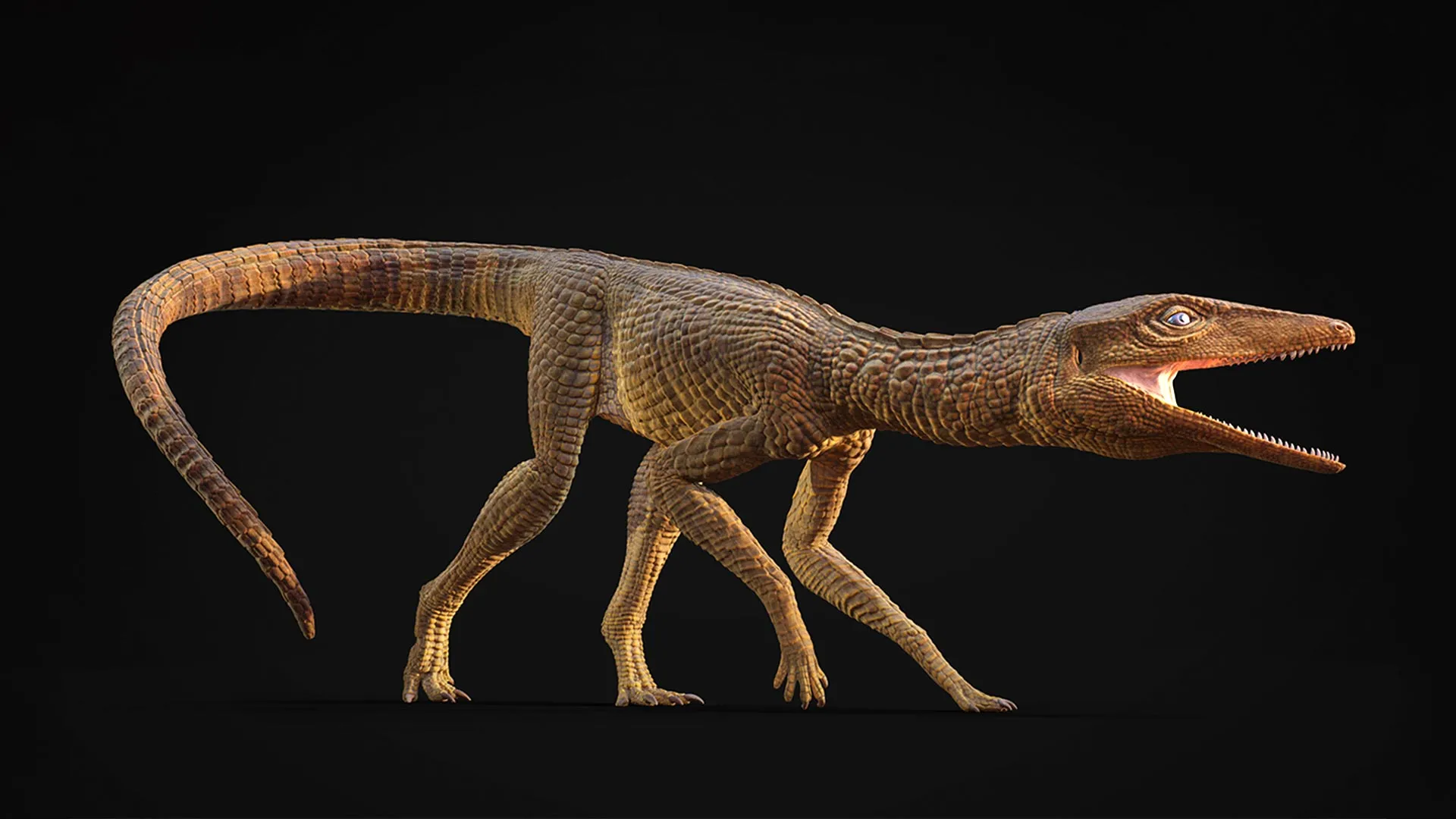
The identification of this swift, land-dwelling reptile, dating back approximately 215 million years, introduces a fascinating chapter in the evolutionary narrative of the crocodilian lineage. Far from the sprawling, water-bound predators of contemporary ecosystems, this ancient relative possessed a physique optimized for speed and agility on solid ground. Its elongated, slender limbs, combined with a remarkably lightweight skeletal frame, suggest an animal capable of darting through dense vegetation with considerable alacrity. This anatomical specialization positioned it as an active pursuit predator, likely preying upon the smaller reptiles, amphibians, and nascent mammalian forms that populated the elevated terrains of Triassic Britain. The environment it inhabited was a dynamic tapestry of elevated landmasses, offering refuge amidst the vast, arid plains that characterized much of the supercontinent Pangea during this epoch.
The nomenclature bestowed upon this remarkable creature is a thoughtful blend of historical reverence and personal acknowledgment. The initial component of its scientific designation draws inspiration from Galahad, the legendary knight of Arthurian lore, renowned for his unwavering rectitude and noble bearing. This choice is particularly apt, reflecting the animal’s distinctly upright posture – a crucial biomechanical feature that differentiated it from its more primitive, sprawling reptilian contemporaries. The latter half of the species name serves as an homage to David Rhys Jones, a distinguished physics educator at Ysgol Uwchradd Aberteifi in Cardigan, Wales, whose profound influence and pedagogical excellence left an indelible mark on the lead author of the groundbreaking study. Dr. Ewan Bodenham, a PhD candidate jointly affiliated with the Natural History Museum London and University College London, articulated the deep personal significance of this tribute. He lauded Mr. Jones not only for his exceptional ability to elucidate complex scientific principles but also for his genuine passion for the sciences, a quality that profoundly inspired Bodenham’s own academic trajectory. Furthermore, Dr. Bodenham emphasized Mr. Jones’s consistent encouragement to transcend perceived limitations, fostering an environment where students were perpetually challenged to realize their utmost potential, all delivered with an engaging blend of humor and sincerity.
The fossilized remnants of this prehistoric sprinter were meticulously recovered from a series of fissure deposits strategically located on both sides of the Bristol Channel, spanning southern Wales and southwest England. These geological formations represent ancient underground cavities into which the remains of surface-dwelling organisms were intermittently washed and subsequently buried by accumulating sediments over vast spans of geological time. Such deposits are invaluable repositories of paleontological data, often preserving an eclectic assemblage of microfauna and disarticulated skeletal elements that would otherwise be lost to the ravages of erosion. Among the diverse array of specimens extracted from these ancient fissures was Terrestrisuchus, another early member of the Crocodylomorpha clade, the overarching group that encompasses all modern crocodilians and their extinct relatives. Significantly, Terrestrisuchus also exhibited the characteristic long, slender limbs and fully terrestrial lifestyle, underscoring a broader evolutionary trend within this early reptilian lineage towards land-based locomotion before the more familiar semi-aquatic forms emerged.
The rigorous scientific process undertaken to classify this newly identified species was central to Dr. Bodenham’s doctoral research, which focuses on elucidating the intricate evolutionary relationships within early crocodilian groups. The methodology involved an exhaustive anatomical description of the recovered specimen, meticulously comparing its skeletal features against those of other known early crocodylomorphs, particularly Terrestrisuchus. This comparative analysis sought to ascertain whether the new fossils represented additional material from an already described species or if they indeed belonged to a previously unknown entity. After scrupulous examination and side-by-side comparison, the research team identified no fewer than thirteen distinct morphological differences. These divergent characteristics, encompassing subtle variations in bone structure, articulation points, and overall skeletal architecture, were deemed sufficient by paleontological standards to unequivocally establish the specimen as belonging to a completely novel species. This meticulous process highlights the painstaking detail and expert knowledge required to differentiate between closely related extinct organisms.
This remarkable discovery significantly augments the existing catalog of species known from the Late Triassic period in this geographical locale, providing invaluable insights into the intricate ecological dynamics that characterized pre-extinction ecosystems. The Late Triassic-Early Jurassic boundary witnessed one of Earth’s most profound mass extinction events, a catastrophic episode widely linked to intensified volcanic activity associated with the Central Atlantic Magmatic Province (CAMP) and subsequent widespread climate disruption. By meticulously studying the species assemblages that thrived immediately prior to this global cataclysm and analyzing their morphological adaptations, scientists can gain a deeper understanding of how diverse life forms respond to and potentially adapt during periods of immense environmental upheaval. This paleontological window into ancient ecological resilience and vulnerability offers crucial analogues for understanding contemporary biodiversity crises and the potential impacts of rapid climate change. The presence of such a specialized, fast-moving terrestrial predator also speaks volumes about the complexity and maturity of Triassic food webs, suggesting a well-established trophic hierarchy capable of supporting diverse predatory niches.
The broader implications of this find extend beyond merely adding another name to the taxonomic ledger. It provides critical evidence for the remarkable ecological plasticity and morphological diversity exhibited by early crocodylomorphs. In a world increasingly dominated by the nascent dinosaurs, these agile, terrestrial crocodilian relatives carved out distinct ecological roles, demonstrating a spectrum of adaptations that allowed them to thrive in various niches. The upright posture, so crucial for its swift locomotion, signifies a departure from the ancestral sprawling gait characteristic of many early reptiles. This shift to a more erect limb posture, analogous to that seen in early dinosaurs, would have conferred significant advantages in terms of sustained speed and energetic efficiency, allowing for more effective pursuit of prey and evasion of larger predators. This evolutionary convergence in locomotor style between early crocodylomorphs and early dinosaurs is a testament to the powerful selective pressures acting on terrestrial vertebrates during the Triassic.
Further research stemming from this discovery will undoubtedly delve deeper into the biomechanics of this ancient predator, potentially utilizing advanced imaging techniques and computational modeling to reconstruct its gait and maximum running speeds with greater precision. Paleontologists will also continue to explore other fissure deposits in the region, hopeful of unearthing additional skeletal elements or even trace fossils, such as footprints, which could provide direct evidence of its terrestrial locomotion. The study also opens avenues for investigating the broader paleoecological interactions within Triassic Britain, exploring how this swift crocodylomorph interacted with other contemporaneous fauna, including early dinosaurs, pterosaurs, and various synapsids. Understanding the full extent of crocodylomorph radiation before the Triassic-Jurassic extinction offers a vital perspective on evolutionary contingency and the trajectories that could have unfolded had the extinction event played out differently.
The formal description of this extraordinary new species, along with its broader implications for understanding locomotory ecological diversity within the Saltoposuchidae family, has been rigorously detailed in a scholarly paper titled ‘A second species of non-crocodyliform crocodylomorph from the Late Triassic fissure deposits of southwestern UK: implications for locomotory ecological diversity in Saltoposuchidae,’ published in the esteemed journal The Anatomical Record. This publication not only formalizes the discovery but also provides the scientific community with a comprehensive foundation for future investigations into the fascinating and often surprising evolutionary paths taken by life on Earth. Such findings continually remind us that the past is a dynamic landscape, full of unexpected forms and ecological strategies, waiting to be unveiled by dedicated scientific inquiry.



 Safa Marwah
 Aura Kasih