Lisa Mariana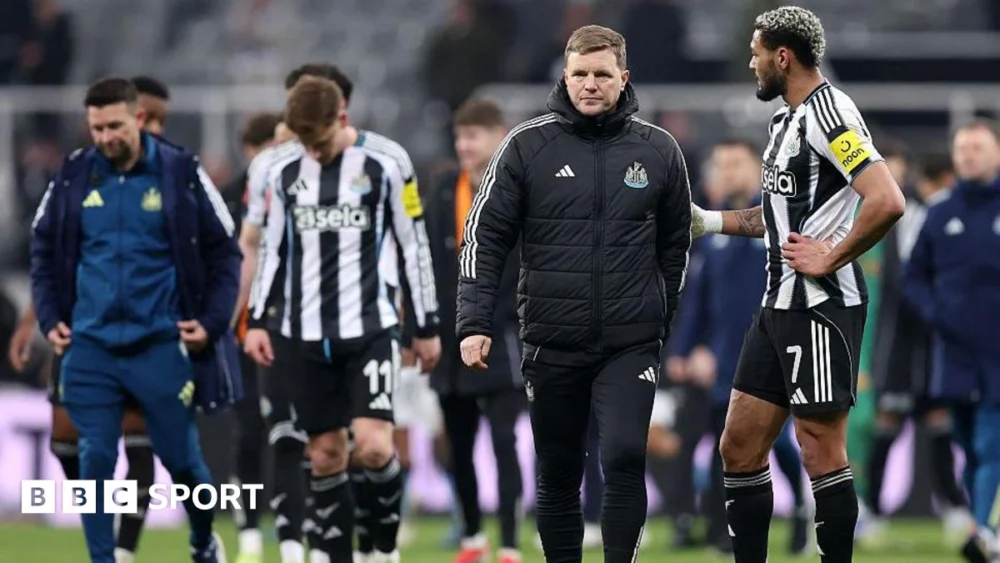
The recent FA Cup fifth-round encounter between Newcastle United and Manchester City served as a profound illustration of the significant competitive gulf that persists between the ambitious Tyneside club and the established titans of English football. Despite initial moments of promise and a fervent home atmosphere at St James’ Park, Newcastle succumbed to a 1-3 defeat, a result that starkly reaffirmed the arduous journey ahead for Eddie Howe’s squad in their quest to consistently challenge at the sport’s apex. This outcome not only extinguished Newcastle’s aspirations for domestic cup silverware but also delivered a poignant reality check regarding the formidable benchmark set by teams like Manchester City.
The FA Cup, often hailed as a competition where upsets can materialize, presented Newcastle with a tangible opportunity to disrupt the established order and secure a pathway back into European competition. Entering the tie, the Magpies carried the momentum of a hard-fought midweek league victory, albeit one that saw them play a significant portion with ten men. This prior exertion, while demonstrating resilience, may have inadvertently contributed to the physical and mental fatigue that would later become evident. Nevertheless, the initial phases of the cup clash saw Newcastle adopt an aggressive, high-energy approach, reflecting their understanding of the stakes involved. Their pressing game, designed to unsettle Manchester City’s typically composed build-up, yielded early dividends. Even a side as proficient as City, known for their meticulous ball retention, displayed rare moments of discomfort, with goalkeeper James Trafford and defender Matheus Nunes uncharacteristically misplacing passes under pressure.
This vibrant start culminated in a breakthrough goal for Newcastle, as Harvey Barnes unleashed a finely curled effort that ignited the St James’ Park faithful. The goal evoked a sense of déjà vu for Pep Guardiola, whose side had previously fallen victim to Barnes’ scoring prowess in a league fixture at the same venue. For a fleeting period, the narrative seemed poised for a potential upset. However, the inherent quality and deep tactical understanding of Manchester City soon began to assert themselves. Guardiola, reflecting on his team’s initial struggles, acknowledged the challenge posed by Newcastle’s early intensity, noting that "the first 15, 20 minutes always happens. We talk about that. We could not control." This observation highlights City’s experience in weathering early storms, a testament to their psychological fortitude and strategic adaptability.
As the first half progressed, the momentum irrevocably shifted. Newcastle, perhaps unable to sustain their high-octane pressing game or consciously opting for a more conservative posture, began to recede deeper into their own half. This tactical adjustment, whether by design or necessity, proved detrimental. Manchester City, renowned for their intricate passing and ability to dictate tempo, seized control of possession, methodically dissecting Newcastle’s midfield lines. The sustained pressure eventually told, with Savinho restoring parity before halftime. This equaliser was particularly galling for Newcastle, arriving after a lapse in defensive organisation allowed an unmarked City forward to convert at the back post – a pattern that would regrettably recur.
The interval offered a moment for regrouping, yet the second half unfolded with a disheartening predictability for the home side. Manchester City’s dominance intensified, and Newcastle’s defensive vulnerabilities were ruthlessly exposed. Omar Marmoush, proving to be a persistent tormentor, capitalised on further defensive miscommunications to score twice, effectively sealing City’s progression. The similarities between Savinho’s and Marmoush’s first goal were striking: both instances saw Newcastle fail to adequately deal with crosses, allowing an unmarked City player to finish at the far post. This recurrent defensive lapse underscores a systemic issue that head coach Eddie Howe later addressed, admitting that his team "just didn’t have the strength to make a dent in them." He further elaborated on the tactical struggle, stating, "The way they play and how good they are technically, they took a stranglehold of the ball. When we got it back, we gave it away too easily, maybe looking too vertical and not horizontal enough at times. As soon as you make a technical mistake, you’re not seeing the ball for long periods and then your energy just drains away. That’s why they have been the best team for so long."
The remarkable aspect of Manchester City’s performance was achieved despite a wholesale rotation of their squad. Pep Guardiola made ten changes from their previous fixture, resting key figures such as Erling Haaland, Ruben Dias, Rodri, and Bernardo Silva. The fact that such a significantly altered lineup could still exert such control and clinical efficiency speaks volumes about the unparalleled depth and inherent quality embedded within the Manchester City infrastructure. This stands in stark contrast to Newcastle, whose reliance on a core group of players has been exacerbated by injuries and the demands of multiple competitions. The disparity in squad resources is arguably the most significant chasm separating the two clubs, illustrating the immense challenge Newcastle faces in constructing a roster capable of competing on multiple fronts at the elite level.
For Newcastle, this defeat marked the fourth occasion this season they have been overcome by Manchester City, a statistical anomaly that underscores City’s consistent superiority. They have now ended Newcastle’s hopes in both domestic cup competitions this season, a painful reiteration of the Magpies’ current standing within the English football hierarchy. The only silver lining for Newcastle is that they are unlikely to face City again this campaign, unless both teams miraculously navigate their respective paths to a Champions League final – a scenario that currently appears remote for the Tyneside club.
The outcome of this FA Cup tie casts a long shadow over Newcastle’s stated ambitions. CEO David Hopkinson has articulated a bold vision for the club, aspiring "to be in the debate about being the top club in the world" by 2030. While such aspirations are commendable and indicative of the new ownership’s intent, the present reality, as demonstrated by the consistent defeats to Manchester City, suggests a monumental task lies ahead. Defender Kieran Trippier’s candid assessment, "There’s no excuses today. We got beat by the better team," encapsulates the honest appraisal required to bridge this gap. The journey from being a competitive Premier League side to a global footballing powerhouse demands not only significant financial investment but also meticulous strategic planning, a robust player development pathway, and a sustained period of tactical evolution.
Furthermore, Newcastle’s defensive record at St James’ Park has become a cause for concern. Having conceded 38 goals in 26 home games across all competitions this season, it marks their most porous defensive performance at home since 1978. This statistic highlights a fundamental issue that needs urgent attention. While the team’s attacking verve can often compensate, consistent success against top-tier opponents necessitates a robust and resilient defensive foundation, an area where Newcastle is currently faltering. The repeated exploitation of similar defensive weaknesses against Manchester City suggests a need for tactical adjustments and greater individual accountability within the defensive unit.
Despite the immediate disappointment and the sobering reflection on their current standing, Newcastle has little time to dwell on this FA Cup exit. An even more formidable challenge looms large on the immediate horizon: the Champions League last-16 first-leg clash against Barcelona at St James’ Park. Head coach Eddie Howe has unequivocally described this upcoming fixture as potentially the "biggest game" in the club’s history, a sentiment that underscores the magnitude of the task and the opportunity it presents. He emphasized the necessity for an extraordinary collective effort, stating, "We need to approach it that way and we need the supporters to think that way. We need to try and find some energy from somewhere that will elevate our performance to a level that we’ve not seen before this season because I think that’s the only way we get through."
This sentiment encapsulates the core dilemma facing Newcastle United. While the ownership’s vision is grand, the path to achieving it is fraught with significant competitive challenges, as vividly demonstrated by the FA Cup defeat to Manchester City. The match served as a critical reminder that bridging the gap to the footballing elite is not merely about ambition or investment, but also about the relentless pursuit of tactical perfection, unparalleled squad depth, and the consistent execution of a high-performance mentality against the sport’s most formidable adversaries. The coming weeks, particularly the crucial European encounter, will offer further insights into Newcastle’s capacity to learn from these harsh lessons and elevate their game to the stratospheric levels required to compete at the very pinnacle of football.



 Ridwan Kamil
 Safa Marwah
 Aura Kasih