Aura Kasih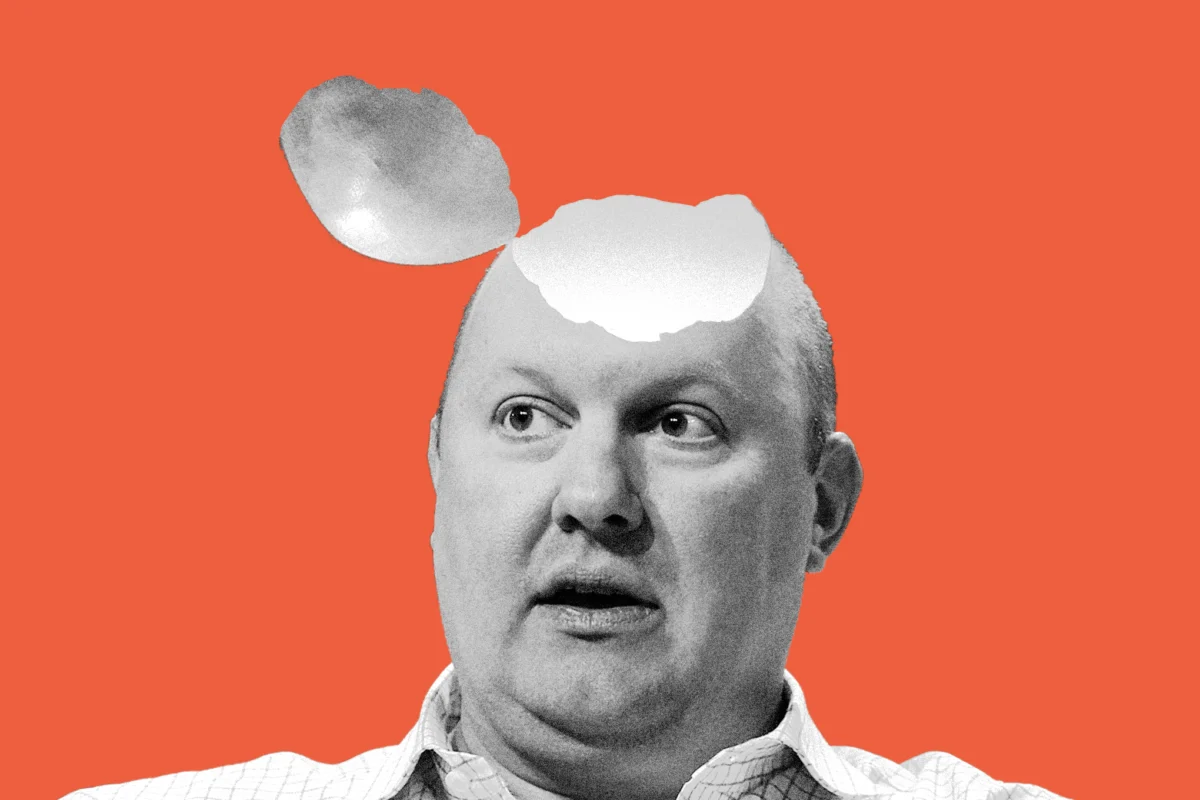
In a development that blurs the lines between theoretical philosophy and real-world discourse, prominent venture capitalist Marc Andreessen has become the unlikely focal point of a profound debate concerning consciousness, introspection, and the very nature of human experience. A recent flurry of public statements and social media pronouncements by Andreessen, particularly his assertion of possessing "zero" levels of introspection, has ignited a firestorm of commentary, drawing parallels to the long-standing philosophical thought experiment of the "philosophical zombie." This essay delves into the implications of Andreessen’s declarations, exploring the philosophical underpinnings of his stance, the potential societal impact of such views, and the broader questions they raise about the evolution of human cognition in an increasingly technologically mediated world.
The concept of the philosophical zombie, most famously articulated by philosopher David Chalmers, posits an entity physically identical to a conscious being but entirely devoid of subjective experience – the "what it’s like" quality of being. This hypothetical being would function identically to a conscious person, exhibiting all outward behaviors, yet lacking any internal qualitative awareness, or "qualia." It is in this theoretical space that Andreessen’s pronouncements find their resonance. His claim of actively seeking to minimize introspection, viewing it as a hindrance rather than a tool for self-understanding, positions him as a fascinating, albeit unsettling, case study for those interested in the mechanics of the human mind. While a Hollywood zombie is characterized by a lack of control and cognitive impairment, the philosophical zombie is a perfect mimic, outwardly indistinguishable from the real thing, yet inwardly empty. Andreessen’s public embrace of minimal introspection, presented as a virtue for entrepreneurship, suggests a radical detachment from the internal landscape that has historically been considered central to human identity and decision-making.
Andreessen’s public commentary on introspection has been largely framed by his engagement with Nick Chater’s book, The Mind Is Flat: The Remarkable Shallowness of the Improvising Brain. Chater, a professor of behavioral science, argues against the notion of a deep, complex unconscious mind, proposing instead that our mental processes are largely superficial and improvisational, driven by immediate situational context rather than ingrained internal states. While Chater’s work is a complex academic endeavor, Andreessen’s interpretation, as conveyed through his public statements, appears to simplify and perhaps sensationalize its core tenets. His distilled message, "TLDR There is no inner self, you’re chasing an imaginary concept, the end," encapsulates a stark rejection of internal self-reflection. Furthermore, his subsequent pronouncements, such as describing human cognition as a "15-second sliding context window with the working memory of a goldfish, your long-term memory is mainly fake, and it’s a minor miracle you can get out of the door in the morning," push these ideas to provocative extremes. These statements, while likely intended to be contrarian or attention-grabbing, invite a deeper examination of their factual basis and their potential impact on how we perceive ourselves and others.
The historical and philosophical context of introspection reveals a stark contrast to Andreessen’s current position. Across millennia and diverse cultures, introspection has been a cornerstone of human inquiry and self-development. Ancient philosophical traditions, from the Upanishads and the Bhagavad Gita in India to the dialogues of Plato in the West, emphasized the importance of looking inward to understand the self and the nature of reality. Religious practices, such as those found in contemplative Christianity and Sufism, have long utilized introspection as a path to spiritual enlightenment and moral guidance. Even within the realm of secular philosophy, thinkers like René Descartes, with his famous declaration "I think, therefore I am," placed internal reflection at the very foundation of existence. Sigmund Freud’s groundbreaking work in psychoanalysis further solidified the significance of the unconscious mind and the therapeutic value of exploring its hidden depths. The idea that introspection is a recent, or even novel, concept emerging from Vienna in the early 20th century is historically inaccurate and demonstrates a significant lacuna in understanding the evolution of human thought.
Chater’s core argument, as presented in his lectures and reviews of his work, seems to challenge the traditional Freudian model of a vast, hidden unconscious mind dictating our behavior. Instead, he suggests that our mental landscape is more akin to a series of surface-level processes, constantly adapting and improvising based on immediate input. The concept of "qualia," the subjective, qualitative character of experience – the redness of red, the pain of a stubbed toe – is central to the debate on consciousness and is directly challenged by a purely functionalist or behaviorist view of the mind. If consciousness is merely a complex set of computational processes, as some theories suggest, then a physical duplicate without subjective experience could, in theory, perform all the same functions. Andreessen’s apparent adoption of Chater’s ideas, particularly the dismissal of an "inner self" and the unconscious, places him at the vanguard of a potentially radical redefinition of human consciousness.
The implications of Andreessen’s stance extend beyond the philosophical realm and touch upon the practicalities of leadership, innovation, and societal well-being. If introspection is indeed detrimental, as his public statements suggest, then the qualities often associated with wisdom, empathy, and ethical decision-making – all of which are cultivated through self-reflection – might be considered liabilities. In the context of entrepreneurship, Andreessen argues that a focus on external reality and action is paramount, implying that internal rumination is a distraction that can lead to stagnation. This perspective, while potentially motivating in a hyper-competitive business environment, risks devaluing the internal compass that guides ethical conduct and long-term vision.
Furthermore, Andreessen’s pronouncements raise questions about the impact of technology, particularly artificial intelligence, on human cognition. His suggestion that the ultra-wealthy may be losing their capacity for introspection due to their reliance on others to perform mundane tasks and offload cognitive burdens resonates with concerns about the potential for AI to automate not just tasks, but also the very processes of thinking and problem-solving. If individuals increasingly delegate cognitive functions to AI, the skills that underpin introspection, critical thinking, and even creativity could atrophy. This echoes the phenomenon of "use it or lose it" observed in language acquisition and skill development. The potential for a society where individuals, particularly those with significant resources, become increasingly detached from their inner lives, while simultaneously being surrounded by a highly agreeable and financially motivated ecosystem, is a chilling prospect. This environment, where external validation and affirmation are constant, could indeed foster a form of functional shallowness, mirroring the characteristics of the philosophical zombie.
The comparison of Andreessen to a philosophical zombie is not merely an ad hominem attack; it is an attempt to grapple with the profound implications of his public declarations on consciousness and self-awareness. His embrace of a view that de-emphasizes or outright dismisses the significance of internal experience, coupled with his advocacy for a purely external, action-oriented approach, aligns remarkably with the theoretical construct of a being that functions identically to a conscious entity but lacks subjective awareness. This is not to definitively state that Andreessen is a philosophical zombie, but rather that his public persona and stated beliefs provide a compelling, real-world illustration of the thought experiment. The challenge lies in discerning whether this is a deliberate philosophical stance, a provocative rhetorical strategy, or a genuine reflection of a mind that has indeed minimized introspection to a degree that borders on the theoretical construct.
The author’s experiment with ChatGPT, roleplaying as Andreessen, further highlights the complex interplay between human and artificial intelligence. While the AI’s responses, when prompted to explain Andreessen’s views, do not perfectly capture his tendentious style, they do reflect the underlying logic of his argument – that introspection can be a "trap" and that a bias toward "external reality and action" is crucial, particularly in the startup world. This exercise underscores the increasing difficulty in distinguishing between human and artificial intelligence, especially when the former exhibits characteristics that appear to mirror the latter’s operational principles. If Andreessen’s views suggest that human intelligence is fundamentally improvisational and lacks deep internal structure, then the distinction between human and AI becomes even more blurred, with significant implications for the future of work, creativity, and human identity.
Ultimately, Marc Andreessen’s public pronouncements have thrust the philosophical concept of the zombie into the mainstream discourse, forcing a re-examination of what it means to be conscious, to introspect, and to be human. His embrace of a "flat mind" paradigm, devoid of significant internal depth, and his dismissal of introspection as a detrimental pursuit, offer a provocative glimpse into a potential future where technology and a certain ideology converge to reshape our understanding of ourselves. Whether this is a deliberate act of philosophical provocation or a genuine reflection of his worldview, it serves as a potent reminder of the enduring questions surrounding consciousness and the potential consequences of divorcing our actions from our internal lives. The implications for society, particularly in an era of accelerating technological advancement, are profound and warrant continued, rigorous examination. The specter of the philosophical zombie, once confined to academic thought experiments, may be closer to reality than many previously imagined, and Marc Andreessen’s public persona has become its most compelling, and perhaps most disquieting, avatar.




 Ayu Aulia
 Ridwan Kamil
 Safa Marwah
 Lisa Mariana