
 Ridwan Kamil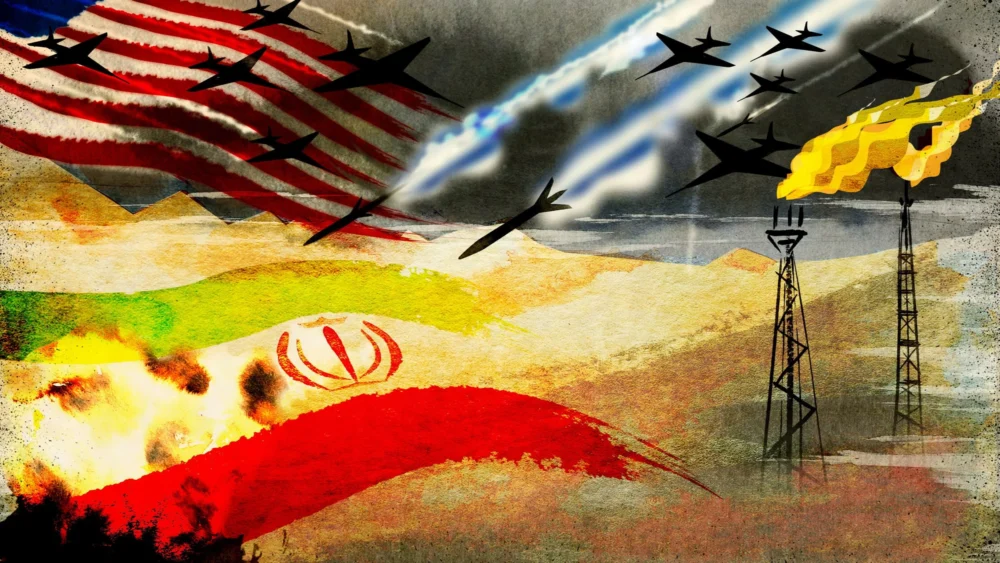
In the intricate tapestry of global affairs, actions undertaken with specific intentions often unfurl a cascade of unanticipated outcomes, profoundly reshaping landscapes and challenging initial objectives. This phenomenon, a recurring theme in history and contemporary policy, highlights the inherent complexity of cause and effect, where even the most carefully calibrated interventions can engender a war of unintended consequences. The current geopolitical and economic climate is replete with examples, illustrating how decisions made to achieve stability, foster growth, or assert influence can, paradoxically, sow seeds of disruption and volatility.
The genesis of these unintended consequences often lies in the inherent interconnectedness of global systems. Economic policies, for instance, designed to stimulate domestic markets, might inadvertently trigger currency fluctuations in partner nations, leading to trade disputes or capital flight. Similarly, security initiatives aimed at bolstering regional stability can, through miscalculation or unforeseen local dynamics, escalate tensions, creating new flashpoints or empowering undesirable actors. The delicate balance of international relations, influenced by a myriad of cultural, political, and economic variables, renders any intervention susceptible to a spectrum of reactions that transcend initial projections.
A prime area where this dynamic is acutely observable is in the realm of international trade and sanctions. The imposition of punitive measures, often aimed at compelling a recalcitrant state to alter its behavior, can have far-reaching effects beyond the targeted entity. While the intention is to exert economic pressure, the ripple effect can manifest as disrupted supply chains for allied nations, increased global commodity prices, and a humanitarian toll on civilian populations within the sanctioned country, which can, in turn, foster resentment and anti-Western sentiment. The long-term impact might be a hardening of political resolve rather than the intended capitulation, leading to prolonged geopolitical standoffs. Furthermore, the search for alternative markets by the sanctioned nation can lead to the strengthening of economic ties with geopolitical rivals, creating new strategic alignments that were not part of the initial calculus.
Consider the impact of technological advancements and their regulation. Policies designed to foster innovation and maintain national competitiveness can, without careful foresight, lead to the concentration of power in a few dominant entities. This can stifle emergent competition, create barriers to entry for smaller players, and raise concerns about data privacy and algorithmic bias. The very tools intended to propel progress can, if not managed with a keen understanding of their societal implications, exacerbate existing inequalities and create new forms of digital divides. The rapid evolution of artificial intelligence, for example, presents immense opportunities but also raises profound ethical questions regarding employment, security, and the very nature of human interaction, all of which require nuanced policy responses that are often reactive rather than proactive.
Environmental policies, while crucial for the planet’s long-term health, can also be a fertile ground for unintended consequences. The transition to renewable energy, for instance, while essential, necessitates significant resource extraction for components like batteries and solar panels. The sourcing of these materials can lead to environmental degradation in developing nations, geopolitical competition over critical mineral supplies, and social disruption for local communities. The pursuit of a green future, therefore, requires a holistic approach that considers the entire lifecycle of these technologies and their global impact, rather than focusing solely on emissions reduction in isolation.
In the sphere of international development and aid, well-intentioned programs designed to alleviate poverty or promote democracy can, in certain contexts, inadvertently undermine local economies or foster dependency. The influx of foreign aid, if not carefully managed and integrated with local capacity-building initiatives, can distort local markets, discourage local production, and create a reliance on external support that is unsustainable in the long run. The political implications can also be complex, with aid sometimes becoming a tool of geopolitical leverage, leading to unintended shifts in power dynamics and local governance structures.
The concept of unintended consequences also extends to the realm of military interventions and conflict resolution. While the objective may be to neutralize immediate threats or restore order, the ensuing power vacuums, protracted instability, and the rise of non-state actors can create a far more complex and enduring security challenge. The long-term costs of such interventions, in terms of human lives, economic resources, and geopolitical credibility, often far outweigh the initial perceived benefits, illustrating the difficulty of surgically altering complex conflict dynamics.
Analyzing the war of unintended consequences requires a sophisticated understanding of systems thinking, which emphasizes the interconnectedness of all elements within a given environment. It demands a shift from linear, cause-and-effect reasoning to a more holistic perspective that acknowledges feedback loops, emergent properties, and the potential for non-obvious interactions. This analytical framework is crucial for policymakers, strategists, and international observers seeking to navigate the complexities of the modern world.
Several key factors contribute to the prevalence of unintended consequences. Firstly, imperfect information is a pervasive challenge. Decision-makers rarely possess complete data about the intricate workings of the systems they seek to influence. Assumptions made based on incomplete information can lead to flawed predictions and, consequently, unforeseen outcomes. Secondly, human behavior and agency introduce an element of unpredictability. Individuals, communities, and even entire nations can react in ways that defy rational prediction, driven by cultural norms, historical grievances, or emergent social dynamics. Thirdly, time lags between action and consequence can obscure the causal link. The full impact of a policy or intervention may not become apparent for months or even years, making it difficult to attribute outcomes to specific decisions. Finally, escalation and adaptation are inherent to dynamic systems. Actors may respond to initial interventions in ways that necessitate further, often more complex, interventions, leading to a spiral of unforeseen developments.
To mitigate the risk of unintended consequences, a multi-faceted approach is necessary. Scenario planning and simulation can help to explore a wider range of potential outcomes, including those that are less probable but potentially high-impact. Robust monitoring and evaluation mechanisms are essential for tracking the actual effects of policies and interventions, allowing for course correction and adaptation. Engaging diverse perspectives and stakeholders can provide crucial insights into potential blind spots and unforeseen repercussions. This includes consulting with local communities, academic experts, and civil society organizations who possess a deeper understanding of the ground realities. Emphasis on adaptive governance, which is characterized by flexibility, learning, and the ability to adjust strategies in response to new information, is paramount.
The ongoing global recalibration following periods of significant geopolitical shifts and technological disruption underscores the enduring relevance of understanding the war of unintended consequences. As nations and international bodies grapple with challenges such as climate change, economic inequality, and evolving security threats, the capacity to anticipate and manage the ripple effects of their decisions will be a defining factor in achieving sustainable and positive outcomes. The pursuit of progress and stability is an ongoing process, one that is perpetually tested by the intricate interplay of human endeavor and the complex, often unpredictable, nature of the systems within which we operate. The wisdom lies not only in formulating sound initial intentions but also in the sustained vigilance and adaptive capacity to navigate the inevitable tides of unforeseen repercussions.




 Ayu Aulia
 Safa Marwah
 Aura Kasih
 Lisa Mariana