Aura Kasih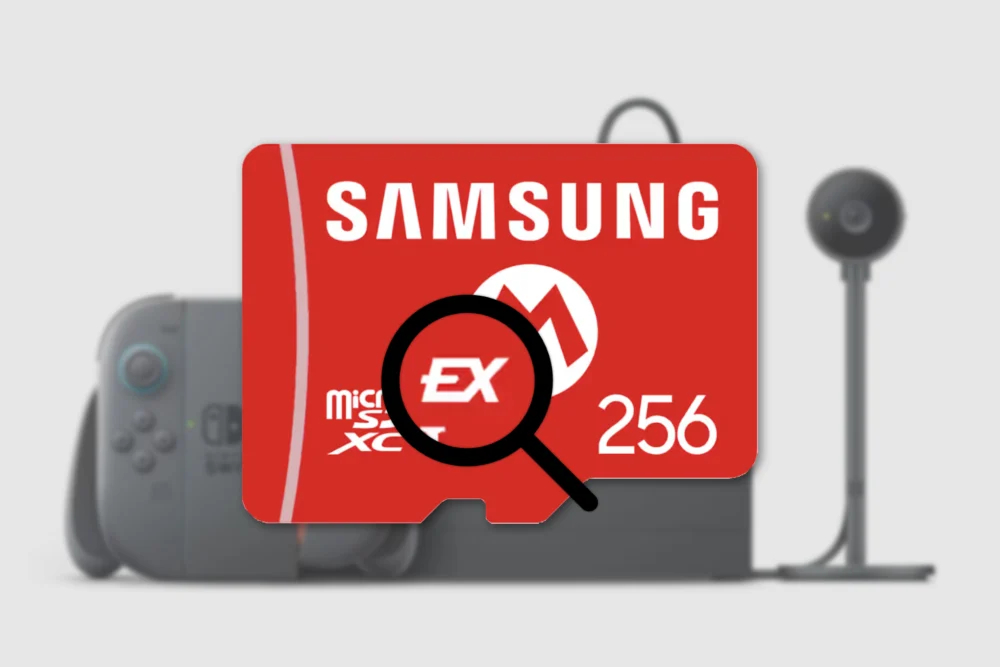
As the Nintendo Switch 2 prepares to launch, a critical component for expanding its storage capabilities has emerged: the microSD Express card. Unlike its predecessor, the Switch 2 mandates this newer, faster standard for game installations and access, necessitating a closer examination of available options for consumers looking to maximize their gaming library. This article delves into the considerations for selecting the optimal microSD Express card, focusing on the intersection of performance, cost, and practical utility for the upcoming console.
The evolution of gaming consoles has consistently been intertwined with advancements in storage technology. From the physical media of cartridges and discs to the digital downloads facilitated by internal and external storage solutions, the ability to store and access game data swiftly and efficiently is paramount to the player experience. The original Nintendo Switch, with its reliance on standard microSD cards, offered a foundational level of expandable storage. However, the burgeoning complexity and graphical fidelity of modern video games demand a more robust solution. The introduction of the microSD Express standard represents a significant leap forward, promising speeds that can better keep pace with the demands of contemporary gaming.
MicroSD Express cards are not merely an incremental upgrade; they represent a fundamental architectural shift in removable storage. The "EX" designation is the key identifier, signaling a departure from the older UHS-I and UHS-II interfaces. Instead, microSD Express leverages the NVMe (Non-Volatile Memory Express) protocol, which was originally designed for high-performance solid-state drives (SSDs) in PCs and servers. This transition allows microSD Express cards to communicate directly with the host system over PCIe lanes, a much more direct and faster communication pathway than the traditional SD interface. The result is a theoretical maximum transfer speed that can be orders of magnitude greater than standard microSD cards, with advertised speeds reaching up to 3,940 MB/s for PCIe Gen 4.0 x1, and potentially even higher with future iterations. For context, even the fastest UHS-II microSD cards typically top out around 300 MB/s.
This dramatic increase in throughput is not merely an academic benchmark; it has tangible implications for the gaming experience on the Nintendo Switch 2. Developers are increasingly creating games with higher-resolution textures, more complex environmental assets, and larger, more expansive open worlds. Loading these assets from slower storage can result in prolonged loading times, stuttering during gameplay as assets stream in, and overall a less fluid and immersive experience. The Switch 2’s internal 256GB SSD, while offering a good starting point, will undoubtedly become a bottleneck for players who accumulate a substantial digital library. MicroSD Express cards are positioned to alleviate this by providing a high-speed conduit for game data, ensuring that the console’s processing power is not held back by storage limitations.
When considering the purchase of a microSD Express card for the Switch 2, several factors come into play beyond raw speed. Capacity is, of course, a primary concern. While the Switch 2 comes equipped with a 256GB internal SSD, modern games can easily consume 50GB or more. A 256GB microSD Express card would offer a total of 512GB, which might suffice for a casual gamer. However, for those who prefer to download a significant portion of their game library, a 512GB or even a 1TB card would be a more prudent investment. The Switch 2 officially supports microSD Express cards up to 2TB, though currently, 1TB remains the largest commercially available capacity in this format.
The pricing of microSD Express cards has historically been a significant barrier to adoption. When the technology first emerged, 1TB capacities were often priced in the vicinity of $200 or more. However, as with most emerging technologies, manufacturing efficiencies and increased competition have begun to drive prices down. While they still command a premium over standard microSD cards, the gap has narrowed considerably, particularly for lower capacities like 256GB and 512GB. Occasional promotional events and sales can further reduce these prices, bringing them into a more accessible range for a broader consumer base.

The core premise of acquiring the "best" microSD Express card for the Switch 2, from a value perspective, often boils down to identifying the most cost-effective option. Given that the underlying technology and performance specifications for microSD Express cards are largely standardized by the SD Association, the tangible differences in speed and reliability between reputable brands for a given capacity are often minimal. Therefore, prioritizing the lowest price point from a trusted manufacturer becomes a logical strategy. This approach acknowledges that consumers are paying for a specific technological standard, and unless there are significant, demonstrable differences in build quality, longevity, or warranty support, the financial aspect becomes the most persuasive factor.
Brands like SanDisk, Samsung, and Lexar have been prominent players in the flash storage market for years, and their entry into the microSD Express space offers a degree of reassurance regarding product quality and support. However, it is also worth noting the emergence of more budget-oriented brands. In the context of removable storage, while extreme cost-cutting can sometimes lead to compromises in durability or performance consistency, it is also true that these brands can offer compelling value propositions, especially when paired with robust warranty offerings. For the Switch 2, where the primary requirement is adherence to the microSD Express standard, the focus should be on acquiring a card that meets this technical specification at the most favorable price.
The market for microSD Express cards is still maturing. While 1TB cards are available, they represent the upper echelon of capacity and price. For most users, a 512GB card offers a substantial increase in storage without the prohibitive cost of the largest capacities. Recent market observations have indicated that 256GB models can sometimes dip below the cost of new AAA game titles, making them an attractive add-on purchase. Similarly, 512GB cards, while typically priced higher, have also seen significant discounts, positioning them as a sweet spot for a balance of capacity and affordability.
It is crucial for consumers to understand that the "best" card is not necessarily the one with the absolute highest advertised speed (as they are all bound by the microSD Express standard) but rather the one that provides the most storage for the least amount of money, from a manufacturer that inspires confidence. The inclusion of the "EX" marking is a non-negotiable requirement. Users should be vigilant in checking product listings and specifications to ensure they are purchasing a true microSD Express card and not a standard microSDXC card, which will not be compatible with the Switch 2’s high-speed storage slot.
The Nintendo Switch 2’s reliance on microSD Express also hints at broader industry trends. As devices become more powerful and data-intensive, the demand for faster, more efficient storage solutions will only increase. The adoption of NVMe protocols in smaller form factors like microSD cards suggests a future where performance limitations are increasingly relegated to the device’s internal architecture rather than its removable storage. This could lead to more seamless transitions between devices, easier data management, and ultimately, a more fluid digital life.
In conclusion, for prospective Nintendo Switch 2 owners looking to expand their storage, the most prudent strategy is to prioritize cost-effectiveness. The technical requirements of the Switch 2 necessitate the use of microSD Express cards. Within this category, the performance differences between reputable brands are often negligible. Therefore, the most economical microSD Express card available, purchased from a trusted vendor, represents the optimal choice for maximizing storage capacity without overspending. Consumers should remain vigilant for deals and promotions, as these can significantly reduce the cost of entry into this faster storage standard. The key is to ensure the card meets the "EX" specification and offers a sufficient capacity to accommodate a growing digital game library, all while adhering to a budget-conscious purchasing decision. The continued evolution of flash memory technology and the increasing adoption of high-speed interfaces like NVMe suggest that prices will continue to become more competitive, making expanded storage for the Switch 2 an increasingly accessible upgrade for all players.




 Ridwan Kamil
 Safa Marwah
 Lisa Mariana
 Ayu Aulia