
 Aura Kasih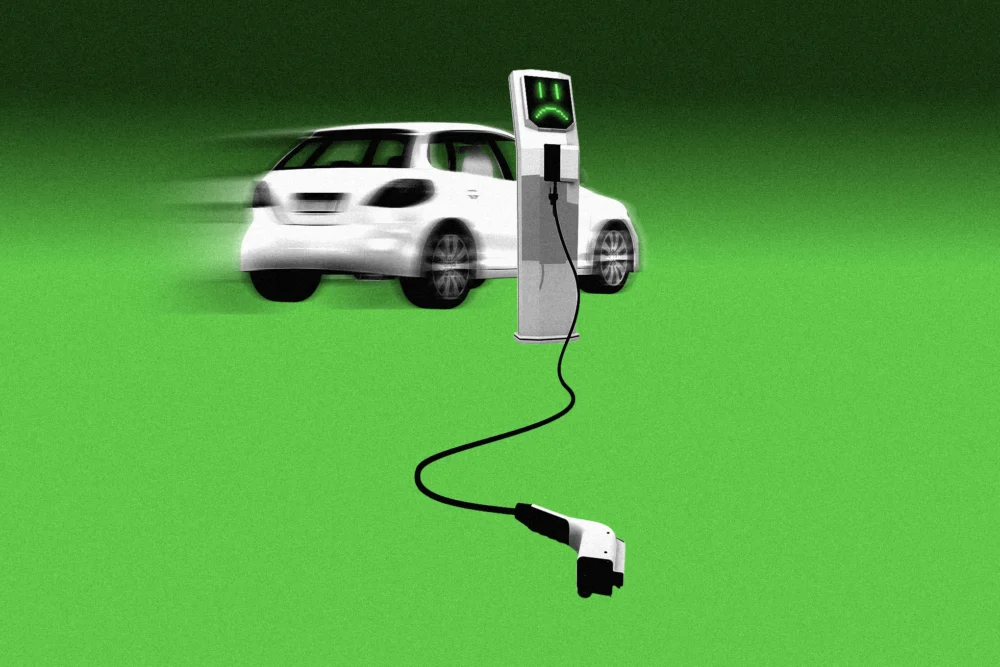
Hybrid vehicles, once heralded as the pragmatic bridge between internal combustion engines and a fully electric future, are facing a critical re-evaluation as new data reveals a significant disconnect between their design intent and real-world usage, raising questions about their true environmental benefit and the automotive industry’s strategic direction.
The automotive landscape has long been characterized by innovation, with early pioneers like Ferdinand Porsche in 1900 experimenting with hybrid powertrains in his Semper Vivus, a testament to an enduring fascination with combining disparate power sources. Yet, for over a century, the automotive world largely overlooked the profound potential of integrating internal combustion engines with electric propulsion. Today, in an era marked by a palpable slowdown in the growth of fully electric vehicle (EV) sales, hybrid technology is experiencing a resurgence, with plug-in hybrids (PHEVs) emerging as a favored solution for automakers grappling with fluctuating consumer preferences and evolving regulatory pressures. Sales figures for these vehicles have surged to unprecedented levels in recent years, positioning them as a seemingly sensible compromise for consumers seeking improved fuel economy and reduced emissions without the range anxiety often associated with pure EVs. The widespread adoption of hybrid powertrains is evident even in the most popular segments, with flagship models like the Toyota RAV4 now exclusively offered in hybrid configurations, signaling a clear industry pivot.
However, this optimistic narrative is beginning to fray at the edges. The absence of robust governmental mandates, such as stringent fuel economy standards and compelling EV tax incentives, has led several major automakers to reconsider their commitment to PHEVs. Jeep’s recent decision to discontinue its PHEV offerings, despite their strong market performance, exemplifies this trend. The automotive industry’s attention is increasingly shifting towards Extended-Range Electric Vehicles (EREVs), a subcategory that utilizes small gasoline engines primarily as generators to replenish an EV-sized battery, thereby extending the vehicle’s electric driving range. This strategic recalibration underscores a growing industry uncertainty about the long-term viability and consumer adoption of traditional PHEV architectures.
The fundamental premise of a plug-in hybrid is its ability to operate on electric power for significant portions of daily driving, thereby minimizing tailpipe emissions and maximizing fuel efficiency. This potential is realized only when the vehicle is regularly connected to an external charging source. Without consistent charging, a PHEV transforms into a heavier, less efficient, and potentially more polluting conventional gasoline-powered vehicle, thereby negating its core environmental advantages and undermining the very rationale for its existence.
The reality of PHEV ownership, as revealed by recent analyses, paints a less-than-ideal picture regarding charging habits. A significant body of research indicates that a substantial number of PHEV owners are not consistently engaging in the practice of plugging in their vehicles, thereby failing to leverage the electric-only driving capabilities that define these vehicles. This oversight renders the "plug-in" aspect of PHEVs largely theoretical for a considerable portion of the user base.
A comprehensive analysis conducted by Geotab, a leading telematics and fleet management company, examined 1,776 PHEVs deployed in commercial fleets across North America. The findings were stark: these vehicles relied on gasoline for approximately 86% of their total energy consumption. This data strongly suggests a widespread failure to adequately charge the vehicle’s battery, which is crucial for achieving electric-only operation. Consequently, the average fuel efficiency achieved by these PHEVs was a modest 37 miles per gallon (approximately 6 liters per 100 km), a figure only marginally superior to that of comparable gasoline-only vehicles, which averaged around 33.1 miles per gallon (approximately 7 liters per 100 km). This marginal improvement hardly justifies the added complexity and cost of a PHEV powertrain if the electric component is not actively utilized.
Further corroboration of these concerning trends comes from a study released by the Fraunhofer Institute, which analyzed onboard fuel consumption monitoring (OBFCM) data from nearly one million vehicles across Europe. The study’s findings were particularly illuminating, revealing that PHEVs consumed an average of 6 liters of fuel per 100 kilometers. This figure is approximately three times higher than what manufacturers often advertise and indicates that these vehicles were frequently operating on gasoline even when the electric system was theoretically available. The primary driver for this discrepancy, the study concluded, was the failure of drivers to regularly charge their vehicles. Instead of maximizing electric propulsion, owners were essentially carrying the weight of an unused, or underutilized, battery system while burning significantly more fuel than anticipated.
Interestingly, the Fraunhofer study did identify variations in charging behavior among different brands. Toyota hybrid owners demonstrated the most consistent engagement with electric power, utilizing it for approximately 44% of their driving energy. This suggests a greater propensity for this demographic to regularly plug in their vehicles. Conversely, Porsche owners exhibited the lowest engagement, with electric power accounting for a mere 0.8% of their driving energy, averaging a negligible 7 kWh over a two-year period. Such a statistic would likely elicit a disappointed reaction from Ferdinand Porsche himself, the visionary behind the world’s first hybrid automobile.
Despite these challenges, the future of hybrid vehicles is not entirely without potential pathways to redemption. Some automotive manufacturers are exploring innovative strategies to incentivize and encourage more consistent charging behavior among PHEV owners. Toyota, for instance, has piloted a prototype feature within its ChargeMinder app, designed to gamify the charging process. This initiative employs notifications, positive reinforcement, and interactive quizzes to foster improved charging habits. In pilot programs within the United States, this gamified approach reportedly led to a 10% increase in charging frequency among PHEV owners, correlating with a notable 16-percentage-point improvement in their overall ownership satisfaction. Such behavioral economics-driven interventions could represent a crucial element in unlocking the full potential of PHEV technology.
Another strategic direction being pursued by some automakers involves the development and promotion of Extended-Range Electric Vehicles (EREVs). These vehicles represent a conceptual inversion of the traditional PHEV, featuring a substantial battery pack and EV-centric platform, augmented by a small internal combustion engine that serves primarily as an onboard generator to recharge the battery. However, this approach does not entirely circumvent the fundamental challenge of user engagement. EREVs, like PHEVs, still require both regular charging and periodic refueling with gasoline, presenting drivers with the dual responsibility of managing both energy sources. This complexity suggests that consumers may struggle to consistently adhere to the maintenance requirements of vehicles demanding such multifaceted energy management.
This ongoing dilemma places many automotive manufacturers in a precarious position. General Motors, for example, experienced considerable success with its Chevrolet Volt, a popular PHEV model that was a consistent seller in the United States for years. However, the company ultimately discontinued the Volt in 2018, pivoting decisively towards a fully electric vehicle strategy. While GM has achieved notable successes with its electric offerings, such as the highly sought-after Chevrolet Blazer and Equinox EVs, these advancements have not been sufficient to entirely offset the broader market headwinds and the fluctuating policy landscape surrounding electric vehicles at the federal level. This challenging environment has led GM to incur significant financial write-offs, exceeding $6 billion, on its EV investments. In response to these evolving market dynamics, GM CEO Mary Barra has indicated that the company is actively re-evaluating its stance on hybrid vehicles.
During a recent industry conference in Detroit, Barra articulated the core challenge facing hybrid technology with a candid observation: "What we also know today with plug-in hybrids is that most people don’t plug them in," she stated. This acknowledgment underscores the fundamental paradox of PHEVs: their environmental and efficiency benefits are contingent upon a level of user commitment that is demonstrably not being met across a broad segment of owners. Consequently, she emphasized the need for a highly considered approach to future hybrid and plug-in hybrid product development, signaling a strategic pivot towards more robust and user-friendly solutions. The industry’s journey towards sustainable mobility remains a complex and iterative process, with the efficacy of hybrid technology now subject to critical scrutiny and a demand for more tangible, real-world performance.




 Lisa Mariana

 Ridwan Kamil
 Safa Marwah