
 Aura Kasih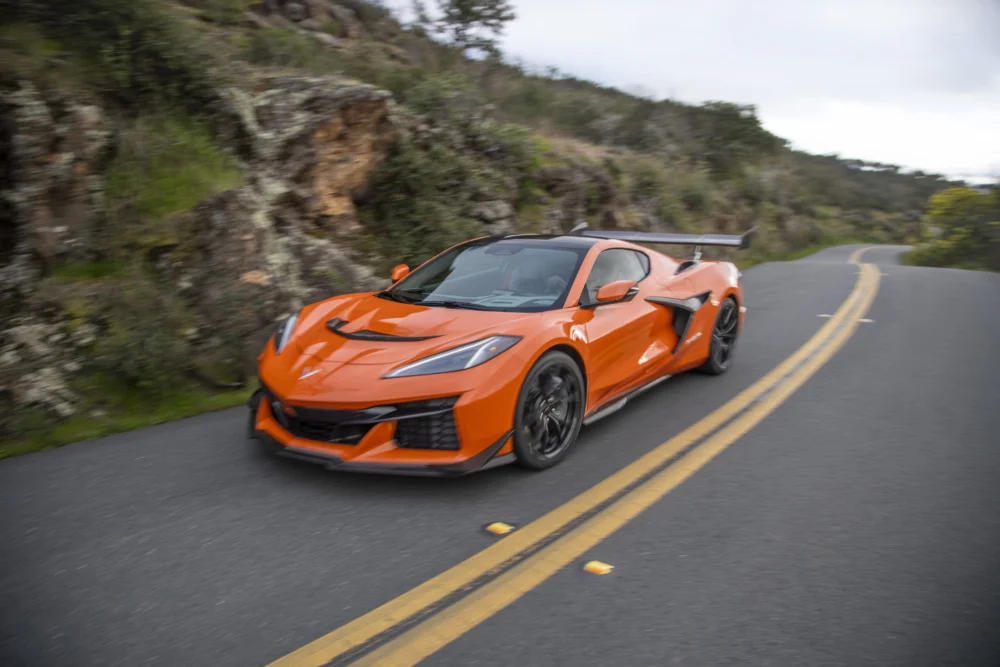
In a surprising twist for the automotive world, the Chevrolet Corvette ZR1X hybrid has emerged as a performance titan, capable of eclipsing the capabilities of million-dollar hypercars while commanding a significantly more accessible price point, demonstrating a profound shift in how electrification is revolutionizing the pinnacle of automotive engineering.
The initial surge of electric vehicles, epitomized by the early Tesla Roadster, fostered a widespread expectation that internal combustion engines in performance vehicles would soon become relics of the past. However, the reality has proven far more nuanced. Purely electric two-seater sports cars have struggled to gain traction with consumers, with established manufacturers like Porsche reconsidering all-electric versions of their iconic Boxster and Cayman models due to technical challenges and lukewarm reception from their loyal customer base. Similarly, Lamborghini has recently signaled a departure from its first all-electric venture, citing a distinct lack of interest from its clientele in vehicles devoid of a traditional gasoline engine. This landscape, however, is precisely where the Corvette ZR1X hybrid asserts its dominance, showcasing a potent fusion of electric augmentation and sophisticated engineering that redefines the upper echelons of performance, mirroring the hybrid powerplants now integral to Formula 1 racing.
The author’s rigorous evaluation of the ZR1X, conducted across the demanding asphalt of Sonoma Raceway and the scenic routes of Napa Valley, unequivocally validates the indispensable role of electric assistance in achieving superlative performance. The statistics are staggering: a colossal 1,250 hybrid horsepower, a significant leap from the 1,064 horsepower of its gasoline-only predecessor, the ZR1. This power translates into an astonishing 0-to-60 mph acceleration time of a mere 1.67 seconds, a figure that directly rivals the $2.5 million Rimac Nevera R EV and surpasses the acceleration benchmarks of any Tesla or Lucid model currently available.
Further solidifying its position at the apex of automotive achievement, the ZR1X blazed through Germany’s legendary Nürburgring circuit in a breathtaking 6 minutes and 49 seconds. This monumental lap time not only established a new American production-car record but also bested the Rimac by a substantial 16 seconds and narrowly edged out Porsche’s track-focused 911 GT3 RS. It also decisively outperformed the Yangwang U9, a 3,000-horsepower Chinese EV priced at approximately $235,000, which, despite its impressive 6-minute 59-second Nürburgring lap – the first for an EV under seven minutes – is more of a limited-production prototype than a widely accessible production car, with a mere 30 units slated for manufacture.
The Corvette’s enduring legacy, forged over 73 years of racing heritage, cultural impact, and relentless engineering innovation, including an impressive nine production-class victories at the 24 Hours of Le Mans since 2020, becomes acutely apparent when analyzing these performance metrics. The ZR1X, with less than half the horsepower of the Yangwang, demonstrably outpaced the world’s fastest EV by a margin of 10 full seconds – an almost insurmountable advantage in the competitive realm of motorsport. Moreover, the dedicated engineers behind the ZR1X, including chassis specialist Drew Cattell, have been instrumental in its track-conquering exploits, achieving these records across North America and Europe without relying on the professional racing drivers typically employed by other manufacturers.
While ultimate top speeds often serve more as a marketing tool than a reflection of real-world usability, the Corvette’s 233 mph peak velocity surpasses that of numerous hybrid hypercars, including the forthcoming $3.7 million, 1,184-horsepower Ferrari F80 and the $2.1 million, 1,258-horsepower McLaren W1. Even the Lamborghini Temerario hybrid, a recent driving experience featuring a vibrant 10,000 rpm V8, approached and exceeded $500,000 with optional enhancements. Crucially, while many ultra-exclusive models necessitate considerable wealth and privileged access, the ZR1X is available through conventional dealership channels, with a starting price of $207,395 for the coupe and an additional $10,000 for the convertible variant. While this represents a substantial investment for a Corvette, it offers exceptional value when juxtaposed with the price tags of its elite competitors. Even the more accessible Corvette E-Ray hybrid, starting at $110,195 with a robust 655 horsepower, and the standard C8 Corvette coupe, beginning at $71,995 with 495 horsepower, underscore the ZR1X’s position as the ultimate performance offering for those who prioritize absolute capability and exclusivity.
The visceral experience of piloting the ZR1X on the challenging road course at Sonoma Raceway is characterized by an overwhelming surge of power and g-forces that push the boundaries of physical perception. The car’s sophisticated Performance Data Recorder captures comprehensive telemetry, including video, lap times, and performance metrics, providing invaluable data for post-drive analysis and driver improvement.
At the heart of the ZR1X lies the potent 5.5-liter V8 engine derived from the gasoline-only ZR1, seamlessly integrated with an eight-speed dual-clutch automated transmission featuring responsive carbon-fiber paddle shifters. This "Gemini" V8, a testament to the pinnacle of internal combustion engine technology, boasts a Ferrari-inspired flat crankshaft, titanium connecting rods, and an impressive 1,064 horsepower output culminating in a searing 8,000 rpm redline. This meticulously hand-built, twin-turbocharged engine is positioned behind the driver, enhancing the vehicle’s weight distribution and providing a dramatic visual element beneath a transparent, vented panel that pays homage to the iconic 1963 split-window Sting Ray.
Complementing the V8’s prowess is a beefed-up electric motor situated at the front of the vehicle, delivering supplementary bursts of up to 186 horsepower and 145 pound-feet of torque – a notable increase over the E-Ray’s electric output. In a sophisticated engineering solution, there is no direct mechanical linkage between the gasoline and electric powertrains. Instead, an intricate interplay of software and sensors monitors vehicle dynamics and driver inputs to precisely manage and synchronize power delivery and traction between the rear wheels, driven by the V8, and the independent front axle, coordinated by the Corvette’s advanced electronic limited-slip differential.
A key technological innovation is the torque-vectoring system, which significantly enhances the ZR1X’s ability to navigate corners at extraordinary speeds with remarkable control, a feat unattainable by any rear-wheel-drive vehicle, including the standard ZR1. This advanced system liberates the driver from the constant, often challenging, task of managing steering input to harness immense power, as experienced in the standard ZR1. The ZR1X, in contrast, exhibits a more fluid and balanced demeanor through turns. Engineers are actively engaged in a sophisticated debate regarding the ultimate superiority of the rear-drive ZR1 versus the all-wheel-drive hybrid ZR1X, acknowledging that driver confidence is a paramount determinant of on-track performance. As global performance manager Aaron Link aptly states, "There’s a tameness to the ZR1X, but in a good way. You can go just as fast without being on the ragged edge and white-knuckling it everywhere."
The electric motor’s capability extends to providing instantaneous, nitrous-like acceleration boosts at speeds up to 160 mph, surpassing the E-Ray’s 150 mph cutoff. This enhanced high-speed capability bolsters its drag-racing credentials, enabling the ZR1X to achieve nearly 160 mph within the confines of a quarter-mile. The automated launch control system further refines this performance, allowing drivers to precisely calibrate engine speed and wheel slip for optimal acceleration. On a prepped dragstrip, the author recorded a 9.1-second quarter-mile time, a respectable figure, though Corvette engineers have achieved an astonishing 8.65 seconds at 159.5 mph in Michigan.
Powering this electrifying performance is a compact lithium-ion battery pack, strategically mounted low and centrally within the car’s rigid aluminum chassis. A detailed cutaway model reveals the battery’s integration within the center console, alongside other sophisticated components. This petite pack offers a capacity of 1.9 kilowatts, with a usable energy output of approximately 1.6 kilowatt-hours, representing a 25 percent increase over the E-Ray. The thermal management system employs eighteen radiators to maintain optimal operating temperatures for the battery and associated electronics.
Distinct from plug-in hybrid vehicles like the Toyota Prius, the ZR1X does not require external charging. Its hybrid system is meticulously engineered for exhilaration, prioritizing the recapture and rapid redeployment of regenerative braking energy in potent 188-horsepower jolts. Racetrack environments, with their frequent and intense braking events, maximize the system’s kinetic energy recovery capabilities. In addition to the electric augmentation, the ZR1X features colossal physical brakes – the largest ever fitted to a General Motors vehicle – equipped with bespoke 10-piston calipers and carbon-ceramic rotors, engineered to decelerate the car from extreme speeds with immense force. The system can generate a neck-snapping 1.9 g’s of deceleration from 180 to 120 mph.
While a standard Corvette can achieve impressive fuel economy figures approaching 30 mpg on the highway, the ZR1X, during spirited driving through Napa Valley’s scenic landscape, averaged 11 mpg, with a cumulative average of 15.5 mpg over 1,800 miles. On the track, fuel consumption escalates dramatically, with the Corvette consuming up to two gallons of fuel per minute under full throttle, highlighting the need for a larger fuel tank in such demanding conditions.
For everyday driving, the electric system remains responsive until the battery charge drops below approximately 50 percent. However, a "Charge +" button on the steering wheel, part of an upgraded interior found across all 2026 Corvettes, facilitates rapid battery replenishment through normal cruising, quickly restoring the electric assist.
A suite of specialized energy management strategies optimizes the hybrid technology’s performance. An "Endurance" mode meticulously monitors and adjusts energy storage to ensure consistent power delivery from the electrified front wheels and all-wheel-drive handling capabilities throughout a full tank of fuel. Conversely, a "Qualifying" mode unleashes the full combined potential of the gasoline and electric powertrains for maximum performance over a single lap.
The redesigned interior now features three high-resolution displays, including a novel instrument cluster positioned to the left of the carbon-fiber-rimmed steering wheel. The previous "waterfall" of controls, a design element of the C8 Corvette, has been replaced by a carbon-fiber grab handle, a welcome addition for anxious passengers. The left-hand touchscreen provides intuitive access to launch control, performance readouts, and the sophisticated Performance Traction Management (PTM) system. This system offers adjustable levels of stability and safety oversight, catering to various driver skill levels. The PTM system offers modes ranging from Wet and Dry to Sport, Race 1, Race 2, and an advanced PTM Pro mode, which deactivates all stability and traction controls while retaining brake-based energy recovery, electric torque-vectoring, and automatic application of inside front brakes to enhance corner-exit traction.
Aerodynamics and advanced cooling are paramount to the ZR1X’s sustained performance. The vehicle incorporates eighteen heat exchangers, along with meticulously designed scoops, vents, and a towering rear wing, which, as part of the optional ZTK Performance Package, generates 1,200 pounds of downforce at top speed, ensuring optimal grip and stability.
While personal preference in color is subjective, the "red mist" paint option presents a striking visual appeal, evoking the richness of a fine Sonoma Pinot Noir rather than a common fire-engine red.
The resistance to purely electric sports cars extends beyond the ultra-luxury segment, with drivers of more attainable vehicles like the Mazda Miata expressing little enthusiasm for electric alternatives, even when offered superior acceleration. Enthusiasts of gasoline-powered sports cars articulate valid concerns regarding the compromises inherent in electric vehicles, such as the impact of heavy battery packs on agility and the limited space for batteries in small, low-slung chassis, forcing trade-offs between range and handling. Furthermore, the absence of authentic auditory and tactile feedback has led some EV manufacturers to resort to simulated engine sounds and artificial gear changes.
The issue of EV batteries and systems that deplete rapidly during spirited driving or overheat and cease functioning after brief track sessions remains a significant engineering hurdle. While these challenges are progressively being addressed, hybrid performance vehicles, exemplified by the Corvette ZR1X, the latest Porsche 911, Lamborghini Temerario, and Ferrari 296 GTB, are beginning to bridge the gap and win over even the most skeptical drivers. These vehicles offer the ability to perform exceptionally on racetracks and winding roads, can be refueled in mere minutes, and maintain their performance capabilities for extended periods.
The ZR1X incorporates an F1-style "push-to-pass" button, which unleashes the full combined power of its hybrid system for a decisive surge of acceleration. This feature will prove invaluable when encountering slower traffic or when engaging in spirited driving with other performance vehicles. The ultimate coup de grâce for ZR1X owners when encountering more ostentatious and expensive rivals is the simple revelation of the purchase price, underscoring the extraordinary value proposition of this hybrid supercar.
Photography by Chevrolet




 Lisa Mariana
 Ayu Aulia
 Ridwan Kamil
 Safa Marwah