
 Aura Kasih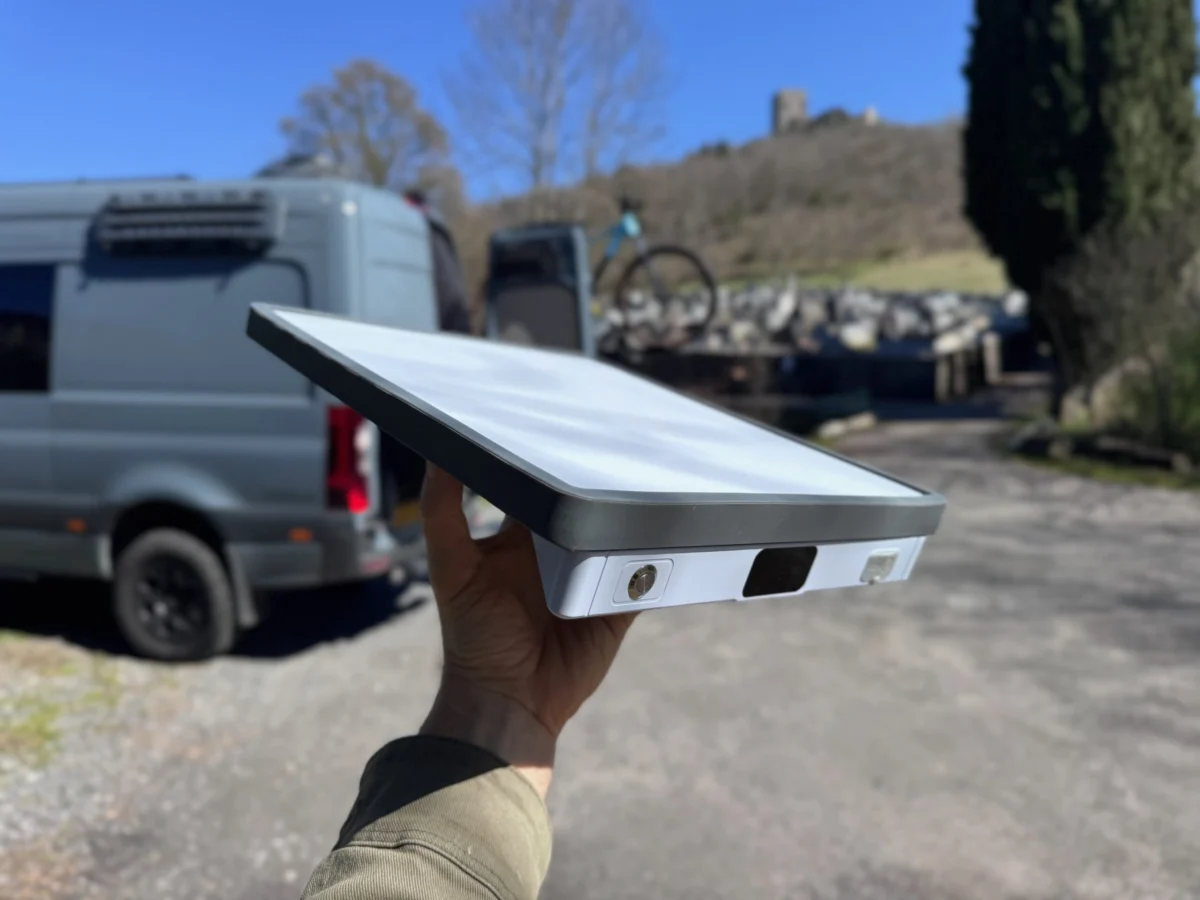
A new era of portable, high-speed internet access has dawned with the unveiling of an improved, battery-powered Starlink Mini, a device poised to redefine remote work and connectivity for digital nomads and off-grid enthusiasts. This latest iteration addresses the core limitation of its predecessor by offering extended, cable-free operation, liberating users from the constraints of traditional power sources and enabling internet access in previously unreachable locales.
For individuals who rely on consistent and robust internet for their livelihoods, the Starlink Mini has emerged as a transformative technology. Its ability to establish a satellite connection in areas where terrestrial cellular networks falter has opened up unprecedented opportunities for remote work, empowering a growing community of van-lifers, digital nomads, and outdoor adventurers to operate seamlessly from the most secluded environments. The introduction of an advanced portable power solution signifies a significant leap forward, promising hours of uninterrupted service without the need for constant tethering to a power outlet or a bulky generator.

The implications of this enhanced mobility are profound. Imagine establishing a stable internet connection in a remote mountain pass, allowing for critical navigation or immediate communication, while simultaneously enabling a passenger to conduct business meetings without interruption. This scenario, once a distant aspiration, is now within practical reach. The ability to position the Starlink Mini optimally, away from obstructions like trees or in shaded areas for thermal management, without being limited by cable length, dramatically improves the user experience and network reliability. This flexibility is crucial for maintaining a clear line of sight to the satellites, which is paramount for optimal performance.
The advancements in portable power for the Starlink Mini are spearheaded by innovative third-party solutions, with recent developments offering substantial improvements in battery life and user convenience. These external power banks, designed to seamlessly integrate with the Starlink Mini’s hardware, effectively eliminate the dependency on grid power or vehicle alternators. This liberation from power cables is not merely a convenience; it represents a fundamental shift in how and where Starlink Mini can be deployed, expanding its utility for a diverse range of applications.
The technical specifications of these power solutions are noteworthy. The latest generation of power banks offers a significant increase in operational time compared to earlier models. This extended duration is achieved through a combination of higher energy density batteries and optimized power management systems. For instance, a fully charged unit can now provide upwards of five and a half hours of continuous Starlink Mini operation, a substantial improvement that translates directly into greater autonomy for users. This increased runtime is particularly beneficial for extended work sessions or for maintaining connectivity during overnight stays in remote locations.

Furthermore, the integration of these power solutions with the Starlink Mini is designed for user-friendliness. The battery units typically attach directly to the back of the Starlink Mini, utilizing the same mounting mechanism as the standard SpaceX fixture. This design ensures a secure and stable connection, though for applications requiring extreme robustness, such as permanent roof mounting on a moving vehicle, additional securing mechanisms might be advisable. The availability of specialized mounts, such as suction cup designs, further enhances the versatility of deployment.
A key innovation in the latest power bank iterations is the inclusion of a dedicated DC barrel input. This feature allows users to charge the power bank using the original Starlink Mini power cable, simplifying the charging process. Additionally, a new breakaway magnetic dongle offers an ingenious solution for preventing accidental disconnections or damage. If the charging cable is snagged, the magnetic connection safely disengages, protecting both the Starlink Mini and the power source from potential harm. This thoughtful design element underscores a commitment to user safety and equipment longevity.
Another critical feature is the battery bypass mode. This functionality enables the Starlink Mini to be powered directly from an external source when the power bank is plugged in. This not only reduces wear on the battery itself but also helps manage operational temperatures, particularly in demanding environments. By allowing the external power source to take precedence, users can extend the lifespan of their power bank while ensuring continuous connectivity.

The practical implications of these power solutions extend to the broader ecosystem of portable energy. The Starlink Mini itself has a substantial power requirement, necessitating a robust power source when not connected to AC power. Standard USB Power Delivery (PD) chargers with ratings of 65W or lower are insufficient to power the Starlink Mini, demanding a minimum of 100W (20V/5A) from compatible power banks or AC adapters. This requirement makes dedicated power solutions, like the enhanced battery packs, indispensable for untethered operation.
The ability to supplement the power bank’s internal battery with external sources further amplifies its utility. On sunny days, a small folding solar panel can be connected to the power bank’s USB-C input, providing a continuous trickle charge. This setup can extend the Starlink Mini’s runtime significantly, potentially reaching over seven hours, depending on the solar panel’s output and the Starlink Mini’s power consumption, which typically averages around 18W in rural settings. Similarly, vehicle-mounted USB-C ports, often delivering a steady 28W, can effectively offset the Starlink Mini’s power draw when placed on a dashboard, ensuring continuous operation without depleting the internal battery.
Recharging the power bank itself is also optimized for convenience and speed. While standard USB-C charging typically caps at 65W, requiring approximately one hour and forty minutes for a full recharge, advanced settings can enable a 100W charging rate. This faster charging comes with the caveat of potentially impacting the battery’s long-term lifespan. The power bank also offers bidirectional USB-C functionality, allowing it to serve as a conventional power bank for charging laptops and mobile devices at up to 65W. Charging speeds also vary depending on the connection method, with USB-C generally offering the fastest recharge, followed by the DC barrel jack and the magnetic dongle.

In terms of durability, these power solutions often boast an IP65 rating for dust and water resistance. This classification indicates that the units can withstand a rain shower when stationary, but it’s important to note that this rating typically does not extend to operation while mounted on a moving vehicle or when charging ports are exposed. Therefore, careful consideration of environmental conditions and deployment strategy is essential.
The physical design of these power banks also prioritizes portability and ease of use. They add a modest amount of weight to the Starlink Mini, bringing the combined unit to a manageable weight that can still be handled with one hand. For added security, users can employ creative mounting solutions, such as magnetic bases screwed into the power bank’s tripod mount, to ensure stability on surfaces like a vehicle’s roof. This proactive approach to securing the equipment is vital, as a loss of Starlink connectivity can have significant repercussions for remote workers.
While the technological advancements are impressive, the cost of these enhanced power solutions can be a point of consideration. The price of the latest generation power banks has seen an increase compared to their predecessors. This premium is attributed to the enhanced battery capacity, improved charging technologies, and added features like the magnetic breakaway dongle and battery bypass mode. For users who do not require the absolute longest possible runtime or the most advanced features, older or less feature-rich models may still represent a more economical choice, offering a substantial improvement over unassisted Starlink Mini operation at a lower price point.

The ongoing evolution of portable power for satellite internet devices like the Starlink Mini signals a significant trend towards true wireless connectivity. As battery technology advances and power management systems become more sophisticated, we can anticipate even longer runtimes, faster charging, and greater resilience in challenging environments. This continuous innovation is not only enhancing the user experience for current Starlink Mini owners but also paving the way for a future where reliable, high-speed internet access is truly ubiquitous, unhindered by geographical limitations or the need for conventional power infrastructure. The improved battery-powered Starlink Mini is not just an accessory; it’s an enabler of freedom and productivity in an increasingly connected, yet geographically diverse, world.



 Ayu Aulia
 Safa Marwah
 Lisa Mariana

 Ridwan Kamil