Aura Kasih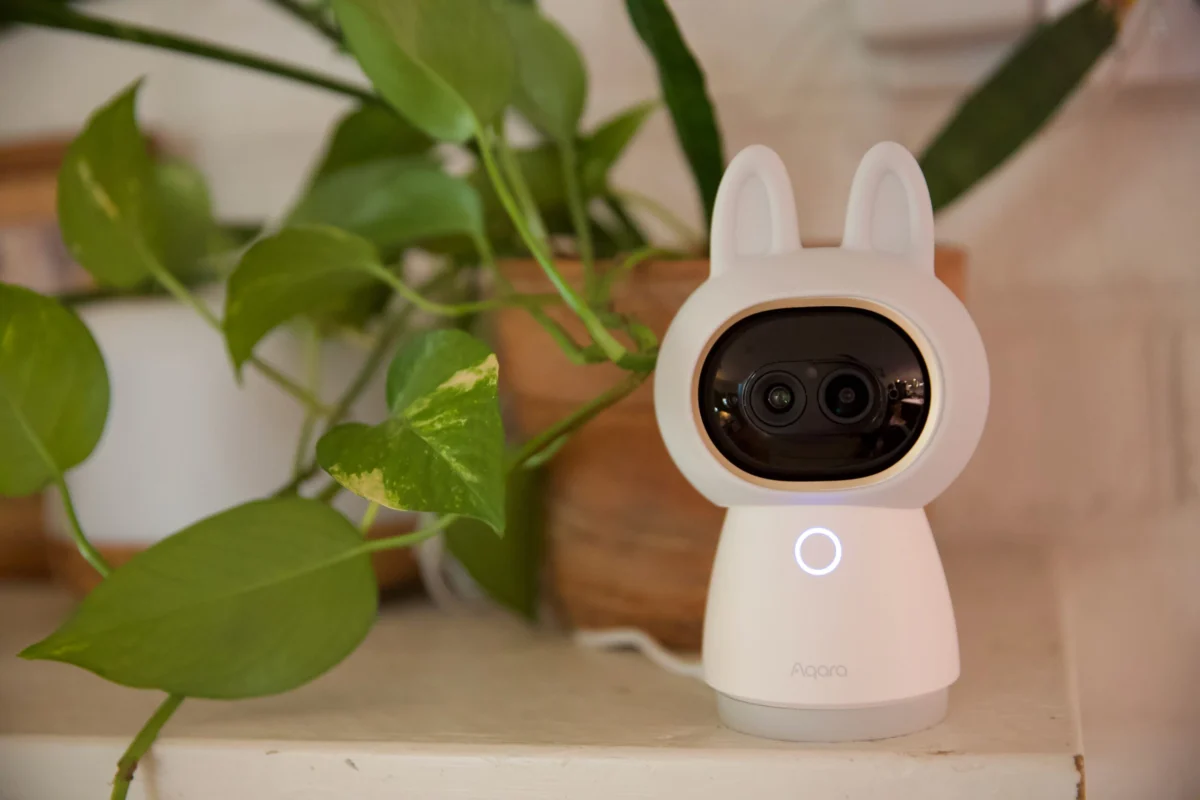
The landscape of smart home security has taken a significant leap forward with the introduction of Aqara’s Camera Hub G350, marking a pivotal moment as the first camera to embrace the Matter standard, albeit with present limitations. This sophisticated indoor security device, unveiled at CES and now hitting the market, promises a unified future for smart home ecosystems, offering advanced features like 4K resolution and pan-and-tilt functionality.

The advent of Matter was heralded as a revolutionary step towards simplifying smart home device integration, promising a future where devices from different manufacturers could seamlessly communicate and function together. A key component of this vision has been the inclusion of camera support, a feature that officially arrived with Matter 1.5. Aqara’s Camera Hub G350 is the vanguard of this new era, representing the first product to leverage this crucial update. Announced at the Consumer Electronics Show (CES), the G350 is engineered as a versatile indoor security camera, boasting a high-resolution 4K wide-angle lens and a secondary 2.5K telephoto lens capable of up to 9x hybrid zoom. Its integrated pan-and-tilt mechanism allows for a full 360-degree field of view, ensuring comprehensive coverage of any indoor space.
Currently, the G350’s Matter compatibility is primarily confined to Samsung’s SmartThings platform. This exclusivity stems from the fact that other major smart home ecosystems have yet to fully implement Matter 1.5, the specific version that enables robust camera functionality. Early adopters, including this analysis, have encountered a period of firmware updates and configuration adjustments before achieving successful Matter integration. Initial functionality within the SmartThings ecosystem is presently limited to live video streaming, a foundational capability that foreshadows the broader spectrum of features anticipated for Matter-enabled cameras. Samsung has outlined a comprehensive set of capabilities for Matter cameras within SmartThings, including advanced controls and recording management, suggesting a significant roadmap for future development. Despite the nascent stage of its Matter integration, the Aqara G350 presents a compelling platform with substantial potential for growth and evolution within the smart home landscape.

The Aqara G350 is not merely a camera; it is a multifaceted smart home device designed to serve as a central nervous system for connected homes. Beyond its primary function as an indoor security camera, it integrates a suite of advanced capabilities. The device features dual-lens technology, comprising a primary 4K wide-angle lens for expansive views and a secondary 2.5K telephoto lens for detailed close-ups. This sophisticated optical system enables an impressive 9x hybrid zoom, allowing users to capture both broad scenes and specific details without compromising image quality. The camera’s compact pan-and-tilt mechanism provides fluid, silent movement across a full 360 degrees, ensuring no corner of a room goes unmonitored. For enhanced privacy, a physical shutter is incorporated, which automatically engages when the camera is powered down, offering a tangible layer of security and peace of mind.
In terms of connectivity and compatibility, the G350 demonstrates a commitment to broad integration. While its headline feature is Matter support, it also seamlessly integrates with Apple’s HomeKit Secure Video service, providing end-to-end encryption for video recordings stored in iCloud. Furthermore, it offers cloud-based integration with popular platforms such as Amazon Alexa and Google Home, allowing for voice control and inclusion in existing smart home routines. For users prioritizing local storage and greater control over their data, the G350 supports microSD cards for on-device recording. Additionally, the inclusion of RTSP (Real Time Streaming Protocol) support is a significant advantage for advanced users and integrators, enabling direct streaming of video feeds to Network Video Recorders (NVRs) and platforms like Home Assistant. Aqara also provides its own cloud storage service, which is fortified with end-to-end encryption, offering users a secure and flexible option for off-site data backup.

The initial setup and Matter integration experience with the Aqara G350, while ultimately successful, highlighted the current developmental phase of Matter camera support. Out of the box, the camera did not immediately present itself as a Matter device. The process involved connecting it to the Aqara app first, where it was recognized and functioned flawlessly as a standalone camera. It was within the Aqara app that the necessary firmware updates were delivered. One of these updates was crucial, introducing Matter 1.5 compatibility and enabling the camera to be recognized and added to Samsung’s SmartThings platform. The onboarding process within SmartThings required leveraging Matter’s multi-admin feature, and importantly, necessitated a SmartThings Matter Controller to facilitate the connection. This multi-step approach, while requiring patience, underscores the importance of firmware updates in unlocking the full potential of Matter-enabled devices. It also points to the ongoing efforts by manufacturers to refine the user experience as the Matter ecosystem matures.
The core promise of Matter, particularly for cameras, lies in its ability to unify the smart home experience. Historically, users have been tethered to individual manufacturer apps to access the full functionality of their smart cameras. This fragmentation means that managing a diverse set of devices – perhaps a Ring doorbell, an Aqara indoor camera, and a Eufy floodlight camera – necessitates juggling multiple applications. While platforms like Amazon Alexa can provide live video feeds from various brands, accessing crucial features such as recorded video playback, adjusting pan-and-tilt controls, or configuring privacy zones often requires reverting to the camera’s native app. Matter aims to dismantle these silos, allowing for a single, cohesive interface within a preferred smart home platform to manage all connected cameras. This includes the full spectrum of camera operations: live and recorded video and audio streaming, two-way communication, remote and local access, precise pan-tilt-zoom controls, the definition of detection and privacy zones, and flexible recording options (continuous or event-based), all accessible from one central hub. This level of interoperability is fundamental to realizing the vision of a truly integrated and user-friendly smart home.

The Aqara G350, as a smart home hub in addition to being a camera, plays a significant role in this interconnected ecosystem. It functions not only as a Matter controller and bridge but also as a Thread Border Router, facilitating communication for Thread-enabled devices. This multi-functional design means that a single device can manage a wide array of smart home accessories, further simplifying home automation. The physical design of the G350 is also noteworthy. It includes a cute, removable silicone bunny ear accessory, adding a touch of personality to the device, which might appeal to a broader consumer base. Power is supplied via an included USB-C cable, though users are required to provide their own power adapter. The microSD card slot, ingeniously placed within the camera’s "mouth" accessed by lifting its face, is a clever design choice that maintains the device’s clean aesthetic while providing convenient local storage access.
The integration of cameras into the primary smart home platform opens the door to more sophisticated and personalized automations. Imagine a scenario where unlocking your front door automatically disarms your security camera and illuminates your entryway, or where a motion detection event triggers a specific lighting scene. These kinds of interconnected actions are the bedrock of a truly intelligent home, and Matter’s ability to facilitate such cross-device communication is a significant advancement. The G350’s potential in this regard is substantial, given its robust feature set and its role as both a camera and a hub.

During the testing phase, the camera’s performance within the SmartThings app, while limited, showcased the underlying potential of Matter. The livestream feed was remarkably clear and responsive, loading almost instantaneously with minimal initial buffering, a testament to the local nature of Matter communication. Two-way talk functionality worked effectively, ensuring clear audio transmission in both directions. A settings menu within the app presented a range of options, including motion-activated recording, resolution adjustments, and the creation of preset camera positions. However, at the time of this analysis, only the volume and resolution settings were fully operational. The ability to toggle recording or view video history within the SmartThings app remained elusive, even with a microSD card inserted. This points to further development required on both the camera’s firmware and the SmartThings platform’s Matter camera implementation. The absence of smart alert features, such as facial recognition or package detection, within the SmartThings app also necessitates continued reliance on the Aqara native application for these advanced functionalities.
A peculiar observation during testing was the disparity in functionality between Android and iOS versions of the SmartThings app. On an Android device (Samsung Galaxy S22 Ultra), only the livestream was visible, with no interactive controls or access to settings. In contrast, the iOS version (iPhone 17 Pro) displayed the expected controls and the settings page, indicating potential platform-specific development or optimization ongoing for Matter camera integration. This highlights the evolving nature of app development alongside the Matter standard.

The question of subscription services for cloud storage remains pertinent. It is unclear whether viewing recorded footage through SmartThings will require a separate subscription or if Aqara’s own cloud service, priced competitively, will be the primary option for users not relying on local storage. Clarification from platform providers and manufacturers will be crucial as these services mature.
The current ecosystem for Matter cameras is still in its infancy, with Samsung’s SmartThings being the sole platform offering comprehensive support. While other entities like Apple are anticipated to introduce Matter camera capabilities, and Home Assistant is actively developing support, the broader adoption by major players like Google Home and Amazon Alexa remains uncertain. These companies have yet to officially commit to Matter camera integration, and their existing proprietary camera ecosystems might present a competitive barrier. Consequently, the vision of a universally managed smart camera system, accessible through a single application, may still be some time away.

However, the Aqara G350, despite its current limitations, serves as a vital proof of concept. It demonstrates that the fundamental principles of Matter camera support – seamless integration, brand agnosticism, and enhanced security and privacy – are achievable. The future potential mirrors that of Apple’s HomeKit Secure Video, but with the crucial differentiator of being open and interoperable across a wider range of devices and platforms. As manufacturers and platform developers continue to refine Matter implementations, we can anticipate a future where smart home cameras offer an experience that is not only functional but also deeply integrated and highly customizable, truly empowering users to control and secure their homes with unprecedented ease. The G350, as the first step in this journey, represents a significant milestone in the evolution of the connected home.



 Ayu Aulia
 Safa Marwah
 Lisa Mariana
 Ridwan Kamil