Lisa Mariana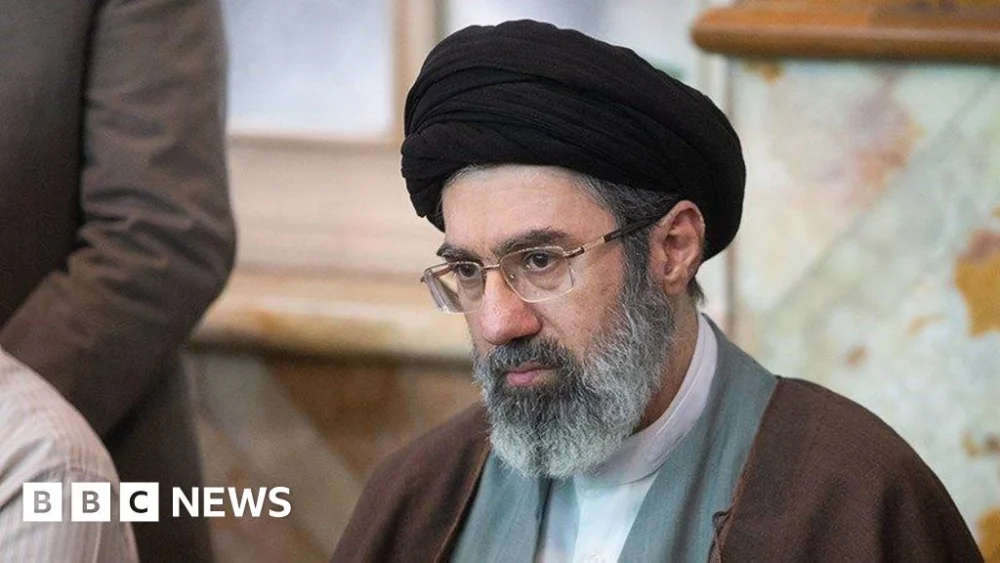
The unexpected vacancy in Iran’s supreme leadership has propelled Mojtaba Khamenei, the hitherto enigmatic son of the late Ayatollah Ali Khamenei, into the nation’s highest office, marking a pivotal moment for the Islamic Republic and raising profound questions about its future trajectory, internal stability, and geopolitical standing. This succession introduces a figure largely operating from the shadows, whose elevation challenges fundamental tenets of the revolutionary state while signaling a potential continuation of hardline policies in an increasingly volatile regional and international landscape.
For decades, Mojtaba Khamenei, now 56, has maintained an exceptionally low public profile, a stark contrast to the conventional political visibility expected of a potential successor to Iran’s most powerful position. He has assiduously avoided public office, refraining from speeches or interviews, and photographic or video documentation of him remains scarce. This deliberate obscurity has fueled speculation and whispers within Iranian political circles, painting him as a formidable yet unseen force shaping key decisions behind the scenes.
The Architect of Influence: A Hidden Hand in Iranian Politics
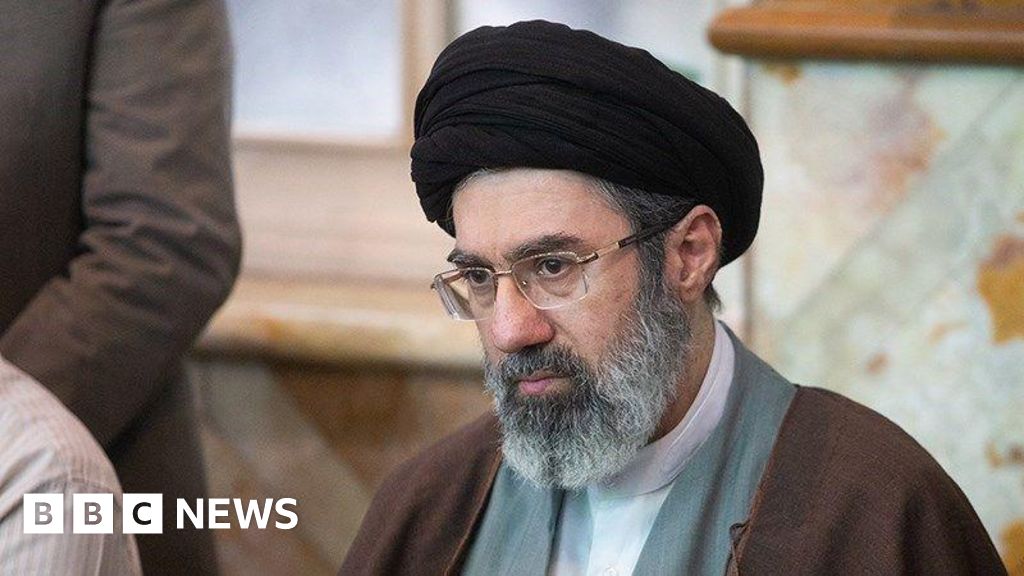
Despite his apparent withdrawal from public view, Mojtaba Khamenei’s influence has been the subject of persistent conjecture and, at times, concrete allegations. Unsealed US diplomatic communications, notably those released by WikiLeaks in the late 2000s, described him as a pivotal figure, a "power behind the robes," widely perceived as both "capable and forceful" within the intricate power structures of the Iranian regime. Such descriptions suggest a deep engagement in political maneuvering and a significant role in advising his father, indicating a strategic mind well-versed in the complexities of governance without holding an official portfolio. This indirect exercise of power points to a sophisticated understanding of Iran’s unique political system, where informal networks and familial ties can often outweigh formal appointments.
His ascent to the supreme leadership is not without significant internal contention, particularly concerning the foundational principles of the Islamic Republic. Established in 1979 following the overthrow of the monarchy, the revolutionary state explicitly rejected hereditary rule, advocating for a supreme leader chosen based on profound religious scholarship, moral rectitude, and demonstrated leadership capabilities. The notion of a son succeeding his father, regardless of individual merit, inevitably invites comparisons to monarchical systems, potentially undermining the revolutionary legitimacy so central to the regime’s self-perception. The late Ayatollah Ali Khamenei himself, while generally circumspect about the future leadership, reportedly expressed reservations about his son being considered a candidate, though he never publicly addressed such speculation directly.
Formative Years and Clerical Path
Born on September 8, 1969, in the revered northeastern city of Mashhad, Mojtaba is the second of Ayatollah Khamenei’s six children. His early education took place at the religious Alavi School in Tehran, a common path for those destined for clerical or governmental roles within the Islamic Republic. His youth was shaped by the tumultuous Iran-Iraq War, a devastating eight-year conflict that profoundly influenced the worldview of an entire generation of Iranian leaders. Mojtaba served in the military for several brief periods during this conflict, an experience that likely instilled a deep suspicion of external powers, particularly the United States and its Western allies, perceived as having supported Iraq during the war.
A notable aspect of his trajectory is his decision to embark on advanced religious studies in Qom, Iran’s preeminent center of Shia theology, in 1999. This move, undertaken at the relatively mature age of 30, is unusual, as most individuals pursuing a clerical career begin their seminary education much earlier. Prior to this, he had not adopted clerical attire, suggesting a later commitment to the formal religious path. This late entry into the seminary system has meant that, until recently, Mojtaba remained a mid-ranking cleric. This could pose a significant challenge to his perceived legitimacy as Supreme Leader, a role traditionally reserved for a Grand Ayatollah (Marja’ Taqlid) — a scholar of the highest religious authority.
The Expedient Elevation of Religious Status
In anticipation of the succession, a noticeable shift has occurred in the public discourse surrounding Mojtaba Khamenei. Certain Iranian media outlets and figures closely associated with the centers of power have begun referring to him as "Ayatollah," a senior clerical title indicating advanced scholarship and religious authority. This strategic re-designation is widely interpreted by observers as a concerted effort to elevate his religious standing and present him as a credible and qualified candidate for the supreme leadership. Within the intricate seminary hierarchy, the title of "Ayatollah" and the capacity to teach advanced religious classes are critical markers of scholarly achievement and jurisprudential knowledge, deemed essential prerequisites for assuming the mantle of Supreme Leader.
While Mojtaba’s current religious rank might still be debated by some theological purists, there is a historical precedent for such expedient elevations. His father, Ali Khamenei, was himself rapidly promoted to the rank of "Ayatollah" shortly after he was chosen to succeed Ayatollah Ruhollah Khomeini as the second Supreme Leader in 1989. This historical parallel suggests that political necessity and the exigencies of succession can, and often do, override strict adherence to traditional religious seniority in the Islamic Republic’s unique governing structure.
A History of Alleged Political Meddling and Repression
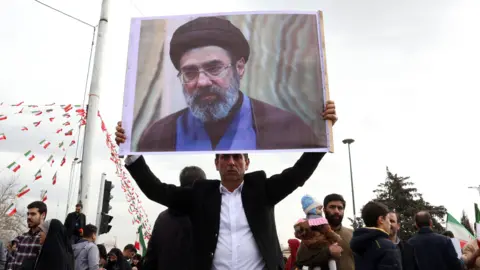
Mojtaba Khamenei’s name first came into public prominence during the contentious 2005 presidential election, which ultimately saw the populist hardliner Mahmoud Ahmadinejad emerge victorious. Reformist candidate Mehdi Karroubi openly accused Mojtaba of orchestrating widespread electoral interference, leveraging elements of the Islamic Revolutionary Guard Corps (IRGC) and the Basij militia to distribute funds to religious groups and sway the vote in Ahmadinejad’s favor.
Four years later, the 2009 presidential election, also won by Ahmadinejad amidst allegations of fraud, further cemented Mojtaba’s reputation for behind-the-scenes manipulation. The re-election ignited widespread protests across the country, collectively known as the Green Movement, which represented the largest challenge to the regime since the revolution. During these demonstrations, some protesters explicitly chanted slogans opposing the prospect of Mojtaba succeeding his father, reflecting a deep-seated public resentment against what was perceived as a dynastic power grab. Mostafa Tajzadeh, then deputy interior minister, famously denounced the election outcome as an "electoral coup" and later attributed his subsequent seven-year imprisonment directly to "the direct wish of Mojtaba Khamenei." Furthermore, reports from Iranian sources indicate that in February 2012, Mojtaba himself met with Mir-Hossein Mousavi, one of the reformist candidates placed under house arrest after the 2009 election, urging him to abandon his protest. These incidents underscore a consistent pattern of alleged intervention in critical political processes and a willingness to employ the state’s coercive apparatus to suppress dissent.
The Daunting Path Ahead: Challenges for the New Supreme Leader
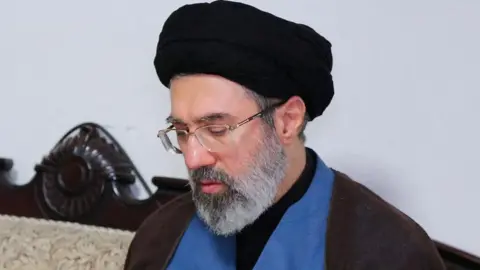
As Supreme Leader, Mojtaba Khamenei is widely expected to maintain, if not intensify, the hardline policies that characterized his father’s later years. His likely adherence to an anti-Western stance, support for regional proxy forces, and emphasis on domestic social control align with the ideological bedrock of the revolutionary establishment. There is a prevailing belief among some analysts that a leader perceived to have experienced significant personal losses in the context of geopolitical tensions would be inherently resistant to external pressure and unlikely to compromise on core revolutionary principles.
However, Mojtaba faces an exceptionally daunting array of challenges that will test his leadership and determine the long-term viability of the Islamic Republic. He must navigate a complex geopolitical environment marked by persistent tensions with the United States, Israel, and Saudi Arabia, coupled with the ongoing proxy conflicts across the Middle East. Domestically, he inherits an economy crippled by international sanctions, mismanagement, and widespread corruption, leading to pervasive public discontent and sporadic protests. The task of convincing a disillusioned populace that he is the legitimate and capable leader to steer the country through these turbulent waters will be immense, especially given his past controversies and the anti-hereditary ethos of the revolution.
Furthermore, the perception that the Islamic Republic is gradually transforming into a hereditary system under his rule could severely erode its legitimacy, deepen public cynicism, and potentially fuel internal unrest. His leadership record remains largely untested in the public sphere, meaning he will need to swiftly consolidate power and demonstrate effective governance. Adding to these internal and external pressures, the new Supreme Leader also faces acute personal security threats, with prominent figures from rival nations having publicly stated that Iran’s supreme leader would be considered "an unequivocal target for elimination." This declaration underscores the precarious position Mojtaba Khamenei now occupies, demanding both astute political skill and robust security measures to ensure his survival and the stability of the Islamic Republic. His journey from the shadows to the pinnacle of Iranian power will undoubtedly be one of the most closely watched and consequential leadership transitions in modern Middle Eastern history.


 Ayu Aulia
 Ridwan Kamil
 Safa Marwah
 Aura Kasih