
 Aura Kasih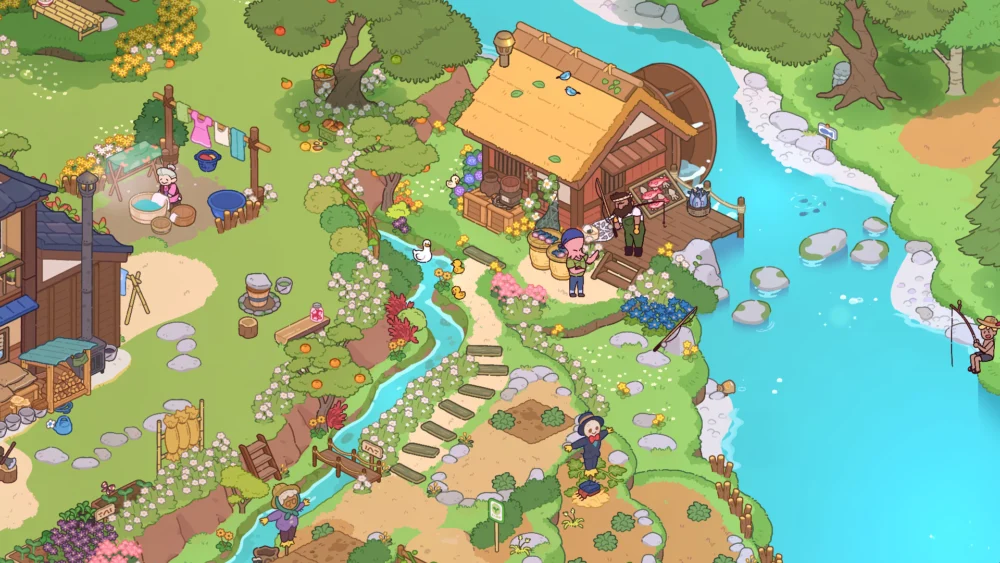
In an era saturated with high-octane action and complex narratives, a burgeoning wave of independent video games is redefining player engagement by elevating the simple act of looking into an intricate art form. This shift is not merely about spotting concealed items; it represents a profound evolution of a long-standing genre, imbuing it with narrative depth, interactive discovery, and a renewed appreciation for meticulous design. The journey from traditional hidden object puzzles to these sophisticated experiences underscores a growing developer focus on fostering curiosity and rewarding keen observation, thereby transforming passive viewing into an active, artful engagement.
The genesis of this modern movement can be traced, in part, to the innovative approach taken by Adriaan de Jongh and Sylvain Tegroeg with their 2017 release, Hidden Folks. While the concept of hidden object games has roots stretching back centuries, predating digital media and manifesting in illustrated manuscripts and detailed paintings, Hidden Folks introduced a crucial dimension: interactivity and a focus on the "searching" experience rather than mere object identification. De Jongh conceptualized it as a "searching" game, where the primary objective transcends simply locating pre-defined items. Instead, the gameplay encourages players to delve into richly detailed, hand-drawn environments, interacting with elements to uncover their secrets and trigger emergent narratives. This deliberate design choice aimed to cultivate a sense of wonder and playful exploration within miniature, self-contained worlds, each brimming with potential stories and delightful surprises. The intention was to create an environment that begged for meticulous examination, rewarding players for their patience and inquisitiveness.
The success and unique methodology of Hidden Folks inspired a wave of imitators, some of whom replicated its distinctive aesthetic and mechanics with a fidelity that blurred the lines of originality. While these games can satisfy a basic desire to find things, they often fall short of capturing the nuanced delight and immersive quality that defined the original. More importantly, the "searching" genre, as exemplified by Hidden Folks, has provided developers with a potent framework for injecting narrative and fostering a deep sense of curiosity into what were once static puzzle formats. This lineage is clearly discernible in titles such as the "interactive city discovery game" Small Life, the mystery-driven Wind Peaks, the historical exploration game Hidden Through Time, and more recently, the adventure-infused hidden object experience Lost and Found Co. These games demonstrate a collective ambition to move beyond simple object hunts, weaving intricate stories and engaging mechanics into the fabric of meticulous world-building.
The core appeal of Hidden Folks lies in its elegant simplicity and profound depth. Players are presented with meticulously crafted, pen-and-ink worlds rendered by artist Sylvain Tegroeg. Their task is to locate a list of specified items, but the true magic unfolds through interaction. Unlike traditional hidden object games that rely on static images, Hidden Folks encourages players to click on various elements within the environment. These interactions often trigger charming, developer-generated "mouth sounds" and reveal hidden pathways or clues, leading players not only to the target objects but also to unexpected discoveries. Every detail, from the rustling of leaves to the scurrying of tiny creatures, is a product of extensive playtesting, designed to evoke a sense of organic life and playful discovery. This iterative process of refinement ensures that the act of searching is not a chore but a rewarding exploration, where even seemingly insignificant elements can hold a key to unlocking further secrets.
Lost and Found Co., developed by the Thailand-based studio Bit Egg, exemplifies the evolution of this genre, offering an experience that resonates with the spirit of Hidden Folks while carving out its own unique identity. The game centers on a dragon goddess who tasks players with recovering lost objects within vibrant, fantastical realms populated by thousands of meticulously detailed items and characters. This approach imbues each level with a palpable sense of narrative, inviting players to uncover the myriad micro-stories unfolding within the game’s diverse environments. Bit Egg co-founder and CEO, Richmond Lee, has openly acknowledged the influence of Hidden Folks, particularly in the game’s hint system, which serves as an homage to de Jongh and Tegroeg’s work. However, Bit Egg’s ambition extends beyond mere emulation; they aim to elevate the hidden object genre by transcending static imagery and embracing dynamic storytelling.
The environments within Lost and Found Co. are not merely backdrops but active participants in narrative construction. From an antique shop overflowing with enchanted artifacts to a boisterous family home in the throes of morning chaos, and a serene vacation spot where patrons indulge in exotic concoctions, each locale is elaborately designed to tell multiple stories simultaneously. Beyond the overarching narrative, smaller vignettes play out in every nook and cranny, rewarding observant players with delightful easter eggs and pop culture references. One notable example is a haunted doll, a clear nod to the real-life artifact that inspired the Annabelle horror franchise, which itself is housed in an occult museum not far from the developer’s home. This meticulous attention to detail and layered storytelling transforms the act of searching into a detective-like endeavor, where uncovering objects is intertwined with piecing together the world’s lore.
Lee articulated a clear vision for Lost and Found Co., highlighting a perceived deficiency in many existing hidden object games: "When we looked at a lot of the hidden object games that are out there, they’re very gameplay-focused," he stated. "They have a theme, they give you a lot of content, but there’s not much in the way of characters and story. That’s something we wanted to push." This desire to inject personality and narrative depth is evident in the game’s central characters: Mei, the dragon goddess, and her enthusiastic intern, Ducky, a former duckling transformed into a human. Their quest to recover stolen items serves as the narrative glue that binds the game’s disparate levels together. As mysterious figures pilfer from the townspeople, Mei and Ducky’s prowess in finding lost possessions gradually restores faith in the goddess, who has seen her influence wane in the modern era. This overarching story provides context for the individual challenges, whether it’s locating ingredients for a smoothie or retrieving personal belongings within an apartment complex. The game consistently rewards players for their curiosity, often with hidden extras that lie beyond the primary objectives. The discovery of a submerged submarine, for instance, after correctly manipulating four seemingly unrelated lampposts, exemplifies the game’s commitment to rewarding persistent exploration.
Both de Jongh and Lee concur that rigorous playtesting is paramount to the success of any hidden object game. While a compelling art style, evocative sound design, and a well-crafted narrative are crucial, the underlying mechanics must be polished and intuitive. "You can have a great art style, clever sounds, and a nice story, but if the game doesn’t work well, it won’t click with players," Lee emphasized. He described the development of Lost and Found Co. as a "years-long process of trial and error," noting the inherent difficulty developers face in gauging the accessibility of their own creations. "Someone who makes a level has a very hard time understanding how difficult or easy it might be for someone else. You just have to keep workshopping and testing." This commitment to iterative refinement was instrumental in making Hidden Folks such a satisfying experience. De Jongh considers playtesting a foundational element of his development process, stating, "You put it in front of someone and you will learn a million things. I think I’ve watched over 200 to 300 hours of players playing the game and changing little things based off what I saw players do." This constant feedback loop ensures that the player experience is continually optimized, fostering engagement and preventing frustration.
The placement of hidden objects within these intricate environments is an art form in itself. Lee explained that Bit Egg employs a multi-stage design process for Lost and Found Co., beginning with concept art, then translating it into an isometric level, before finally integrating it into the game engine. "We basically draw everything three times," he stated. This contrasts with the development of Hidden Folks, which commenced with Tegroeg’s ink drawings on paper. These drawings were then scanned, assembled into a large composite image, and subsequently imported into the game engine.
"He draws everything, we scan it in, and throw it into the game engine," de Jongh elaborated. "There, he, one by one, drags everything into the right position." This painstaking process requires immense precision and dedication, a testament to which is Hidden Folks‘ sprawling factory level, featuring hundreds of distinct box types. Animations are later layered onto these static elements, breathing further life into the meticulously constructed scenes. The sheer volume of detail and the effort involved in its creation underscore the artistic investment in making the act of looking an engaging and rewarding experience.
Ultimately, all this effort converges on an experience that taps into something profoundly human: the innate drive to observe and discover. Lee posits that even ancient Chinese and Japanese paintings can be viewed through the lens of hidden object games. While they may not explicitly guide the viewer to find specific items, their intricate and detailed compositions often reveal subtle discoveries the longer one looks. "There’s a really long history of people being captivated by these neat little scenes," he observed. This enduring fascination with detailed visual narratives highlights a fundamental aspect of human perception and cognition, one that indie game developers are masterfully reinterpreting and amplifying for a modern audience. The evolution of the hidden object genre, propelled by innovative titles like Hidden Folks and Lost and Found Co., demonstrates a sophisticated understanding of player psychology, transforming a simple mechanic into a rich canvas for artistic expression, storytelling, and the enduring joy of meticulous observation.




 Ridwan Kamil

 Safa Marwah
 Lisa Mariana