Aura Kasih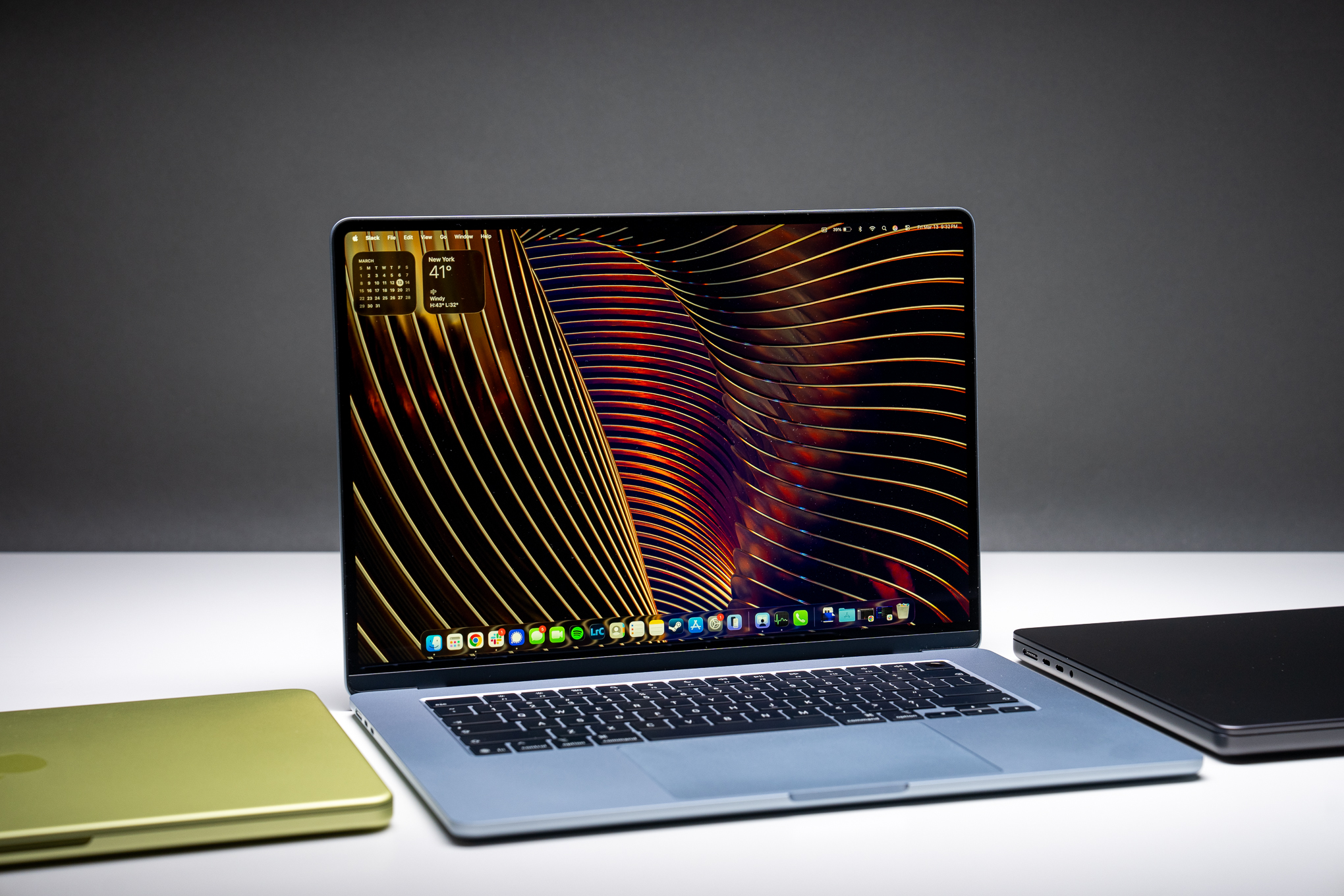
Apple’s latest iteration of the MacBook Air, now powered by the M5 chip, represents a subtle yet significant evolution for the perennial favorite, further cementing its position as the quintessential "just right" Mac for a broad spectrum of users, even as its pricing sees a modest upward adjustment. This refresh introduces the M5 processor, Wi-Fi 7 connectivity, and an elevated baseline storage of 512GB, building upon the already exceptional foundation of its predecessor. While the core computing experience remains remarkably robust, the strategic introduction of new product tiers within Apple’s lineup casts the MacBook Air in a newly defined light, emphasizing its role as a sophisticated upgrade path rather than merely an entry-level offering.
The landscape of Apple’s portable computing solutions has demonstrably shifted with the arrival of the MacBook Neo. This new contender, positioned at a significantly more accessible price point, offers a compelling proposition for users whose computing needs are less demanding. However, the existence of the Neo does not diminish the inherent value or purpose of the MacBook Air. The Air remains a demonstrably more capable, faster, and sleeker machine, designed to cater to a more discerning user. Its placement in Apple’s hierarchy now positions it as the logical step-up from the Neo, while still maintaining a clear distinction and ample room for differentiation from the higher-performance MacBook Pro series. This strategic segmentation prompts a crucial question: does the MacBook Air occupy an awkward middle ground, or has it perfected its role as the ideal intermediary in Apple’s product continuum? The evidence strongly suggests the latter, indicating a refined equilibrium within the ecosystem.
The fundamental strengths that defined previous MacBook Air models remain intact and are, in fact, amplified with the M5 iteration. The display continues to be a standout feature, offering exceptional brightness, vibrant color reproduction, and impressive accuracy, rendering it suitable even for color-critical professional tasks. The tactile experience of the keyboard is as satisfying as ever, providing a comfortable and efficient typing environment. The integrated 12-megapixel Center Stage camera continues to set the benchmark for built-in webcams, delivering superior clarity and framing capabilities for video conferencing and content creation. Battery life remains a significant advantage, consistently exceeding a full workday and extending well into the evening with typical usage patterns. Extended testing reveals endurance figures of 13 to 14 hours on a single charge, even under moderate loads involving web browsing, communication, and multimedia consumption, with screen brightness settings between 50% and 100%. For the 15-inch model, the six-speaker audio system delivers remarkable volume and clarity, a testament to Apple’s acoustic engineering within a slim chassis.
The primary advancements in the 2026 MacBook Air are concentrated in its performance enhancements, particularly in processing power and storage. The integration of the M5 chip, featuring a 10-core CPU and a 10-core GPU, brings the Air into parity with the performance characteristics previously seen in the 14-inch MacBook Pro equipped with the same silicon. Benchmark analysis consistently places the M5 MacBook Air slightly behind its fan-cooled Pro counterpart, an expected outcome given the thermal management differences. Nevertheless, the M5 Air demonstrates a notable improvement over its M4 predecessor, with the most significant gains observed in graphical processing power and certain multi-core intensive tasks, such as 3D rendering benchmarks.
Benchmark Analysis: M5 MacBook Air vs. Predecessors and Contemporaries
| Metric | MacBook Air 15 / M5 / 16GB / 1TB | MacBook Air 15 / M4 / 16GB / 512GB | MacBook Air 15 / M3 / 16GB / 512GB | MacBook Air 15 / M2 / 16GB / 512GB | MacBook Air (2020) / M1 / 16GB / 512GB | MacBook Neo / A18 Pro / 8GB / 256GB | MacBook Pro 14 / M5 / 16GB / 1TB | Framework Laptop 13 / Ryzen AI 7 350 / 32GB / 1TB | Microsoft Surface Laptop 13" / Snapdragon X Plus / 16GB / 512GB |
|---|---|---|---|---|---|---|---|---|---|
| CPU cores | 10 | 10 | 8 | 8 | 8 | 6 | 10 | 8 | 8 |
| GPU | M5 (10 cores) | M4 (10 cores) | M3 (10 cores) | M2 (10 cores) | M1 (8 cores) | A18 Pro (5 GPU cores) | M5 (10 cores) | Radeon 860M (8 cores) | Adreno X1-45 |
| Geekbench 6 CPU Single | 4175 | 3790 | 3124 | 2606 | 2409 | 3402 | 4208 | 2899 | 2437 |
| Geekbench 6 CPU Multi | 16567 | 14831 | 12056 | 10055 | 8754 | 8508 | 17948 | 13568 | 11427 |
| Geekbench 6 GPU (OpenCL) | 47661 | 35914 | Not tested | 27795 | 21512 | 19798 | 49059 | 24981 | 9391 |
| Geekbench 6 GPU (Metal) | 76035 | 55368 | 46266 | 45607 | 34592 | 31026 | 77595 | N/A | N/A |
| Cinebench 2026 Single | 727 | Not tested | Not tested | Not tested | 439 | 518 | 736 | Not tested | Not tested |
| Cinebench 2026 Multi | 3413 | Not tested | Not tested | Not tested | 1924 | 1466 | 4486 | Not tested | Not tested |
| PugetBench for Photoshop | 11513 | 10275 | 9349 | Not tested | Not tested | Not tested | 12354 | 8805 | 4773 |
| PugetBench for Premiere Pro | 61861 | Not tested | Not tested | Not tested | Not tested | Not tested | 71122 | Not tested | Not tested |
| PugetBench for DaVinci Resolve | 45378 | Not tested | Not tested | Not tested | Not tested | Not tested | 50882 | Not tested | Not tested |
| Blender classroom test (sec) | 46 | 66 | 129 | Not tested | 254 | Not tested | 44 | Not tested | 486 |
| Premiere 4K Export (min:sec) | 2:53 | Not tested | Not tested | Not tested | 6:39 | Not tested | 2:47 | Not tested | Not tested |
| Sustained SSD reads (MB/s) | 7049.45 | 3465.32 | 3504.1 | Not tested | 3422.1 | 1735.91 | 7049.45 | 5279.21 | 3840.78 |
| Sustained SSD writes (MB/s) | 7480.55 | 3626.23 | 3190.9 | Not tested | 3274.88 | 1684.05 | 7317.6 | 4967.27 | 3476.62 |
| Price as tested | $1,499 | $1,399 | $1,699 | $1,699 | $1,249 | $599 | $1,949 | $1,781 | $999.99 |
A particularly significant area of improvement lies in the storage subsystem. Amorphous Disk Mark tests reveal read and write speeds that are more than double those of the M4 MacBook Air, aligning with Apple’s claims. This elevates the Air’s storage performance to a level comparable with the M5 MacBook Pro and nearing that of significantly more expensive configurations, such as the M4 Max MacBook Pro reviewed previously. This enhancement in storage speed translates directly to a more responsive user experience, particularly during file transfers, large file copying operations, and when the system relies on swap memory under heavy load.
To illustrate the resilience of the M5 Air under extreme conditions, a strenuous test was conducted, involving simultaneous import of over 1,000 high-resolution RAW images into Lightroom Classic, exporting a 4K video in Premiere Pro, downloading a large game via Steam, and maintaining 17 open Chrome tabs. The MacBook Air reached its RAM capacity and utilized nearly 20GB of swap memory. While performance predictably slowed and thermal output increased, the system remained stable and did not crash. This scenario underscores that while the Air is remarkably capable, sustained heavy workloads of this magnitude are fundamentally the domain of the MacBook Pro.

For existing owners of the M4 MacBook Air, the incentive to upgrade is minimal. The M4 model remains a highly competent machine, offering ample performance for the vast majority of users for an extended period. The M5 Air, with its enhanced chip, faster storage, and Wi-Fi 7 support, offers incremental futureproofing. However, for those on M1 or older Macs, or potentially M2 Air users experiencing performance limitations, the M5 Air presents a compelling upgrade. Even then, the decision to upgrade from an M2 Air should be carefully considered, primarily if the current device is demonstrably hindering productivity due to slowdowns.
The introduction of the MacBook Neo fundamentally redefines the entry-level segment of Apple’s laptop offerings. For first-time Mac users or those migrating from older Intel-based machines facing OS update limitations, the Neo, priced between $600 and $700, may indeed fulfill all essential computing requirements. However, for individuals engaging in creative endeavors that involve applications like Adobe Creative Suite, the additional investment in the MacBook Air is justifiable due to its superior performance and capabilities. For professionals whose daily workflow revolves around content creation, the decision to invest in a MacBook Pro remains the most logical path forward.
This tiered product strategy exemplifies Apple’s success in creating a comprehensive upgrade funnel. The ecosystem is designed to cater to a wide range of user needs and budgets, with clear pathways for incremental improvements. Whether it’s a larger display, expanded storage, increased RAM, or a more powerful processor, Apple offers a meticulously crafted aluminum-clad solution designed to meet evolving demands. The MacBook Air, once the default choice for users willing to invest around $1,000 in a premium laptop experience, now occupies a more nuanced position. With the Neo offering an excellent option for lighter users at a lower price point, and the Pro models continuing to serve professionals and enthusiasts, the Air has found its definitive niche.
The MacBook Air now resides comfortably in the mid-tier segment, embodying a harmonious balance of portability and performance. Its slim profile and travel-friendly design remain attractive, complemented by its robust performance for all but the most demanding content creation and graphics-intensive tasks. Essential conveniences such as high-speed Thunderbolt 4 ports, efficient MagSafe charging, a generously sized haptic trackpad, and a backlit keyboard further enhance its appeal. These features contribute to its enduring status as a highly recommended option, as evidenced by recent recommendations for a 13-inch M4 Air due to its futureproofing and performance advantages over the Neo for specific user needs.
With the MacBook Neo now established, the MacBook Air solidifies its identity as the quintessential all-around performer. It continues to integrate the latest generation of Apple’s M-series chips, ensuring a long operational lifespan that can potentially extend to seven or even ten years. Despite its positioning as the middle child between the Neo and the Pro, the MacBook Air remains, for a significant portion of the user base, Apple’s "just right" Goldilocks laptop.
2026 Apple MacBook Air M5 15 Specs (As Reviewed)
- Display: 15.3-inch Liquid Retina display
- Processor: Apple M5 chip (10-core CPU, 10-core GPU)
- Memory: 16GB Unified Memory
- Storage: 1TB SSD
- Ports: Two Thunderbolt / USB 4 ports, MagSafe 3 charging port, 3.5mm headphone jack
- Wireless: Wi-Fi 7, Bluetooth 5.3
- Camera: 1080p FaceTime HD camera with Center Stage
- Audio: Six-speaker system with force-cancelling woofers, Wide stereo sound, Support for Spatial Audio
- Keyboard: Backlit Magic Keyboard with Touch ID
- Trackpad: Force Touch trackpad
- Battery: Up to 18 hours Apple TV app movie playback, Up to 15 hours wireless web
- Dimensions: 0.45 inch (1.15 cm) thin
- Weight: 3.3 pounds (1.51 kg)
Photography by Antonio G. Di Benedetto / The Verge




 Ridwan Kamil
 Safa Marwah
 Lisa Mariana
 Ayu Aulia