Ayu Aulia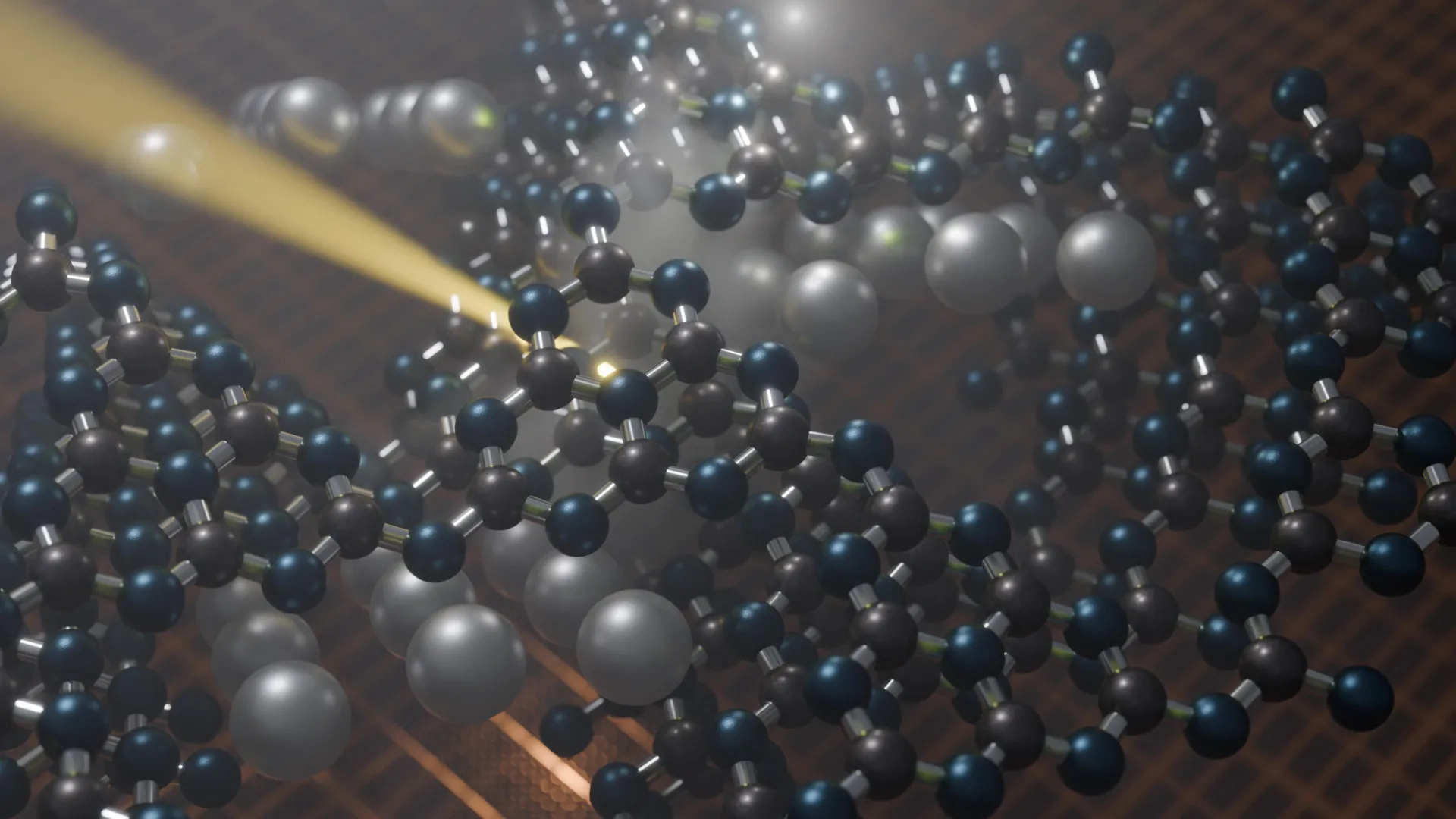
The global imperative for sustainable energy solutions continues to drive intense research into renewable resources. Sunlight, an abundant and clean energy source, presents an unparalleled opportunity if harnessed effectively. Photocatalysis, the process by which light energy drives chemical reactions, stands at the forefront of this quest. It offers a pathway to produce hydrogen from water, reduce carbon dioxide into useful hydrocarbons, and synthesize vital industrial chemicals like hydrogen peroxide, all powered by the sun. However, realizing the full potential of photocatalysis hinges on the development of highly efficient, stable, and cost-effective materials.
Among the myriad materials investigated for photocatalytic applications, polyheptazine imides (PHIs) have emerged as particularly promising candidates. These fascinating compounds possess unique structural and electronic properties that make them adept at absorbing light and facilitating the subsequent chemical transformations. Yet, a significant bottleneck in their development has been the limited atomistic and electronic insight into how subtle modifications in their molecular architecture translate into observable changes in their performance. The sheer complexity and vastness of the potential design space have historically made a systematic exploration of these materials challenging, often relegating research to a laborious process of trial and error.
A Theoretical Leap Forward
This long-standing challenge has now been addressed by a research team spearheaded by experts at the Center for Advanced Systems Understanding (CASUS) at Helmholtz-Zentrum Dresden-Rossendorf (HZDR). They have pioneered a sophisticated and verifiable theoretical methodology that provides unprecedented clarity into the intricate relationship between the structure of polyheptazine imides and their critical electronic and optical behaviors. This computational advance is not merely a descriptive tool; it is a predictive engine, capable of forecasting material properties with remarkable accuracy. Crucially, the team’s theoretical predictions were rigorously substantiated through meticulous measurements conducted on actual material samples, lending significant weight to the validity and reliability of their approach. This methodological breakthrough is anticipated to dramatically accelerate the pace of research and innovation in the field of polyheptazine imides, fostering rapid advancements in solar-driven chemical production.
The Intricacies of Carbon Nitride Materials
Polyheptazine imides belong to the broader family of carbon nitrides, a class of materials characterized by their layered structures. Conceptually, they share a structural resemblance to graphene, the celebrated two-dimensional material composed solely of carbon atoms arranged in a hexagonal lattice. However, a fundamental distinction lies in their atomic composition: carbon nitrides, including PHIs, incorporate nitrogen atoms alongside carbon, forming intricate ring-shaped molecular units within their layers. This inclusion of nitrogen atoms profoundly alters their electronic properties compared to pure carbon structures.
While graphene is renowned for its extraordinary electrical conductivity and mechanical strength, its suitability as a photocatalyst is limited. This is primarily due to its metallic or semi-metallic electronic band structure, which lacks a suitable band gap for efficient visible light absorption and subsequent charge separation. Polyheptazine imides, by contrast, possess well-defined electronic band gaps. These gaps enable them to absorb photons within the visible spectrum of sunlight—a critical feature, as visible light constitutes a substantial portion of the solar energy reaching Earth’s surface. The absorption of visible light is the prerequisite for initiating the photoexcitation process necessary for photocatalytic reactions.
Beyond their electronic characteristics, carbon nitride materials offer several compelling practical advantages. Their constituent elements—carbon and nitrogen—are abundant and relatively inexpensive, translating into lower production costs compared to catalysts based on rare or precious metals. They are also inherently non-toxic, addressing environmental and safety concerns associated with many industrial catalysts. Furthermore, their thermal stability ensures durability and operational integrity under the elevated temperatures often encountered in chemical reactors.
However, earlier generations of carbon nitride materials, despite these advantages, exhibited suboptimal performance as photocatalysts. A primary impediment was their limited ability to achieve effective charge separation. In the fundamental process of photocatalysis, when a photon of sufficient energy strikes a material, it excites an electron, promoting it to a higher energy state and leaving behind a positively charged "hole" in its original position. For a chemical reaction to occur, this electron and hole must migrate to the material’s surface and interact with reactant molecules. If the excited electron rapidly recombines with the hole before it can participate in a reaction, the absorbed energy is merely dissipated as heat or light, rendering the material inefficient.
Dr. Zahra Hajiahmadi, the first author of the groundbreaking study, highlights a pivotal discovery: "Polyheptazine imides containing positively charged metal ions exhibit markedly improved charge separation. This feature renders them highly suitable for practical applications." This insight underscores the importance of tailored material design, moving beyond generic carbon nitrides to optimized compositions.
Accelerating the Quest for Enhanced Catalysts through Computational Modeling
The economic viability of several critical photocatalytic processes hinges on the development of materials with superior performance metrics. These include the efficient splitting of water molecules to produce hydrogen, a clean fuel vital for a future hydrogen economy; the reduction of atmospheric carbon dioxide into basic carbohydrates or other industrial chemicals, offering a strategy for carbon capture and utilization; and the sustainable production of hydrogen peroxide, a versatile industrial chemical used in diverse applications from bleaching to disinfection.
The rational design of a polyheptazine imide catalyst specifically engineered for a particular reaction demands meticulous control over a multitude of structural parameters. The potential permutations arising from variations in atomic arrangement, functional groups, and dopants are astronomically large. Consequently, the traditional approach of synthesizing and experimentally testing every conceivable material candidate in a laboratory setting is not only resource-intensive but practically unfeasible within realistic timelines. This inherent complexity elevates computational methods to an indispensable role in modern materials science. These methods serve as powerful virtual laboratories, enabling researchers to efficiently screen and narrow down the vast array of possibilities, directing experimental efforts toward the most promising candidates.
Prof. Thomas D. Kühne, Director of CASUS, head of the CASUS research team "Theory of Complex Systems," and senior author of the study, eloquently articulates the scale of this challenge: "The design space is enormous. One can for example add functional groups on the surface or substitute specific nitrogen or carbon atoms with oxygen or phosphorus atoms." This statement encapsulates the combinatorial complexity that necessitates advanced theoretical tools. Professor Kühne’s research group specializes in developing sophisticated numerical techniques designed to be both computationally efficient and highly accurate in reproducing the intricate chemical and physical behaviors of complex materials. Their work provides the foundational methodologies for navigating this immense design landscape.
Systematic Exploration of Metal Ions and Advanced Computational Techniques
A defining characteristic that distinguishes polyheptazine imides and contributes to their enhanced catalytic activity is the presence of intrinsically negatively charged pores within their layered structure. These pores act as preferential binding sites for positively charged metal ions. The incorporation of these metal ions can significantly modulate and enhance the catalytic performance of the material, primarily by influencing charge separation and reaction pathways.
Dr. Hajiahmadi’s extensive research represents the first comprehensive and systematic investigation into how the specific identity and placement of various metal ions impact the optoelectronic properties of these materials. The study meticulously examined a remarkable total of 53 different metal ions. These ions were systematically categorized based on their structural integration within the PHI network: whether they reside predominantly within the planar layers (in-plane) or occupy the interlayer spaces, and critically, how their presence alters the geometry of the material, specifically whether they induce a significant structural distortion or maintain the original lattice integrity. This detailed categorization provides invaluable insights into structure-property relationships at an unprecedented level of granularity.
"We used a reliable and reproducible computational framework that goes beyond conventional modeling approaches," states Hajiahmadi, emphasizing the methodological rigor of their work. Standard computational studies of photocatalysts frequently focus on "ground-state" properties, which describe the material’s behavior in its lowest energy state, often neglecting the dynamic and critical "excited-state" effects that are inherently central to photocatalysis. Since photocatalysis is fundamentally driven by photoexcited charge carriers—electrons and holes generated by light absorption—accurately modeling these excited states is paramount. To address this, the team employed advanced many-body perturbation theory methods.
These sophisticated methods commence with a simplified theoretical model system that intentionally omits complex particle interactions. Subsequently, the intricate interactions between electrons, holes, and the atomic lattice—the "many-body" effects—are progressively introduced as small, yet crucial, corrections. This iterative refinement allows researchers to approximate with high fidelity how vast numbers of interacting particles collectively influence the material’s behavior. Such calculations are notoriously demanding, requiring substantial computing power and expertise, which is why they have been rarely applied to this specific class of materials in the past. However, the new study powerfully demonstrates their immense value. This advanced computational framework provides an exceptionally accurate description of how these materials absorb light and, critically, how their electronic structure behaves under illumination—the very conditions under which photocatalytic reactions occur.
Experimental Validation and Future Trajectories
Leveraging their powerful computational approach, the researchers meticulously investigated the subtle yet profound ways in which different metal ions alter the intricate structure of the polyheptazine imide network. Their detailed analysis revealed that the introduction of specific ions can induce measurable structural changes. These changes manifest as shifts in the spacing between the layered sheets of the material and modifications to the local chemical bonding environments around the incorporated ions. These structural variations are not merely incidental; they directly and profoundly influence the material’s electronic band structure and optical properties, dictating how efficiently the material captures light and initiates catalytic reactions.
To rigorously validate their theoretical predictions, the research team transitioned from computation to concrete experimentation. They painstakingly synthesized eight distinct polyheptazine imide materials, each meticulously incorporating a different metal ion as predicted by their models. These synthesized materials were then subjected to empirical evaluation, specifically testing their efficacy in catalyzing the production of hydrogen peroxide. This choice of reaction served as a practical benchmark for assessing their photocatalytic capabilities.
The results of these experimental validations were compelling and conclusive. "The results clearly showed a high degree of agreement to our predictions and outperformed competing calculation methods," Dr. Hajiahmadi proudly concludes. This robust concordance between theoretical foresight and experimental reality is a hallmark of truly transformative scientific work, solidifying the reliability and predictive power of their novel computational framework.
Professor Kühne underscores the far-reaching implications of these findings: "If there was some doubt about polyheptazine imides being one of the most promising platforms for next-generation photocatalytic technologies, I believe this work put them to rest." He further asserts that "The path toward the targeted design of efficient polyheptazine imide photocatalysts for sustainable reactions is clearer now. I firmly believe that it will be taken often and successfully." This declaration signals a pivotal shift from exploratory material discovery to a more deliberate and rational design paradigm.
The implications of this research extend far beyond the immediate findings. This validated theoretical approach provides a critical tool for rational catalyst design, allowing researchers to predict optimal material compositions and configurations with unprecedented accuracy and speed. This will significantly reduce the time and resources traditionally required for material discovery and optimization. The ability to precisely tailor polyheptazine imides for specific reactions opens up new avenues for developing highly efficient and selective photocatalysts for a wide range of applications, from large-scale industrial processes to niche chemical syntheses.
Looking ahead, the successful integration of advanced computational methods with experimental validation represents a potent paradigm for materials science. This framework could potentially be adapted and applied to other complex material systems, accelerating discovery in diverse fields such as energy storage, sensors, and quantum computing. For polyheptazine imides specifically, the next steps will involve scaling up synthesis, investigating long-term stability under operating conditions, and integrating these novel catalysts into pilot-scale reactor designs. The clearer path forged by this research brings the promise of a future powered by clean, abundant solar energy, translated into fuels and chemicals through intelligently designed materials, significantly closer to reality.




 Ridwan Kamil
 Safa Marwah
 Aura Kasih
 Lisa Mariana