Lisa Mariana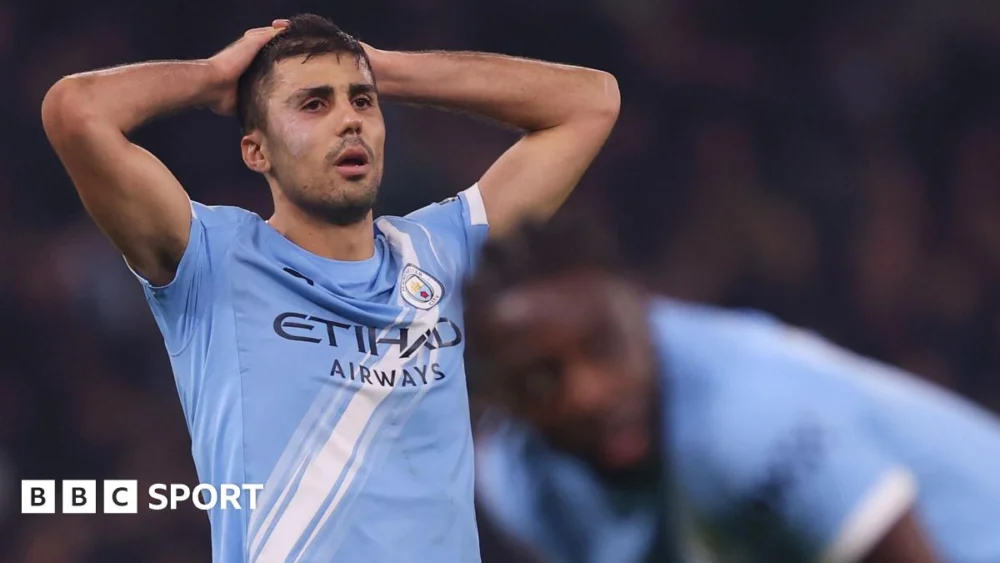
Manchester City’s pursuit of the Premier League title suffered a considerable setback following an unexpected 2-2 draw against Nottingham Forest, a result that allowed Arsenal to extend their lead at the summit of English football. The reigning champions, having established an early advantage, ultimately conceded two second-half goals, betraying a concerning pattern of diminished efficacy after the interval that has characterised their recent performances and now casts a shadow over their championship aspirations.
The fixture at the City Ground presented a crucial test for Pep Guardiola’s squad, who entered the contest acutely aware of the imperative to secure maximum points in the relentless chase for the league title. Their opponents, Nottingham Forest, were battling for survival in the top flight, a context that often imbues teams with heightened resolve and an unpredictable edge. City commenced the encounter with a clear intent, demonstrating the fluid passing and territorial dominance that have become their hallmark. It was their January acquisition, Semenyo, who broke the deadlock, showcasing an impressive adaptation to his new environment. The forward, who had already demonstrated his goal-scoring prowess with a decisive strike against Leeds United just days prior, expertly converted an opportunity to put City ahead, marking his seventh goal since his transfer from Bournemouth. This early lead, established before the half-time whistle, suggested a routine evening for the league’s perennial contenders, poised to exert further control and consolidate their advantage.
However, the narrative of the match underwent a profound transformation in the second period, reflecting a recurring vulnerability within the Manchester City ranks. Statistical analysis of City’s season reveals a striking discrepancy in their performance across the two halves of matches. Had Premier League fixtures concluded at the interval throughout the current campaign, Manchester City would presently command a formidable 13-point lead over their closest rivals, Arsenal. The reality, however, paints a starkly different picture, with the champions now trailing by a significant margin of seven points. This pronounced drop-off in the latter stages of games indicates a systemic challenge, whether it stems from physical fatigue, a lapse in concentration, or opponents successfully recalibrating their tactics to exploit perceived weaknesses.
Nottingham Forest, under the astute guidance of their manager, capitalised on this discernible shift in momentum and intensity. Despite twice falling behind, their resilience and tactical discipline remained unwavering. The home side’s equaliser arrived through a moment of exquisite individual skill from Morgan Gibbs-White, whose audacious and instinctive backheel defied the odds and the angles to find the back of the net, igniting the fervent home support. This spectacular goal served as a significant psychological boost for Forest, confirming their belief that an upset was within reach. The eventual leveller, a stunning curling effort from Elliot Anderson, further underscored Forest’s determination and ability to exploit the spaces that City, uncharacteristically, began to afford them. Anderson’s strike was a testament to precision and composure, leaving the City goalkeeper with little chance and completing a remarkable comeback for the hosts.
The immediate aftermath of the final whistle was profoundly illustrative of the magnitude of the points dropped for Manchester City. Players were observed with bowed heads and slumped shoulders, their demeanour reflecting a collective understanding of the critical implications of the draw for their title aspirations. This visible display of dejection contrasted sharply with the typical steely resolve associated with Guardiola’s winning machine, suggesting a deeper psychological impact stemming from their inability to secure victory against a team positioned significantly lower in the league standings.
Pep Guardiola, in his post-match assessment, maintained a steadfast defence of his players, refraining from individual criticism despite the undeniable disappointment. "I would like to concede fewer but it’s not about analysing one specific action," Guardiola stated, underscoring a desire to avoid pinpointing specific errors or individuals. He further affirmed, "I never point fingers at my players. We did everything." While acknowledging the team’s efforts and the creation of numerous opportunities in both halves, particularly in the latter stages as they pressed for a winner, he conceded, "We had the chances at the end and in the first half and the momentum. But something always happens and we could not win." This sentiment, "something always happens," might be interpreted as an acknowledgement of an underlying issue, a recurring pattern that prevents his side from converting dominant positions into definitive victories, particularly when confronted with spirited opposition.
The timing of Manchester City’s draw amplified its impact, as it coincided with a crucial victory for their title rivals. Arsenal, kicking off simultaneously, seized the opportunity presented by City’s stumble. The North London club navigated a challenging fixture against Brighton & Hove Albion, ultimately securing a narrow but vital 1-0 victory. This outcome further solidified Arsenal’s position at the top of the table, extending their lead to a seven-point advantage. The manner of Arsenal’s win, a hard-fought battle where they demonstrated grit and determination to "grind out" a result, offered a stark contrast to City’s inability to see out their own match.
Expert commentary highlighted the psychological ramifications of these concurrent results. Former England goalkeeper Rob Green, speaking on BBC Radio 5 Live, articulated the evolving dynamic of the title race with incisive clarity. "Arsenal can keep playing badly and winning all they like – it’s the others that are faltering," Green observed, drawing a crucial distinction between Arsenal’s capacity to secure points even when not at their scintillating best, and City’s recent tendency to falter under pressure. He further elaborated, "Manchester City are faltering and you just look at this Arsenal side and how they go about winning games, they manage to just grind out results and that’s all they’ve done tonight. They don’t care, they won." This analysis underscores a fundamental difference in how the two title contenders are currently navigating the intense pressures of the season. Arsenal’s ability to "win ugly" or secure results through sheer tenacity and tactical discipline, even when their free-flowing attacking game is less prominent, provides them with a robust foundation for their title challenge. Conversely, City’s inability to consistently convert dominant performances into three points, particularly when leading, suggests a potential vulnerability that their rivals are now exploiting.
The implications of this draw extend beyond the immediate league table standings. For Manchester City, the psychological burden of chasing a seven-point deficit, particularly against an Arsenal side demonstrating such resilience, will be substantial. The champions are renowned for their relentless pursuit and ability to string together lengthy winning runs, often overcoming significant point gaps in previous seasons. However, the recurring theme of second-half performance attenuation presents a novel challenge for Guardiola and his coaching staff. Addressing this systemic issue will be paramount if they are to reignite their title charge. Is it a question of physical conditioning, mental fortitude, or tactical adaptability? The answer will likely involve a combination of these factors, requiring a meticulous review of their training methodologies, in-game management strategies, and player rotation policies.
The Premier League title race is often described as a marathon, not a sprint, but crucial moments and psychological shifts can dramatically alter the trajectory of the contest. This draw against Nottingham Forest represents one such pivotal moment. It not only provided Arsenal with a tangible points advantage but also offered a significant psychological boost to the Gunners, reinforcing their belief that this could indeed be their season. For Manchester City, the challenge now intensifies. They must quickly overcome the disappointment, address their discernible vulnerabilities, and rediscover the unwavering consistency that has defined their previous championship successes. The coming weeks will undoubtedly provide further insights into the mental fortitude and tactical acumen of both contenders as the season progresses towards its thrilling climax. The pressure on Manchester City to respond decisively is immense, while Arsenal will aim to maintain their impressive composure and continue capitalising on any further stumbles from their formidable rivals. The title landscape has undeniably shifted, making the remainder of the campaign a compelling study in championship resolve.


 Ridwan Kamil
 Aura Kasih

 Safa Marwah