Ayu Aulia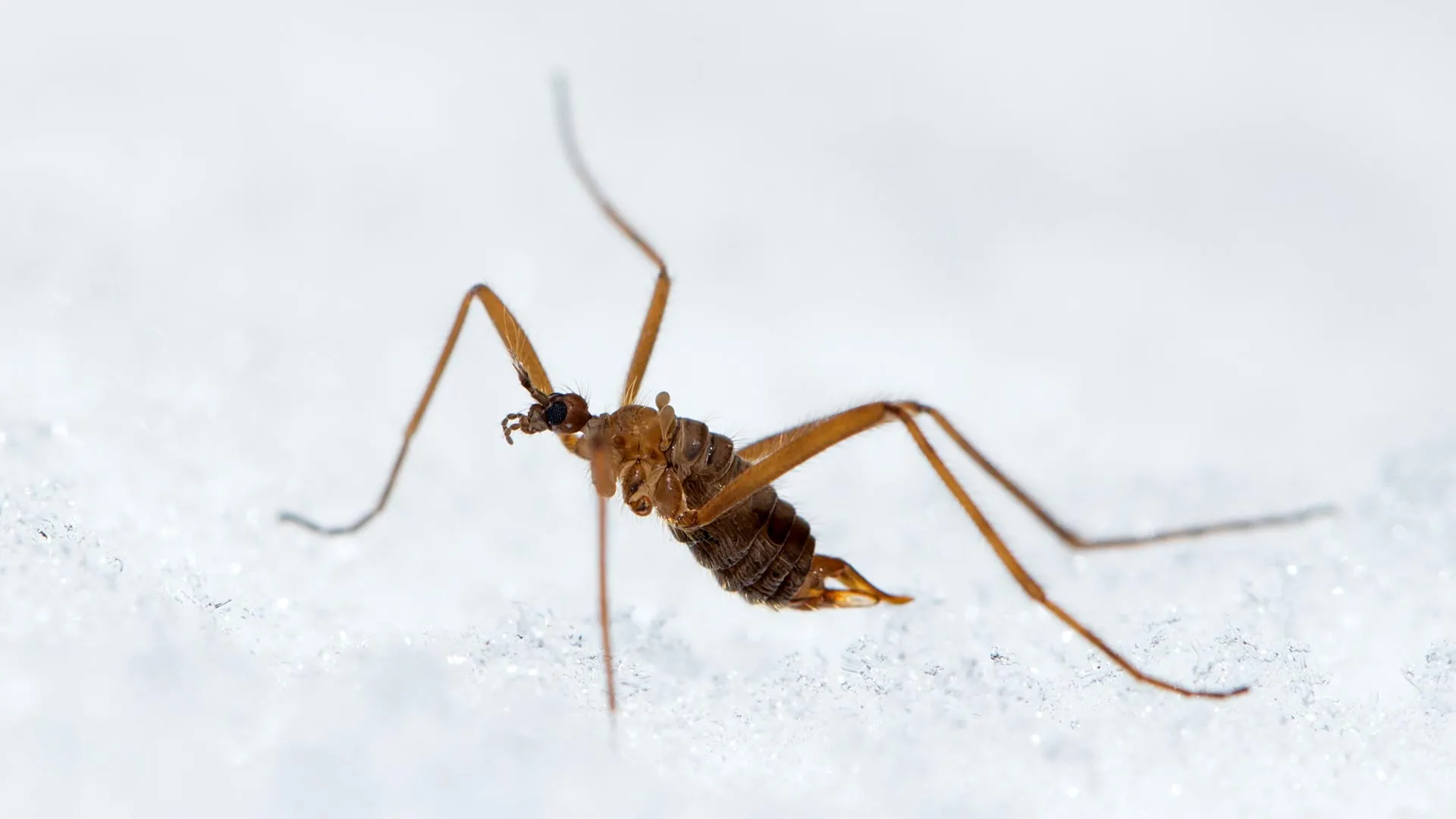
Groundbreaking scientific inquiry has illuminated the extraordinary survival mechanisms of a diminutive, wingless insect, the snow fly, in environments where most life forms succumb to the frigid grip of winter. A recent study, spearheaded by researchers at Northwestern University, meticulously dissects the complex biological toolkit enabling these creatures to not only endure but actively thrive in sub-freezing temperatures. The investigation reveals a remarkable convergence of adaptive strategies: the snow fly exhibits an endogenous capacity for heat generation, akin to mammalian thermogenesis, alongside the synthesis of highly specialized antifreeze proteins, mirroring those found in cryo-adapted marine life. These findings represent a significant leap in understanding how life adapts to the most challenging environmental conditions, offering profound implications for fields ranging from cryopreservation to biomaterials science.
Life on Earth has evolved an astonishing array of strategies to persist in diverse and often hostile environments. Among the most formidable challenges is survival in extreme cold, a condition that typically leads to cellular damage, metabolic arrest, and eventual death for most organisms. Ectothermic creatures, such as insects, are particularly vulnerable, as their body temperature largely mirrors their surroundings. Yet, a select few species, known as psychrophiles or cryophiles, defy these physiological limitations. The snow fly (Chionea alexandriana) stands out as an exceptional example, maintaining activity at temperatures as low as -6 degrees Celsius (21.2 degrees Fahrenheit) — a feat that pushes the boundaries of biological endurance. Unlike many cold-adapted insects that enter a state of dormancy or diapause, snow flies remain metabolically active, navigating snowy landscapes to reproduce and forage. This paradoxical preference for freezing conditions, where they become dormant only when the snow melts and temperatures rise, captivated the research team.
The comprehensive study, published in Current Biology, delves into the intricate molecular and physiological mechanisms underpinning this extraordinary resilience. Dr. Marco Gallio, a distinguished neurobiology professor at Northwestern’s Weinberg College of Arts and Sciences and the Soretta and Henry Shapiro Research Professor in Molecular Biology, led the investigation, collaborating with Dr. Marcus Stensmyr, a biology professor at Lund University in Sweden. Dr. Gallio emphasized the remarkable adaptive capacity of insects, stating, "Insects are cold-blooded, so they are at the mercy of external temperatures, but they have a mind-boggling ability to adapt to extremes. When it gets cold, a common strategy is to find shelter and become dormant until conditions get better. But instead of slowing down, snow flies actually prefer freezing cold, snowy conditions and hide away when the snow melts and it gets warm. They really push the limit of what’s possible. Now we’ve found snow flies aren’t just tolerating the cold, they have multiple ways to counteract it." This assertion highlights the novelty of the snow fly’s approach to cold survival, distinguishing it from mere tolerance.
A pivotal step in unraveling the snow fly’s genetic secrets involved sequencing its entire genome—a pioneering effort for this specific species. This foundational genomic data allowed the researchers to conduct sophisticated comparative analyses with related insect species that do not possess such extreme cold adaptations. Utilizing RNA sequencing, the team identified genes that were actively transcribed and translated into proteins during exposure to freezing temperatures, providing critical insights into the molecular machinery at play. Richard Suhendra, a Ph.D. student working with Northwestern’s William Kath from the McCormick School of Engineering, was instrumental in performing these complex genetic comparisons.
The initial genomic analysis yielded surprising results. Dr. Gallio recounted the unexpected challenge: "We couldn’t find many of the genes within any database. Initially, I thought we must have sequenced some alien species. It’s very rare for an active gene, which makes a protein, to not have a match." This anomaly underscored the highly specialized nature of the snow fly’s genetic toolkit. Further investigation revealed that these previously unidentified genes were responsible for producing a suite of unique antifreeze proteins (AFPs). These proteins function by binding to nascent ice crystals within the insect’s body, preventing their growth into larger, damaging structures that would rupture cell membranes and organelles. The discovery of AFPs in snow flies is particularly striking due to their structural similarities to those found in Arctic fish, suggesting a compelling case of convergent evolution—where unrelated species evolve similar solutions to common environmental pressures. Dr. Gallio remarked on this phenomenon, noting, "Remarkably, some of the antifreeze proteins we found are actually structurally related to those of Arctic fish. That suggests evolution came to the same solution for a common problem." This independent evolution of analogous cryoprotective mechanisms across vastly different taxa underscores the fundamental biophysical challenges posed by freezing and the limited number of effective molecular strategies to overcome them.
Beyond the cryoprotective role of AFPs, the research unearthed another extraordinary adaptation: the snow fly’s capacity for endogenous heat production. The team identified genes associated with energy metabolism and cellular processes directly implicated in generating warmth. Specifically, these genes showed homology to those involved in mitochondrial thermogenesis, a process typically observed in the brown adipose tissue (BAT) of mammals. In larger animals like marmots and polar bears, BAT plays a crucial role in non-shivering thermogenesis, where stored fat is oxidized to produce heat rather than ATP, enabling survival during hibernation or in intensely cold environments. The presence of similar genetic pathways in an insect, traditionally considered ectothermic, is a revolutionary discovery. Dr. Gallio articulated this hybrid strategy: "We found genes that in larger animals are associated with mitochondrial thermogenesis in brown adipose tissue. Many animals like marmots and polar bears have brown fat, which is there to produce heat. When they go into hibernation, they burn this stored fat to produce heat rather than to produce chemical energy. So, in some ways snow flies use a combination of the strategies used by polar bears and by Arctic fish." This finding suggests that snow flies have evolved a sophisticated, cellular-level thermogenic mechanism distinct from the shivering thermogenesis commonly employed by larger insects like bees or moths.
To validate these hypothesized mechanisms, the research team conducted a series of elegant experiments. Matthew Capek, a Ph.D. student in the Gallio Lab, genetically modified fruit flies to express one of the identified snow fly antifreeze proteins. When exposed to freezing temperatures, these modified fruit flies exhibited significantly higher survival rates compared to their unmodified counterparts, unequivocally confirming the cryoprotective function of the snow fly AFPs in preventing ice crystal propagation. For thermogenesis, researchers meticulously measured the internal body temperature of snow flies as ambient temperatures were gradually lowered below freezing. The results demonstrated that snow flies consistently maintained an internal temperature a few degrees Celsius warmer than would be expected for an ectotherm, and critically, warmer than other insects under similar conditions. This internal warmth, even if slight, can be a decisive factor in preventing lethal freezing and allowing the insect to remain active. Dr. Stensmyr clarified the nature of this heat generation: "Other insects, like bees and moths, shiver to increase their heat. But we found no evidence of shivering. Snow flies instead likely produce heat at the cellular level, more similar to how mammals and even some plants generate heat." This cellular thermogenesis could provide critical minutes or hours of warmth, allowing the snow fly to find shelter or continue essential activities when external temperatures plummet.
Another crucial aspect of the snow fly’s cold resilience is a significantly reduced sensitivity to the noxious effects of extreme cold. Most organisms experience pain or discomfort when exposed to dangerously low temperatures, a protective mechanism mediated by specific sensory receptors that signal potential tissue damage. The research revealed that a key sensory protein, an irritant receptor involved in detecting harmful stimuli, is approximately 30 times less responsive in snow flies compared to common insects like mosquitoes and fruit flies. This diminished sensitivity to cold-induced cellular stress enables snow flies to tolerate conditions that would incapacitate or even kill most other species, allowing them to remain functional and active in their frigid habitat. Dr. Gallio elaborated on this sensory adaptation: "It turns out that a specific irritant receptor is 30 times less sensitive in snow flies than in mosquitoes and fruit flies. So, they can cope with higher levels of noxious irritants produced by cold exposure." This adaptation is a testament to the holistic nature of the snow fly’s survival strategy, encompassing not just physiological protection but also sensory modulation.
The implications of this research extend far beyond the specific biology of snow flies. The insights into novel antifreeze proteins and cellular thermogenesis pathways hold immense promise for cryopreservation, a field striving to preserve biological materials like cells, tissues, and organs at ultra-low temperatures without incurring damage from ice crystal formation. Current cryopreservation techniques often rely on chemical cryoprotectants that can be toxic; understanding natural AFPs and endogenous heat mechanisms could lead to safer, more effective methods. Furthermore, these discoveries could inform the development of novel biomaterials or engineering solutions designed to withstand extreme cold. From an ecological and evolutionary perspective, the snow fly study deepens our understanding of adaptive radiation and the diverse, often convergent, strategies life employs to conquer environmental extremes. It provides a unique model for investigating the molecular basis of environmental adaptation, particularly in the face of ongoing climate shifts.
Looking ahead, the research team plans to delve deeper into the precise molecular mechanisms governing cellular heat generation in snow flies, aiming to identify the full repertoire of proteins and metabolic pathways involved. Further investigation will also focus on characterizing the complete spectrum of antifreeze proteins and their specific functions. This future work will explore whether similar multifaceted strategies are employed by other extremophiles in various cold environments, potentially uncovering universal principles of cold adaptation. The interdisciplinary nature of this research, spanning genomics, neurobiology, biophysics, and evolutionary biology, highlights the power of collaborative science in addressing fundamental questions about life’s resilience. The study, "Coordinated molecular and physiological adaptations enable activity at subfreezing temperature in the snow fly Chionea alexandriana," featured on the cover of Current Biology, represents a significant contribution to our understanding of biological limits and the remarkable ingenuity of evolution.




 Safa Marwah
 Aura Kasih
 Lisa Mariana