Lisa Mariana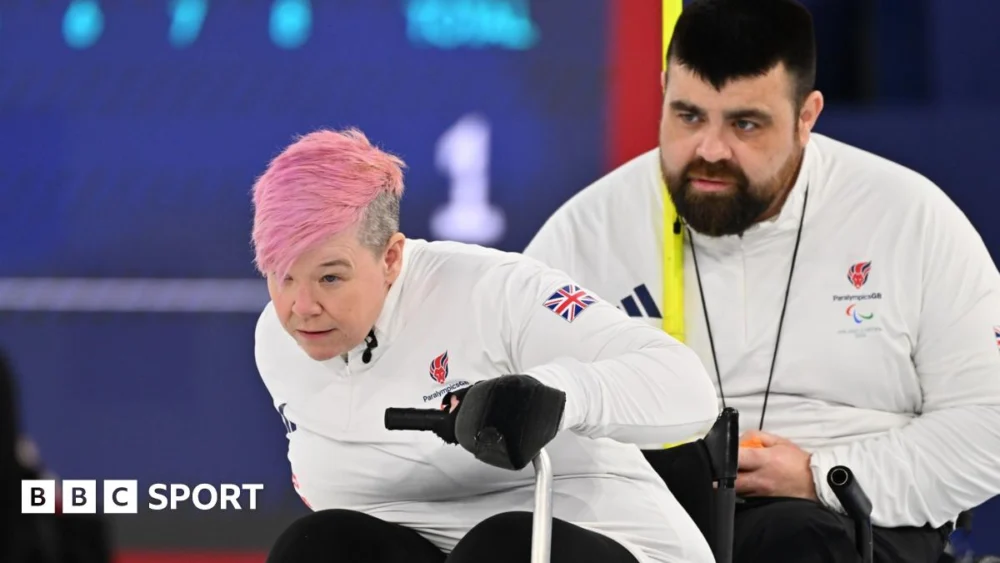
The initial phase of the Winter Paralympic Games 2026 has presented a demanding landscape for the British contingent, marked by a series of near-misses and the arduous journey of key athletes striving for podium finishes. The aspirations for medal contention faced significant setbacks with the elimination of the mixed doubles wheelchair curling pair, Jo Butterfield and Jason Kean, from semi-final contention, alongside the continued search for a medal by Para-alpine skier Neil Simpson and the courageous return of veteran Menna Fitzpatrick amidst injury recovery. These early developments underscore the intense competitive environment and the fine margins separating success from disappointment at the elite level of Paralympic sport.
The narrative of the British campaign commenced with a particularly challenging sequence of events in wheelchair curling. The mixed doubles pairing of Jo Butterfield and Jason Kean, who had positioned themselves favorably for progression, ultimately failed to secure a coveted semi-final berth. Entering the final day of preliminary rounds, the duo occupied a promising joint-second position in the standings, needing just a single victory from their concluding two matches to almost certainly advance. This strategic advantage, however, proved elusive in the high-stakes environment of Paralympic competition. Their first encounter on Sunday pitted them against the formidable and undefeated Chinese team, a contest in which the British pair, while acknowledged underdogs, demonstrated early prowess. They established a commanding 5-1 lead after just three ends, a testament to their initial execution and strategic acumen. Yet, a mid-game tactical shift by the British team proved to be a critical miscalculation, allowing their opponents to capitalize and ultimately overturn the deficit.
The subsequent match against Italy, a team languishing at the bottom of the standings with only a solitary win and no mathematical prospect of advancing, presented what appeared to be a more straightforward path to qualification. However, the dynamics of Paralympic sport often defy such predictions. The Italian team, buoyed by the fervent support of a home crowd in Cortina, initiated their performance with remarkable intensity, securing a 4-0 lead in the opening end. This initial advantage rapidly expanded to a formidable 10-4 after six ends, placing the British pair in an acutely precarious position. What followed was a remarkable display of resilience and determination from Butterfield and Kean, who staged an extraordinary comeback by scoring six consecutive points across the final two ends, thereby forcing an extra end. This heroic effort, however, culminated in a heart-wrenching defeat as their final two shots in the decisive extra end were misjudged, allowing Italy to secure an 11-10 victory. The narrow margin of this loss, resulting from a lapse in precision at the most critical juncture, epitomizes the brutal reality of elite sporting competition, where fractions of an inch and split-second decisions dictate outcomes. The inability to close out either of these crucial matches, despite strong positions in both, will undoubtedly prompt a thorough post-mortem for the British curling program, examining tactical decision-making under pressure and shot execution in high-leverage situations. The psychological toll of such a double setback, particularly after being on the cusp of progression, represents a significant challenge for the athletes and coaching staff.
Concurrently, on the demanding slopes of the Tofane piste, Para-alpine skier Neil Simpson was engaged in his own quest for a medal, particularly in the Super-G event where he arrived as the reigning Paralympic champion. Four years prior in Beijing, Simpson, guided by his brother Andrew, had etched his name into British sporting history by securing the nation’s sole gold medal in the visually impaired Super-G, thereby becoming the first British male to achieve this feat at a Winter Paralympics. The pressure of defending such a prestigious title is immense, compounded by the significant logistical and strategic changes leading into these Games. This time, Simpson was guided by Rob Poth, a late switch that inherently introduces an additional layer of complexity regarding synergy and communication, vital components in visually impaired skiing. Despite demonstrating flashes of his championship form, Simpson ultimately finished in fourth place, mirroring his result from Saturday’s downhill event. His performance in the Super-G saw him cross the finish line 1.1 seconds shy of a podium position, a testament to the intensely competitive field and the unforgiving nature of the sport.
Simpson’s analysis of his run highlighted specific technical challenges. "There was some good skiing, so I’m pretty proud. Unfortunately there were just a couple of mistakes," the 23-year-old commented, reflecting on the fine margins involved. He elaborated on difficulties encountered on a particular section of the course: "The section where there was a bit more air time and jumps, I just didn’t quite have the line there, so that just meant I didn’t have the speed over the flat." This detailed self-assessment points to the critical importance of maintaining optimal lines and speed management throughout the course, particularly on sections that demand precise aerial control and subsequent momentum generation. The Tofane piste, renowned for its technical demands and varied terrain, offers minimal room for error, and even minor deviations can accumulate into significant time losses. The gold medal in the visually impaired Super-G was claimed by Austria’s Johannes Aigner, marking his second Paralympic title of these Games, following his victory in the downhill event. Simpson’s British team-mate, Fred Warburton, guided by James Hannan, also competed, placing 12th after what he candidly described as "a bit of a battle." Both British pairs are slated to compete in three additional events at the Milan-Cortina Games, commencing with Tuesday’s alpine combined, an event demanding proficiency in both Super-G and slalom disciplines. Simpson, who with Poth clinched the 2023 Super-G World Championship title, remains pragmatic and focused on future opportunities: "I gave it my best shot, unfortunately it wasn’t to be but it’s something that we need to learn from." This perspective underscores the iterative nature of elite sport, where even setbacks are viewed as opportunities for growth and refinement.
Adding another layer to the British narrative is the highly anticipated return of Menna Fitzpatrick, Britain’s most decorated Winter Paralympian with an impressive tally of six medals. Fitzpatrick’s first appearance at these Games saw her secure a sixth-place finish in the women’s visually impaired Super-G. Her journey to Cortina has been particularly arduous, marked by a torrid 18-month period of injury. This challenging spell began with a broken leg at the close of 2024, followed by a significant anterior cruciate ligament (ACL) injury sustained during training in December, just months before the Games. The decision-making process regarding her rehabilitation was critical; she opted to forego surgery in a determined bid to compete, a testament to her unwavering commitment and resilience. This choice, while allowing her to participate, placed immense pressure on her body and required an exceptionally meticulous and aggressive rehabilitation protocol.
Following extensive training runs on the course last week, Fitzpatrick, guided by Katie Guest, made a strategic decision to skip Saturday’s downhill event. This choice was a pragmatic one, aimed at conserving her physical resources and focusing on events where she felt her strengths and current physical condition would be best utilized. The Super-G, an event in which Fitzpatrick has previously won silver and bronze medals at the past two Paralympic Games, represented a more favorable initial challenge. In her Super-G run, the British duo completed the course in one minute 25.52 seconds, placing them just over 10 seconds behind Italy’s Chiara Mazzel, who clinched the gold medal for the host nation. Despite the gap to the podium, Fitzpatrick’s performance offered encouraging signs given her recent injury history. "It was a step up from our training runs," Fitzpatrick observed, indicating positive progression. "I managed to let the skis run a bit more, which is a step in the right direction for sure. I was way more confident and really enjoyed the course."
Her reflections underscore the psychological and physical hurdles she has overcome. "It’s so lovely to actually be out here after the last two seasons of being injured. I had a lot of fun and I’ve got great confidence in the knee itself, just the [other] girls are skiing really well and they’re pushing the competition, so we’ll slowly get closer." This statement provides crucial insight into her current state: while the competition has advanced, her confidence in her rehabilitated knee is robust, and her enjoyment of the sport remains undiminished. The strategic decision to prioritize her health and event selection appears to be yielding dividends in terms of confidence and readiness for subsequent races. "Now that I’ve done one [event], I’m way more excited and confident for the next races," she affirmed, signaling a renewed impetus for the remainder of her Paralympic campaign. Her journey serves as a powerful testament to the fortitude required to compete at the highest level, especially when battling significant physical adversity.
In summation, the initial days of the Winter Paralympics 2026 have presented a mixed bag for the British delegation. While the medal count remains elusive, the performances have been characterized by moments of exceptional grit, strategic navigation of physical challenges, and an unyielding commitment to competition. The wheelchair curlers’ dramatic exit highlights the brutal precision demanded at the elite level, where small errors carry significant consequences. Neil Simpson’s consistent top-four finishes, while not yet yielding a medal, demonstrate his continued presence among the world’s best, with opportunities remaining to capitalize on his formidable talent. Menna Fitzpatrick’s courageous return, marked by a respectable finish and renewed confidence, sets a compelling precedent for her upcoming events, showcasing the profound resilience inherent in Paralympic athletes. As the Games progress, the focus for the British team will undoubtedly shift towards converting these near-misses and promising starts into tangible medal success, leveraging the lessons learned from these early challenges to fuel their pursuit of glory in Cortina. The unfolding narrative promises further demonstrations of determination, strategic adjustments, and the enduring spirit of Paralympic competition.



 Ayu Aulia
 Ridwan Kamil
 Safa Marwah
 Aura Kasih