Lisa Mariana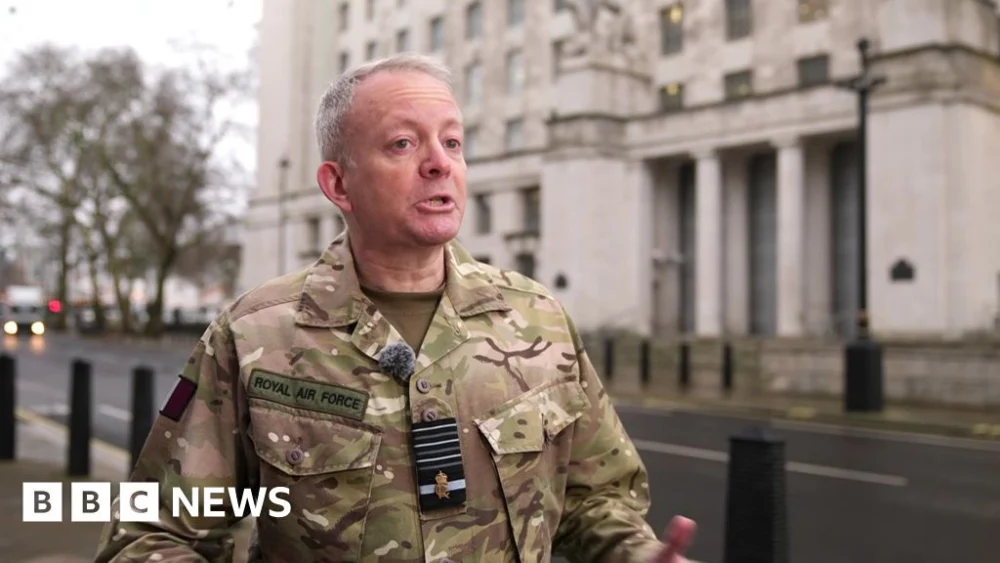
In a period marked by profound geopolitical volatility, the United Kingdom’s Chief of the Defence Staff has staunchly refuted assertions that the nation was inadequately prepared for the unfolding conflict in the Middle East, a region he categorises as experiencing its most perilous juncture in three decades. Sir Richard Knighton, speaking amidst a backdrop of escalating hostilities, articulated a firm rejection of criticisms questioning the efficacy and timeliness of Britain’s strategic response, even as domestic political voices amplify their scrutiny of governmental actions.
The current conflagration, now in its eighth day, has rapidly transformed the regional security landscape, drawing in major global powers and highlighting the intricate web of alliances and antagonisms. For the UK, a nation with enduring historical ties and vital strategic interests in the Middle East, the crisis presents a multifaceted challenge requiring a delicate balance of deterrence, protection of assets, and diplomatic engagement. The defence chief’s pronouncements arrive at a moment when the integrity of Britain’s military readiness and the decisiveness of its political leadership are under intense domestic and international examination.
Central to the debate is the deployment of naval assets, specifically the Type 45 destroyer, HMS Dragon. Critics have pointed to its delayed departure from Portsmouth, where it remains undergoing maintenance and awaiting ammunition, as emblematic of a broader lack of preparedness. This perceived lag is starkly contrasted with the swift deployment of naval vessels by allied nations, including France and Greece, towards Cyprus, where a critical UK military installation, RAF Akrotiri, recently endured a drone attack. The incident at Akrotiri, assessed to have originated from an Iranian-aligned group in Lebanon, underscored the direct threat to British sovereign bases and personnel, intensifying calls for robust and immediate protective measures.
Sir Richard Knighton, in his defence, emphasised that the UK has been proactively "bolstering our presence" in the Middle East for several weeks, indicating a pre-emptive strategic adjustment to an anticipated deterioration of security. He maintained that the government’s response strategy was formally approved by ministers within days of the conflict’s resurgence, affirming a rapid decision-making process. This proactive stance, according to the defence chief, involved the deployment of additional Typhoon and F-35 jets, alongside over 400 military personnel, to Cyprus, reinforcing the island’s airspace defence capabilities and enhancing the overall protective posture of British interests in the eastern Mediterranean. The commitment of these high-value air assets and skilled personnel underscores a significant, albeit less visible, component of the UK’s immediate response, aiming to create a robust air defence umbrella over its strategic holdings.
The chief’s assertion that demands on defence capabilities are "rising" without compromising the speed of the UK’s response, directly addresses underlying concerns about potential impacts of historical defence budget decisions or force structure adjustments. He posited that the current crisis validated the strategic posture that had been meticulously developed over an extended period. This perspective suggests a belief within the military hierarchy that existing capabilities, when strategically deployed and augmented, are sufficient to meet the challenges posed by the current regional dynamics. However, the operational specifics surrounding HMS Dragon’s readiness and transit time to the Mediterranean, which Sir Richard stated would be "in the next few days" once ammunition is onboard, remain a focal point for those questioning the agility of UK naval power projection. The strategic implications of this delay are not merely logistical; they touch upon the perception of Britain’s reliability as an ally and its capacity to respond with requisite speed to emergent threats in a volatile theatre.
The political dimension of the UK’s response has been sharply illuminated by the Leader of the Opposition, Kemi Badenoch. Addressing the Conservative Party’s Spring Conference, Badenoch launched a scathing critique of Prime Minister Sir Keir Starmer, accusing him of "sitting on the fence" and exhibiting a debilitating indecisiveness. Her remarks painted a picture of a nation lacking "strong and decisive leadership" at a critical juncture, suggesting that the Prime Minister’s reluctance to commit fully had left the UK vulnerable and its allies questioning its resolve. Badenoch’s pointed reference to HMS Dragon being "stuck in Portsmouth Harbour" while other allied nations had already dispatched their naval assets served as a potent symbol of what she characterized as governmental "dithering." This political broadside aims to draw a clear distinction between the government’s perceived hesitancy and the opposition’s call for more robust and immediate action, framing the crisis not just as a national security issue but also as a test of leadership.
The broader geopolitical context, as articulated by Sir Richard, highlights a significant escalation in the nature of the conflict. He noted that it became evident early on that Iran’s response to the latest developments would be "much broader, wild and indiscriminate, and rather reckless" compared to previous engagements, such as the "12-day war last summer." This assessment points to a qualitative shift in the conflict’s character, moving beyond more contained or predictable confrontations to a potentially more expansive and destabilising regional conflagration. The implication is that the UK’s strategic planning needed to account for a more unpredictable and widespread array of threats, including those from state and non-state actors alike. This heightened threat environment necessitates not only defensive measures but also a clear articulation of red lines and deterrent capabilities.
The critical role of the United States in the regional security architecture, and its coordination with the UK, has also come under focus. The arrival of B-1 Lancer strategic bombers at RAF Fairford in Gloucestershire, including multiple aircraft capable of carrying 24 cruise missiles and known for their long-range heavy bombing missions, signifies a significant augmentation of allied strike capabilities. This deployment, however, was preceded by a reported initial reluctance from Prime Minister Sir Keir Starmer to grant permission for the US to utilise UK bases for its joint offensive operations with Israel against Iran, drawing criticism from figures such as US President Donald Trump. While Sir Richard Knighton expressed "absolute confidence" that the US would adhere to using UK military bases purely for "defensive" purposes, this episode underscores the complex diplomatic and political considerations inherent in facilitating allied military operations, particularly those with a potential for escalation. The presence of such powerful US assets on British soil serves as a potent deterrent, but also as a potential flashpoint, requiring continuous assurance and strategic alignment between the two nations.
As the conflict intensifies, with US Defence Secretary Pete Hegseth indicating that strikes on Iran are "about to surge dramatically," the UK finds itself navigating a perilous diplomatic and military landscape. Sir Richard Knighton, while keeping "all options under review" regarding further involvement, reiterated that his primary focus remains "on protecting our interests and our people right across the region." This cautious approach reflects the intricate balance between demonstrating resolve, safeguarding national assets, and avoiding an uncontrolled escalation that could have catastrophic regional and global consequences. The UK’s strategy appears to hinge on a combination of enhanced defensive posture, close allied coordination, and a pragmatic assessment of escalating threats, while simultaneously managing domestic political pressures and international expectations.
Beyond the military and political dimensions, the conflict has already begun to exact a significant humanitarian and economic toll. Widespread airspace closures across the Middle East, affecting major commercial hubs such as Dubai, Qatar, and Abu Dhabi, have severely disrupted global aviation and trade routes. This disruption highlights the interconnectedness of regional stability with broader economic security. Furthermore, ongoing efforts to repatriate British nationals from the region, facilitated by charter flights from Muscat, Oman, underscore the immediate human cost of the conflict and the government’s responsibility to ensure the safety of its citizens abroad. These evacuation efforts, alongside the logistical challenges presented by restricted airspace, add another layer of complexity to the UK’s comprehensive response.
In conclusion, the UK’s defence leadership is engaged in a strenuous defence of its strategic readiness and response to a rapidly evolving and profoundly dangerous Middle Eastern conflict. While Chief of the Defence Staff Sir Richard Knighton steadfastly rejects claims of ill-preparedness, highlighting weeks of proactive force posture adjustments and swift governmental approval for deployments, domestic political criticism continues to challenge the perceived timeliness and decisiveness of the government’s actions. The delayed departure of HMS Dragon and the broader political narrative surrounding leadership during crisis have become central to this debate. As the UK navigates its role amidst escalating US-led operations and a shifting regional threat matrix, the imperative remains to protect national interests and personnel while meticulously managing the risks of further entanglement in a conflict with far-reaching and unpredictable implications. The coming weeks will undoubtedly test the resilience of the UK’s defence strategy and the mettle of its leadership in a geopolitical environment teetering on the precipice of broader regional conflagration.


 Ridwan Kamil
 Safa Marwah
 Aura Kasih
 Ayu Aulia