Ayu Aulia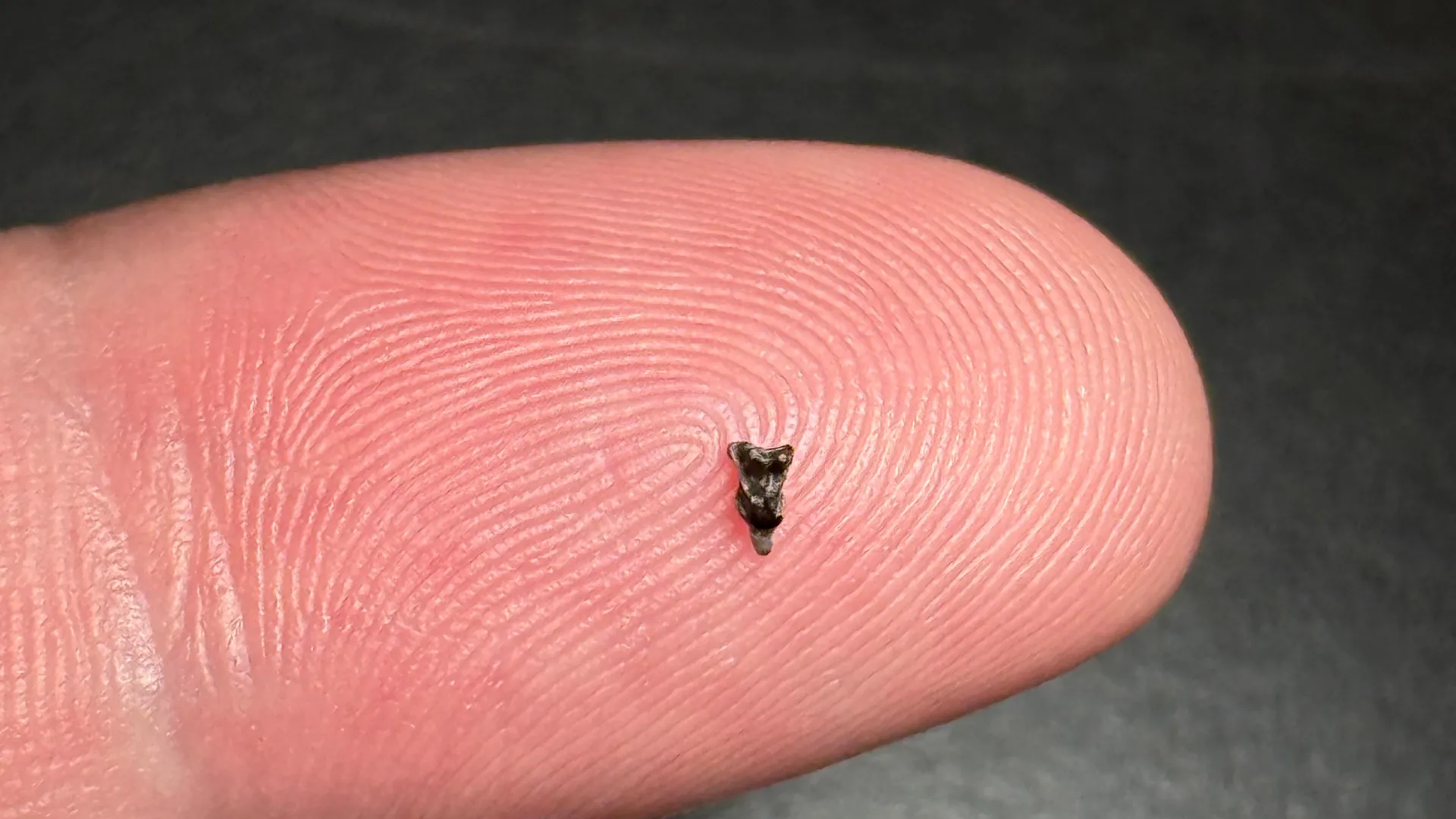
A pivotal paleontological investigation has unveiled exceptionally small fossil remnants of Purgatorius, identified as the earliest known ancestor to all primate lineages, including humans, at a previously undocumented southerly location within North America. This significant discovery provides unprecedented clarity into the initial evolutionary pathways and geographical dissemination of primates across the continent, particularly in the immediate aftermath of the cataclysmic event that ended the age of dinosaurs.
The enigma surrounding the genesis and early geographical expansion of primates has long represented a focal point of scientific inquiry. Purgatorius, a diminutive mammal comparable in stature to a modern shrew, emerges in the geological record shortly after the catastrophic extinction event approximately 65.9 million years ago. It is widely acknowledged as the most ancient representative of archaic primates, occupying a critical position in understanding the deep evolutionary history of our own order.
While geological strata from this critical epoch are distributed extensively across North America, previous fossil evidence for this particular species had been confined primarily to regions within Montana and select areas of southwestern Canada. Other archaic primate relatives have been documented in the southwestern United States, yet their stratigraphic placement dates roughly two million years later, thereby establishing a chronological void in the fossil record that has perplexed researchers until the present findings.
As detailed in a recent publication within the authoritative Journal of Vertebrate Paleontology, the newly identified fossils establish the southernmost recorded presence of Purgatorius. These crucial specimens were unearthed in Colorado’s Denver Basin, specifically within the meticulously studied Corral Bluffs area, a site increasingly recognized for its unparalleled insights into the recovery of life after the Cretaceous-Paleogene (K-Pg) extinction event.
Geographical Expansion Post-Cretaceous-Paleogene Extinction
"This discovery is instrumental in bridging the previous informational void concerning the geographical distribution and evolutionary trajectory of our most ancient primate forebears," stated Dr. Stephen Chester, an associate professor at Brooklyn College and The Graduate Center, City University of New York (CUNY), who spearheaded this research collaboration with colleagues from the Denver Museum of Nature & Science (DMNS). The presence of these fossils in the Colorado locale suggests a northern origin for archaic primates, followed by a subsequent southward migration and diversification that commenced swiftly after the immense biotic crisis at the close of the Cretaceous Period.
The K-Pg extinction event, largely attributed to a massive asteroid impact, precipitated an ecological reset on a global scale. This cataclysm eliminated approximately 75% of plant and animal species, including all non-avian dinosaurs. The ensuing ecological vacuum presented unprecedented opportunities for the surviving mammalian lineages to diversify and occupy newly available niches. The rapid appearance and subsequent dispersal of Purgatorius immediately following this event underscore the dynamic nature of evolution in periods of profound environmental upheaval. Understanding how early mammals, especially primates, navigated and capitalized on this post-extinction landscape is crucial for comprehending the foundational stages of modern biodiversity.
Paleontological evidence, specifically fossilized ankle bones, indicates that Purgatorius was likely an arboreal creature, well-adapted to life in trees. This characteristic previously led researchers to hypothesize that its apparent absence in regions south of Montana might have been linked to widespread forest destruction resulting from the asteroid impact approximately 66 million years ago. The prevailing assumption was that extensive arboreal habitats, crucial for species like Purgatorius, would have taken a significant period to re-establish.
"The ankle morphology of Purgatorius clearly exhibits features indicative of an arboreal lifestyle," elaborated Dr. Chester. "Consequently, we initially considered that its absence from southern Montana localities could be directly related to the extensive ecological devastation of forest ecosystems following the asteroid impact. However, the insights provided by our paleobotanical collaborators suggested a remarkably rapid recovery of plant communities across North America. This information compelled us to reconsider, leading to the inference that Purgatorius should indeed be present in more southerly latitudes, and that perhaps our previous search methodologies had simply been insufficiently comprehensive." This re-evaluation highlights the interdisciplinary nature of modern paleontological research, where insights from diverse fields like paleobotany can fundamentally alter prevailing hypotheses.
Innovative Techniques Uncover Minute Dental Evidence
To conduct a more exhaustive investigation, Dr. Chester and his team at DMNS implemented an intensive screen-washing methodology to meticulously process sediment for exceptionally small fossils. This rigorous undertaking received substantial support, partially through a collaborative grant nearing $3 million from the National Science Foundation. This funding underpins a broader research initiative directed by Dr. Tyler Lyson at DMNS, which focuses on the intricate processes of biotic recovery subsequent to the mass extinction that marked the termination of the dinosaurian era.
The screen-washing process involves carefully breaking down large quantities of rock and sediment in water, then passing the slurry through progressively finer mesh screens. This separates minute fossil fragments from the surrounding matrix, allowing for the discovery of specimens that would be invisible or overlooked during conventional surface collecting. Students and dedicated volunteers diligently washed and sorted through prodigious volumes of sediment, a painstaking effort that ultimately yielded numerous fossils pertaining to fish, crocodilians, and turtles. Crucially, their perseverance eventually uncovered several minuscule Purgatorius teeth, so diminutive that they could comfortably rest upon the tip of an infant’s finger. These teeth, though tiny, carry immense information about diet, age, and evolutionary relationships.
Dr. Jordan Crowell, a postdoctoral fellow at DMNS and a key contributor to the research effort, underscored the exceptional importance of these dental specimens. He highlighted the compelling possibility that they might represent an even earlier, potentially novel, species within the Purgatorius genus. "These particular specimens display a unique combination of morphological characteristics when compared against previously documented species of Purgatorius," Dr. Crowell noted. "However, definitive classification awaits the recovery of additional associated skeletal material to thoroughly assess whether these fossils indeed represent a previously undescribed species." The identification of a new species would further refine the evolutionary tree of primates and potentially push back the timeline for certain adaptive traits.
Reconsidering Overlooked Fossils and Advancing Paleontological Understanding
This groundbreaking discovery also strongly implies that the perceived absence of early primate relatives in the more southerly sectors of the Western Interior of North America may have been significantly influenced by sampling bias in previous paleontological endeavors. For nearly a century and a half, paleontologists operating in this expansive region predominantly relied on traditional surface collecting techniques. Such methods inherently favor the retrieval of larger fossils that are readily discernible to the unaided eye, while the minute specimens, which are often the most informative for microfauna, frequently remained concealed within the vast sedimentary deposits. This methodological shift highlights a critical paradigm change in how paleontological sites are explored, moving beyond serendipitous finds to systematic microfossil recovery.
"Through our enduring collaborative relationship with the City of Colorado Springs, which maintains ownership of the land where these invaluable fossils were collected, and owing to the countless hours dedicated by our volunteers and interns in meticulously sifting through the earth for these precious vertebrate remains, we are progressively assembling an extraordinary dataset," remarked co-author Dr. Lyson. "This data is furnishing profound insights into how life, including our earliest primitive primate ancestors, successfully recuperated and diversified following what was unequivocally the single most devastating day for life on Earth." The Corral Bluffs site, with its exceptionally preserved K-Pg boundary and subsequent recovery layers, is proving to be a treasure trove for understanding evolutionary resilience.
The implications of these findings extend beyond primate evolution, offering a broader perspective on the recovery dynamics of ecosystems after mass extinctions. The rapid diversification of mammals, including Purgatorius, in the wake of the K-Pg event, demonstrates the remarkable capacity for life to adapt and innovate under extreme selective pressures. This period is a critical natural experiment, providing analogues for understanding current biodiversity crises and future ecological responses.
"Our results unequivocally demonstrate that small-scale fossils are susceptible to being easily overlooked by conventional methods," concluded Dr. Chester. "By implementing more intensive search strategies, particularly those employing advanced screen-washing techniques, we anticipate the undeniable discovery of many more pivotal specimens that will continue to reshape our understanding of early mammalian and, specifically, primate evolution." This future outlook suggests a new era of microfossil discovery, where technology and meticulous methodology converge to reveal previously hidden chapters of life’s history. The study also acknowledges the significant contributions of co-author Dr. David Krause, who holds the position of Senior Curator of Vertebrate Paleontology at the DMNS. This collaborative and systematic approach underscores the future direction of paleontological research, promising further revelations from the minute details of the past.




 Ridwan Kamil
 Safa Marwah
 Aura Kasih
 Lisa Mariana