
 Lisa Mariana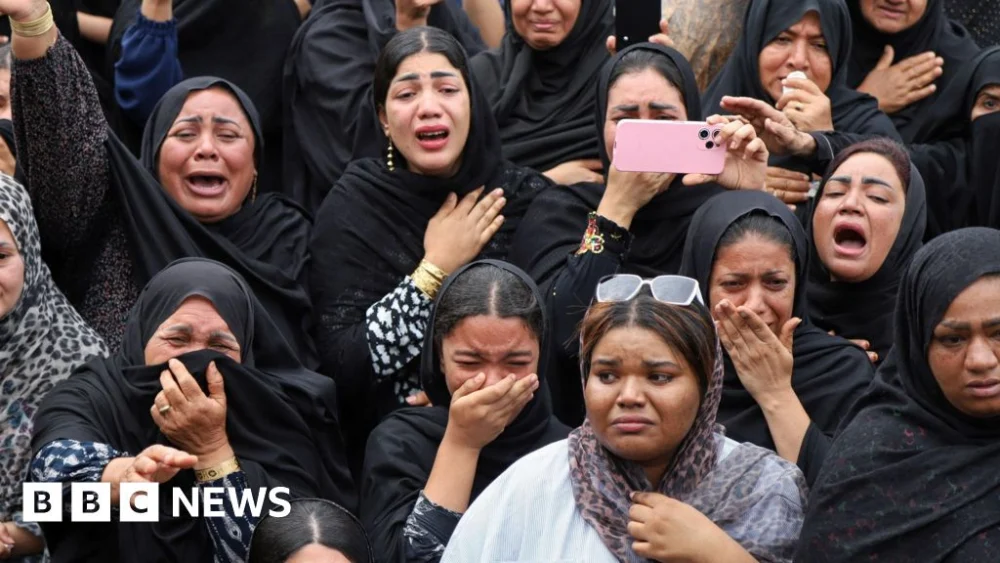
The city of Minab in southern Iran recently became the somber stage for mass funerals, as grieving communities laid to rest numerous students and faculty members tragically killed in an incident Iranian authorities unequivocally label a US-Israeli aerial assault on a girls’ school. This devastating event, which Tehran asserts claimed over 160 lives, has ignited a fierce diplomatic row and heightened regional tensions, with Washington and Tel Aviv issuing denials and expressions of concern regarding civilian harm.
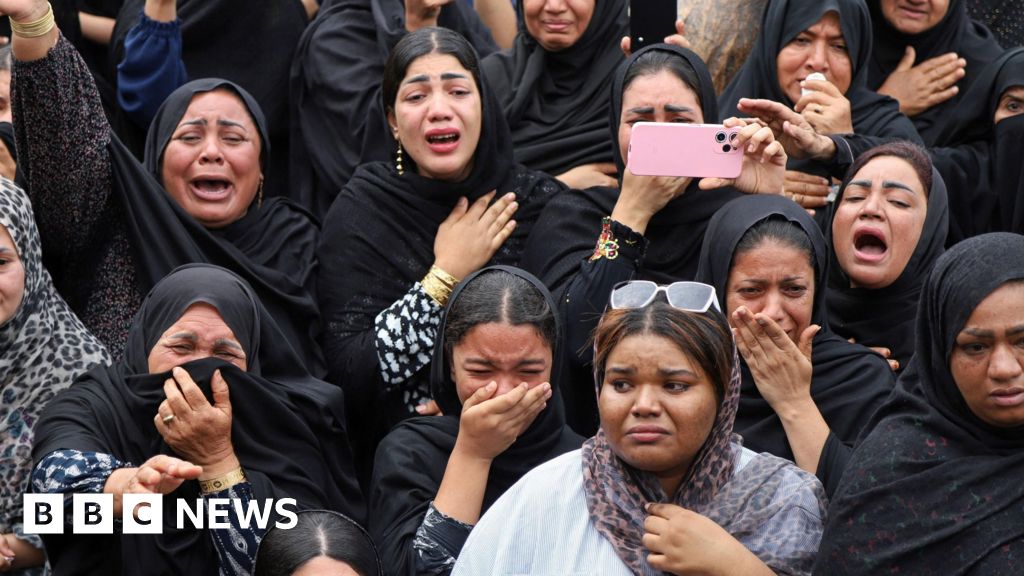
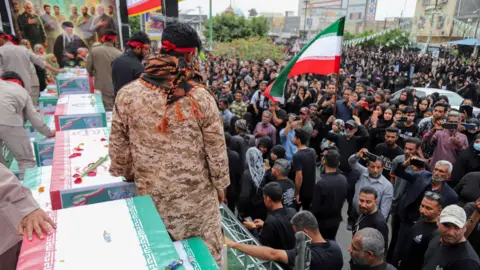
The profound sorrow gripping Minab was palpable during the funeral ceremonies, broadcast extensively across Iranian state media. Hundreds of mourners, their faces etched with grief, lined the streets as child-sized coffins, draped in the national flag of the Islamic Republic, were borne through the crowds. The visual narrative presented by state television emphasized the deep personal tragedy, featuring voiceovers that articulated the anguish of parents mourning their lost daughters, underscoring the immense human cost of the Saturday morning strike. Iranian officials stated that three missiles struck the school building, situated approximately 600 meters (1970 feet) from a base belonging to the Islamic Revolutionary Guard Corps (IRGC). Given Iran’s six-day school week, the facility was likely occupied by students and staff when the attack occurred, amplifying the tragedy.
The incident unfolded amidst a backdrop of heightened regional volatility, with Iranian authorities contending that the strike was part of broader, concurrent US and Israeli military operations targeting Iranian command and control centers and other strategic installations. This assertion immediately drew strong reactions from international actors. The United States military indicated it was reviewing reports of the incident, while the Israeli military explicitly stated it possessed no information regarding any operations in the vicinity of Minab at the time.
Iran’s leadership swiftly condemned the attack. President Masoud Pezeshkian denounced the incident as a "barbaric act," characterizing it as "another black page in the record of countless crimes committed by the aggressors." Echoing this sentiment, Foreign Minister Seyed Abbas Araghchi utilized social media to underscore the perceived brutality, posting an image of numerous graves being prepared, accompanied by a pointed comment: "This is how ‘rescue’ promised by Mr Trump looks in reality," implicitly linking the incident to past US rhetoric and actions in the region.
The aftermath of the explosion, depicting smoke billowing from the damaged structure and scenes of panic among onlookers, has been verified through independent analysis of available video clips. However, the broader challenges inherent in verifying information originating from Iran persist. International news organizations frequently face significant obstacles in obtaining visas and direct access to the country, severely limiting their capacity for independent journalistic inquiry and on-the-ground reporting. This constraint invariably shapes the global understanding of such incidents, often leaving a vacuum filled by competing narratives.
In response to direct inquiries, US Secretary of State Marco Rubio addressed the allegations. Speaking on Monday, Rubio categorically stated that "The US would not deliberately target a school," emphasizing, "We would have no interest, and frankly, no incentive to target civilian infrastructure." While acknowledging a lack of specific operational details, he reiterated, "what is clear is that the United States would not target a school." Concurrently, a spokesperson for US Central Command (Centcom), Tim Hawkins, conveyed that the US takes such reports "seriously," adding, "The protection of civilians is of utmost importance, and we will continue to take all precautions available to minimise the risk of unintended harm." These statements underscore a consistent US policy stance against targeting civilian infrastructure, even as they navigate the complexities of military operations in contested environments.
Geopolitical Context and Escalating Tensions
The alleged strike in Minab cannot be viewed in isolation; it is deeply embedded within the intricate and often volatile geopolitical landscape of the Middle East, characterized by decades of antagonism between Iran, the United States, and Israel. The region has been a crucible of proxy conflicts, economic sanctions, and intermittent military confrontations. US policy in the region has historically aimed at countering what it perceives as Iran’s destabilizing influence, including its nuclear program, ballistic missile development, and support for various non-state actors. Israel, for its part, views Iran as an existential threat and has openly pursued a strategy of pre-emptive or retaliatory strikes against Iranian assets or proxies, particularly those deemed to be advancing its military capabilities or regional reach.
Recent years have witnessed an intensification of these tensions. The withdrawal of the United States from the Joint Comprehensive Plan of Action (JCPOA), commonly known as the Iran nuclear deal, and the subsequent re-imposition of stringent sanctions, dramatically escalated the economic pressure on Tehran. Iran has responded by gradually reducing its compliance with the nuclear agreement and has been implicated in a series of regional incidents, including attacks on shipping, drone strikes, and missile launches, often attributed to its proxy forces. The "widespread strikes targeting Iran’s military sites and leadership" alluded to by Iranian authorities, if they occurred as claimed, would represent a significant escalation in this shadow war, moving beyond covert operations to potentially more overt military action. The proximity of the Minab school to an IRGC base introduces a critical element into the discourse, with Iranian officials portraying it as a deliberate act of aggression against a civilian target, while any potential attacking force might claim it was an unintended consequence of targeting a legitimate military objective. This distinction is central to international law concerning armed conflict, particularly the principles of proportionality and distinction.
International Law, Verification, and Accountability
The alleged targeting of a school, resulting in significant civilian casualties, immediately raises profound concerns under international humanitarian law (IHL), specifically the Geneva Conventions and their Additional Protocols. IHL mandates that parties to an armed conflict must distinguish between civilian objects and military objectives, and direct their attacks only against military objectives. While military objectives may be attacked, all feasible precautions must be taken to avoid, and in any event to minimize, incidental loss of civilian life, injury to civilians, and damage to civilian objects. The principle of proportionality dictates that even if an object is a legitimate military target, an attack is prohibited if the expected civilian harm would be excessive in relation to the anticipated military advantage.
The challenge of independently verifying the facts surrounding the Minab incident—who fired the missiles, what the intended target was, and why a school was hit—is immense. As noted, the limited access for international media to Iran creates an information vacuum. In such environments, state-controlled media narratives often dominate, making it difficult for the global community to ascertain the truth without independent, impartial investigations. Calls for such investigations typically emerge in the aftermath of such events, but their feasibility often hinges on the political will and cooperation of all implicated parties, which is frequently lacking in highly adversarial contexts. Without unimpeded access to the site, forensic evidence, and witness testimonies by neutral parties, definitive conclusions remain elusive, fueling speculation and competing claims.
Humanitarian Impact and Regional Stability
Beyond the immediate geopolitical implications, the strike in Minab represents a profound humanitarian tragedy. The loss of over 160 lives, including a significant number of children, leaves an indelible scar on the community and highlights the devastating impact of armed conflict on civilian populations. Schools, by their very nature, are protected civilian objects, and any attack on them, especially when occupied, constitutes a grave breach of international norms and laws. The psychological trauma inflicted on survivors, families, and the broader community will be long-lasting, contributing to cycles of grief, anger, and a desire for justice.
From a regional stability perspective, incidents like Minab carry a high risk of escalation. Each alleged attack and subsequent civilian casualty deepens the mistrust and animosity between rival powers. Iran’s leadership will likely leverage the incident to galvanize domestic support, reinforce its narrative of victimhood, and potentially justify future retaliatory actions, thereby perpetuating a dangerous cycle of violence. For the United States and Israel, the allegations, even if denied, pose a public relations challenge and could complicate their diplomatic efforts, particularly concerning international perceptions of their adherence to humanitarian principles in military operations.
Future Outlook
The Minab incident stands as a stark reminder of the precarious security situation in the Middle East. Moving forward, several trajectories are possible. Without a concerted international effort to de-escalate tensions, the risk of further direct or indirect confrontations remains high. Calls for independent investigations into the Minab strike will likely continue from international bodies and human rights organizations, but their realization will depend heavily on the willingness of Iranian authorities to grant access and the cooperation of other implicated states.
The incident will undoubtedly become another point of contention in the ongoing diplomatic standoff between Iran and the West. It could harden positions, making any future negotiations on issues such as the nuclear program even more challenging. The international community faces the imperative to advocate for the protection of civilians in all armed conflicts and to press for accountability when such protections fail. The tragic events in Minab underscore the urgent need for all parties to exercise restraint, adhere strictly to international humanitarian law, and prioritize diplomatic solutions to prevent further loss of innocent lives and avert a wider regional conflagration. The memory of the students and staff lost in Minab will likely serve as a potent symbol of the human cost of unresolved geopolitical rivalries for years to come.



 Aura Kasih
 Ridwan Kamil

 Safa Marwah