
 Ridwan Kamil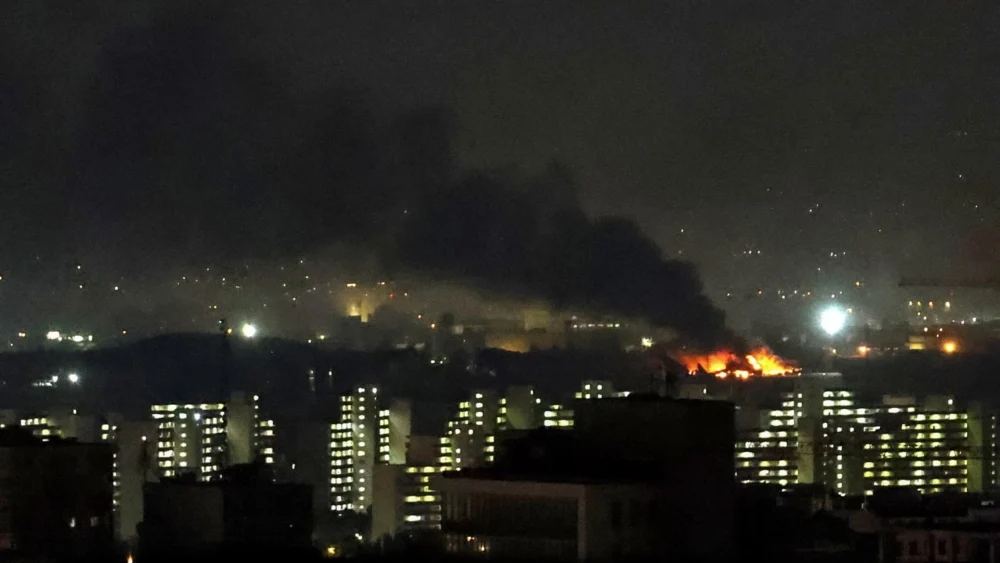
In a significant development that has captured the world’s attention, Iran has issued a formal apology for recent attacks that have heightened tensions across the Middle East, a move that former President Donald Trump has characterized as a sign of the nation’s "surrender" to its neighbors. This unprecedented acknowledgment from Tehran, coupled with conciliatory statements, suggests a potential pivot in regional dynamics, sparking widespread analysis of the underlying causes and far-reaching implications for the volatile geopolitical landscape.
The unfolding situation is a complex tapestry woven from years of entrenched animosity, proxy conflicts, and a persistent struggle for regional dominance. Iran, a Shiite Islamic republic, has long been at odds with several predominantly Sunni Arab nations, particularly Saudi Arabia, which views Tehran’s growing influence and support for regional militant groups as a direct threat to its security and stability. This rivalry has manifested in numerous theaters, from the civil wars in Yemen and Syria to broader diplomatic and economic competition.
The recent spate of attacks, which have been attributed by various intelligence agencies and regional powers to Iran or its proxies, included drone strikes and missile launches targeting critical infrastructure and shipping lanes. These actions had significantly ratcheted up anxieties, pushing the region to the precipice of a wider conflagration. The international community, already grappling with numerous global crises, had been watching with grave concern, fearing the economic and humanitarian fallout of an intensified conflict.
The apology from Iran, though framed by some as a sign of weakness, could also be interpreted as a pragmatic response to mounting international pressure and the potential for severe economic repercussions. Sanctions, coupled with the disruption of vital trade routes, have undoubtedly taken a toll on Iran’s economy. Furthermore, the risk of a direct military confrontation with a coalition of powerful regional and international actors would represent an existential threat to the current Iranian regime.
Former President Trump’s pronouncement that Iran has "surrendered" to its neighbors, while provocative and likely intended to underscore his administration’s tough stance on Iran, offers a particular lens through which to view this development. During his presidency, Trump pursued a policy of "maximum pressure" against Iran, withdrawing the United States from the Joint Comprehensive Plan of Action (JCPOA) – the international nuclear deal – and reimposing stringent sanctions. This approach aimed to cripple Iran’s economy and force it to renegotiate a more comprehensive agreement that would curb its ballistic missile program and its regional activities.
While the effectiveness of Trump’s strategy remains a subject of debate, the current situation might, in his view, represent a vindication of his approach, suggesting that sustained pressure can indeed compel adversaries to alter their behavior. However, a more nuanced analysis suggests that Iran’s decision to apologize is likely a multifaceted response. It is possible that internal political considerations within Iran, coupled with a reassessment of the costs and benefits of continued aggression, have played a significant role. The regime may be seeking to buy time, alleviate immediate pressure, and perhaps explore alternative avenues for engagement, even while maintaining its core strategic objectives.
The concept of "surrender" in international relations is rarely absolute. It is more likely that Iran is engaging in a strategic recalibration, seeking to de-escalate immediate hostilities while preserving its long-term interests. The apology could be a tactical maneuver designed to create space for diplomatic engagement, to sow division among its adversaries, or to buy time to bolster its defenses and alliances. The nature of the apology itself – whether it is a full and unconditional admission of guilt or a more qualified statement – will be crucial in determining its true significance.
The implications of this development are profound and extend far beyond the immediate diplomatic exchanges. For the broader Middle East, it offers a glimmer of hope for a reduction in the cycle of violence and instability that has plagued the region for decades. A de-escalation could lead to a reassessment of regional security architectures, potentially paving the way for more constructive dialogue and cooperation.
For the global economy, particularly the energy markets, a significant reduction in regional tensions would be a welcome development. The Middle East remains a critical hub for global oil and gas supplies, and any disruption to these flows can have significant ripple effects on inflation and economic growth worldwide. A period of relative calm could stabilize energy prices and reduce the risk of supply chain disruptions.
However, skepticism is warranted. The history of the Middle East is replete with instances where periods of détente have been short-lived, and underlying grievances have resurfaced. The apology, while significant, does not erase the deep-seated ideological, political, and strategic differences that fuel regional conflicts. The proxy wars and political rivalries that have characterized the region are unlikely to disappear overnight.
Furthermore, the role of external powers, particularly the United States, will be crucial in shaping the trajectory of events. The Biden administration has expressed a desire to re-engage with Iran and revive the JCPOA, albeit with certain modifications. This development could present an opportunity for such engagement, but it also raises questions about the potential for differing approaches between the US and its regional allies, who may be more inclined towards a harder line.
The international community will be closely observing Iran’s subsequent actions. Will the apology be followed by tangible steps towards de-escalation, such as a cessation of support for proxy groups or a commitment to verifiable arms control measures? Or will it prove to be a temporary pause, a strategic maneuver to regroup before resuming a more aggressive posture?
Expert analysis suggests several possible scenarios. One possibility is that Iran is genuinely seeking a pathway towards normalization and integration into the regional order, albeit on its own terms. This would require a fundamental shift in its foreign policy, including a willingness to compromise on its revolutionary ideology and its regional ambitions. Such a scenario would be transformative for the Middle East, potentially ushering in an era of unprecedented cooperation and prosperity.
Another possibility is that this is a tactical maneuver, designed to exploit divisions among its adversaries and to secure concessions from the international community. In this scenario, Iran might use the period of de-escalation to consolidate its gains, strengthen its alliances, and prepare for future confrontations. This would be a more pessimistic outlook, suggesting that the underlying causes of conflict remain unaddressed.
A third scenario involves a complex interplay of internal and external factors. Iran’s leadership may be facing significant internal pressure due to economic hardship and popular discontent. The apology could be a way to alleviate this pressure, to signal a willingness to engage with the international community, and to seek relief from sanctions. Simultaneously, regional powers may have leveraged their diplomatic and economic influence to achieve this outcome.
The implications for regional security alliances are also significant. Countries like Saudi Arabia and the United Arab Emirates have been at the forefront of efforts to counter Iranian influence. This development could lead to a reassessment of their strategies, potentially opening up avenues for direct dialogue with Tehran or a recalibration of their security partnerships.
The question of the JCPOA remains a critical backdrop. The original deal aimed to curb Iran’s nuclear program in exchange for sanctions relief. However, many regional powers and some within the US argue that it did not adequately address Iran’s ballistic missile program or its regional activities. A renewed diplomatic effort, potentially building on this conciliatory gesture, could aim to address these broader concerns.
In conclusion, Iran’s apology for recent attacks represents a pivotal moment in the ongoing geopolitical drama of the Middle East. While some, like former President Trump, interpret it as a sign of definitive surrender, a more comprehensive analysis suggests a complex strategic calculation. The path forward remains uncertain, contingent on Iran’s subsequent actions, the responses of regional powers, and the diplomatic engagement of the international community. The potential for de-escalation offers a much-needed opportunity to address the underlying causes of conflict and to forge a more stable and prosperous future for the region, but vigilance and a clear-eyed assessment of the evolving dynamics will be paramount.



 Ayu Aulia
 Safa Marwah
 Aura Kasih
 Lisa Mariana