Ayu Aulia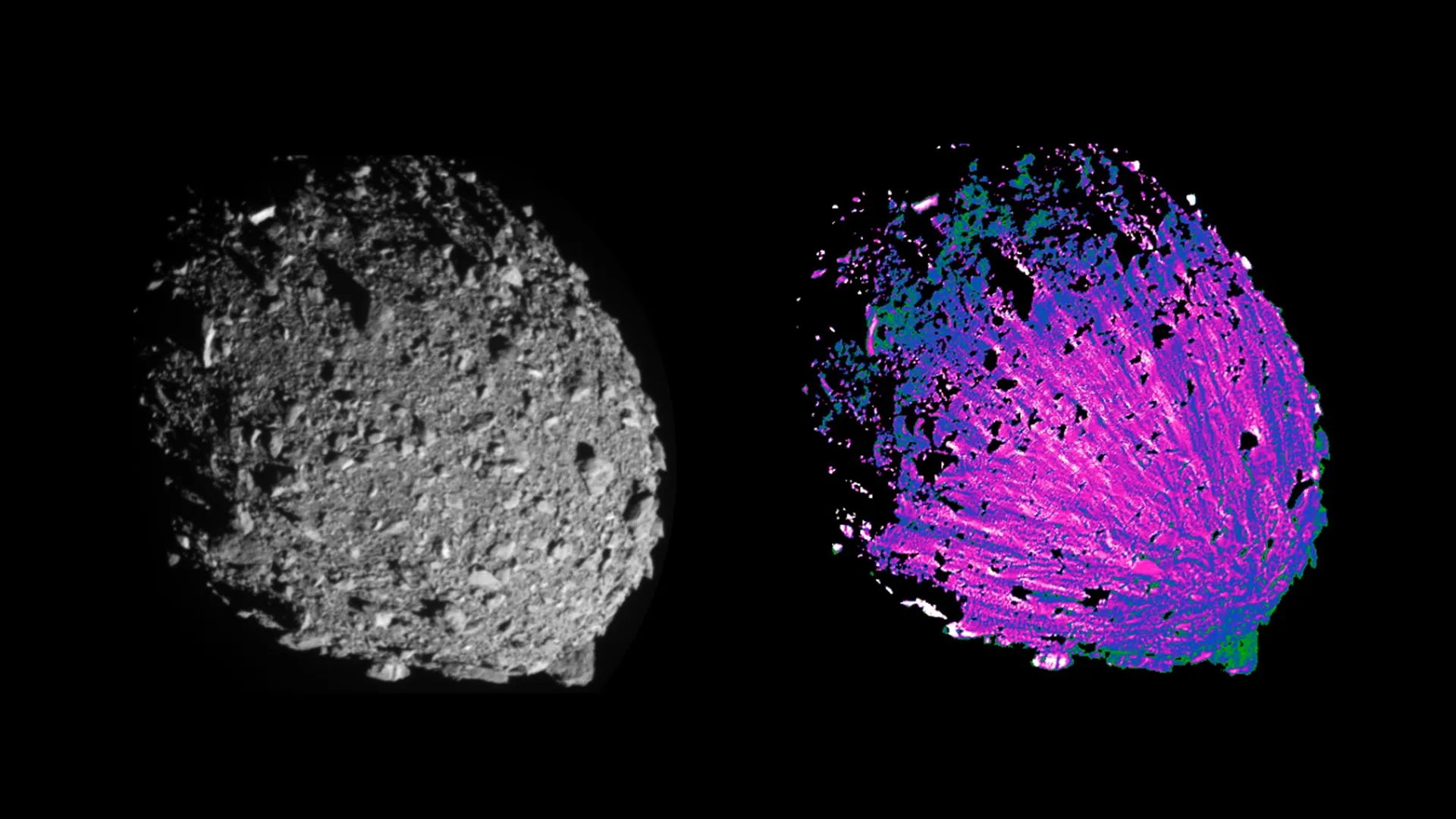
A groundbreaking analysis of data from NASA’s Double Asteroid Redirection Test (DART) mission has revealed that binary asteroid systems are far more dynamic than previously understood, actively exchanging material through a process akin to "cosmic snowballs." This discovery challenges long-held assumptions about the static nature of these celestial pairs, demonstrating that the smaller companion asteroids can be continually reshaped by gentle, low-velocity impacts from debris originating from their larger counterparts, a phenomenon with significant implications for understanding asteroid evolution and planetary defense strategies.
The Prevalence and Enigma of Binary Asteroids
Approximately 15% of asteroids in the near-Earth environment are not solitary bodies but exist as binary systems, comprising a larger primary asteroid orbited by a smaller satellite, or "moonlet." These paired objects represent a significant population within our solar system, yet their formation and evolutionary pathways have remained subjects of intense scientific inquiry. While their orbital mechanics have been well-studied, the extent of physical interaction between these components beyond gravitational tethering was largely speculative. The DART mission, primarily designed as a planetary defense technology demonstration, inadvertently provided an unprecedented opportunity to scrutinize such a system at close range, yielding revelations that redefine our understanding of these binary configurations.
Unveiling the Hidden Dynamics: DART’s Unexpected Insights
The pivotal discovery emerged from a meticulous examination of images captured by the DART spacecraft in 2022, moments before its intentional impact with Dimorphos, the moonlet of the asteroid Didymos. Scientists observed faint, fan-shaped streaks etched across Dimorphos’s surface—markings that initially puzzled researchers and were almost dismissed as optical anomalies. However, through dedicated analytical techniques, these subtle patterns were confirmed to be tangible geological features, providing the first direct visual evidence of material transport between the components of a binary asteroid system. This finding, published in The Planetary Science Journal, signals a paradigm shift in asteroid science, indicating that these systems are far from inert.
Dr. Jessica Sunshine, a lead researcher involved in the study and a distinguished professor at the University of Maryland, noted the initial skepticism regarding the visual data. "The patterns we discerned were highly consistent with low-velocity impacts, akin to the gentle deposition of ‘cosmic snowballs.’ This offered the inaugural direct proof of recent material exchange within a binary asteroid system," she elaborated, underscoring the significance of validating these subtle observations.
The YORP Effect: A Driver of Asteroid Reshaping
The observed material exchange also provides compelling visual corroboration for a process known as the Yarkovsky-O’Keefe-Radzievskii-Paddak (YORP) effect. The YORP effect describes how sunlight, absorbed and re-emitted by an asteroid’s surface, can generate a subtle but continuous torque, gradually altering the asteroid’s spin rate over millions of years. For smaller asteroids, this effect can accelerate their rotation to a critical point where centrifugal forces overcome surface gravity, causing loose material to be shed from the equator. This ejected debris can then either escape into space or, in the case of a binary system, coalesce into an orbiting moonlet or be recaptured by a companion.
In the Didymos-Dimorphos system, the fan-shaped streaks on Dimorphos strongly suggest that Didymos, the larger primary, spun up due to the YORP effect, flinging off surface material. This ejected debris then traveled through space, eventually encountering and gently settling onto Dimorphos. This mechanism provides a robust explanation for both the formation of binary asteroids and the ongoing reshaping of their surfaces, highlighting the active role of solar radiation in their geological evolution.
Advanced Image Processing: Unlocking Hidden Details
Detecting these elusive streak patterns was an arduous undertaking, requiring sophisticated computational methodologies. The original images transmitted by the DART spacecraft did not immediately reveal these features. Dr. Tony Farnham, a research scientist in astronomy at the University of Maryland, alongside former postdoctoral researcher Dr. Juan Rizos, pioneered specialized image processing algorithms. These techniques meticulously filtered out shadows cast by surface boulders and corrected for various lighting artifacts, thereby unveiling the faint but distinct patterns left by the "cosmic snowballs."
"We ultimately observed these radial patterns that enveloped Dimorphos, a feature unprecedented in asteroid imagery," Farnham recounted. "The subtlety and unique character of these marks initially made them hard to accept." The DART spacecraft’s direct approach trajectory further complicated the analysis, as the viewing angle and illumination conditions remained largely constant throughout the encounter. This posed a significant challenge in distinguishing genuine surface features from mere lighting effects.
To rigorously validate the authenticity of the streaks, researchers painstakingly traced them back to a specific origin point near Dimorphos’s limb. Crucially, this source region was not located directly beneath the Sun, thereby ruling out simple illumination phenomena as their cause. As the team refined their three-dimensional model of Dimorphos, the fan-shaped streaks became progressively clearer and more defined, solidifying their reality.
The Physics of Gentle Impacts
Further calculations, led by University of Maryland alumnus Dr. Harrison Agrusa, provided quantitative insights into the dynamics of this material exchange. His analysis determined that the debris ejected from Didymos traveled at an remarkably slow velocity, approximately 30.7 centimeters per second—a speed slower than a typical human walking pace. This low velocity is crucial to understanding the morphology of the observed streaks.
"Such slow-moving impacts do not create typical impact craters but rather lead to depositional features," Dr. Sunshine explained. "The fan-shaped marks are consistent with this, spreading out rather than forming excavated pits, and are concentrated around the equator, as predicted by models of material centrifugally shed from the primary body." This low-energy regime results in a distinctive geological signature, a testament to the gentle yet persistent forces at play in these binary systems.
Laboratory Experiments and Simulations: Replicating Cosmic Phenomena
To provide empirical validation for their hypothesis, researchers led by former UMD postdoctoral associate Dr. Esteban Wright conducted a series of laboratory experiments at the University of Maryland’s Institute for Physical Science and Technology. These experiments involved dropping marbles into a bed of sand interspersed with painted gravel, simulating the boulders on Dimorphos’s surface. High-speed cameras meticulously recorded the trajectories and deposition patterns of the "impacting" material.
The results from these controlled experiments mirrored the observations on Dimorphos. The simulated boulders effectively blocked some particles while allowing others to pass through the interstitial gaps, generating ray-like patterns remarkably similar to the streaks seen in the DART images. Complementary computer simulations performed at Lawrence Livermore National Laboratory independently corroborated these findings. Regardless of whether the incoming material was a solid object like a marble or a loose aggregate of dust, the presence of surface boulders consistently shaped the incoming material into the characteristic fan patterns.
Profound Implications for Asteroid Science and Planetary Defense
This discovery carries profound implications for multiple branches of planetary science. Firstly, it fundamentally alters our understanding of asteroid surface evolution. Rather than being static, passively orbiting bodies, binary asteroids are now understood as dynamic systems undergoing continuous, albeit slow, geological modification driven by internal processes (like YORP-induced spin-up) and external forces (like sunlight). This dynamic exchange of material contributes to the ongoing resurfacing of these objects over millions of years.
Secondly, these insights are invaluable for planetary defense. Binary asteroid systems represent a significant fraction of potentially hazardous asteroids (PHAs). Understanding their dynamic nature—how they shed material, how that material interacts with their companions, and how their surfaces evolve—is critical for developing more accurate models for predicting their trajectories and for designing effective mitigation strategies. For instance, knowing that an asteroid might be shedding debris could influence the approach and design of future deflection missions. The composition and structural integrity of an asteroid, inferred from such processes, are vital parameters for any intervention.
Dr. Sunshine emphasized the broader significance: "These new details are crucial to our understanding of near-Earth asteroids and their evolutionary paths. We now recognize their significantly more dynamic character than previously assumed, which will directly enhance our predictive models and bolster our planetary defense capabilities."
The Hera Mission: A Glimpse into the Future
The European Space Agency’s Hera mission, scheduled to reach the Didymos system in December 2026, is poised to build upon these groundbreaking findings. Hera will provide an invaluable opportunity to re-examine Dimorphos and ascertain whether the observed streak patterns survived the DART impact. Furthermore, scientists anticipate that Hera might detect new ray patterns, potentially formed by boulders dislodged during DART’s collision, offering fresh evidence of ongoing material transport and surface alteration. This follow-up mission will offer a unique before-and-after perspective on asteroid dynamics and the long-term effects of human intervention.
The paper, "Evidence of Recent Material Transport within a Binary Asteroid System," was formally published on March 6, 2026, in The Planetary Science Journal. This extensive research received critical support from NASA (Contract No. 80MSFC20D0004), the U.S. Department of Energy (Contracts DE-AC52-07NA27344 and LLNL-JRNL2002294), and the French National Research Agency (Project ANR-15-IDEX-01), underscoring the collaborative international effort behind this significant scientific advancement.




 Ridwan Kamil
 Safa Marwah
 Aura Kasih
 Lisa Mariana