Lisa Mariana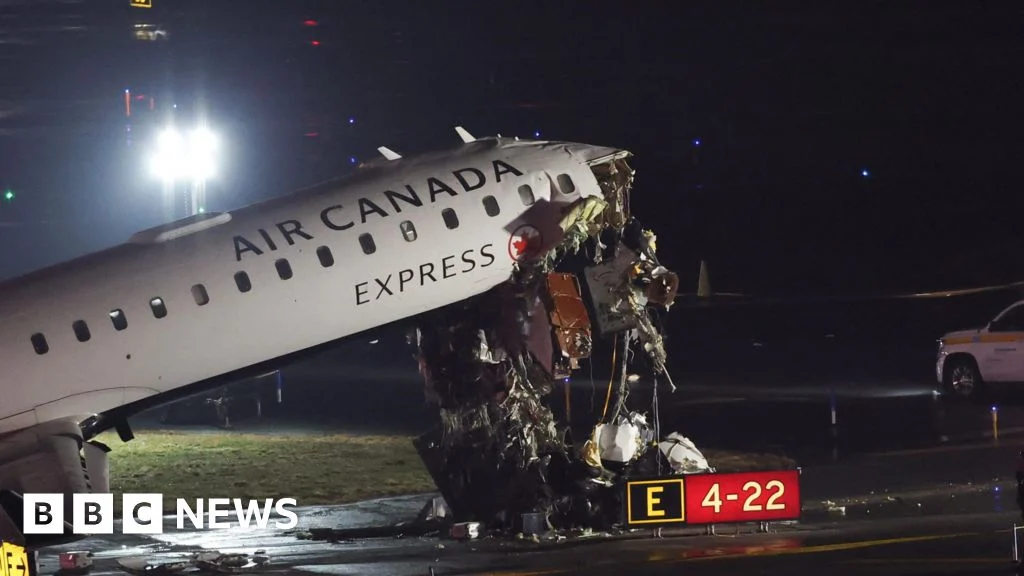
A critical incident unfolded late Sunday evening at New York’s LaGuardia Airport (LGA), precipitating a complete cessation of flight operations when a commercial aircraft collided with a Port Authority Aircraft Rescue and Firefighting (ARFF) vehicle. The serious ground event, involving an Air Canada regional jet operating under its partner Jazz Aviation, prompted an immediate and comprehensive response from emergency services and regulatory bodies, leading to significant disruptions for travelers and raising pointed questions about the intricate safety mechanisms governing busy airport environments.
The collision occurred as Air Canada Flight 7891, a Bombardier CRJ 900 regional jet arriving from Montreal, was maneuvering on the airfield following its landing. Preliminary reports indicate the aircraft, carrying approximately 76 individuals including passengers and crew, was proceeding at a relatively low speed of around 24 miles per hour when it made contact with a Port Authority ARFF vehicle. Crucially, the firefighting unit was reportedly en route to a separate, unrelated emergency on the airport grounds, underscoring the dynamic and often complex operational environment of a major international hub. The impact resulted in substantial damage to the forward section of the aircraft, visibly lifting its nose in post-incident imagery. While initial assessments suggested a number of injuries, the full extent and nature of these were not immediately specified.
The Federal Aviation Administration (FAA) swiftly implemented a ground stop for all incoming and outgoing flights at LaGuardia, an immediate measure designed to prevent further aircraft movement and ensure the safety of ongoing emergency operations. This directive, issued late on Sunday night, carried a high probability of extended duration, signaling the gravity of the situation and the anticipated lengthy period required for initial assessment and clearing of the incident site. The ripple effect of such a closure at one of the nation’s busiest airports is profound, impacting thousands of passengers, numerous flight schedules, and the broader air traffic network across the Northeast corridor.
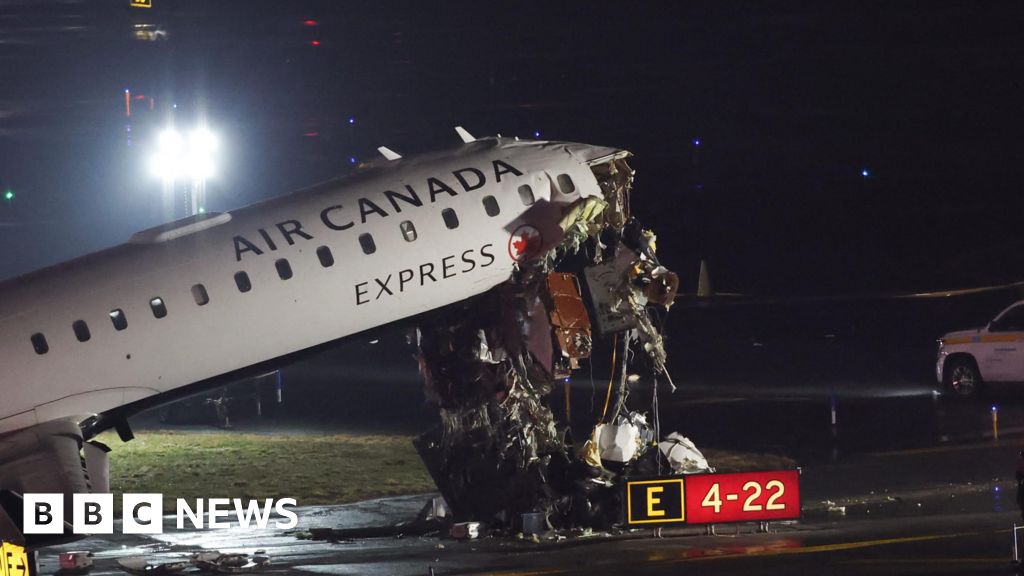
LaGuardia Airport, managed by the Port Authority of New York and New Jersey, confirmed the incident, stating that emergency response protocols were activated without delay. Personnel from the Port Authority Police Department (PAPD), alongside senior agency leadership, were immediately dispatched to the scene to coordinate the multifaceted response. Concurrently, public advisories were issued by both the New York City Police Department (NYPD) and the New York City Fire Department (FDNY), urging the public to anticipate extensive delays, road closures, and traffic disruptions in and around the airport vicinity, advising the use of alternative routes. Visual evidence circulating on social media platforms depicted the damaged regional jet, its forward fuselage prominently tilted skyward, surrounded by emergency vehicles.
The CRJ 900, a twin-engine regional jet, is a common sight at airports across North America, typically deployed on shorter-haul routes. Operated by Jazz Aviation on behalf of Air Canada Express, these aircraft are integral to connecting smaller markets to larger hubs. The incident involving such a workhorse aircraft, particularly one that had already completed its flight segment and was on the ground, highlights the inherent risks present even during routine taxiing operations. The fact that the ARFF vehicle was responding to a separate emergency adds a layer of complexity to the investigation, which will undoubtedly scrutinize communication protocols, vehicle dispatch procedures, and the overall situational awareness of all parties involved in airfield movements.
Ground collisions, while less frequent than mid-air incidents, represent a significant safety concern within the aviation industry. These events, often categorized as "runway incursions" or "surface incidents," underscore the critical importance of precise coordination between air traffic control, flight crews, and ground vehicle operators. Major airports like LaGuardia operate under incredibly tight schedules, with a constant flow of aircraft, support vehicles, and personnel traversing a complex network of runways and taxiways. The robust systems in place, including advanced surface movement guidance and control systems (A-SMGCS) and stringent communication protocols, are designed to mitigate these risks. However, human factors, equipment malfunctions, or unexpected operational contingencies can still create hazardous situations.
The National Transportation Safety Board (NTSB), the independent U.S. government agency responsible for civil aviation accident investigation, promptly launched an investigative team to probe the circumstances surrounding the collision. An NTSB investigation is a meticulous and exhaustive process, typically involving several key stages. Investigators will gather perishable evidence from the scene, including flight data recorders (FDR) and cockpit voice recorders (CVR) from the aircraft, as well as any available data from the ARFF vehicle. They will interview flight crew members, air traffic controllers, ARFF personnel, and other witnesses. Furthermore, they will examine the damaged aircraft and vehicle, analyze airport diagrams, review air traffic control recordings, and scrutinize operational procedures, training records, and maintenance logs. The objective is not merely to assign blame but to determine the probable cause of the accident and issue safety recommendations to prevent similar occurrences in the future. This comprehensive approach ensures that lessons learned from such incidents contribute to the continuous improvement of aviation safety standards.
The operational implications of LaGuardia’s closure are far-reaching. As a key gateway to New York City, LGA handles millions of passengers annually, primarily serving domestic routes. A complete ground stop, particularly one initiated late on a Sunday night, creates a cascading effect across the national air transportation system. Flights destined for LaGuardia were either held at their departure airports, diverted to alternative airports such as Newark Liberty International (EWR) or John F. Kennedy International (JFK), or cancelled outright. This leads to substantial inconvenience for passengers, including missed connections, prolonged delays, and unexpected overnight stays. Airlines face significant financial costs associated with diversions, crew rescheduling, aircraft repositioning, and compensation for affected passengers. The economic impact extends beyond the airlines to airport concessionaires, ground transportation providers, and the broader regional economy.
Beyond the immediate disruption, the incident casts a spotlight on the ongoing challenges of managing airside operations at a high-volume airport like LaGuardia, which has undergone significant modernization in recent years. While these upgrades have improved passenger experience and terminal efficiency, the fundamental constraints of its compact footprint and busy airspace remain. The simultaneous occurrence of two separate incidents—the initial emergency requiring ARFF response and the subsequent collision—underscores the complex interplay of events that can rapidly escalate on an active airfield.
Looking ahead, the NTSB’s findings will be crucial in informing potential changes to airfield safety protocols, communication procedures, and perhaps even technological enhancements. This incident serves as a stark reminder of the continuous vigilance required to maintain the highest levels of safety in aviation. Recommendations could range from revised training for ground personnel and flight crews regarding situational awareness during taxi operations, to improvements in vehicle tracking and communication systems, or even adjustments to air traffic control directives concerning emergency vehicle movements. The aviation industry prides itself on its safety record, a testament to its relentless pursuit of identifying and mitigating risks. Every incident, regardless of its scale, is treated as an opportunity to learn and further fortify the layers of safety that underpin modern air travel. The full investigation, while potentially lengthy, will be critical in providing clarity and guiding future enhancements to ensure such an event is not repeated.




 Safa Marwah
 Aura Kasih
 Ayu Aulia