
 Ridwan Kamil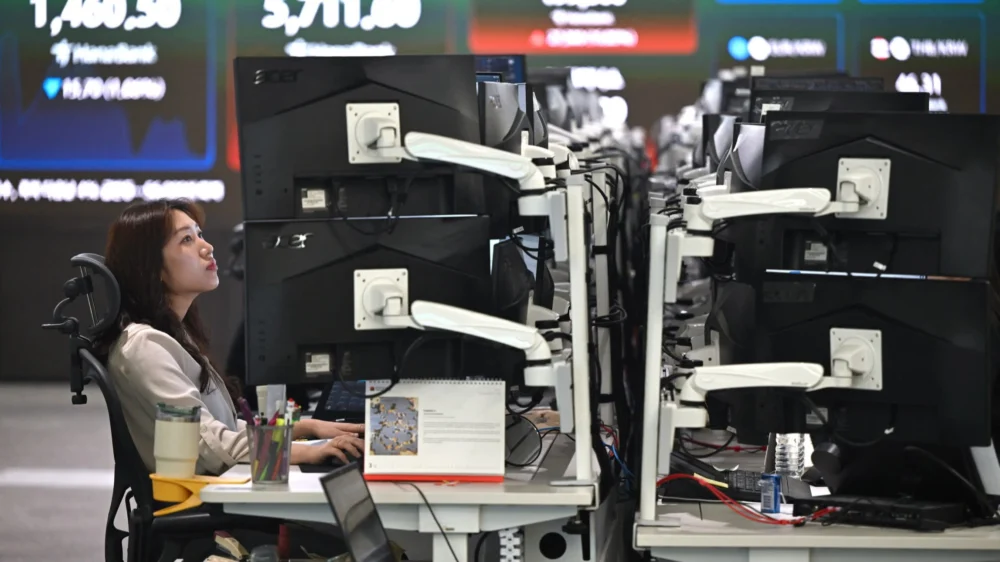
In the wake of escalating tensions in the Middle East, global financial markets have demonstrated a notable resilience, with South Korea emerging as a frontrunner in the rebound following a period of significant volatility. Investor sentiment, initially shaken by the repercussions of Iran’s actions, is now showing signs of stabilization, propelled by a confluence of economic factors and strategic market adjustments.
The geopolitical tremors emanating from the Middle East, specifically related to Iran’s actions, sent ripples of uncertainty across international financial landscapes. This uncertainty manifested in a broad market downturn, characterized by a flight to safety and a palpable increase in risk aversion among investors. However, the narrative quickly began to shift as economic fundamentals and the inherent strength of certain markets started to assert themselves. South Korea, a nation with a robust export-oriented economy and a critical role in global technology supply chains, proved particularly adept at navigating this turbulent period. Its market performance became a barometer for the broader recovery, signaling a potential normalization of investor confidence.
The initial market reaction to the geopolitical escalation was predictable, mirroring historical patterns where periods of heightened international tension lead to investor caution. This typically involves a sell-off in riskier assets, such as equities, and a simultaneous surge in demand for perceived safe-haven assets like gold and certain government bonds. The impact was felt across major indices, with indices in Asia, Europe, and North America experiencing significant dips. Currencies also reflected this sentiment, with a strengthening of the US dollar and other traditional safe havens. The fear was that any disruption to oil supplies or significant escalation of conflict could trigger a prolonged period of economic contraction, impacting global trade and corporate profitability.
However, the subsequent rebound, spearheaded by South Korea, suggests that the market’s initial assessment may have been overly pessimistic, or that underlying economic strengths are proving more potent than the immediate geopolitical anxieties. Several factors likely contributed to South Korea’s leading role in this recovery. Firstly, the nation’s deep integration into the global technology sector, particularly in semiconductors, positions it as a critical player whose performance is closely watched by international investors. Disruptions in the Middle East, while concerning, did not directly impede the physical production or supply of these essential components in the immediate aftermath. Secondly, South Korea’s own economic policies and the resilience of its domestic demand likely provided a stabilizing influence. The Bank of Korea’s monetary policy stance, coupled with government initiatives aimed at bolstering economic activity, would have contributed to a more stable investment environment.
The performance of the South Korean stock market, often a leading indicator for the region, became a focal point. As investors began to reassess the immediate economic impact of the geopolitical events, they turned their attention to markets with strong fundamentals and robust export capabilities. South Korea, with its advanced manufacturing sector and significant global market share in key industries like electronics and automobiles, presented an attractive proposition. The Kospi index, in particular, demonstrated a swift recovery, outpacing many of its regional counterparts. This upward trajectory was driven by the renewed confidence in the export sector and the anticipation of continued global demand for South Korean goods.
Beyond the immediate market movements, the rebound highlights the complex interplay between geopolitical events and economic realities. While the threat of conflict can induce significant short-term volatility, the underlying economic structures and policy responses often dictate the speed and nature of the recovery. In this instance, the global economy, despite its vulnerabilities, has shown a capacity to absorb and adapt to geopolitical shocks, at least in the short to medium term. The continued global demand for technology, driven by digitalization and artificial intelligence, provided a crucial undercurrent of support for economies like South Korea.
Furthermore, the strategic positioning of South Korea within global supply chains cannot be overstated. As a leading producer of semiconductors, memory chips, and advanced electronic components, its output is indispensable for a vast array of industries worldwide, from consumer electronics to automotive and industrial automation. Any perceived threat to these supply chains can trigger a rapid reassessment of investment strategies. The fact that South Korea was able to maintain its export momentum suggests that the immediate geopolitical fallout did not translate into significant disruptions for its manufacturing or logistics operations. This underlying strength provided a solid foundation for its market’s recovery.
The analysis of this market phenomenon also requires an examination of investor behavior. Following periods of sharp declines, markets often experience a "relief rally" as initial fears subside and investors seek to re-enter positions at more attractive valuations. The swiftness of South Korea’s recovery suggests that investors were quick to identify the nation’s underlying economic strengths and its relative insulation from the most direct economic consequences of the Middle Eastern events. This also points to a degree of sophistication in how global investors are now assessing geopolitical risks, moving beyond broad-brush reactions to more nuanced evaluations of specific economic exposures.
The implications of this rebound extend beyond the immediate financial markets. It underscores the interconnectedness of the global economy and the importance of understanding regional economic dynamics. A strong performance in a major exporting nation like South Korea can have positive spillover effects on its trading partners and on global supply chains. It also signals a degree of confidence in the global economic outlook, suggesting that major economies are not yet on the precipice of a widespread recession.
Looking ahead, the sustainability of this recovery will depend on several factors. The geopolitical situation in the Middle East remains a fluid and critical variable. Any further escalation or prolonged period of instability could reignite market anxieties. However, the resilience displayed by markets, particularly in technologically advanced economies, suggests a growing capacity to manage such risks. The ongoing global demand for semiconductors and other high-value manufactured goods will continue to be a key driver for South Korea’s economic performance. Moreover, the effectiveness of domestic economic policies in South Korea, including monetary and fiscal measures, will play a crucial role in sustaining investor confidence.
The experience also highlights the importance of diversification in investment strategies. While geopolitical events can cause indiscriminate market sell-offs, the subsequent recovery often favors economies with strong fundamentals and strategic importance. Investors who can identify these resilient markets are better positioned to navigate periods of volatility. The South Korean rebound serves as a case study in this regard, demonstrating how a nation’s integral role in global technological advancement can act as a powerful buffer against external shocks.
In conclusion, the global market’s ability to rebound from a period of significant geopolitical-induced stress, with South Korea at the vanguard, is a testament to the underlying resilience of the global economy and the adaptive nature of financial markets. While the Middle Eastern geopolitical landscape remains a critical factor to monitor, the performance of key economic powerhouses like South Korea suggests a capacity for recovery and continued growth, driven by robust industrial capabilities and strategic global integration. The swiftness of this recovery, spearheaded by the Asian powerhouse, offers a crucial indicator of the market’s underlying strength and its ability to recalibrate in the face of external challenges.



 Safa Marwah
 Aura Kasih
 Lisa Mariana
 Ayu Aulia