Lisa Mariana
A sudden declaration by the US President regarding progress in diplomatic discussions aimed at resolving the protracted conflict in the Middle East precipitated a dramatic shift in global financial markets, sending crude oil prices into a steep decline while simultaneously invigorating major equity indices. The unexpected announcement, signaling a potential pause in military escalation between the United States, its allies, and Iran, swiftly recalibrated risk assessments across trading floors worldwide, leading to a significant pullback in the geopolitical risk premium that had been driving commodity valuations to multi-year highs.
On Monday, international benchmark Brent crude futures registered a precipitous drop of approximately 13% in intra-day trading, retreating sharply from earlier peaks. Concurrently, major European stock indices, which had commenced the trading session under considerable pressure, staged a robust recovery. London’s FTSE 100 index, for instance, reversed an initial decline exceeding 2% to close with a gain of 0.5%, mirroring similar upward trajectories observed in continental European bourses. This abrupt market pivot underscored the profound sensitivity of global finance to geopolitical developments, particularly those emanating from the energy-rich Persian Gulf region.
The catalyst for this dramatic market realignment was a series of pronouncements from US President Donald Trump, conveyed through social media channels. The President stated that "very good and productive" discussions had taken place between the United States and Iran regarding a cessation of hostilities in the Middle East. Crucially, he also declared an immediate "POSTPONEMENT OF ANY AND ALL MILITARY STRIKES AGAINST IRANIAN POWER PLANTS AND ENERGY INFRASTRUCTURE" for a period of five days. This statement marked a significant de-escalation from earlier, more confrontational rhetoric. Just days prior, the President had issued a stark warning, threatening to "obliterate" Iranian power plants if the critical Strait of Hormuz maritime artery remained closed. Tehran had, in turn, vowed swift and decisive retaliation against regional infrastructure should such an attack materialize, setting the stage for what many feared would be an all-out regional conflagration.
The preceding weekend had been characterized by acute anxiety across financial centers, as the escalating war between the US, Israel, and Iran appeared increasingly entrenched, threatening to spiral into a prolonged and devastating conflict. The closure of the Strait of Hormuz, a narrow waterway through which an estimated 20% of the world’s total oil supply and a substantial portion of its liquefied natural gas (LNG) shipments traverse, had already triggered a dramatic surge in global energy prices. This maritime choke point, strategically vital for international commerce, had become a focal point of the burgeoning crisis, with its disruption directly translating into higher costs for consumers and industries globally.
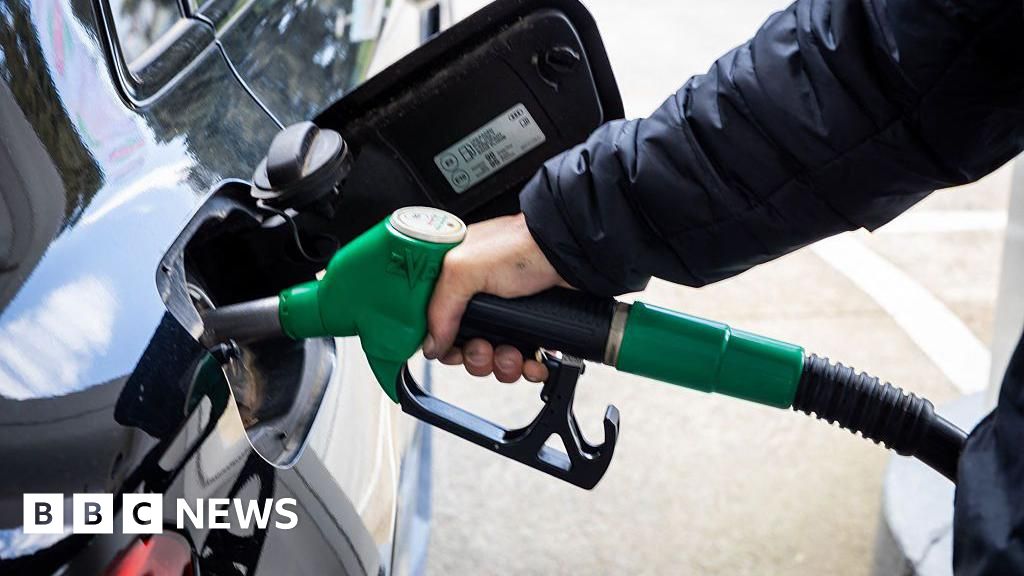
The immediate relief observed in energy markets was a direct consequence of the perceived reduction in the probability of a direct military confrontation disrupting oil and gas flows through the Strait of Hormuz. A sustained closure or significant impediment to transit through this waterway would inevitably lead to severe supply shortages, forcing crude oil prices to astronomical levels and potentially triggering a global recession. The market’s reaction indicated that participants were unwinding the significant geopolitical risk premium that had been built into prices in anticipation of widespread conflict and supply disruptions. The 13% decline in Brent crude represented not just a profit-taking exercise but a fundamental reassessment of future supply security.
The broader implications for global energy security had been starkly articulated earlier on Monday by Fatih Birol, the Executive Director of the International Energy Agency (IEA). Speaking at an event in Australia, Birol issued a sobering warning that the ongoing conflict had the potential to plunge the world into its most severe energy crisis in decades. He drew unsettling parallels between the current predicament and the seismic energy shocks of the 1970s, as well as the profound impact of Russia’s full-scale invasion of Ukraine in 2022. Birol underscored the unprecedented nature of the crisis, stating, "This crisis as things stand is now two oil crises and one gas crash put all together." This assessment highlighted a confluence of supply-side vulnerabilities and demand-side pressures, exacerbated by geopolitical instability, creating a perfect storm for global energy markets.
The 1970s energy crises, notably the 1973 oil embargo and the 1979 Iranian Revolution, demonstrated the devastating economic consequences of sudden and sustained disruptions to global oil supplies, leading to stagflation and widespread economic hardship. More recently, the 2022 conflict in Ukraine exposed Europe’s critical reliance on Russian natural gas, triggering an acute energy crisis characterized by soaring prices, supply rationing, and urgent efforts to diversify energy sources. Birol’s comparison suggested that the current US-Israeli-Iran conflict threatened to combine the worst aspects of these historical precedents, creating a multi-faceted energy challenge involving both oil and gas supply chains, with potentially far-reaching global economic repercussions. The sheer scale of potential disruption from the Strait of Hormuz, coupled with existing vulnerabilities, amplified these concerns.
Prior to President Trump’s conciliatory remarks, the price of Brent crude had briefly soared to $113 a barrel, reflecting the extreme market apprehension. This level represented a significant premium driven purely by fear and uncertainty, rather than underlying supply-demand fundamentals. The subsequent plunge underscored how quickly market sentiment can pivot on diplomatic signals, even if their long-term efficacy remains uncertain. The volatility served as a stark reminder of the fragile balance within the global energy ecosystem and the outsized influence of geopolitical events on commodity prices.
The positive reversal in European equity markets further illustrated the profound impact of de-escalation hopes on investor confidence. Germany’s Dax index, which had initially dipped by approximately 2%, closed 1.6% higher, while France’s Cac index followed a similar trajectory, recovering from a 2% fall to end up 1.2%. These gains reflected a collective sigh of relief among investors, who had been bracing for the economic fallout of a protracted and expanding Middle Eastern conflict, including higher energy costs, supply chain disruptions, and dampened consumer spending. The prospect of averted military action offered a glimmer of hope for greater economic stability and predictability, encouraging a return to risk assets.
In contrast, Asian stock markets, which had concluded their trading sessions before President Trump’s late-day announcements, bore the full brunt of the initial market jitters. Japan’s Nikkei index recorded a substantial decline of 3.5%, while South Korea’s Kospi index suffered an even steeper fall of 6.5%. The pronounced downturn in these markets highlighted their particular vulnerability to Middle Eastern geopolitical instability. Both Japan and South Korea are heavily dependent on imported oil and natural gas, much of which traditionally transits through the Strait of Hormuz. Any threat to this vital shipping lane directly imperils their energy security and economic stability, making their economies acutely sensitive to regional tensions. The time zone differential meant that these markets could not immediately react to the positive news, locking in significant losses for the day.
Looking ahead, the longevity of this de-escalation remains a critical question for analysts and policymakers. While President Trump’s announcement provided immediate relief, the underlying tensions and strategic rivalries that ignited the US-Israeli-Iran conflict persist. Experts caution that a five-day postponement of military strikes, while welcome, does not constitute a comprehensive resolution. The success of future talks will hinge on the willingness of all parties to make significant concessions and establish durable mechanisms for conflict resolution. The diplomatic landscape is fraught with complexities, including differing regional interests, historical grievances, and the involvement of various state and non-state actors.
The incident underscores the growing phenomenon of "tweet diplomacy" and its instantaneous, often dramatic, impact on global financial markets. Such rapid shifts in policy communication can inject both volatility and opportunity, demanding heightened vigilance from market participants. For the energy sector, the current reprieve offers a brief window for reassessment and strategic planning, but the long-term imperative for diversification of supply routes and energy sources remains paramount. The IEA’s stark warning about a multi-faceted energy crisis serves as a powerful reminder of the inherent fragilities within the global energy system and the urgent need for resilient infrastructure and robust international cooperation to mitigate future shocks.
Ultimately, while Monday’s events brought a welcome respite from escalating fears, the global economy and energy markets remain on tenterhooks, acutely aware that the path to lasting stability in the Middle East is fraught with challenges. The world watches closely to see if the declared "very good and productive" talks will translate into tangible, enduring peace, or if this temporary de-escalation merely postpones an inevitable reckoning.


 Ayu Aulia
 Safa Marwah
 Aura Kasih