Ridwan Kamil
In a dramatic escalation of regional tensions, the United States has reportedly issued a stark 48-hour ultimatum to Iran, demanding the immediate reopening of the Strait of Hormuz, a critical chokepoint for global oil transit. This development signals a significant intensification of diplomatic and potentially military pressure on Tehran, with profound implications for global energy markets and international security. The deadline, if accurate, suggests a rapidly deteriorating situation, pushing the region closer to a precipice with potentially devastating consequences.
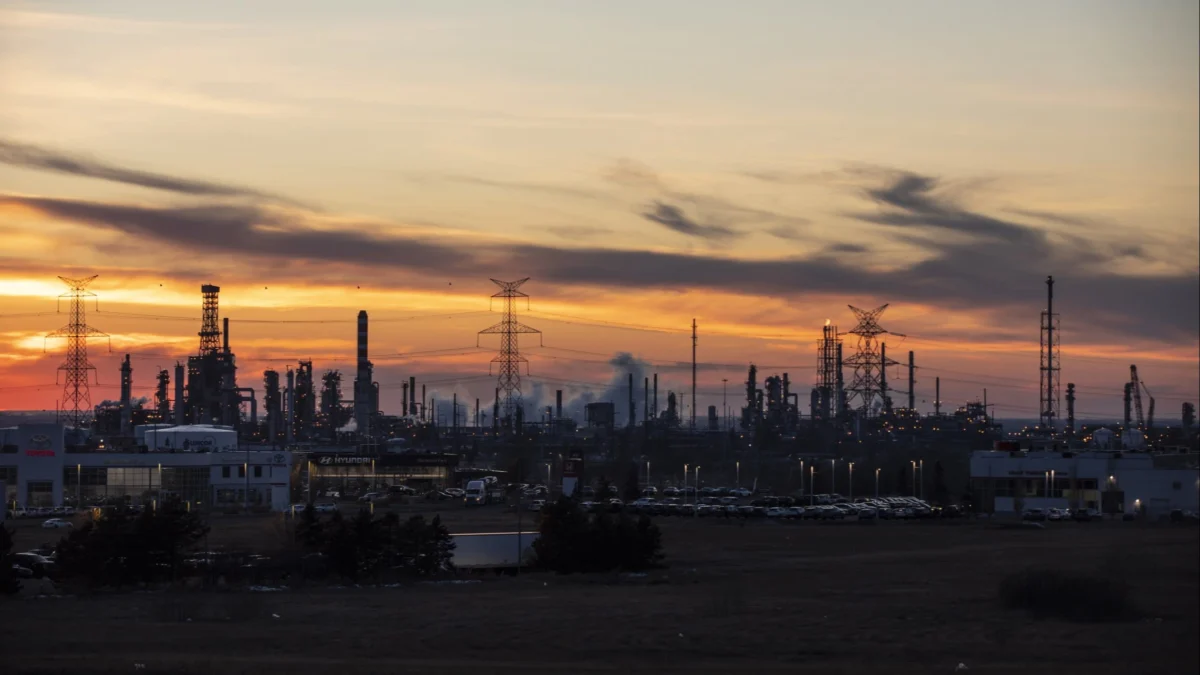
The Strait of Hormuz, a narrow waterway separating Iran from Oman and the United Arab Emirates, serves as the sole maritime passage for roughly one-fifth of global oil consumption. Its strategic importance cannot be overstated, making any disruption to its traffic a matter of immediate international concern. Reports of a direct ultimatum from the US to Iran regarding this waterway suggest a deliberate move to force a resolution to ongoing disputes, which have been simmering for years and have recently reached a boiling point.
The precise nature of the demands beyond the reopening of the Strait remains unspecified, but the context points towards a broader agenda encompassing Iran’s nuclear program, its ballistic missile development, and its alleged support for regional proxy groups. The US administration’s stance, as reportedly conveyed, indicates a zero-tolerance policy towards any actions that threaten the free flow of commerce through this vital artery. The 48-hour timeframe is exceptionally short in diplomatic terms, suggesting that Washington believes a swift and decisive outcome is necessary to de-escalate the situation or, conversely, to initiate a more forceful response.
A History of Friction and the Strategic Significance of Hormuz
The Strait of Hormuz has long been a focal point of geopolitical contention in the Middle East. Its strategic value has been recognized for centuries, but its significance has been amplified in the modern era by the global reliance on oil transported by sea. Iran, controlling much of the northern coastline, has historically wielded the potential threat of closing the Strait as a powerful deterrent and leverage in its dealings with the international community. This threat, while rarely acted upon, has consistently cast a shadow over regional stability and global energy security.
The current impasse is rooted in a complex web of factors. The US withdrawal from the Joint Comprehensive Plan of Action (JCPOA), commonly known as the Iran nuclear deal, in 2018, and the subsequent reimposition of stringent sanctions, significantly strained US-Iran relations. Tehran has viewed these actions as a violation of international agreements and a deliberate attempt to cripple its economy. In response, Iran has intermittently threatened to retaliate by disrupting shipping in the Strait, citing its right to self-defense and its grievances against what it perceives as American aggression.
Recent incidents, including alleged attacks on oil tankers in the Persian Gulf and the seizure of vessels, have further inflamed tensions. The US has consistently accused Iran or its proxies of being responsible for these provocations, while Iran has denied direct involvement, often pointing to the volatile regional security environment as the root cause. This cycle of accusation and denial has created a dangerous feedback loop, eroding trust and increasing the likelihood of miscalculation.
The ultimatum, if it materializes as reported, represents a significant shift in US strategy. Instead of relying on a protracted diplomatic or economic pressure campaign, Washington appears to be opting for a high-stakes gambit, demanding immediate compliance. The underlying assumption might be that Iran, facing immense economic pressure and potentially isolated diplomatically, would be compelled to accede to the demands to avoid a more severe military confrontation.
Expert Analysis: Implications of the Ultimatum
The potential consequences of an Iranian refusal to comply with such a deadline are severe and multifaceted. Economically, any disruption to the Strait of Hormuz would inevitably lead to a sharp spike in global oil prices. The world’s dependence on oil transiting through this waterway means that even a temporary closure could have ripple effects across industries, impacting transportation costs, manufacturing, and consumer spending worldwide. This could trigger inflationary pressures and potentially slow down global economic growth, particularly in energy-importing nations.
Geopolitically, a failure to resolve the situation peacefully could lead to a significant military escalation. The US has a strong naval presence in the Persian Gulf and has conducted joint military exercises with regional allies to ensure freedom of navigation. If Iran defies the ultimatum, the US and its allies might consider military options to enforce compliance. Such an action would carry immense risks, including the potential for a wider regional conflict involving Iran’s allies and proxies, further destabilizing an already volatile region.
Dr. Anya Sharma, a Senior Fellow at the Institute for International Security Studies, commented, "This ultimatum, if true, represents a bold and potentially risky diplomatic maneuver. The short timeframe suggests a desire for immediate deterrence or, more alarmingly, a pre-meditated path towards military action. The global economy is acutely vulnerable to any disruption in the Strait of Hormuz, and a conflict in this region would have cascading effects far beyond the immediate combatants."
She further elaborated, "The international community will be watching closely. The credibility of both the US and Iran will be on the line. However, the primary concern remains the potential for unintended escalation. Miscalculations, especially in a high-tension environment, can quickly spiral out of control."
Iran’s Strategic Calculus and Potential Responses
For Iran, the decision-making process in response to such an ultimatum would be fraught with complexity. Adhering to the demand would mean a significant loss of face and a potential capitulation on issues that Tehran considers vital to its national sovereignty and security. It could also be perceived by hardliners within Iran as a sign of weakness, potentially emboldening domestic opposition and regional adversaries.
Conversely, defying the ultimatum, even without directly closing the Strait, could invite severe retaliation. Iran’s military doctrine emphasizes asymmetric warfare and the use of its missile capabilities. It might resort to retaliatory strikes against US interests or allies in the region, or through its proxy networks, such as Hezbollah in Lebanon or the Houthi rebels in Yemen. Such actions would further entrench the conflict and prolong the period of instability.
The Iranian regime has consistently demonstrated a degree of resilience and strategic patience in navigating international pressure. However, the economic strain imposed by sanctions has been significant, and the domestic population has increasingly expressed frustration with the government’s handling of the economy. This internal pressure could influence the regime’s calculus, making it more or less inclined to take risks.
Mohammad Reza, a geopolitical analyst specializing in Iranian affairs, noted, "Tehran’s response will depend on a delicate balance of internal political dynamics and external pressures. The regime has a vested interest in maintaining its power, and any decision that threatens its survival will be meticulously weighed. While closing the Strait would be a grave escalation, defiance of a direct ultimatum carries its own set of significant risks. The Iranian leadership might opt for a calibrated response that avoids outright capitulation but also does not invite overwhelming military force."
He added, "The international community’s role will be crucial. A unified diplomatic front urging de-escalation could provide Iran with a pathway to avoid a direct confrontation without appearing to cede entirely. However, a fractured international response could embolden either side to pursue more aggressive options."
The Broader Regional and International Ramifications
The implications of this standoff extend far beyond the immediate US-Iran dynamic. Regional powers such as Saudi Arabia, the UAE, and Israel have long viewed Iran’s regional influence and its ballistic missile program as significant security threats. Any perceived weakening of Iran, or conversely, any escalation that draws them into direct conflict, would have profound regional consequences.
Saudi Arabia, a major oil producer and a key US ally, has been at the forefront of efforts to counter Iranian influence. A conflict in the Strait of Hormuz would directly impact its oil exports and could lead to increased regional instability. Israel, which views Iran as its primary existential threat, would closely monitor any developments, potentially seeing an opportunity to further weaken its adversary.
The international community, particularly European nations, has consistently advocated for diplomatic solutions and adherence to international law. The potential for a military conflict in the Persian Gulf would be met with widespread concern, given the humanitarian and economic ramifications. The UN Security Council would likely convene emergency sessions, but its ability to enforce a resolution would depend on the cooperation of its permanent members, particularly the US and Russia.
The current situation underscores the fragility of global security and the interconnectedness of regional conflicts with global stability. The Strait of Hormuz is not merely a waterway; it is a symbol of the geopolitical fault lines that continue to shape international relations. The 48-hour deadline, if accurate, represents a critical juncture, a moment where diplomatic efforts will be severely tested, and the world will hold its breath, awaiting the unfolding consequences.
Future Outlook: Navigating Towards De-escalation or Escalation?
The immediate future hinges on Iran’s response within the stipulated timeframe and the subsequent actions of the United States and its allies. Several scenarios could unfold. In the most optimistic, Iran could agree to open the Strait, perhaps with assurances regarding sanctions relief or a renewed commitment to diplomatic engagement. This would represent a significant diplomatic victory for the US and would avert an immediate crisis.
However, a more confrontational outcome is also plausible. If Iran refuses to comply or attempts to maintain a de facto blockade, the US might be compelled to take military action to ensure freedom of navigation. This could range from targeted strikes against Iranian military assets to more comprehensive military operations. Such a scenario would almost certainly trigger a wider regional conflict, with unpredictable and potentially devastating consequences for all parties involved.
A third, and perhaps more nuanced, scenario involves a period of heightened tension and limited skirmishes, without a full-blown conflict. Iran might continue its disruptive tactics, while the US and its allies might respond with increased naval patrols and targeted defensive measures. This would create a prolonged period of uncertainty and volatility, with continuous risks of miscalculation and escalation.
Ultimately, the situation underscores the urgent need for sustained diplomatic engagement and de-escalation. The reliance on ultimatums, while potentially intended to force a resolution, carries inherent risks of unintended consequences. The international community must redouble its efforts to facilitate dialogue and find pathways towards a peaceful resolution that addresses the underlying grievances and ensures regional stability. The fate of global energy markets and international security may well rest on the decisions made in the coming days.



 Ayu Aulia
 Safa Marwah
 Aura Kasih
 Lisa Mariana