Lisa Mariana
The United Kingdom is poised to endure the most pronounced economic repercussions among the Group of Twenty (G20) advanced and emerging economies, stemming from the escalating conflict dynamics in the Middle East, according to comprehensive analyses from a prominent international policy institution. This stark assessment underscores a significant downward revision in the nation’s economic growth projections and an upward adjustment in inflation forecasts, painting a challenging picture for the coming years.
The Organisation for Economic Co-operation and Development (OECD), a highly respected intergovernmental economic organization, recently issued its revised economic outlook, highlighting the profound global ramifications of the intensified US-Israel conflict with Iran. For the UK, the forecast for economic expansion this year has been dramatically recalibrated to a mere 0.7%, a substantial reduction from the previously anticipated 1.2%. Concurrently, inflationary pressures are now projected to be considerably more persistent and elevated than earlier estimates suggested. This adverse revision is not exclusive to the UK; numerous major global economies have seen their growth prospects dimmed as a direct consequence of the geopolitical turbulence emanating from the Middle East.
A protracted period of conflict in this volatile region carries the distinct risk of precipitating "significant energy shortages" on a global scale, a grave warning articulated by the OECD. Furthermore, should the sharp escalation in fertilizer prices persist, the ripple effects on agricultural productivity would be unavoidable, leading to diminished crop yields and, subsequently, a surge in food prices globally in the forthcoming year. These interconnected threats present a formidable challenge to economic stability worldwide, with particular vulnerabilities emerging in economies heavily reliant on energy and food imports.
The initial tremors of the conflict have already manifested in the global commodities markets, where wholesale oil and natural gas prices have experienced a marked ascent. This surge is primarily attributable to multiple factors: the effective constriction or closure of the Strait of Hormuz, a critical maritime chokepoint through which a substantial portion of the world’s oil supply transits; and direct damage inflicted upon key oil and gas infrastructure within the Middle East. The strategic importance of the Strait of Hormuz cannot be overstated; its disruption or perceived threat of disruption sends immediate shockwaves through the global energy complex, impacting everything from crude oil benchmarks to refined petroleum products and natural gas liquefaction and transportation.
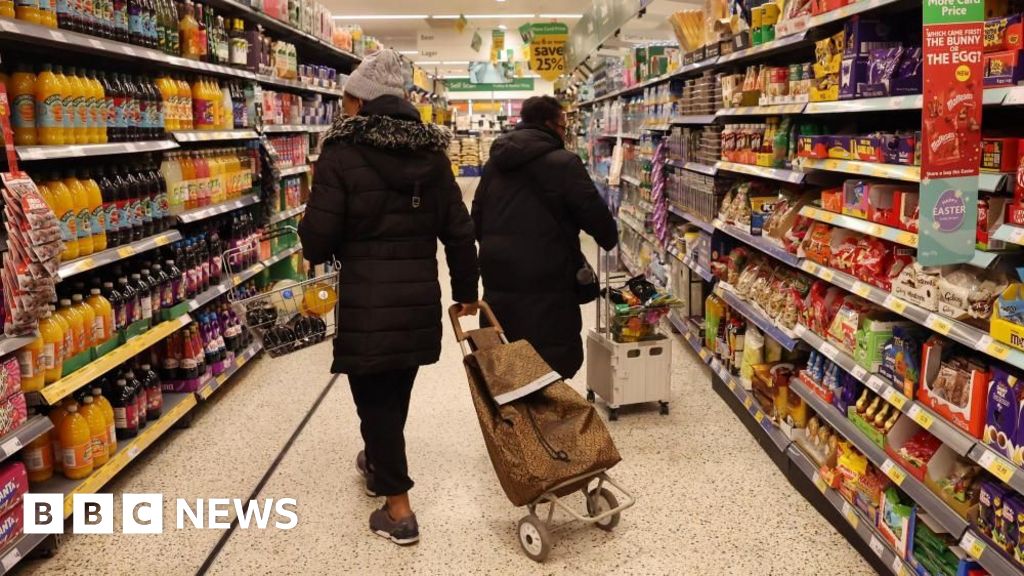
Economic experts universally concur that a sustained period of elevated energy prices is a potent inhibitor of economic growth. Such conditions invariably stoke inflationary fires, erode purchasing power, increase business operating costs, and compel central banks to maintain, or even raise, interest rates for longer durations than would otherwise be necessary. The prospect of delayed interest rate reductions has profound implications for businesses and households alike, impacting borrowing costs for mortgages, corporate loans, and government debt, thereby dampening investment and consumption.
While the OECD’s global growth projection for the current year remains stable at 2.9%, this figure masks considerable regional disparities and sectoral vulnerabilities. Of particular concern is the revised forecast for inflation across the G20 nations, which is now expected to reach 4%, a significant leap from the prior estimate of 2.8%. This upward revision signals a broad-based inflationary environment, driven by the energy and commodity price shocks, which could undermine economic recovery efforts globally.
The UK’s specific inflation outlook is particularly sobering. The OECD now anticipates UK inflation to register 4% this year, a notable increase from the earlier forecast of 2.5%. While a subsequent moderation to 2.6% is projected for 2027, this figure still represents an upward revision from the previous 2.1% estimate, indicating a longer tail of inflationary pressure. Within the G7 cohort of leading industrial nations, the UK’s inflation forecast is surpassed only by that of the United States, highlighting the domestic economy’s particular susceptibility. Furthermore, only Italy is expected to experience weaker economic growth among the G7 members, underscoring the UK’s challenging position relative to its peers.
This latest analysis from the OECD builds upon earlier domestic assessments that had already signaled a more cautious outlook for the UK economy. In early March, the Office for Budget Responsibility (OBR), the UK government’s independent fiscal watchdog, had already trimmed its projected growth rate for the UK this year to 1.1% from the 1.4% it had forecast in the preceding year’s Budget. Crucially, this OBR forecast predated the full escalation of the "Iran war," with the institution subsequently acknowledging that such a conflict could exert a "very significant" impact on global economies. The current OECD assessment therefore serves as a stark validation and amplification of those earlier concerns, providing a more precise quantification of the potential damage.
In response to the OECD’s somber assessment, political figures in the UK offered contrasting interpretations. The Chancellor of the Exchequer affirmed that while the escalating conflict would inevitably affect the UK, the government’s existing "economic plan" was robust enough to navigate these turbulent waters. The Chancellor emphasized that prior policy decisions had positioned the country more advantageously to safeguard both national finances and household budgets against external instability. Conversely, the Shadow Chancellor characterized the growth downgrade as a "damning verdict" on the perceived fragility of the UK economy, attributing its vulnerability to the incumbent government’s policies. The Shadow Chancellor contended that blaming global events alone was insufficient, asserting that domestic policy choices had exacerbated the economy’s susceptibility at a critical juncture. Similarly, the Liberal Democrats interpreted the forecast as an urgent "wake-up call," arguing that the government’s perceived "anti-growth agenda" was directly imposing costs upon ordinary families. These divergent political responses highlight the sensitivity of economic performance to external shocks and the ongoing domestic debate regarding the efficacy of current economic strategies.

It is imperative to acknowledge the inherent complexities and uncertainties embedded within economic forecasting, particularly when confronted with rapidly evolving geopolitical landscapes. The OECD’s outlook, while providing an informed guide to probable future trajectories, is fundamentally contingent upon a specific set of assumptions. Central to these projections is the premise that the current disruptions within the energy market will gradually abate, leading to a stabilization and subsequent decline in oil, gas, and fertilizer prices from the summer months onwards. Any deviation from this critical assumption, such as a further escalation of the conflict or prolonged supply chain disruptions, would necessitate a significant recalibration of these forecasts, potentially leading to even more adverse outcomes.
The OECD also outlined a series of policy recommendations aimed at mitigating the economic fallout. It advocated for government measures designed to cushion households from the impact of higher energy prices to be "timely, well-targeted on households most in need and viable firms, preserve incentives to lower energy use and have clear expiry mechanisms." This nuanced approach seeks to avoid broad, untargeted subsidies that could exacerbate inflationary pressures or disincentivize energy conservation, while still providing essential support to vulnerable segments of society and critical businesses. The Chancellor had previously indicated that any such support package would be constrained by the government’s fiscal rules and its overarching objective of maintaining inflation and interest rates "as low as possible," underscoring the delicate balancing act required in formulating such interventions. Furthermore, the OECD emphasized that policies aimed at enhancing domestic energy efficiency and reducing reliance on imported fossil fuels should be prioritized over the medium term. Such structural reforms are deemed crucial for building long-term economic resilience against future energy price volatility and geopolitical shocks.
The macro-economic assessments from the OECD are already translating into tangible concerns for specific sectors and businesses within the UK. In a recent announcement, Next, a prominent UK clothing retailer, issued a warning regarding the potential necessity of raising prices for its customers if the Middle East conflict persists. The company projected that it would likely incur approximately £15 million in additional operational costs – primarily due to increased fuel expenses and higher air freight charges – if the conflict were to endure for a period of three months. While these initial additional costs have, for the time being, been offset by savings realized in other areas of its operations, Next indicated that should the conflict extend beyond the three-month mark, it would be compelled to "begin to pass costs through as higher pricing." This illustrates how geopolitical events swiftly translate into increased supply chain costs, which eventually filter down to consumer prices, further fueling inflationary pressures and eroding household purchasing power. The vulnerability of global supply chains, particularly those reliant on specific maritime routes and energy-intensive logistics, is thus acutely exposed by the current geopolitical climate.
Beyond the immediate impact on energy and food prices, the broader implications for global trade and investment cannot be overlooked. Increased geopolitical risk often leads to greater uncertainty in financial markets, potentially deterring foreign direct investment and making borrowing more expensive for both sovereign states and corporations. The rerouting of shipping, heightened insurance premiums, and potential for trade barriers could further fragment global supply chains, leading to inefficiencies and higher costs for goods and services. For an open, trade-dependent economy like the UK, these dynamics present additional headwinds, potentially hindering export growth and increasing import costs.
In conclusion, the OECD’s recent economic analysis presents a sobering outlook for the United Kingdom, positioning it as the G20 economy most acutely vulnerable to the economic fallout from the escalating Middle East conflict. The combination of downgraded growth forecasts and elevated inflation projections, driven primarily by anticipated energy and food price shocks, underscores a challenging period ahead. While the inherent uncertainties of geopolitical events make precise long-term predictions difficult, the current trajectory necessitates a vigilant and adaptive policy response. Strategic investments in domestic energy resilience, targeted fiscal support, and prudent monetary policy will be crucial in mitigating the adverse impacts and safeguarding the nation’s economic stability in an increasingly volatile global landscape. The analysis serves as a critical call to action for policymakers to navigate these complex challenges with foresight and decisive action.



 Ayu Aulia
 Safa Marwah
 Aura Kasih